You Should Write a Memoir. Yes, You.
Your voice has power. Share it.
Have you considered writing a memoir? I don't necessarily mean publishing a memoir or pitching it to someone; I just mean writing one. You don't need to ask someone else's permission to document your own life. You should consider it. And better yet, you should start on it. Today, preferably!
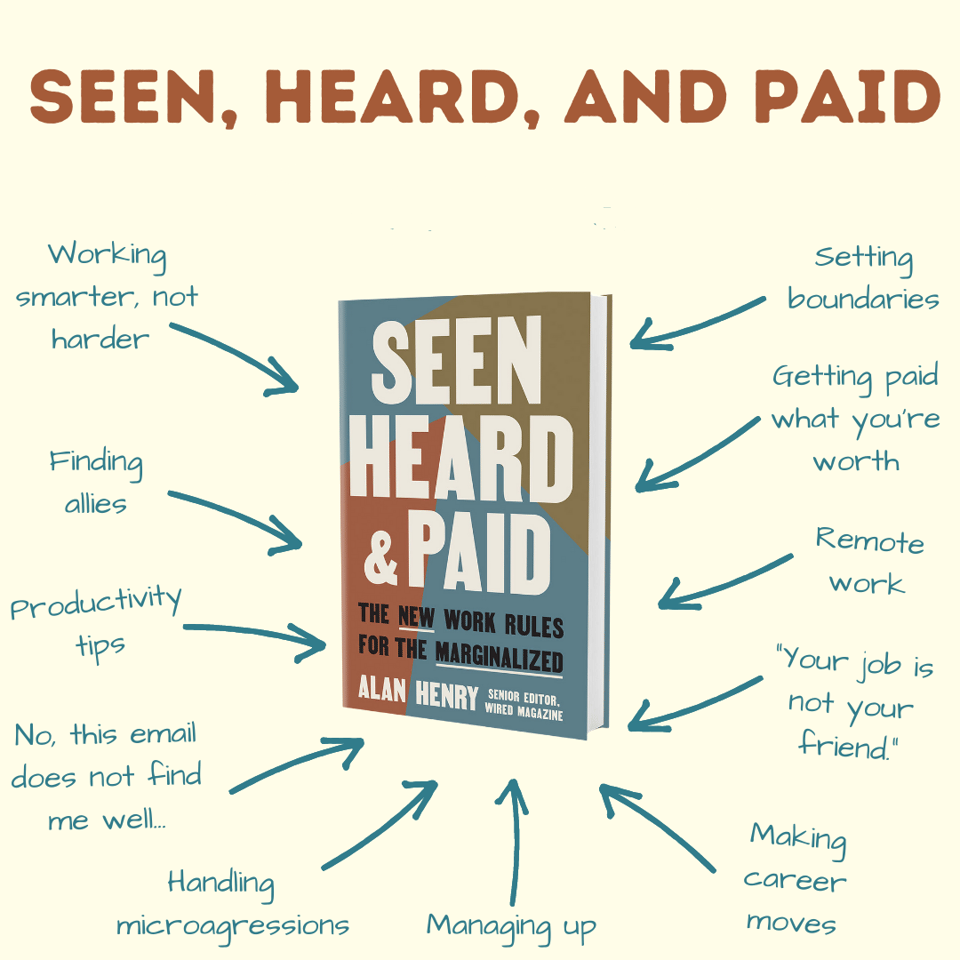
First, welcome back to Productivity, Without Privilege! I am, as always, Alan Henry, and my book, Seen, Heard, and Paid: The New Work Rules for the Marginalized, deserves a spot on your bookshelf. If you already have a copy, consider supporting me and this newsletter by either sending me a tip here or subscribing to my Patreon, which gives you early access to this newsletter, among other perks.
Getting back to the topic at hand, two things inspired me to discuss this with all of you: First, I've always been the type of person who's fascinated by the deep, interior lines of others. Everywhere I go, when I see others, I'm the type to wonder what's going on in their heads and in their lives. I'll sit on the couch in my apartment and look out at the sky beyond the buildings, and when a plane flies overhead, I'll watch it, thousands of feet in the air, and think about the people on board. I wonder: Where are they headed? Who's going on vacation to a bucket list destination, or who's making a trip they've made a dozen times before? Who's going on a business trip? Who's going home to see family, or who's starting a new chapter of their lives? I wonder if any of them are traveling to a wedding. Or maybe a funeral. Maybe someone on that flight is heartbroken. Or maybe one of them is falling in love.
I think this is one reason I love living in a city. Some people call it people watching; I call it daydreaming. It's part of why I love getting places early, especially liminal spaces that people pass through on their way from one place to another. When I ride the subway, I ponder the lives of my fellow commuters. When I walk through the airport or the train station on my way to my gate, I look at the destinations of other gates and scan the faces of the people waiting there. So part of my ask here is selfish: I love reading about other people, especially their thoughts, dreams, and aspirations.
Second, I was thinking about what got me into writing in the first place, especially writing things for others to read. From the time I started my first silly little hand-coded HTML-based blog back in college, I wrote for two big reasons: One, because I wanted to help other people if I could, and second, because I knew I had a voice and an intense desire to be heard; to share my thoughts and feelings with others that I hoped would understand and appreciate them.
And part of what's mattered the most to me in this industry is growing into a position where I can offer other people, other voices, and other stories worth telling the same space and opportunities that I was afforded: to know your voice has value and power, and you have a story worth telling, even if you only speak it aloud to yourself.
***
How you go about doing this is up to you; I'm not here to tell you how to write a memoir so it'll get picked up by a major publisher (I definitely haven't done that) or how to pitch a memoir or even a story that would be in your memoir to a publication that would be interested in such a thing (I don't know any pubs that would, and while I've certainly edited personal essays, I've written few.) But what I do know, without a doubt, is that every single one of us has a story worth sharing, even with those of us we trust the most, or even aloud with ourselves, so we're keenly aware of our own personal journeys and how far we've come.
I'm a big fan of historical and archaeological documentaries, and I'm constantly amazed by the fact that so much of what we know about the way people used to live comes either from people who were so prominent that their lives were documented (not unlike today, honestly) or from the diaries and journals of everyday people during that time period. After all, how would we know that you apparently can't trust copper from Ea Nasir if one of the oldest written documents in history wasn't a complaint letter addressed to him by one of his customers? How would Ken Burns have put together so many documentaries without the letters and journals of the soldiers and citizens of the time periods he studied?
While I'm sure this is a documented problem by people who have studied this field more than I, I do wonder how we'll document our current times, and the way we thought, related to one another, and handled our everyday challenges when so few people keep (or even have time to keep) journals of their own.
The blogging rush ended with the explosion of social media, and while the early days of social media were also tinged with "how dare you post simple things like what you ate," at least for a while there, people did use it to chronicle their day-to-day lives. Some people still do, even. But there's something even more valuable, I think, to documenting your own experiences and thoughts in a form that lets you be free with their length and format. And considering that AI is doing a great job right now of absorbing all information to destroy free, objective truth in favor of a corporatized, brand-safe version of reality, we're risking losing those raw, unfiltered, straight-from-the-source versions of our lives for future versions of us to look back on and learn from. Especially in a way that's truthful and not the preferred version of the past that people in power want us to believe.
If you want to actually do it, you have lots of options. Now is actually a great time to start a blog, whether you host it yourself and use blogging software to manage it, or you use a platform that lets you create first and then worry about sharing with others later. Did you all know my mother was a blogger, too? I keep her domain and her site alive, not because I expect her words to blow up or anything, but because they're valuable to me and my family to go back and reflect on sometimes, especially since we can't hear her stories directly from her anymore. But if you don't want it to be public, you can use everything from a free online document editor to a physical notebook for your own story. The important thing is that it's yours, in your own words, and from your own perspective.
I could do a whole other newsletter on how to write your memoir, and maybe I will eventually, but whatever you do, get started. I'm convinced you have a story worth telling. And even if no one else reads it, it's worth telling yourself. But I'll tell you this: I'd read it.

Advice for Young Black Journalists From an Editor Who Used To Be One, by Danielle C. Belton: Danielle Belton is a friend of mine, and I had the privilege to be one of the only two (she was, of course, the other) Black editors-in-chief at Gawker Media/Gizmodo Media Group when I was at Lifehacker, and she was at The Root. That didn't last long for reasons I discuss in my book, but for a brief moment, it was wonderful. Danielle ended up running The Huffington Post, and I landed at The New York Times, but our struggles and experiences are very similar. In this piece, she offers a ton of advice that I wish I'd gotten earlier in my career, and advice that I know lots of people, especially Black writers and journalists, can use in this media environment—especially when it comes to "well-meaning" white journalists and newsrooms that care about your ideas and perspectives…until their friends are looking for work, or budgets are tight, and they suddenly need to make room for someone more like them.
Dolly Parton Quietly Funded Black School Bands: ‘The Woman Is a National Treasure’, by Charlie Duncan: This article popped up after Dolly Parton's passing and was written back in 2022, but it's something I never knew. The headline is the thrust of the piece, but if you needed yet another reminder that Dolly Parton was an incredible person, and was the kind of person who didn't need public praise and cheers to be a good person, here you go.
Whites Only, by Ari Berman and Pema Levy: I'm glad this Mother Jones feature exists, mostly because while I've certainly seen coverage of the Supreme Court chipping away at voting rights in the United States and, over time, completely gutting what was left of the Voting Rights Act to the point where it's no longer meaningfully effective, this piece threads all of it together to remind us whose votes our government considers valuable and whose don't matter at all. It's also a worthwhile reminder that people died—many people, in fact—to make the Voting Rights Act real, and the fact that restoring its power hasn't become a tentpole in any political party's agenda speaks volumes about our country's priorities.

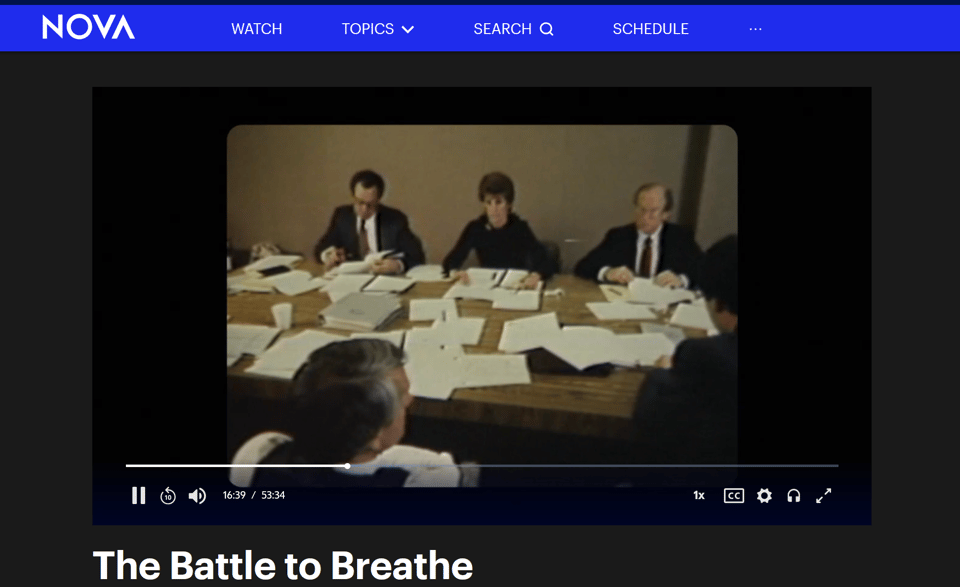
I stumbled on this documentary one night on the couch while looking for something to watch (on PBS streaming, as I do), and The Battle to Breathe stopped me in my tracks. I popped it on because I thought it would be an interesting look at cystic fibrosis, an illness I was aware of but knew little about.
What I didn't know was that the documentary is a full history of how the illness has been, for a long time, a death sentence for those who are diagnosed with it, especially for children who were never expected to live past their pre-teen years, at best. The documentary walks through the history of the disease, how, for years, no one knew how to treat it, and the slow and painstaking process of terrified and grieving parents and families collecting the funding required to even study the disease and fund lifesaving treatments, something that had never been heard of before in the medical community.
Beyond that, the documentary walked headlong into the conversations about how available those lifesaving treatments are to the people who need them, and opened up conversations around the cost to research and develop the medications, the few companies capable of studying and manufacturing those drugs, and, of course, the people who need them, got them and had life-changing effects, and those who didn't get them in time. It's incredible, and if you have any interest in pharmaceutical science, I heartily recommend you watch it.
***
That's all for this edition of Productivity, Without Privilege. If you enjoyed the newsletter, consider supporting me by dropping me a tip here or by subscribing to my Patreon for early access to the newsletter and my other projects. I promise, your support makes it all possible. I’ll see you back here soon.


