Weaponized Incompetence, and How to Work Around It
Some people just forget who they are. Make sure you're not one of them.
Some people just forget who they are. Make sure you're not one of them.
If you're reading this, you and I probably have this in common: you've dealt with people who throw up their hands at things they absolutely should be able to do. Maybe they defer to you instead, not because they respect your opinion and skills, but because they just don't want the responsibility of making their own decisions (or, more likely, they're simply trying to get out of doing their own work.)
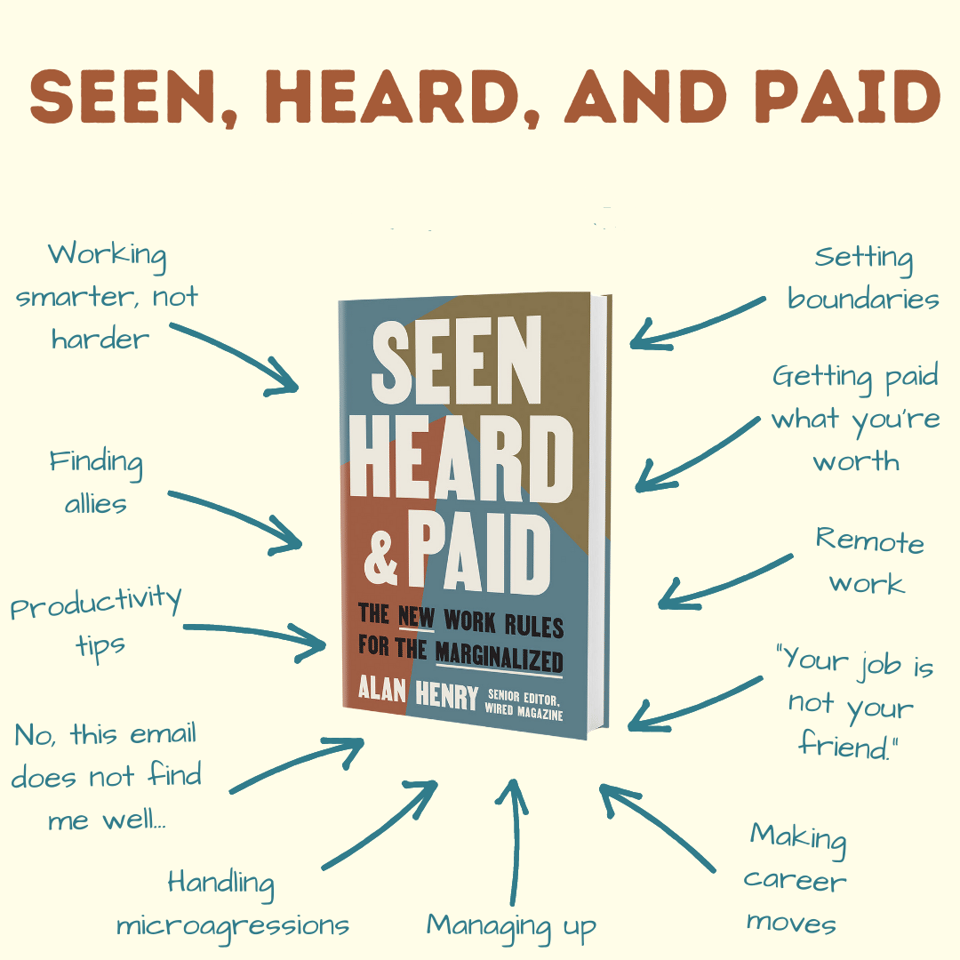
Hello and welcome back to Productivity, Without Privilege! I’m your host, Alan Henry, and my book, Seen, Heard, and Paid: The New Work Rules for the Marginalized, is an excellent addition to your own summer reading list, if you haven't picked it up yet. If you already have a copy, consider supporting me and this newsletter by either sending me a tip here or subscribing to my Patreon, which gives you early access to this newsletter, among other perks.
A long time ago, in a different career, one of my bosses told me he simply hated doing laundry at home. So much so that when his wife got fed up with him periodically and demanded he help out and do the laundry, he would purposefully do such a horrible job at it—enough to get it done, but not enough to get it done well—that his wife would sigh, fix whatever he screwed up, and the clock would start all over again until she got fed up, or, ideally, she would just stop asking.
There's actually a name for this: weaponized incompetence. And while it's very common in relationships, like the example above, it's also very common in the workplace (I'm VERY sure you can think of someone you've worked with who was like this). I'm not here to touch on the former point; I'm here to talk about the latter.
I've worked with journalists who have been in the field longer than I've been alive who, when asked to do something in their wheelhouse but out of their routine, will whine and cry about it more than journalists I've hired to their first professional gigs. They'll behave like they've forgotten how to write a story or interview a subject, or repeatedly make mistakes that were clearly explained to them as a way to try to force me (or another editor/manager) to just take over and do the thing for them.
This piece at The Science of People does a great job explaining what this looks like, and how to tell it apart from people who just have trouble learning new things—in short, people who just have trouble with specific tasks will usually want help, or want to get better at it, rather than just shunting responsibility as soon as they announce they can't do it.
It also explains how to identify weaponized incompetence at work. Usually, it's when someone you know is capable of performing complex tasks conveniently "forgets" how to do the simple one you need them to do, or the one you've taught them how to do several times over, conveniently, when someone's around to take the task off their plate.
***
So how do you deal with people like this?
As a manager, it's usually relatively easy: when it's time for a 1:1 meeting or a performance review, you just bring up the things they seem incapable of doing, even though they're part of the job. Nothing forces people's hand more than some form of actual accountability with consequences.
But as a peer, or when the person involved is your manager, or when they can cloak themselves in things like seniority or being another manager's favorite, dealing with them can be difficult. Here are a few things you can do, regardless of position or work relationship:
Build a paper trail. Yup, this one should be familiar to anyone who's had to deal with, well, anything problematic at work. Document everything. I talk about this in my book, and the Science of People article above mentions it too: every time that person feigns ignorance about their responsibility, or how to perform it, it needs to be documented somewhere. I personally suggest writing it down in your work diary (which you are keeping, right?)
Don't fall for the guilt. Sometimes the best way to handle someone's passive-aggressive behavior is to just let it fall flat and not give them what they want. Respond with something like "I trust you to handle it!" or "Oh, you got this, you'll be fine!" reaffirms the fact that the task at hand is theirs to accomplish and not yours, and is supportive to boot, even if it's a little obvious that you're not taking their bait. A little "if you have trouble, you can always ask [manager] for help" further underscores that you're not going to come to their rescue, and if they really want to weasel out, they'll have to face accountability for doing so.
Follow up clearly. The other important thing to do is make sure you don't let them off the hook after a single conversation. Even if the person isn't behaving with ill intent, they may walk away from the conversation with the assumption that you'll just take care of it, even if you didn't commit to it. Sometimes, people who weaponize incompetence thrive in the in-between spaces where it's arguable whether something is their job or someone else's. Follow up any conversation like the above with clear expectations, like "Hey, like we discussed, you got this! We need it by Friday afternoon, so don't forget, OK?" or "Hey, I know I reminded you about this thing, make sure to include it with the next story you file!" to make it clear that you not only expect them to do it, but you expect them to do this one, the one you've been talking about.
For more, this article from Give an Hour has additional tips, including ones for employers who have to manage people like this who just seem to keep getting away with it. Good luck, we all need it.

Companies That Roll Back DEI Don’t Perform Better Financially, Study Says, by Caroline Colvin: One of the major conclusions of this study, aside from what the headline says, is that all of these companies capitulated under essentially no pressure whatsoever, alienating their customers and employees of color for no reason and no benefit. Even better, companies that retained their DEI programs and commitments performed as well or better than their peers that did away with them. So again, you have to ask: who benefited from these moves, and who were they designed to please? Remember that when you take out your wallet to go shopping.
There’s No Place Like Group Chats, by Hanif Abdurraqib: Ah, the irony of having had this story sent to me through a group chat. I'm here for this piece, mostly because (and if you've been reading for any amount of time, you know) I'm a champion of finding your own community and finding your own spaces where you can express yourself, share the stories that have shaped you, and be open and honest about the people in your lives. They're spaces where you don't have to pull your punches and express yourself truly and openly. Obviously, you still have to be a decent person, if you have decent friends, but I love group chats for nothing else than offering us all a place we can be personal and vulnerable with people we trust to not ridicule us for not knowing something, not phrasing it a certain way, or, bottom line, not assuming the worst about us at the outset.
These Black Men Are Turning To Yoga To Build Meaningful Connections, by Philip Lewis: I will always love and support a story about Black men doing things that, stereotypically, other people think Black men don't do, especially when it involves community and togetherness. In this case, it's a yoga group every Saturday at the Barack Obama Presidential Center in Chicago. The men in the story are about 30, who come to the center, lay down their yoga mats, and do yoga together. It's a mix of ages and skill levels, and this story makes me wonder if there are any similar groups here in New York I could join. Part of me really wants to join a Tai Chi group at the park, but I don't want to invade a space that's not mine, you know? Anyway, if there's anything we need in these difficult times, it's more people coming together to support one another, especially as the systems intended to support us crumble at the whims of the wealthy and the privileged.


One thing I've seen a lot over on Bluesky (follow me there, if you don't already!) is people looking for writing tools that don't use AI, or train AI on your work, the way that both Microsoft 365 and Google Docs do.
While most of us have to deal with those big corporate productivity suites for work (myself included, I don't think I'll ever be able to ditch Google Docs entirely for that very reason), you don't have to do all of your work in them. If you want an option that's free of generative AI, keeps your data private from AI training, and is run by and for actual humans who do actual writing, give Ellipsus a try: it's a completely free document writing, editing, and organization tool.
Oh, and by the way, Ellipsus is the tool that I use to write and edit this newsletter, if you want a testimonial! I also have friends who are fiction writers who use it to keep track of their drafts, plot outlines, and other documents. The service makes it easy to share documents with others, lets readers and viewers add comments (or edit, if you want to let them), and offers a great reading view as well. Of course, if you do need to take your work back to Docs or 365, you can export it or share it so it can be easily imported.
Plus, Ellipsus offers more customization and design options than I've seen in virtually any online document editor, and it even includes a distraction-free "focus" writing mode and a built-in timer. There is a Plus subscription that adds more features if you want to support the project, but the core of the product is totally free. Additionally, the project's Discord server is a great place to see how others use Ellipsus and connect with the development team. Suffice to say, I'm in love with it, and I think you'll enjoy using it too, if you do any substantial writing at all.
***
That's all for this edition of Productivity, Without Privilege. If you enjoyed the newsletter, consider supporting me by dropping me a tip here or by subscribing to my Patreon for early access to the newsletter and my other projects. I promise, your support makes it all possible. I’ll see you back here soon.


