|
|
MODEL
SEISMIC
2026-11-17
GPT-6.2 Astra and Sol — OpenAI's new flagship pair, Astra 20% cheaper
OpenAI's first Astra upgrade since September does more with fewer tokens and costs less per token.
What is it?
GPT-6.2 Astra is OpenAI's new frontier model for the hardest projects, and GPT-6.2 Sol is its efficient model for everyday work. OpenAI says both give better results on long tasks while writing fewer output tokens.
How does it work?
Gains in visual reasoning and computer use let the models follow slide templates, build spreadsheets that reconcile and work in CAD tools. Both take text and images, have a 1.05M-token context and run on the Chat Completions, Responses and Batch APIs.
Why does it matter?
Astra is $8 / $40 per 1M tokens, 20% below GPT-6 Astra, and Sol stays at $2 / $10. OpenAI also rates both Critical for cybersecurity, so tighter safeguards block some legitimate security research.
Who is it for?
Developers and teams running long coding and office agents.
|
|
|
MODEL
SEISMIC
2026-11-16
Qwen4-Max — Alibaba's Qwen4 flagship is live on the API at $1.50 / $4.50
Alibaba's first full Qwen4 model goes live on the API, cheaper than the Qwen3.8-Max it replaces.
What is it?
Qwen4-Max is the general release of Alibaba's next Qwen-Max flagship, five days after a Token Plan-only preview. It combines reasoning, native vision and long-running task execution.
How does it work?
A new Mixture-of-Experts model reads text, images and video with a 1M-token context. The endpoint speaks OpenAI Chat Completions, OpenAI Responses and Anthropic Messages formats.
Why does it matter?
Alibaba says it beats Qwen3.8-Max with up to about 50% fewer tokens, and that cost per task falls by more than 60%. Those figures are Alibaba's own and not yet independently checked.
Who is it for?
Developers running coding and office agents on a budget.
|
|
|
|
SECURITY
MAJOR
2026-11-17
Microsoft agent-framework hijacked on PyPI — two releases stole credentials
A hijacked Microsoft agent package stole Azure, CI and API keys from every Python process for about 45 minutes.
What is it?
Versions 1.26.1 and 1.26.2 of agent-framework, the PyPI meta-package for Microsoft Agent Framework, were malicious uploads published 33 minutes apart on November 17. Socket, Aikido and Endor Labs all flagged them.
How does it work?
A .pth file in a repacked wheel ran on every Python startup, even when the framework was never imported. It collected secrets, cloud tokens and credential files and POSTed them to a webhook.site URL.
Why does it matter?
The package sees about 190,000 downloads a month and is often installed in CI. Any machine, image or cache that installed either version should be treated as exposed.
Who is it for?
Python teams using Microsoft Agent Framework, Azure and GitHub Actions users. Pin agent-framework==1.26.0 and rotate secrets.
|
|
|
|
MODEL
MAJOR
2026-11-17
MAI Code 2 — Microsoft's coding model at 40% of GPT-6.1 Sol's cost
Microsoft AI ships two coding models, built for Copilot, that claim near-frontier scores at a fraction of the cost.
What is it?
MAI Code 2 is Microsoft's coding model for enterprise work like deep debugging, multi-file changes and repo-wide reasoning. MAI Code 2 Flash is the lighter sibling for high-volume jobs and routine fixes.
How does it work?
Microsoft tested both on DeepSWE 1.1, Terminal Bench 2.1, SWE-Atlas and FrontierCode v1.1 at max reasoning effort. It says Code 2 reaches 98% of GPT-6.1 Sol's score at 40% of the cost.
Why does it matter?
Teams that pay for coding agents by the token get a cheaper first-party option. The prices are 50% launch prices, so the real cost afterward is not yet known.
Who is it for?
Teams using GitHub Copilot and coding-agent builders.
|
|
|
|
TOOL
MAJOR
2026-11-18
VS Code 1.147 — agents get Browser Use, model routers and Send Later
VS Code 1.147 gives its agents a real browser, a way to route work to different models, and a scheduler for chat requests.
What is it?
Browser Use, a preview in VS Code 1.147, lets an agent work inside your default Chrome or Edge browser. The release also adds experimental model routers and scheduled chat requests (Send Later).
How does it work?
Model routers are YAML routes that map kinds of work to models, and a decision model picks the route for each request. Browser Use needs the GitHub Copilot browser extension and Node.js 22 or later.
Why does it matter?
Routing lets teams send cheap tasks to small models and hard ones to frontier models automatically. Admins can also now allow the Claude and Codex harnesses under Copilot's managed settings.
Who is it for?
VS Code and GitHub Copilot users, and platform admins.
|
|

|
|
REPO
MAJOR
2026-11-16
vLLM v0.34.0 — a bigger KV cache by default, and Model Runner V1 is gone
vLLM v0.34.0 gives most models a larger KV cache by default and makes Model Runner V2 the only GPU runner.
What is it?
The extensible KV cache is now on by default: the cache is sized from the memory actually free after warmup. The release adds 10 new models, including Mistral Large 4.
How does it work?
Model Runner V2 is now the only GPU runner. New /checkpoint/prepare, /checkpoint/status and /checkpoint/restore endpoints work in both the Python and Rust frontends.
Why does it matter?
Operators get more cached tokens from the same GPUs without retuning. Check before upgrading: the default --block-size moves from 16 to 64 and decode latency can rise on some models.
Who is it for?
Inference and platform engineers.
|
|
|
|
MODEL
MAJOR
2026-11-16
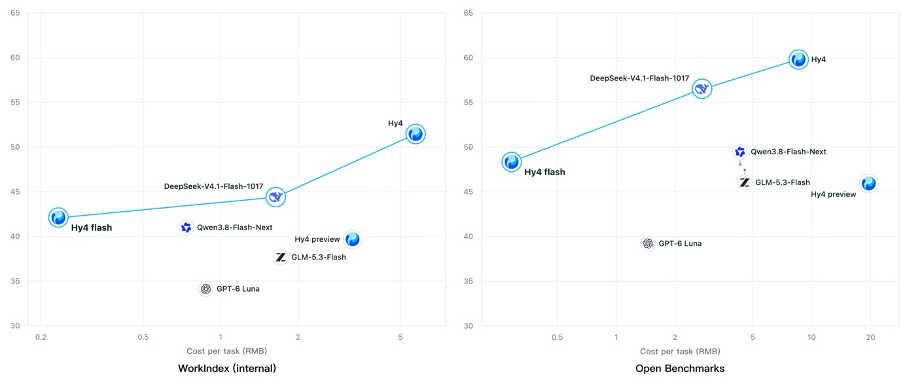
Hunyuan Hy4 Flash — Tencent's cheap 1M-context model for everyday work
Tencent's Flash-tier Hy4: a small-active MoE with a 1M-token context, built to make everyday agent work cheap and fast.
What is it?
Hunyuan Hy4 Flash is a new low-cost model in Tencent's Hy4 family, released twelve days after the full Hy4. It takes multimodal input, reads up to 1M tokens and targets deep research, document processing and computer use.
How does it work?
It is a Mixture-of-Experts with 224B total parameters and only 12B active per token. Tencent says its design shrinks the KV cache to 1/6 of Hy4's.
Why does it matter?
It costs $0.070 per million input tokens and $0.281 output, with 50% off until November 30. Tencent's benchmark and satisfaction figures are company-run, not independent. Open weights are planned but undated.
Who is it for?
Developers running high-volume agents and document workflows.
|
|
|
All releases at ai-tldr.dev
Simple explanations • No jargon • Updated daily
|
|