
|
|
MODEL
SEISMIC
2026-11-16
Qwen4-Max — Alibaba's Qwen4 flagship is live on the API at $1.50 / $4.50
Alibaba's first full Qwen4 model goes live on the API, cheaper than the Qwen3.8-Max it replaces.
What is it?
Qwen4-Max is the general release of Alibaba's next Qwen-Max flagship, five days after a Token Plan-only preview. It is the first model in the Qwen4 family, combining reasoning, native vision and long-running task execution.
How does it work?
A new Mixture-of-Experts architecture reads text, images and video with a 1M-token context window, and thinking is on by default. The endpoint speaks OpenAI Chat Completions, OpenAI Responses and Anthropic Messages formats.
Why does it matter?
Alibaba says it beats Qwen3.8-Max with up to about 50% fewer tokens, and that average cost per task drops by more than 60% (company numbers, not independently checked). Existing coding agents can switch by changing the model id.
Who is it for?
Developers running coding and office agents on a budget.
|
|

|
|
MODEL
MAJOR
2026-11-15
Sage S2.1 Flash — an open 320B model that reads molecules, spectra and EEG
A 320B open-weight model that can take a molecule, a protein or a spectrum as input, then search, code and run experiments.
What is it?
Sage S2.1 Flash is a new open-weight scientific multimodal model from Shanghai AI Lab, released under the MIT License. Besides text and images, it accepts more than ten kinds of scientific data, from molecular graphs to EEG traces.
How does it work?
It is a Mixture-of-Experts with 288 experts and 8 active per token. Dedicated encoders turn each scientific input into embeddings in the same space as text, so one backbone handles everything.
Why does it matter?
Research teams get one self-hostable model that reads lab data directly. In the lab's own table it leads Claude Opus 5 on MLE-bench Lite (90.3 vs 88.0) but trails on agentic coding (60.6 vs 76.5 on SWE-bench Pro).
Who is it for?
AI-for-science researchers, ML engineers, and teams self-hosting agents.
|
|
|
|
MODEL
MAJOR
2026-11-16
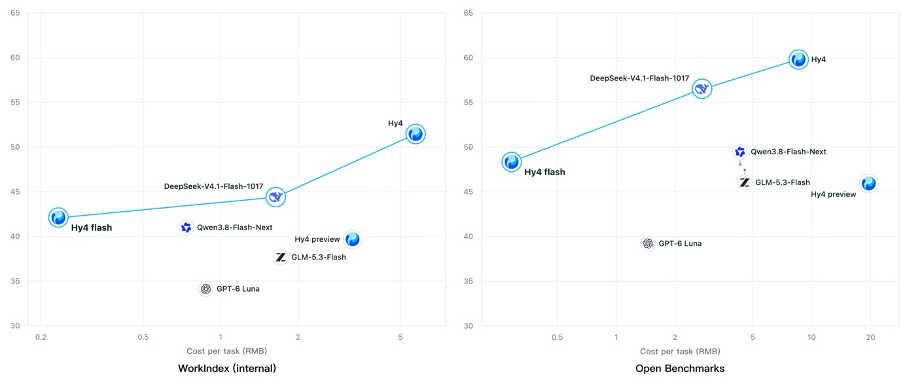
Hunyuan Hy4 Flash — Tencent's cheap 1M-context model for everyday work
Tencent's Flash-tier Hy4: a small-active MoE with a 1M-token context, built to make everyday agent work cheap and fast.
What is it?
Hunyuan Hy4 Flash is a low-cost multimodal model in Tencent's Hy4 family that reads up to 1 million tokens. It targets deep research, document processing, slides and computer use.
How does it work?
A Mixture-of-Experts with 224B total parameters but only 12B active per token. Hybrid attention, LatentMoE and Engram shrink the KV cache to 1/6 of Hy4's.
Why does it matter?
It costs $0.070 per million input tokens, and Tencent says per-task cost is 1/13 of the Hy4 preview (company-run numbers). Open weights are planned but not out yet.
Who is it for?
Developers running high-volume agents and document workflows.
|
|
|
|
TOOL
MAJOR
2026-11-16
ChatGPT for Healthcare agents — they click through hospital software
OpenAI's healthcare agents read screens, click and type across hospital and insurer software, so staff hand off paperwork.
What is it?
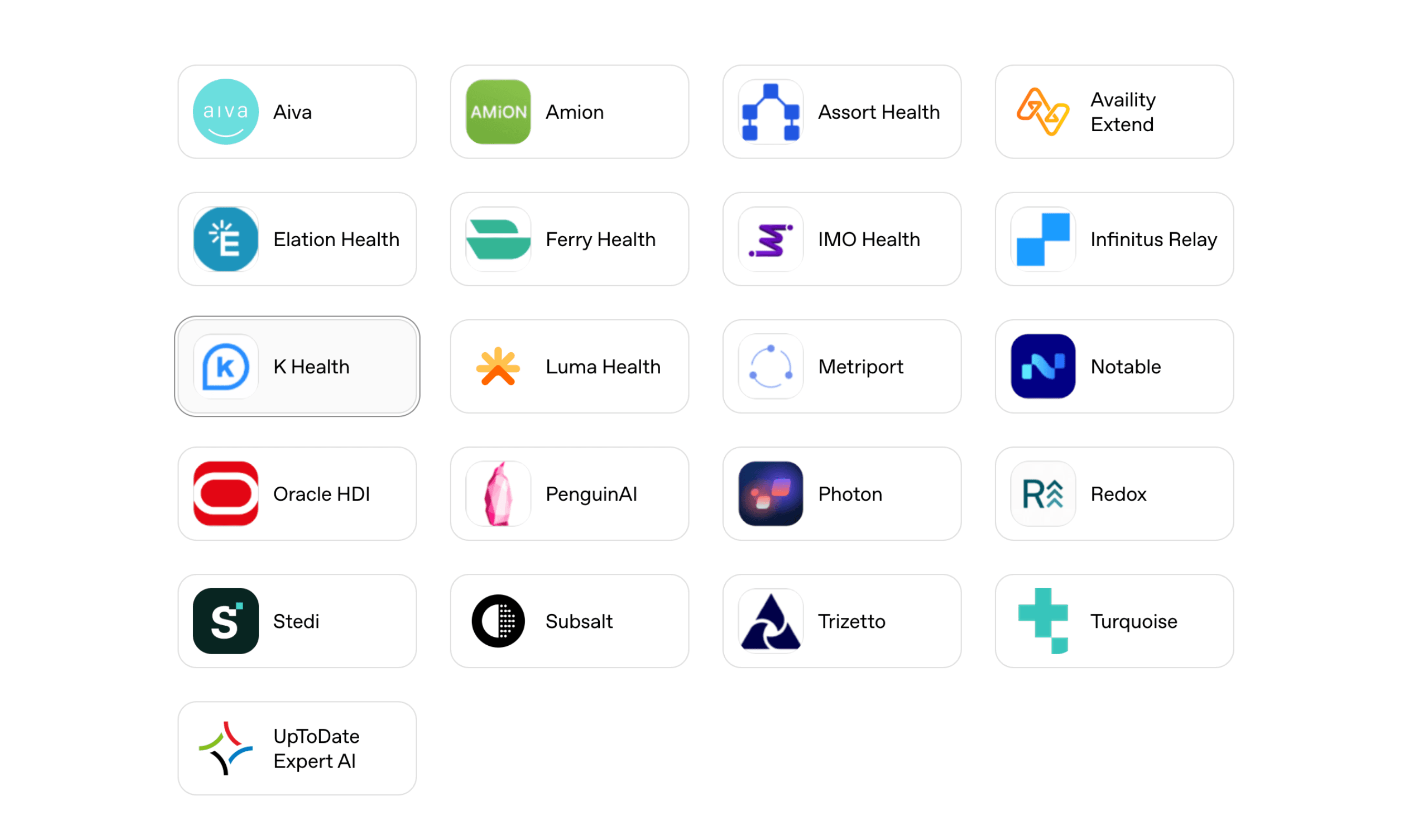
Computer-use agents are the headline of OpenAI's November 16 update to ChatGPT for Healthcare. They handle referrals, document sending and prior authorizations, and the update adds 21 healthcare plugins.
How does it work?
Instead of needing an API for every old system, the agent reads what is on screen, then clicks and types like a person. Organizations choose which apps an agent may touch and which steps need human review.
Why does it matter?
Much healthcare admin work lives in portals with no API. CVS Health and Cigna already run these agents in production workflows, so this is not only a demo.
Who is it for?
Hospital and insurer operations teams, and health IT developers.
|
|

|
|
REPO
MAJOR
2026-11-16
vLLM v0.34.0 — a bigger KV cache by default, and Model Runner V1 is gone
vLLM v0.34.0 gives most models a larger KV cache by default and makes Model Runner V2 the only GPU runner.
What is it?
A big release of the popular open-source LLM serving engine: 1,061 commits from 412 contributors and 10 new models, including Mistral Large 4.
How does it work?
The KV cache is now sized from the memory actually free after CUDA graph capture and warmup, not from an estimate. Model Runner V2 is the only GPU runner, and the old V1 switch fails at startup.
Why does it matter?
Operators get more cached tokens from the same GPUs without retuning. Check before upgrading: the default block size moves from 16 to 64 and decode latency can rise on some models.
Who is it for?
Inference and platform engineers.
|
|

|
|
TOOL
NOTABLE
2026-11-16
Claude Code 2.1.326 — Code Mode works with agent teams, sandbox tightens
Claude Code 2.1.326 brings Code Mode to agent teams and closes more paths from the shell to your credentials.
What is it?
Code Mode can now be turned on while agent teams are enabled. Remote Control replies also stream to a phone or browser as they are written.
How does it work?
Sandboxed commands on macOS, Linux and WSL no longer write to some sensitive home folders by default, and file tools refuse writes to sign-in files such as .credentials.json.
Why does it matter?
Some scripted setups will now get prompts or refusals after updating, so check them. The trade is more prompts for fewer ways an agent can reach credentials.
Who is it for?
Claude Code users and admins who manage its settings.
|
|
|
All releases at ai-tldr.dev
Simple explanations • No jargon • Updated daily
|
|