
|
|
MODEL
SEISMIC
2026-11-16
Qwen4-Max — Alibaba's Qwen4 flagship is live on the API at $1.50 / $4.50
Alibaba's first full Qwen4 model goes live on the API, cheaper than the Qwen3.8-Max it replaces.
What is it?
Qwen4-Max is the general release of Alibaba's next Qwen-Max flagship, five days after a preview. It is the first model in the Qwen4 family, combining reasoning, native vision and long-running task execution.
How does it work?
It uses a new Mixture-of-Experts architecture that reads text, images and video with a 1M-token context window. The API speaks OpenAI Chat Completions, OpenAI Responses and Anthropic Messages formats.
Why does it matter?
Alibaba says it beats Qwen3.8-Max with up to about 50% fewer tokens, though those figures are its own and not yet independently checked. Compatible API formats let existing coding agents switch by changing the model id.
Who is it for?
Developers running coding and office agents on a budget.
|
|
|
|
SHOWCASE
MAJOR
2026-11-15
GPT-6 Astra and the Standard Model — a candidate lattice definition
A physicist credits OpenAI's GPT-6 Astra with leading the proof behind a proposed lattice version of the Standard Model.
What is it?
Nathaniel Craig's paper proposes a way to put the full Standard Model of particle physics on a spacetime grid. OpenAI published his guest post on its new science blog, where he says GPT-6 Astra led the detailed proof.
How does it work?
The paper builds a gauge-invariant fermion measure for a class of theories that includes the Standard Model, and backs it with a Lean 4 formalization.
Why does it matter?
A non-perturbative definition of the Standard Model has been open for more than 25 years, Craig says. The machine-checked companion lets others test the claim instead of trusting it.
Who is it for?
Physicists, mathematicians and people tracking AI for science.
|
|
|
|
TOOL
MAJOR
2026-11-13
DeepSeek App API — web search, file input and safety checks built into the API
DeepSeek moves the tools behind its chat app into the API, so developers can rebuild the app with a few request flags.
What is it?
DeepSeek's November 13 API release gives developers the DeepSeek App's features. The deepseek-flash model gets built-in web search with citations, URL reading, file input and safety checks.
How does it work?
Developers turn features on in the request with the deepseek_web_search and deepseek_read_url tools and a safety_check level. DeepSeek's servers run the tool calls.
Why does it matter?
Teams no longer need their own search provider, scraper or document parser to build a DeepSeek-based assistant. Tool calls are billed per use on top of tokens.
Who is it for?
Developers building chatbots and agents on DeepSeek.
|
|

|
|
SHOWCASE
MAJOR
2026-11-13
Antigravity /teamwork — Google's agent teams prove an open math conjecture
Google Research reports what Antigravity's multi-agent /teamwork system has solved, and opens free access for 10,000 academics.
What is it?
Google Research published results from /teamwork, the multi-agent system inside Antigravity. The headline is a full proof of the 2013 Courtade–Kumar conjecture, made with human experts and formalized in Lean 4.
How does it work?
Specialized agents explore a problem in parallel, and automatic checkers such as the Lean 4 proof checker or a project's test suites decide which work is correct.
Why does it matter?
It moves agent teams from coding demos toward checked research results. Academics can apply for six months of free access at the highest usage tier.
Who is it for?
Mathematicians, CS researchers and developers using Antigravity.
|
|
|
|
ECOSYSTEM
MAJOR
2026-11-13
OpenAI reorganizes its robotics team — general models take over robot work
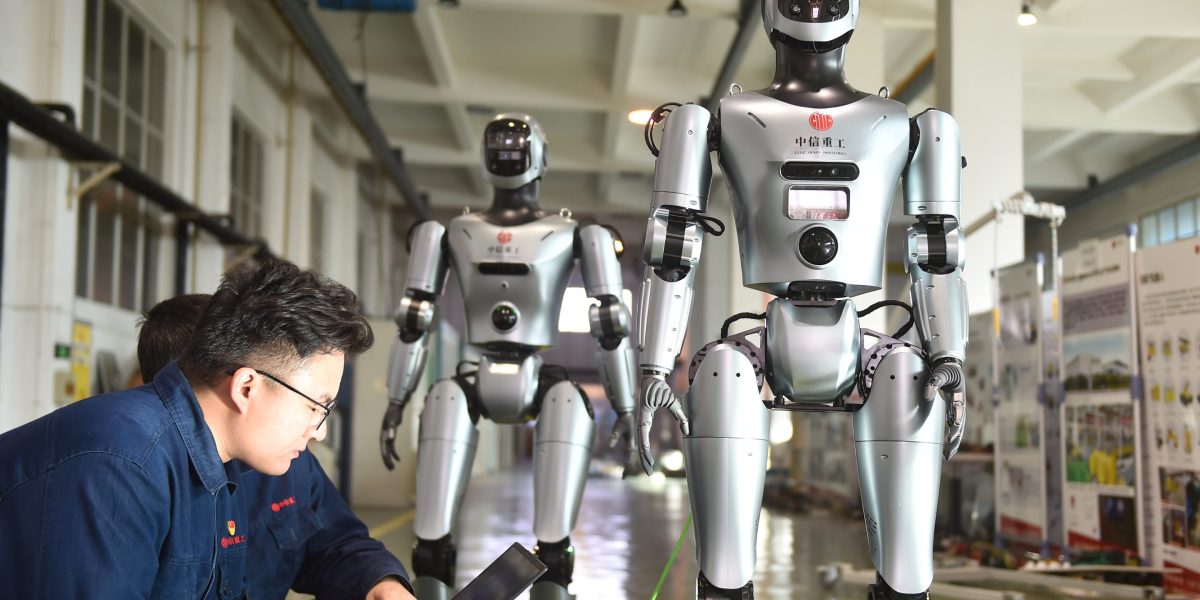
OpenAI folded its robotics team into its main research and applied groups, betting that general models can run robots.
What is it?
OpenAI has reorganized its standalone robotics team, Fortune reported on November 13. An OpenAI spokesperson confirmed the change and framed it as a move to speed up, not pull back.
How does it work?
The robotics research group joins the main research team, and the applied robotics and hardware groups go to the Applied organization. The idea is that one general model, such as GPT-6 Astra, can control robots directly.
Why does it matter?
It signals that a top lab expects general models to cover robot control. Experts quoted by Fortune disagree on how far that goes.
Who is it for?
Robotics teams and AI strategists.
|
|
|
|
TOOL
NOTABLE
2026-11-15
Apple Health AI Usage Study — an OpenEvidence app for 200,000 iPhone users
Apple tests how people trust and use AI health answers, with a study app built on OpenEvidence.
What is it?
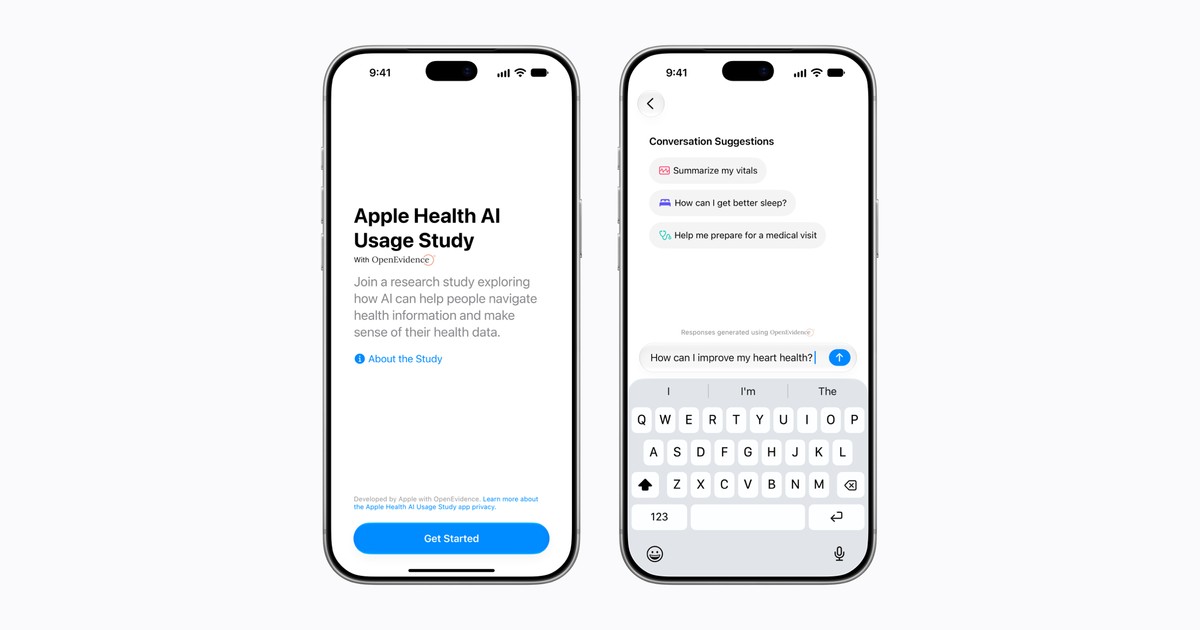
A virtual research study with its own iPhone app, made with the clinical AI company OpenEvidence. Participants ask health questions and get plain-language answers with linked peer-reviewed citations.
How does it work?
People enroll in the Apple Health AI Study App, and answers can draw on HealthKit data the participant chooses to share. The app suggests following up with a provider for certain concerning questions.
Why does it matter?
Apple is studying health AI at scale before shipping a health chatbot of its own. Apple has not said when results will come.
Who is it for?
US iPhone users, health-AI researchers and clinicians.
|
|
|
All releases at ai-tldr.dev
Simple explanations • No jargon • Updated daily
|
|