|
|
TOOL
MAJOR
2026-11-13
DeepSeek App API — web search, file input and safety checks built into the API
DeepSeek moves the tools behind its chat app into the API, so developers can rebuild the app with a few request flags.
What is it?
DeepSeek's November 13 API release gives developers the same features as the DeepSeek App. The deepseek-flash model (V4.1-Flash) gets built-in web search, URL reading, file input and safety checks.
How does it work?
Developers turn the features on in the request, and DeepSeek's servers run the tool calls and assemble the context. It works on the Messages, Responses and Chat Completions endpoints.
Why does it matter?
Teams no longer need their own search provider, scraper or document parser to build a DeepSeek-based assistant. Tool calls are billed per use on top of tokens.
Who is it for?
Developers building chatbots and agents on DeepSeek.
|
|

|
|
SHOWCASE
MAJOR
2026-11-13
Antigravity /teamwork — Google's agent teams prove an open math conjecture
Google Research reports what Antigravity's multi-agent /teamwork system has solved, and opens free access for 10,000 academics.
What is it?
Google Research published results from /teamwork, the multi-agent system inside Antigravity. The headline is a full proof of the 2013 Courtade–Kumar conjecture, made with human experts and formalized in Lean 4.
How does it work?
Specialized agents explore a problem in parallel, and automatic checkers such as the Lean 4 proof checker decide which work is correct.
Why does it matter?
Agent teams move from coding demos toward checked research results. Academics can apply for six months of free access at the highest usage tier.
Who is it for?
Mathematicians, CS researchers and developers using Antigravity.
|
|
|
|
TOOL
MAJOR
2026-11-13
ChatGPT Wallet — OpenAI's agents can now buy things for you
OpenAI gives its agents a way to pay, with a one-time-use card token and your approval on every order.
What is it?
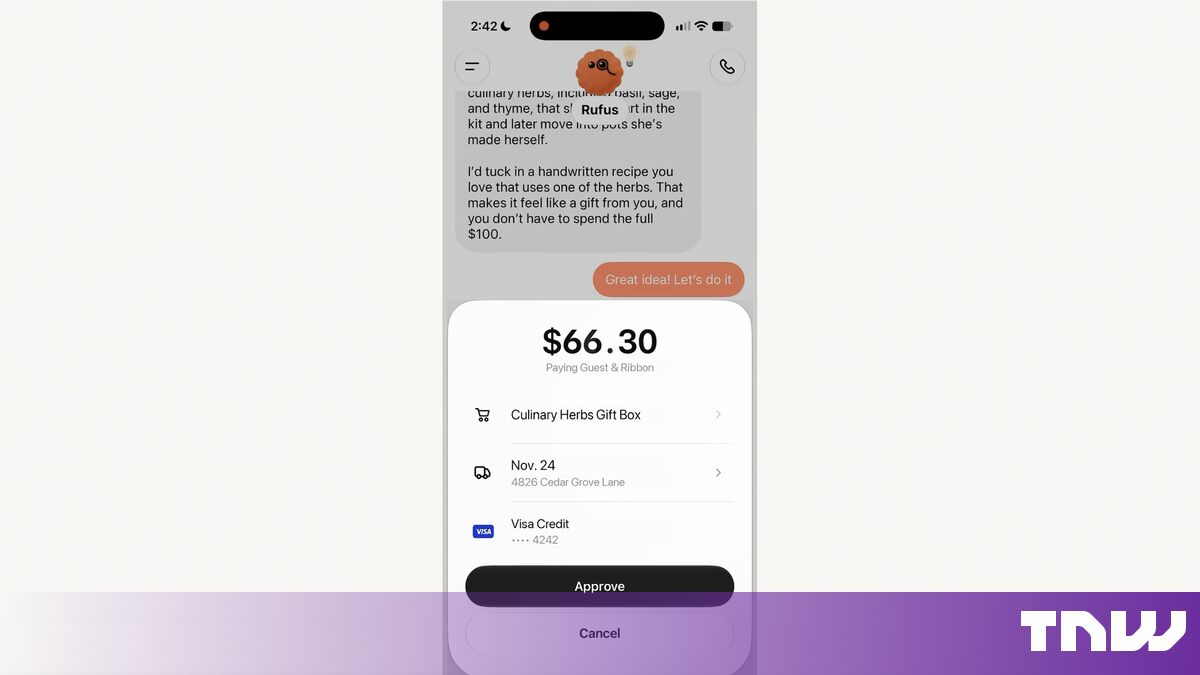
ChatGPT Wallet lets OpenAI's agents in ChatGPT Work, Codex and dots finish a purchase for you. You add a card once, then review the items, total and card before you approve.
How does it work?
After a biometric check, the card network issues a payment token that stands in for your real card. OpenAI says neither the agent nor the merchant sees the real card details.
Why does it matter?
Payment was the missing step for shopping agents, and the token design keeps card numbers away from the model. Whether merchants accept agent orders is still open.
Who is it for?
US ChatGPT Pro users and online merchants.
|
|

|
|
TOOL
MAJOR
2026-11-13
llama.cpp v1.0.0 — first stable release, with semantic versioning
The local inference engine behind much of open-model AI makes its first stable release and promises clear version rules.
What is it?
llama.cpp v1.0.0 is the first stable release of the C/C++ engine that runs open models locally, shipped with ggml v1.0.0. The project is 3.5 years old and supports more than 150 architecture variants.
How does it work?
The release removes 36 deprecated API functions and adds an FP8 KV cache and an OpenAI-compatible /v1/audio/speech endpoint in llama-server.
Why does it matter?
Version numbers now signal breakage, so downstream apps and bindings can pin to 1.x and upgrade safely. Code that calls any removed function will not compile.
Who is it for?
Local LLM users and developers embedding libllama.
|
|
|
|
ECOSYSTEM
MAJOR
2026-11-13
OpenAI disbands its robotics team — general models take over robot work
OpenAI folded its robotics team into its main research and applied groups, betting that general models can run robots.
What is it?
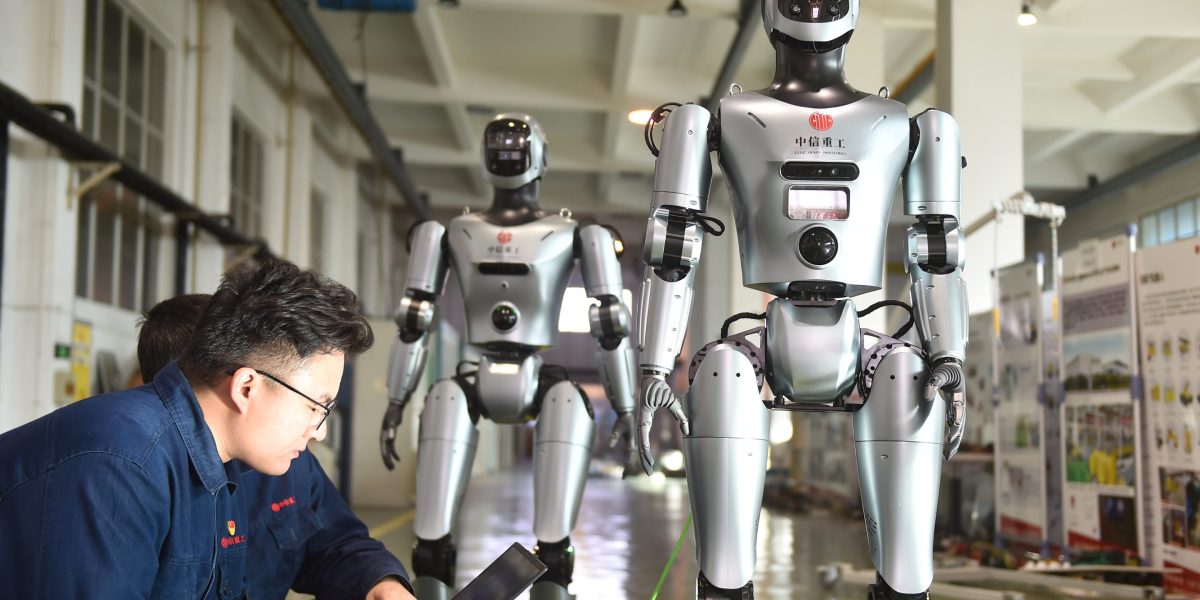
OpenAI has disbanded its standalone robotics team, Fortune reported on November 13, 2026. An OpenAI spokesperson confirmed the change and said robotics stays a core part of its long-term vision.
How does it work?
Robotics researchers join the main research team under Mark Chen, and applied robotics and hardware move to the Applied organization under Greg Brockman.
Why does it matter?
It signals that a top lab expects one general model, such as GPT-6 Astra, to control robots directly. Experts quoted by Fortune disagree on how far that goes.
Who is it for?
Robotics teams and AI strategists.
|
|

|
|
SHOWCASE
MAJOR
2026-11-13
Gödel's notebooks — Claude finds 663 theorems in 1,009 shorthand pages
Claude turned a slow, page-a-week reading of Gödel's private workbooks into a full catalogue of his unpublished theorems.
What is it?
Kurt Gödel's 16 workbooks from the early 1940s hold 1,009 pages, much of it in obsolete German shorthand. With Claude, Helsinki's Jan von Plato now has a list of 663 theorems Gödel proved, sketched or had an idea for.
How does it work?
Von Plato gave Claude his transcriptions plus six of his own books and checked the 650-page digest by hand. He then tested the results in Coq: about 400 held, 200 needed repair and 50 were false.
Why does it matter?
Long-context reading let the model connect all thousand pages at once, and a proof checker sorted real results from false ones.
Who is it for?
Mathematicians, historians of science and anyone using AI on archives.
|
|
|
|
ECOSYSTEM
MAJOR
2026-11-13
Claude outage — login failures, then API errors hit claude.ai and Claude Code
Two back-to-back Claude incidents on 13 November locked users out, then broke the API and connectors.
What is it?
Anthropic's status page logged two separate Claude incidents on 13 November 2026. Sign-ins to claude.ai and Claude Code failed from 09:58 UTC, then claude.ai, the API and Claude Code returned elevated errors from 13:09 UTC.
How does it work?
A fix for the login problem went out at 11:05 UTC. In the afternoon incident, errors spread to connectors and Managed Agents before returning to normal at 15:33 UTC.
Why does it matter?
Teams running coding agents lost about four and a half hours of service. Anthropic says scheduled tasks ran over two hours late and some were skipped, so check that yours ran.
Who is it for?
Teams that depend on Claude, Claude Code or the Claude API.
|
|
|
All releases at ai-tldr.dev
Simple explanations • No jargon • Updated daily
|
|