|
|
MODEL
SEISMIC
2026-11-09
Claude Fable 5.2 — Anthropic's new top model, $8/$40 and 30% faster
Anthropic's top-end Claude gets 20% cheaper, up to 30% faster, and jumps on agentic coding and knowledge-work tests.
What is it?
Claude Fable 5.2 is the new generally available model in Anthropic's Mythos class, replacing Fable 5.1. Claude Mythos 5.2 is the same model with lighter safeguards, open only to vetted cybersecurity and biomedical organizations.
How does it work?
Anthropic reports FrontierSWE v2 rising from 56.3% to 69.9% and Remote Labor Index from 17.9% to 41.3%. Output is up to 30% faster, and an optional fast mode raises generation speed up to 2.5 times at double the price.
Why does it matter?
Teams on Fable 5.1 get a faster, more capable model at a lower list price, and fewer false refusals on security and biology work. Advisor and Orchestrator roles let Fable 5.2 steer cheaper models in multi-agent setups.
Who is it for?
Teams running agentic coding, research and knowledge-work jobs.
|
|

|
|
TOOL
MAJOR
2026-11-10
Gemini for healthcare — Google Cloud's agent for clinical and payer work
Google Cloud's Gemini agent for hospitals and health plans, now in U.S. preview.
What is it?
An industry version of Google's Gemini agent for health systems and health plans. It reads records from many systems and carries out multi-step tasks like building a patient timeline or assembling a prior authorization packet, with humans in the loop.
How does it work?
Expert-written skills, connectors to EHR, claims and admin systems, and a governed platform with model choice. Connectors keep existing access rules, and the Epic and Oracle Health connectors are read-only.
Why does it matter?
Google cites a 2024 study finding clinicians lose nearly 28 hours a week to paperwork, and an agent can do the first pass. Google also says clinical data and outputs are never used to train its foundation models.
Who is it for?
Hospital IT teams, health plans and healthcare integrators.
|
|

|
|
ALGORITHM
MAJOR
2026-11-10
AlphaProof Code — DeepMind AI verifies the Signal protocol's code
A multi-LLM agent system that produces machine-checked Lean proofs that real software is correct.
What is it?
A multi-LLM agentic framework from Google DeepMind for formal verification, which means mathematically proving that code does what its specification says. DeepMind used it on the code behind the Signal protocol.
How does it work?
Humans and models turn Signal's security goals into specifications that experts review. Gemini Carbon agents then write the proofs in Lean, which checks them automatically against the compiled code.
Why does it matter?
Verifying code this deep normally takes expert teams years, and DeepMind reports four weeks. The system generated over six million lines of Lean, and humans reviewed about one percent of the codebase.
Who is it for?
Security engineers and cryptography and formal-methods researchers.
|
|

|
|
MODEL
MAJOR
2026-11-10
LongCat-2.5 — Meituan opens weights of its 1.6T agentic model
Meituan's LongCat-2.5 puts a 1.6T multimodal agent model on Hugging Face under the MIT license.
What is it?
Meituan's native multimodal mixture-of-experts model for long-horizon agentic tasks. The weights are now on Hugging Face under the MIT license, and it succeeds LongCat-2.0.
How does it work?
It has 1.6 trillion total parameters and about 48 billion active per token, with hybrid thinking and non-thinking modes. The model card says the expert weights are quantized to W4A4.
Why does it matter?
Open weights at this size with a permissive license give teams a self-hostable agent model. The benchmark scores are self-reported, so independent tests still need to confirm them.
Who is it for?
Agent builders and teams that self-host large models.
|
|
|
|
MODEL
MAJOR
2026-11-09
Muse Ember — Meta's smallest Muse model for agent sub-tasks
Muse Ember is Meta's cheapest Muse model, made to run the many small steps inside an AI agent.
What is it?
The smallest and most efficient model in Meta's Muse family. It targets tool calls, coding subtasks, routing, extraction and long-document parsing, reading up to 1M tokens.
How does it work?
Meta says it is the first model trained using Muse Wonder Full, its larger frontier setting. Developers call it through the Meta Model API as muse-ember-1.0, or use it inside Muse Code.
Why does it matter?
At $0.10 in and $0.50 out per million tokens, Meta pitches Ember against Claude Haiku 5.5 and GPT-6 Luna. It reports 33.8% on OSWorld 2.1 (binary) and leads on most of its agent tests.
Who is it for?
Developers building high-volume AI agents.
|
|
|
|
SECURITY
MAJOR
2026-11-09
OpenAI Control Room — a fail-closed off switch for research model workloads
OpenAI moved its emergency stop into the inference layer, so a halted research job cannot get another token from any model.
What is it?
OpenAI's central service for tracking model workloads across its research infrastructure and stopping them when a safety or security concern comes up. It covers every research inference workload, including agentic sampling for training and evaluation.
How does it work?
A workload gets a job_id and passes it with every sampling request, and the inference engine checks with Control Room before serving each one. When a monitor sends a stop message, the job's next request to any model on any engine is denied.
Why does it matter?
Enforcement sits in the few inference code paths instead of fast-changing workload code. It is a concrete pattern for other labs: one authorization service per job, checked at the model, that denies everything when it is unavailable.
Who is it for?
AI safety, platform and security engineers.
|
|
|
|
ECOSYSTEM
MAJOR
2026-11-09
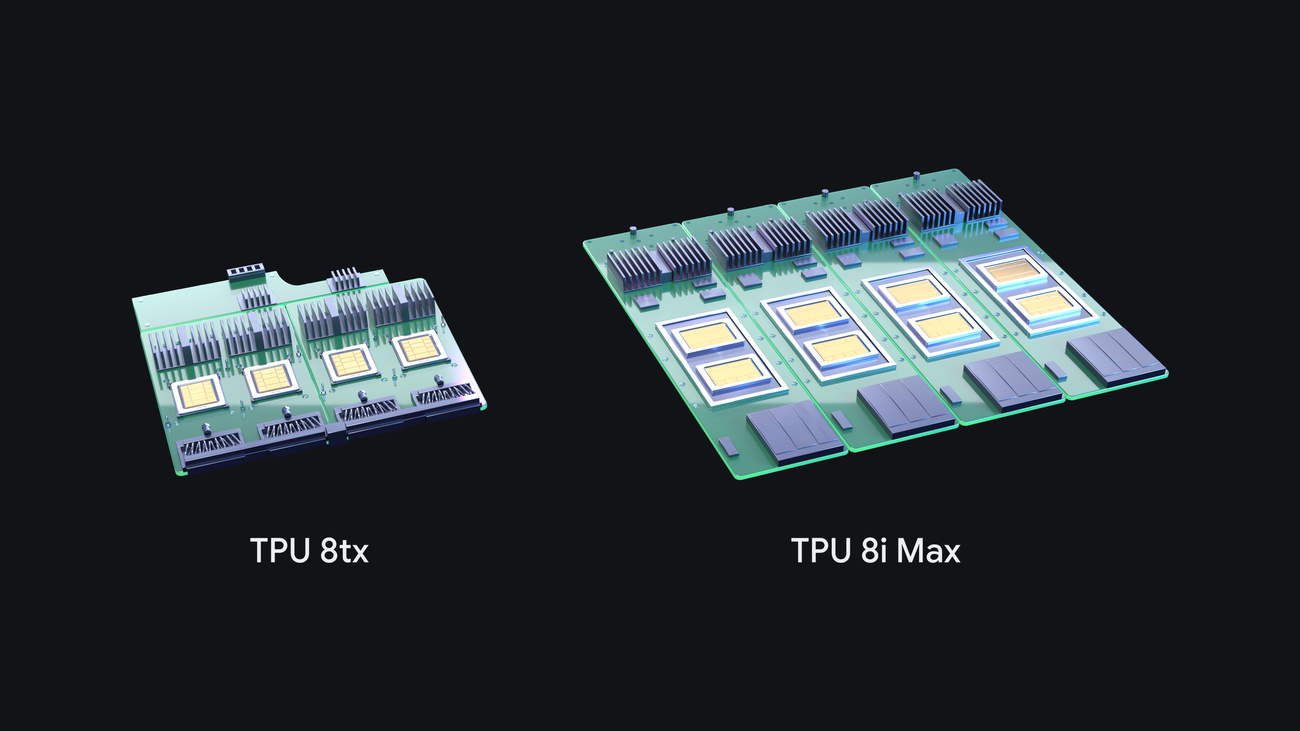
TPU 8tx and TPU 8i Max — Google adds a confidential TPU and a dual-chip TPU
Google's TPU line gets a secure inference system for sensitive data and a denser chip for very long context.
What is it?
Two new systems in Google's eighth TPU generation. TPU 8tx is built for confidential inference and small-scale training, and TPU 8i Max combines two TPU 8i chips on one package for massive context windows.
How does it work?
TPU 8tx pairs TPU 8t silicon with 5th Gen AMD EPYC hosts and protects data and model weights with hardware-level isolation while in use. The dual-chip 8i Max fits twice the silicon in the same rack footprint as TPU 8i.
Why does it matter?
Regulated companies and governments can run frontier or proprietary models next to their most sensitive data without leaving the hardware enclave. Google also shipped agent software, including an open-source TPU agent suite in preview and the TPU Sync library.
Who is it for?
AI infrastructure teams and Google Cloud customers.
|
|
|
SECURITY
MAJOR
2026-11-09
Fireworks AI's October breach grew: billing data, datasets and unfinished weights
Fireworks AI's October breach turned out bigger: billing data, and for some customers, datasets and unfinished fine-tuned weights.
What is it?
Fireworks AI published an update on 9 November 2026 to its October security incident. A second intrusion on 24 October reached account and billing information, and for a limited set of accounts also stored secrets, datasets and incomplete model weights.
How does it work?
A third-party cloud provider hosting Fireworks' R&D machines was hacked on 23 October, and the attacker used that access the next day to run an unauthorized workload. Fireworks links it to a group doing "LLMJacking" — stealing model access and reselling tokens.
Why does it matter?
Teams that fine-tune on Fireworks may have had private training data and partly trained weights exposed. Self-serve dataset uploads and downloads are off during the investigation.
Who is it for?
Teams that fine-tune or serve models on Fireworks AI.
|
|
|
All releases at ai-tldr.dev
Simple explanations • No jargon • Updated daily
|
|