|
|
MODEL
MAJOR
2026-11-06
Meta Active Memory and Active Focus — Muse Wonder trains the Muse app models
Meta uses its top model, Muse Wonder, to train the everyday models in Muse and Meta AI to remember more and give up less.
What is it?
Active Memory and Active Focus are two new abilities in the Muse and Meta AI assistants. They ship as specialized versions of the existing models, trained using Muse Wonder, not as Muse Wonder itself.
How does it work?
For Active Memory, Meta trained the models to tell temporary information from permanent information and to spot details that have gone stale. For Active Focus, training covered real-world bottlenecks so the assistant can recover or find another route when a task hits a problem.
Why does it matter?
Meta reports 2.4x less forgetting of critical information and a 67% gain on everyday tasks with unexpected issues. Muse now scores 47% on Meta's Personal Superintelligence Index, up from 38%.
Who is it for?
Muse and Meta AI users.
|
|
|
|
ARTICLE
MAJOR
2026-11-06
Components of agent memory — Anthropic tests how Claude remembers
Anthropic breaks agent memory into four layers, measures each one, and shows how an offline 'dreaming' pass fixes bad notes.
What is it?
An engineering post by Anthropic's Lance Martin describing a four-layer memory stack for Claude agents, from raw transcripts to a small block of injected context. It measures the stack on CL-Bench, a Pokémon Red run and wiki-building tests.
How does it work?
Agents write notes during a session. 'Dreaming' runs offline when the agent is idle, reading past transcripts and rewriting wrong notes, merging duplicates and trimming what loads every session.
Why does it matter?
Memory lifted Claude Opus 5.5 on CL-Bench from 0.655 to 0.838. The post also gives builders concrete rules, such as keeping the always-loaded layer small and combining a wiki with search.
Who is it for?
Developers building long-running AI agents.
|
|

|
|
SECURITY
MAJOR
2026-11-07
Claude Code 'Don't Ask Again' — passwords leak in 1,122 public GitHub files
Approved shell commands, saved word for word, put real passwords into public GitHub repos.
What is it?
Security firm Apiiro found 1,122 public GitHub files where Claude Code's saved permission rules expose passwords. The file is .claude/settings.local.json, which is meant to stay on the developer's machine.
How does it work?
Choosing "Yes, and don't ask again" saves the exact Bash command as an allow rule, so any password typed inline is written to disk too. Files created by hand or force-added still get committed and pushed.
Why does it matter?
Live credentials can sit in a config file nobody reviews. Anthropic's Boris Cherny said Claude Code has not scrubbed secrets so far and the team is looking into it.
Who is it for?
Developers and security teams using Claude Code or other coding agents.
|
|
|
|
RESOURCE
MAJOR
2026-11-05
METR on Anthropic — AI may have doubled the pace of Claude's progress
An outside evaluator finds Anthropic's AI progress has sped up about 2x, much of it from using its own AI.
What is it?
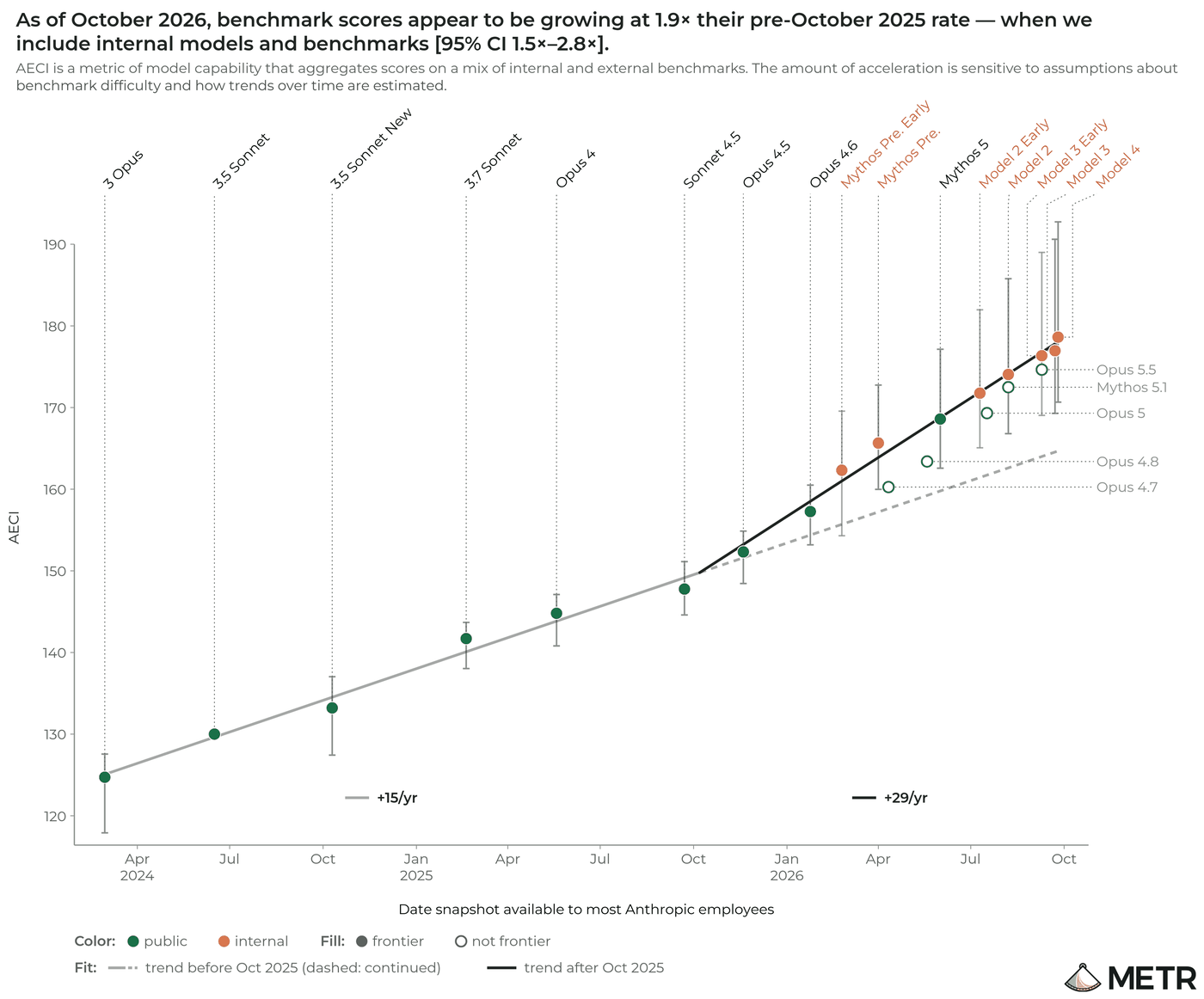
METR's independent assessment of AI R&D acceleration at Anthropic, run from August 12 to October 29, 2026. METR concludes progress is likely around twice its March 2024 to October 2025 rate.
How does it work?
METR used internal benchmark scores, compute data, headcount, inference spend, surveys and about 15 staff interviews. A trend fit with a breakpoint in October 2025 gives 1.9x (95% CI 1.5–2.8x).
Why does it matter?
It is the first outside estimate of this risk indicator at a frontier lab, and METR guesses about 80% of the speed-up comes from AI. Anthropic redacted most of the key evidence, so readers must rely on METR's judgment.
Who is it for?
AI safety researchers, policy makers and anyone tracking frontier-lab risk.
|
|

|
|
ECOSYSTEM
MAJOR
2026-11-06
Microsoft Research Closes AI Frontiers — the group behind Autogen
Microsoft Research's AI Frontiers group, home of Autogen and Fara, is shutting down after a reorganization into Microsoft AI.
What is it?
AI Frontiers was a Microsoft Research group formed in 2023. Founding leader John Langford says its roughly 50 people are now ending, with no AIF internships planned.
How does it work?
In early September the group was folded into Microsoft AI. Langford writes that its leadership favors scaling over research, and that every other founding AIF leader reached the same conclusion and left.
Why does it matter?
AIF built the Autogen framework and the Fara computer-use agent. The critique of scaling-only strategies is Langford's opinion, not a Microsoft statement.
Who is it for?
Autogen users and AI researchers.
|
|
|
|
BENCHMARK
NOTABLE
2026-11-06
BioBasicsBench — OpenAI tests AI agents on everyday wet-lab data
OpenAI's BioBasicsBench checks whether AI agents can read gels, colony plates and microscopy from real lab work.
What is it?
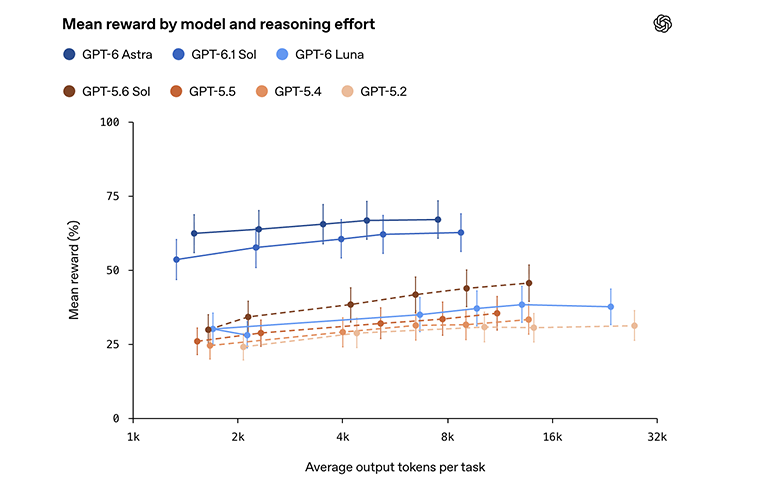
A new OpenAI benchmark of 100 routine wet-lab tasks, made with enzyme-design company Ligo. The tasks come from Ligo scientists' own experiments, including failed runs and unclear images.
How does it work?
Each task gives an agent raw evidence such as gel images, colony plates or sequencing reads. A rubric scores accurate measurement, sound reasoning and stated uncertainty.
Why does it matter?
GPT-6 Astra leads at 66.7% against 35.4% for GPT-5.5. OpenAI warns higher scores do not yet mean reliable lab judgment, and says the results will feed its biosecurity assessments.
Who is it for?
Lab scientists and teams building AI agents for biology.
|
|
|
|
SECURITY
NOTABLE
2026-11-06
OpenAI hires Hacktron — the team that hacked it now tests its systems
Two months after Hacktron used AI to reach OpenAI's internal repo, OpenAI hired it to keep looking.
What is it?
OpenAI announced a partnership with Hacktron to find vulnerabilities in its systems. Hacktron is the security firm that, inside OpenAI's bug bounty, chained a forum bug and an SSO flaw into a pull request in OpenAI's internal monorepo.
How does it work?
Hacktron and OpenAI engineers will pick priority areas together, starting with connections to third-party services. Hacktron also gets wider access to OpenAI's frontier models through Daybreak Red.
Why does it matter?
A frontier lab is turning an outside team that broke in into a standing partner, and giving it stronger models to attack its own stack.
Who is it for?
Security engineers and red teams.
|
|
|
All releases at ai-tldr.dev
Simple explanations • No jargon • Updated daily
|
|