|
|
ECOSYSTEM
MAJOR
2026-11-10
Anthropic IPO terms — $70 to $78 a share, $26B from seven chip and cloud firms
Anthropic sets the price range for its Nasdaq listing, and seven chip and cloud suppliers commit $26B.
What is it?
Anthropic's IPO roadshow began on November 10, 2026, offering 825 million Class A shares at an expected $70 to $78 each on Nasdaq under the ticker ANT.
How does it work?
An amended S-1 adds a private placement: AMD, Broadcom, Google, Micron, Microsoft, Nvidia and TSMC agreed to buy $26 billion of Class N stock at the IPO price.
Why does it matter?
The companies that sell Anthropic its chips and cloud capacity become large shareholders, tying Claude's compute supply more tightly to its owners.
Who is it for?
Claude customers, investors and AI industry watchers.
|
|
|
TOOL
MAJOR
2026-11-10
Businesses in ChatGPT — claim your listing and run a Business Agent
OpenAI gives companies a verified profile in ChatGPT, usage insights and their own customer-facing agent.
What is it?
A new beta that lets a company claim its listing in ChatGPT through Business Hub. After verification, it can update details and add product feeds with prices and stock.
How does it work?
Eligible firms can build, test and launch a Business Agent that answers product questions, started from the business's ChatGPT profile and clearly labeled.
Why does it matter?
Businesses had no official way to correct their information in ChatGPT. Business Hub shows mentions, clicks and discovery topics, without sharing users' conversations.
Who is it for?
Online stores, service businesses and marketers.
|
|
|
|
ARTICLE
MAJOR
2026-11-09
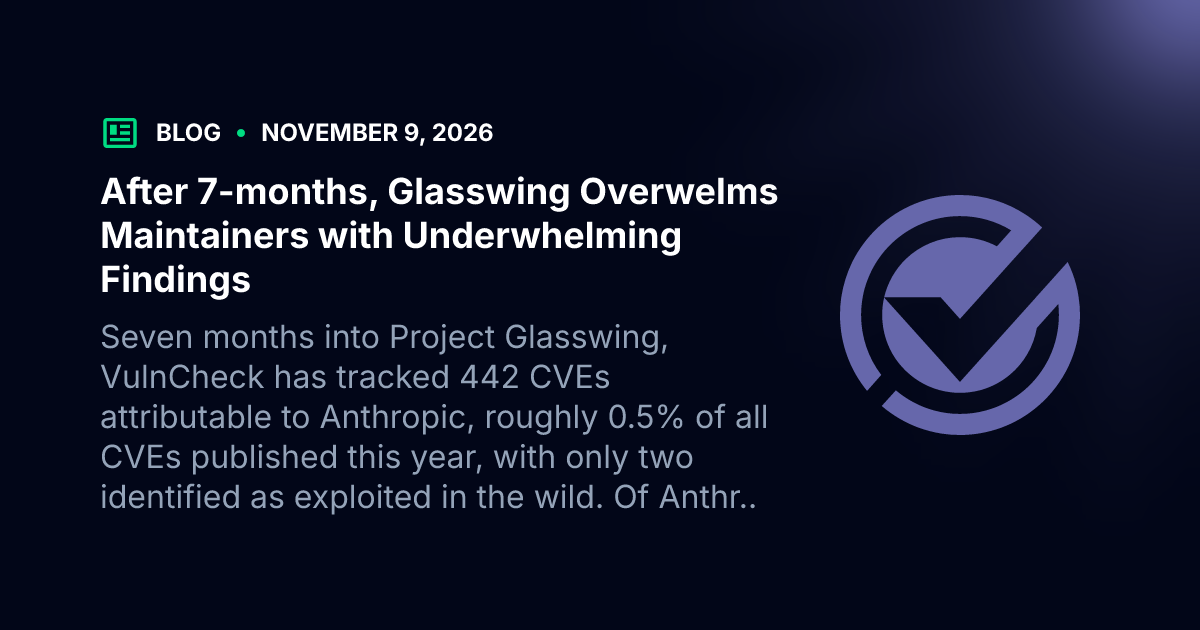
VulnCheck on Glasswing — 442 CVEs, 2 exploited, maintainers carry the triage
A seven-month audit of Project Glasswing finds many findings, few fixes and almost no exploited bugs.
What is it?
VulnCheck counts the CVEs crediting Anthropic's research team since April 2026: 442, about 63 a month and roughly 0.5% of all CVEs published in 2026.
How does it work?
The count combines CVE records, advisories, Linux kernel commits and Anthropic's disclosure ledger, then matches each CVE against VulnCheck's list of exploited bugs.
Why does it matter?
The audit suggests the numbers look bigger than the impact so far, and that unreviewed AI reports cost maintainers time.
Who is it for?
Security teams and open-source maintainers.
|
|
|
|
TOOL
NOTABLE
2026-11-10
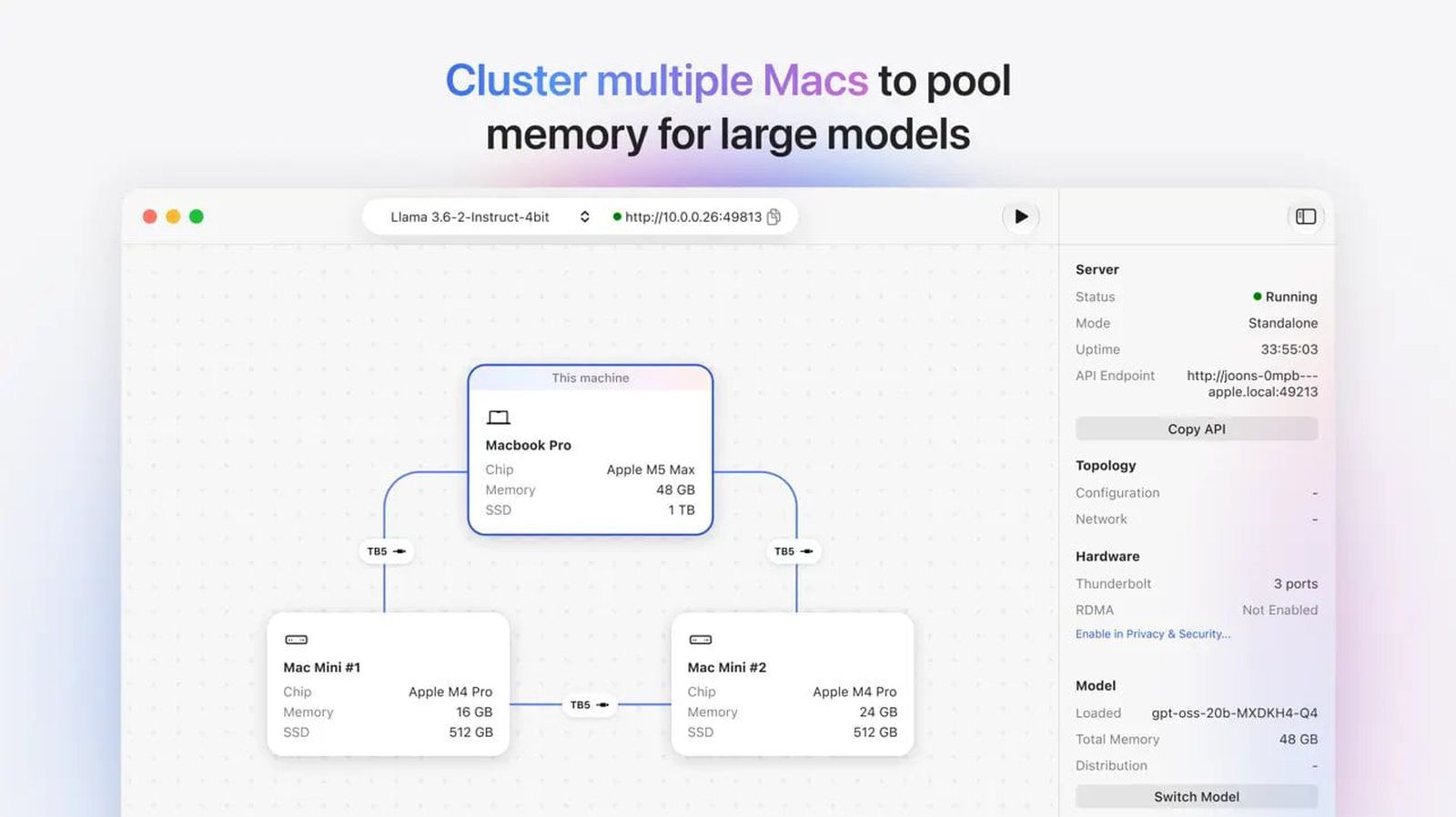
Claris Harbor — Apple's Claris tests a private AI server for Macs
Apple's Claris is testing an app that runs open-weight models on your own Macs, alone or as a Thunderbolt 5 cluster.
What is it?
A new app from Claris that turns Apple silicon Macs into a private inference server for open-weight models. It is in private preview with early-access sign-up.
How does it work?
Harbor detects other Thunderbolt 5 Macs and clusters them to pool unified memory. Models are browsed, downloaded and loaded in the app, with no command line.
Why does it matter?
An Apple-made app with no per-token billing, keeping prompts on company hardware, could make local inference normal for small businesses. No price or launch date yet.
Who is it for?
Mac-based teams that want to run open-weight models on their own hardware.
|
|
|
|
ARTICLE
NOTABLE
2026-11-09
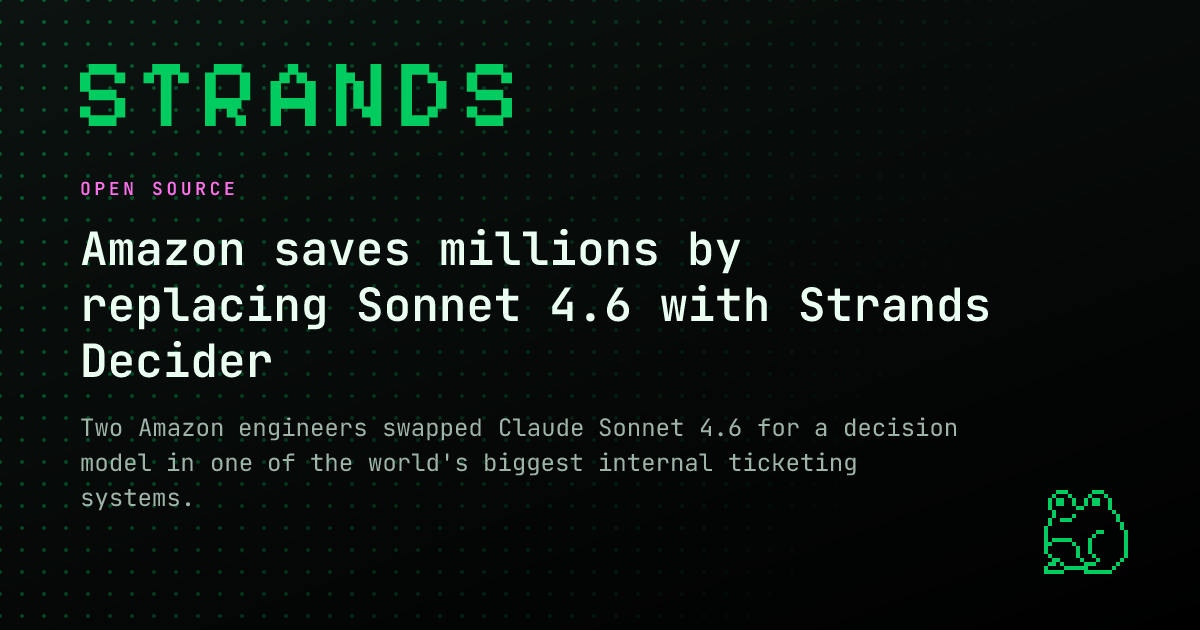
Amazon swaps Claude Sonnet 4.6 for Strands Decider — ticket labels 98% cheaper
An Amazon ticketing team moved a 20-label classification job from Sonnet 4.6 to a small decision model and cut cost by about 44x.
What is it?
Two Amazon engineers describe replacing Claude Sonnet 4.6 with Strands Decider, a decision model from AWS Strands Labs, to label internal tickets.
How does it work?
A decision model returns a probability for each fixed option plus a confidence score instead of writing text. It runs on SageMaker behind an SQS queue and a Lambda function.
Why does it matter?
Cost per million tickets fell from $22,200 to about $500 and average call time from 4,215 ms to 897 ms, a hard-number case for small models on closed-choice jobs.
Who is it for?
Teams running LLM classification agents at scale.
|
|

|
|
TOOL
NOTABLE
2026-11-10
Modern Web Guidance 1.0 — Chrome skills that modernize agent-written web code
Chrome's skill pack teaches coding agents to use modern web features instead of 2019-era patterns.
What is it?
A set of skills from the Chrome team, built with Edge, Firefox and MDN, giving coding agents current web platform guidance. Version 1.0.0 shipped on 10 November.
How does it work?
The skill has the agent call a local CLI: search matches the query to a guide offline, then retrieve loads code patterns, gotchas and fallbacks into context.
Why does it matter?
Agents often default to older solutions even when the browser has a native feature. A legacy-scan command also flags outdated patterns in an existing codebase.
Who is it for?
Front-end developers using coding agents.
|
|

|
|
TOOL
NOTABLE
2026-11-10
Gemini Intelligence November update — Android widgets from a prompt
Google's November update brings prompt-built widgets, phone help by voice and more countries for task automation.
What is it?
Create My Widget builds a home-screen widget from a plain description, pulling from Gmail, Calendar and Search. Device Assistance lets you ask the phone to fix settings.
How does it work?
The November Pixel Drop turns Gemini Intelligence on for the Pixel 10 series, adding Rambler voice typing in Gboard and multi-step tasks. Device Assistance needs Android 17 or later.
Why does it matter?
Task automation now reaches the UK, India and Japan, and the motorola signature 27, Motorola's first Gemini Intelligence phone, opens for U.S. pre-order on November 19.
Who is it for?
Android and Pixel users.
|
|
|
All releases at ai-tldr.dev
Simple explanations • No jargon • Updated daily
|
|