|
|
MODEL
MAJOR
2026-11-05
GPT-6 Cyber — OpenAI's new security model for Daybreak Red
OpenAI's GPT-6 Cyber is a cyber-tuned GPT-6 Astra that refuses less on authorized exploit work and stays inside its scope.
What is it?
A cybersecurity version of GPT-6 Astra, released on 5 November 2026 for authorized work such as vulnerability discovery, exploit development and web pentesting. It follows GPT-5.6-Cyber, which OpenAI says it beats by a wide margin.
How does it work?
OpenAI post-trained GPT-6 Astra to raise its security skills and cut refusals, while teaching it to keep within the user's authorized scope. Extra checks cover high-risk targets such as industrial controls and election systems.
Why does it matter?
It scores 48.45% on ExploitGym against 42.43% for Astra, priced at $20 / $100 per million tokens. OpenAI rates it Critical for cybersecurity, so access stays behind identity checks, hardware keys and IP allowlists.
Who is it for?
Approved security researchers and red teams.
|
|
|
|
MODEL
MAJOR
2026-11-05
Inkling 2 Small — Thinking Machines' 594B MoE, weights due next week
Thinking Machines' second-generation model is a 594B MoE with 17B active parameters, live on Tinker.
What is it?
The first model of Thinking Machines Lab's second Inkling generation: a sparse mixture-of-experts transformer with 594B total and 17B active parameters. It reads text and images and handles context up to 1M tokens.
How does it work?
It was pretrained natively in NVFP4 on NVIDIA GB300 NVL72 racks. Long tasks use compaction, so agents can work past the 256K training context.
Why does it matter?
It scores 31 on the Artificial Analysis Intelligence Index. Apache 2.0 weights are planned for next week, after safety testing, which would give teams a US open-weight base to fine-tune.
Who is it for?
Teams fine-tuning open models and coding-agent builders.
|
|
|
|
RESOURCE
MAJOR
2026-11-05
METR on Anthropic — AI may have doubled the pace of Claude's progress
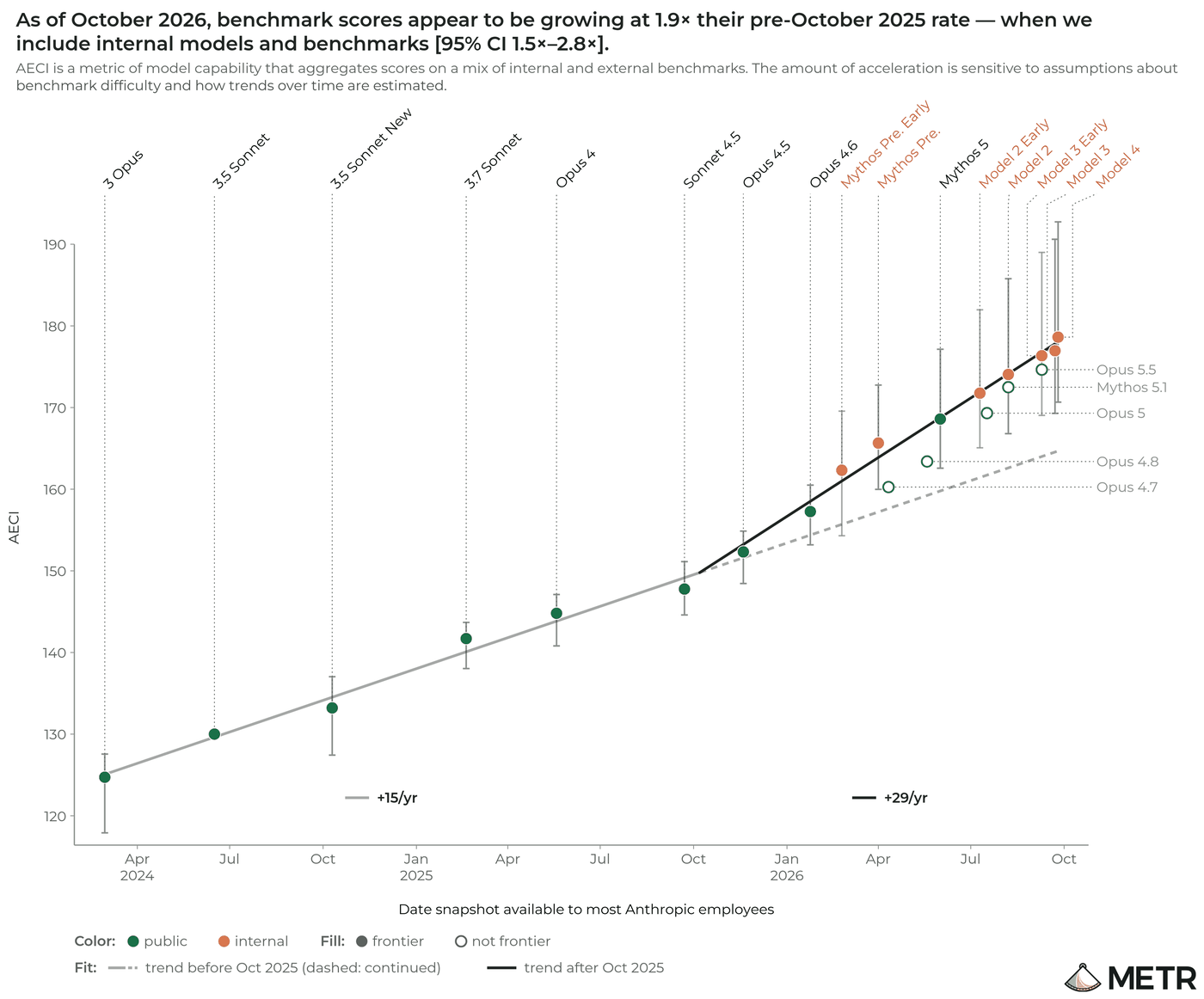
An outside evaluator finds Anthropic's AI progress has sped up about 2x, much of it from using its own AI.
What is it?
An independent, high-access assessment run by METR from August 12 to October 29, 2026. It concludes Anthropic is likely improving capabilities on well-specified tasks at around twice its March 2024 to October 2025 rate.
How does it work?
METR used internal benchmark scores, training-compute data, headcount, inference spend, surveys and about 15 staff interviews. A trend fit with a breakpoint at October 7, 2025 gives a 1.9x acceleration (95% CI 1.5–2.8x).
Why does it matter?
It is the first outside estimate of AI R&D acceleration at a frontier lab; METR guesses about 80% of the speed-up comes from AI. Anthropic redacted most of the key evidence, so readers must rely on METR's judgment.
Who is it for?
AI safety researchers, policy makers and anyone tracking frontier-lab risk.
|
|
|
|
TOOL
MAJOR
2026-11-05
Muse voice and avatars — Meta's AI agent now talks back with a face in the US
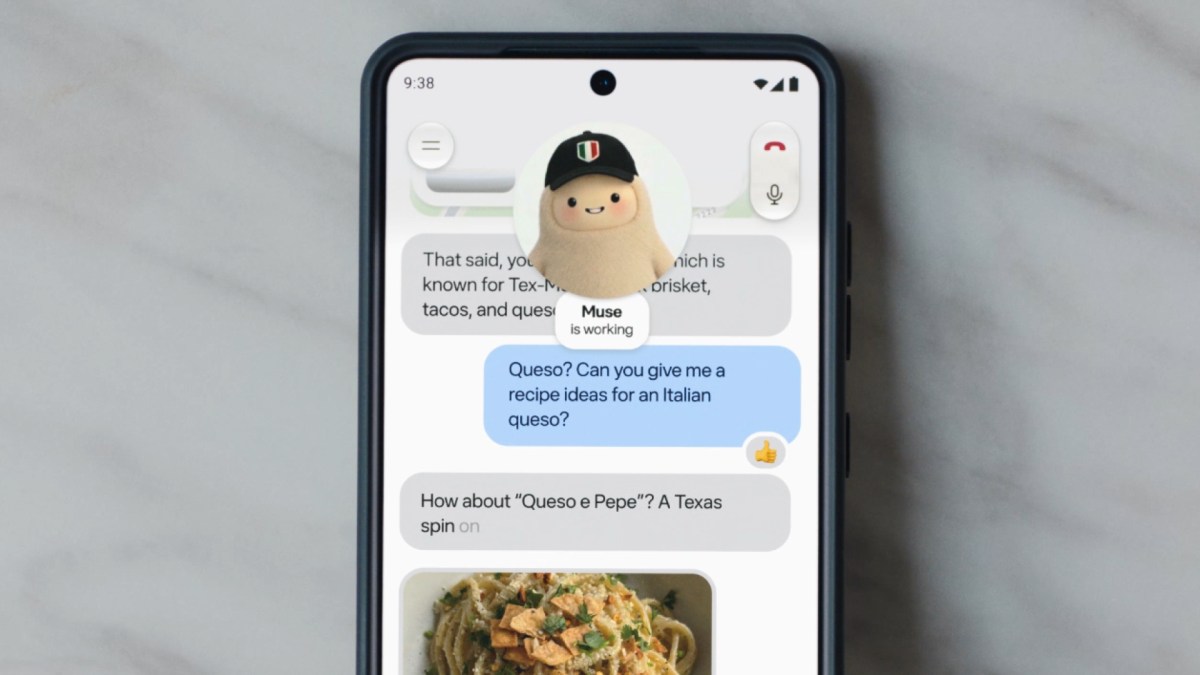
Meta's Muse agent gets live voice calls and an animated avatar that reacts while you talk.
What is it?
Voice conversations and expressive avatars in Meta's Muse app, launched 5 November 2026. Tap the phone icon to start a call, and pick voice only, an avatar beside the chat, or a full-screen avatar.
How does it work?
Muse Realtime Voice streams speech tokens, and Muse Realtime Avatar, an audio-driven Diffusion Transformer, turns them into 25 fps portrait video. Meta measures about 870 ms from the end of your turn to the first byte of the response.
Why does it matter?
Muse moves from research demo to a product US users can try today. In Meta's own tests, raters preferred its avatar over Runway Characters (78% vs 22%) and HeyGen LiveAvatar (88% vs 12%).
Who is it for?
US users of the Muse app.
|
|

|
|
TOOL
MAJOR
2026-11-05
Personal Finance in Claude — read-only bank links through Plaid
Claude can now read your linked bank and card accounts and explain your spending in plain language, but it cannot move money.
What is it?
A new Personal Finance hub in the Claude sidebar, in beta for US Pro, Max and Ultra subscribers. Connect accounts, then ask questions like "Can I afford a trip this spring?" and get answers built from your real transactions.
How does it work?
Accounts are linked through Plaid with read-only access, so Claude never sees your bank password. It can read balances, credit limits and up to two years of transactions, then build charts, bill calendars and dashboards.
Why does it matter?
It puts Claude level with ChatGPT's Plaid-based finance experience from May 2026. Anthropic says hub chats are not used to train its models and there are no ads or sponsored recommendations.
Who is it for?
US Claude Pro, Max and Ultra subscribers.
|
|

|
|
TOOL
NOTABLE
2026-11-05
Codex CLI 0.167.0 — an agent command center and backend switching
Codex gets an agent command center, backend switching and local image previews.
What is it?
The headline of this release is an agent command center: run codex agents --no-daemon to see your agents, with unread results marked. The session picker can now switch between connected backends without losing drafts.
How does it work?
Local image attachments show a preview while you write, and image paths in the transcript are clickable. A "Sign in another way" menu holds API key and cloud provider options, including a Google Cloud Vertex AI setup wizard behind a flag.
Why does it matter?
Fixes keep saved chats visible after you switch model providers, and automatic context compaction now counts output from failed responses. Linux musl builds use less idle memory.
Who is it for?
Developers who use the Codex agent in the terminal.
|
|

|
|
MODEL
NOTABLE
2026-11-04
P-JiT — Linum's open 2B text-to-image model trained for $21K
A research text-to-image model with open weights, built on a small budget, with the full training recipe published.
What is it?
P-JiT (Pyramid-JiT) is a 2.18B-parameter text-to-image model from Linum with Apache 2.0 weights on Hugging Face. The whole model was trained for $21,038, and Linum calls it a research checkpoint, not a production model.
How does it work?
A frozen Qwen3.5-4B text encoder feeds a diffusion transformer that works on raw pixels in 32×32 patches, with no separate image autoencoder. Training used 8,415 H100-hours and the Muon optimizer.
Why does it matter?
It shows a small team can train an image generator from scratch for about $21K, with costs, hardware and settings all public. Known gaps: it cannot write text in images and struggles with crowds.
Who is it for?
ML researchers and teams training their own image models.
|
|
|
All releases at ai-tldr.dev
Simple explanations • No jargon • Updated daily
|
|