
Reusing C20 buildings, and other news (23 Apr 2026)
Reflecting on how to reuse, repurpose and retrofit C20 buildings, given the sunk carbon costs of them. Plus news and events.
Over April we retrofitted our 1930s semi-detached so we are running on renewable energy as much as feasible. The environmental performance of C20 buildings play into their survival, or - if they are performing badly - their doom.
Concrete buildings represent a huge sunk carbon cost: the emissions from their creation decades ago contributed to the climate emergency now. Replacing them creates more emissions, but retrofitting, especially of ‘leaky’ buildings, is also expensive. Some of the best designs from the 1960s, like Saltash Library (Royston Summers, 1963) worked with the environment to stay cool in summer. The replacement of the warped window frames has improved its environmental performance in winter, reducing its energy needs.1 C20 buildings can’t become passiv hauses, but they can be improved.
In a discussion on the practicalities of retrofitting on Bluesky, people raised the difficulty of installing solar in conversation areas. I’d not put solar on my previous house because it was Grade II listed and the roof would have needed replacing to support the weight. And that’s before getting into listed building consent on a cob cottage of uncertain age.
C20 modernist buildings have an immediate advantage over earlier properties in this, as the love of flat roofs behind parapets creates a space for hidden solar. If the UK is serious about energy security and net zero, allowing solar installs on C20 buildings - in general, in conservation zones and even in cases where the building is Grade II listed - feels like an principle to adopt. Reusing, repurposing and retrofitting has to be better, whenever possible, than demolition.
With our own retrofit done, I’m focusing back on work. Apart from checking the solar generation every few minutes.
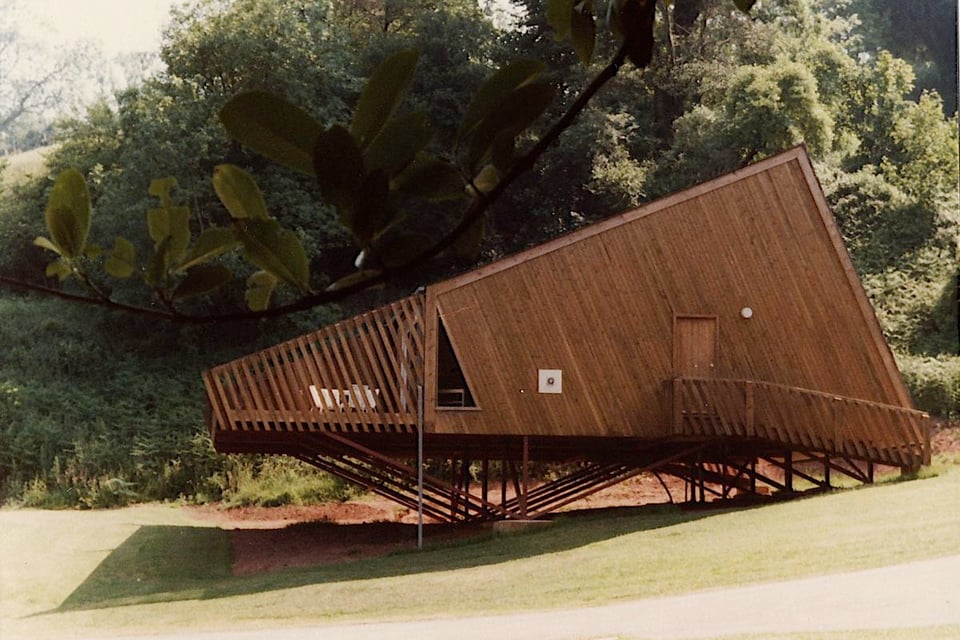
Last week, paying subscribers received a new deep dive about Mervyn Seal’s holiday lodges at Sladnor Park in Torbay. These charming, mostly hidden, wooden buildings exemplified his design principles of “the essentials of the environment” and are very likely to be demolished soon.
I’ve made the previous deep dive, into the retrofitted former library in Nailsea (Bernard Adams, 1971) free for all to read.
Last week, I was in Plymouth and stopped for a coffee and snack at the Tinside Lido cafe again. It was a very blowy day on the Hoe, but the roof top terrace was remarkably sheltered. An ideal spot if you’re in town and fancy pretending you’re in Poirot.
Exeter Corn Exchange’s concrete carbon problem
An example of working with an old building is happening in Exeter, with a plan to make the decaying windows of a 1960s building safe.
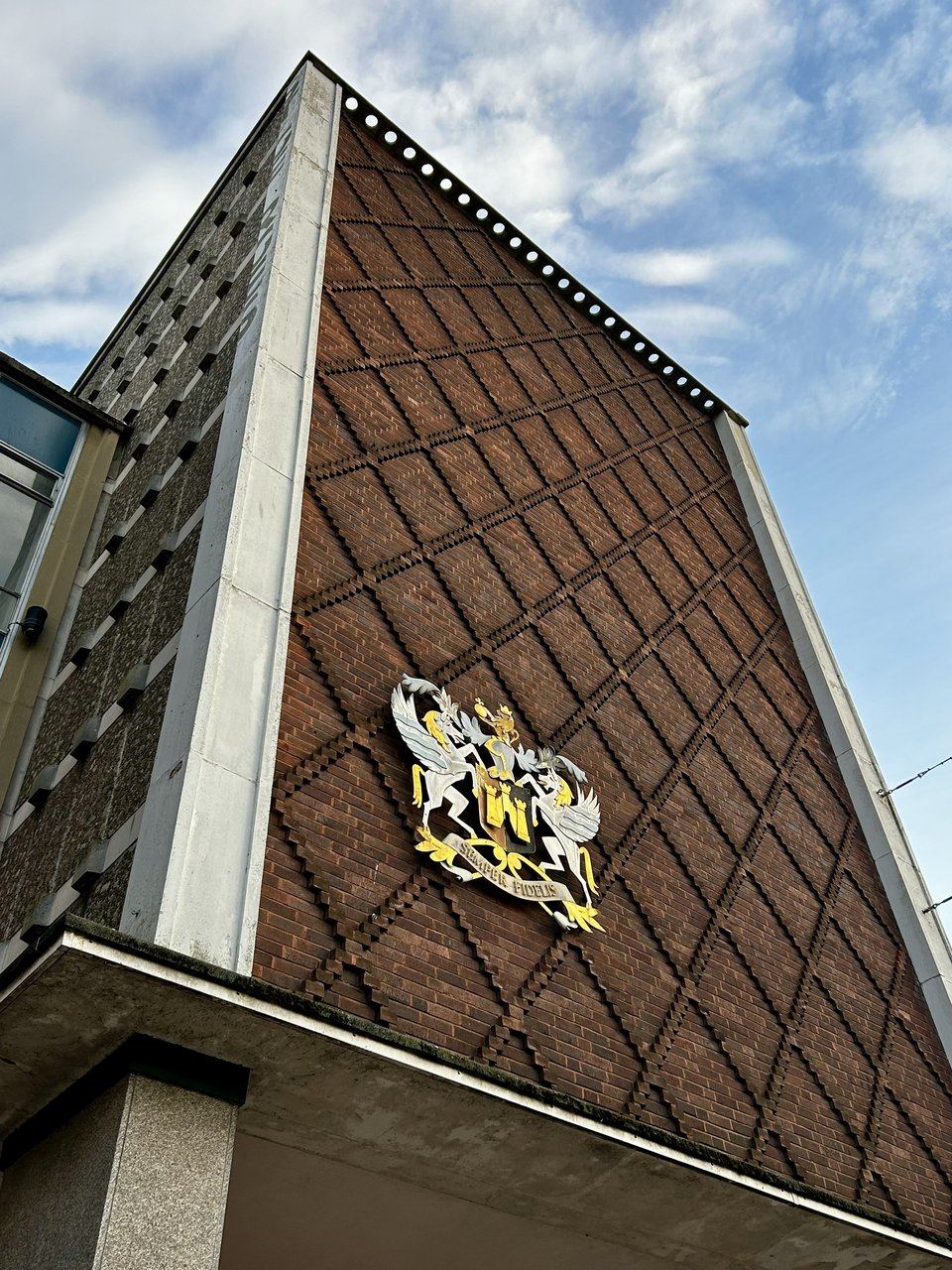
The Corn Exchange (H Rowe, 1960) is one of my favourite post-war buildings in Exeter. It opened as St George’s Hall and Market, and a ghost of that sign is still visible in the concrete. The indoor market was fantastic in the 1980s with stalls selling clothes, fabrics, records and the usual meat, fish and cheeses.
Upstairs, the hall still has a marvelous wooden acoustic wave installed on the ceiling, and several other intact elements from the 1960s. The hall is used for shows, record fairs and comedy nights.
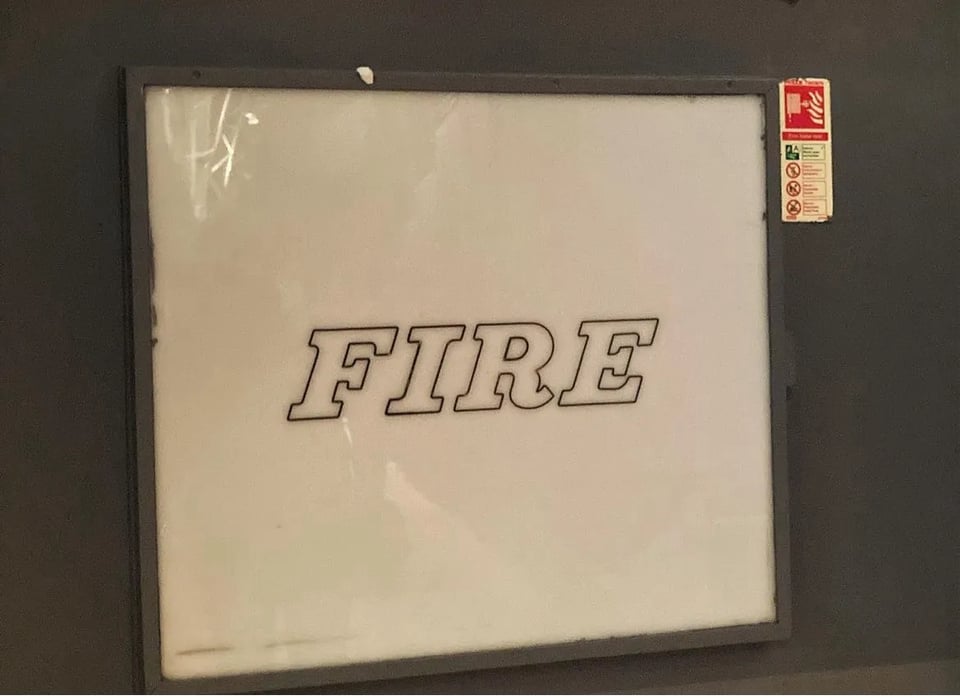
However, the building’s fabric is showing its age, with the concrete window frames along the sides looking especially done for. These are suffering from carbonation: the reaction of carbon dioxide in the environment with calcium hydroxide in the cement. This has caused the concrete to crack and the rebar to be revealed. See Exchange windows to be covered over safety fears (BBC).
The current planning application is looking to box them in, then board them and attach vinyl hoardings to cover the plywood. This is described as a temporary measure, which may be in part as the Corn Exchange is marked as a "Regeneration Opportunity Area” in the Exeter Plan. (Source: csd-04b_policies-map-city-centre-inset.pdf)
I’ve got the building on my deep dive list, but I do think they could consider reopening the indoor market space as a market space for pop-up shops. This is how Sparks Bristol is using a large department store. It would support small local traders not yet able to cover the costs of a shop, and fit with Fore Street’s independent vibe.
If you enjoy this newsletter, you can support it by upgrading to a paid subscription. That’ll give you early access to deep dive, like the Sladnor Park one, and occasional extras.
Upgrade nowReusing department stores
Department stores are a rather more grand version of an indoor market, really. Instead of stalls there are “concessions” and there is much less likelihood of the smell of raw meat or fish. But the principle is the same. I seem to have accidentally become a tracker of department store developments and the last couple of weeks have provided confirmation on two.
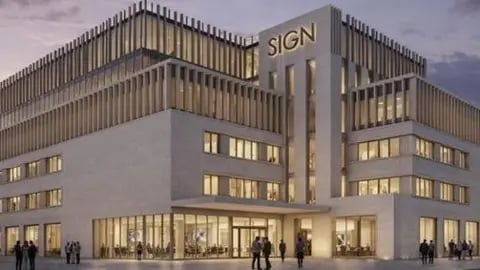
It’s been formally announced that Plymouth’s Dingles (Sir John Burnet, Tait and Partners, 1951) has been bought by Babcock Engineering, the firm that runs Devonport Dockyard. The aim will be to move perhaps 2,000 office-based jobs to the city centre, freeing up space in the dockyard as defense spending ramps up. The artist’s impression of the potential revamp (below) adds long rows of brise soleil to the upper storeys. I rather like the castellated fortress effect, echoing that it’ll be for a defense firm.
Meanwhile, over in Somerset, the buyer of Taunton’s former Debenhams (George Bains and Sons, 1938 and 1960s) has been revealed as the Chestnut Group. In an interview with the Somerset County Gazette, David Carpenter of Chestnut confirmed they are working with the Curve, a local community group, and with the Studio Saar architectural practice.
“This site in Taunton will be our flagship development. Because the building is so nice, we’re keen to put a good stamp on it. The North Street Curve, as people have called it, really lends itself to being a special development.
“We’re also hoping to introduce an internal atrium, which was one of Studio Saar’s ideas.”
Studio Saar’s concepts, Apartment Store, won the 2024 Davidson Prize. You can watch a video about their concept: it will be interesting to see how Chestnut Group turn it into reality.
In brief
Hicklin and Cornish Modernism
Next Tuesday, 28 April, Samantha Barnes-Knight is giving the Nick Cahill Memorial Lecture on F K Hicklin and the work of his team at Cornwall County Council. Appropriately enough, it’s being held at the Grade II listed St Austell Library (Hicklin, 1961) which won a RIBA Bronze Medal 1961.
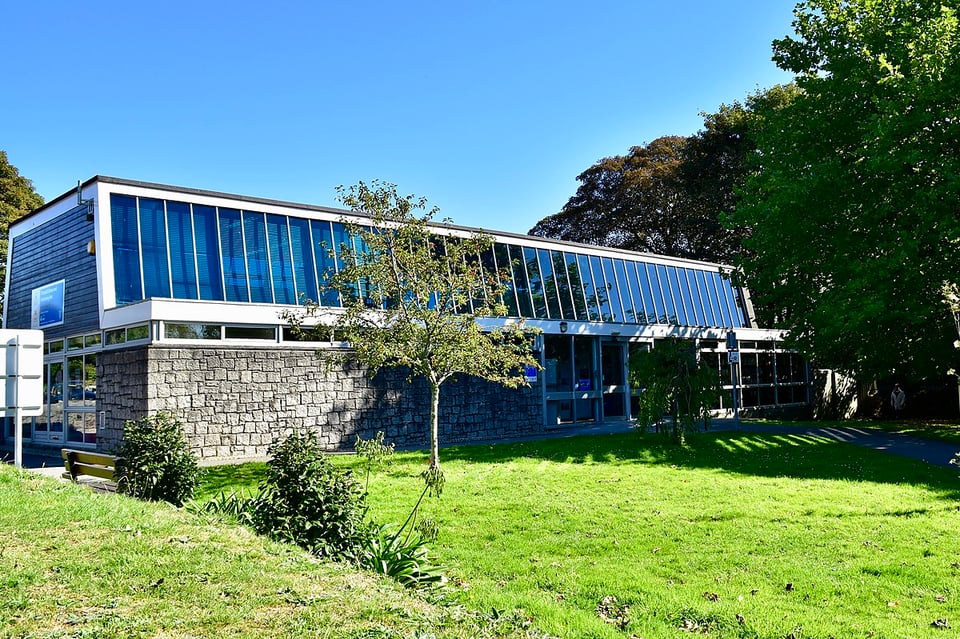
More details including how to book on the Cornish Buildings Group’s Facebook.
Cabinology: in search of the mid-century holiday home
While I was preparing the deep dive into Seal’s holiday lodges, the lovely people at The Modernist announced a talk about mid century architect-led cabins by Peter Halliday.2 His talk will introduce the form, then focus in on the work on Welsh architects Hird and Brooks. The event is on 26 May, in That London. More details and how to book a place on the Modernist’s site.
Wick Hollow House for sale
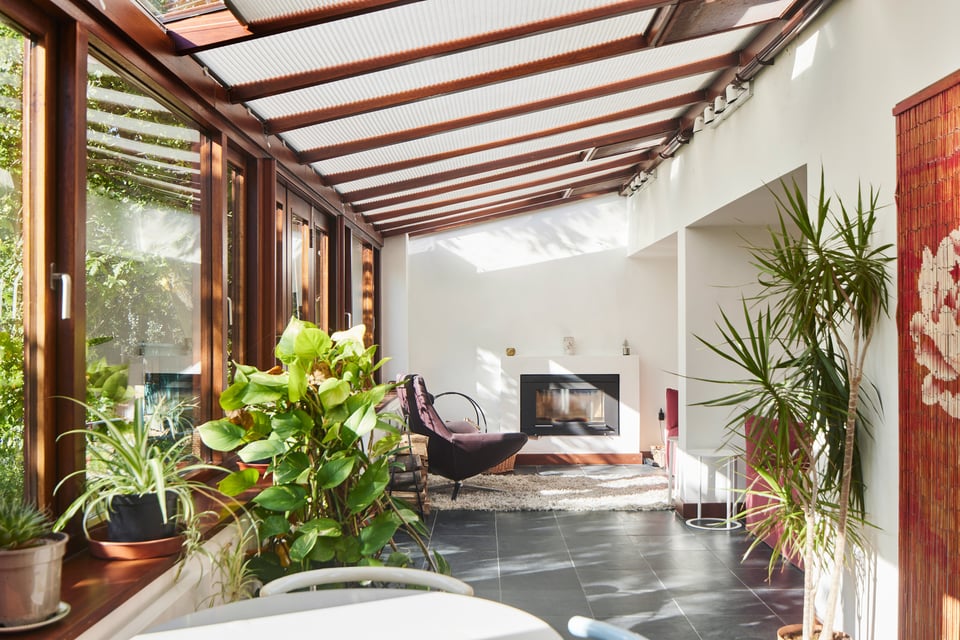
Wick Hollow House was built in 1955, designed by Arthur Jackson Hepworth (a cousin of Barbara). A fan of Frank Lloyd Wright, Hepworth used Bath stone to create a rather restrained English variation that looks unfortunately bunker-like from the north-facing front. From the photos on the agent’s site, it’s the rear and interiors that really sing. See the full details on The Modern House.
I’m off to check on how the solar is enjoying the sunshine.
Mags L Halliday
If you’re enjoying this newsletter, feel free to share it with others.
If someone has sent you this, you can subscribe below.
A free sub will get you the weekly field notes and notice that a deep dive has been published.
A paid sub (£4 a month or £30 a year) will unlock the deep dives early, plus occasional bonus content and the warm knowledge that you’re supporting the project.
For more about the library’s design, see my in-depth look at from 2025. ↩
No relation as far as I know (though there are a lot of branches in the Halliday tree). ↩
