Jason Arday: breaking a butterfly upon a wheel
Arday was a Black man and thus was not allowed a second act in American, or any, life.

CW: death, suicide
Here’s a story for you in the wake of the tragic death of Jason Arday, whom we wrote a little about last week:
A Tale of Two Academics
A man who struggled to read throughout his school years because of a disability became famous thanks to an unconventional and memorable backstory that included “overcoming disability” and relevance of his work to cultural interests. He obtained university appointments, professor status, and oversight of graduate students despite being extremely underqualified on paper for the roles. Thanks to these successes, he rode a wave to international fame as a public speaker and consultant and the face of success for someone with his disability.
Then as time passed, elements of the story came into question. The man was inconsistent in the chronologies of his autobiographical vignettes. He failed repeatedly to attribute one of his most famous academic contributions to a woman whose own work had made them possible. Details of his stories had little flourishes and embellishments that varied in the telling. He engaged in behaviors in his professional and private lives that called his judgment, at the very least, into question and connected him with one of the most reprehensible villains of our time. He ultimately had to leave the academic institution where he was employed.
A search on this man and the most recent revelations of this connection yields relatively few hits, most of them local to the institutions associated with him. The New York Times did not run any lengthy pieces about him in the wake of these revelations or of his departure from the institution that employed him. Neither did any of the other national outlets in the United States or international outlets elsewhere, such as, say, The Telegraph.
Many aspects of this story are similar to claims that have been made about Jason Arday, the UK academic who came under relentless attack by UK and US journalists spurred on by their own orientation to bigotry and by racist, ableist, and vengeful pseudoacademics. Arday died by suicide in the aftermath of his resignation from Cambridge University and amid the ongoing relentless coverage of his past and present. And the vicious eugenicists in particular were happy about it.
Like the fellow in the opening story of this post, Arday struggled in childhood because of disability but became famous because of his unconventional backstory and relevance in the zeitgeist. He obtained university appointments, including a professorship at Cambridge (he actually did have a PhD), despite being adjudicated as “underqualified” by a cadre of journalists at the New York Times, which did somehow manage detailed coverage of Arday’s case. The NYT has been joined by legions of other outlets, some of which have devoted thousands and thousands of words to the unfolding tragedy of Jason Arday’s brief life at Cambridge and premature death by suicide.
The ‘crimes’ of which he stood accused included plagiarizing the work of a woman in his field, manufacturing stories and details about his past that stretch credulity, and writing a book proposal with details that do not align perfectly with those in the book he ultimately wrote. He was investigated by one university on the plagiarism charges but cleared. After Cambridge opened up yet another investigation, he submitted his resignation and asked for space and grace from the howling mob of press nipping incessantly at his heels. But they continued tearing away at pieces of his life in unseemly paroxysms of handrubbing glee at having a story that seemed to confirm their deepest held beliefs about Black and disabled people in academia and how they got there.
Let's pretend now that the absolute worst-case scenario is true (that's not possible because many aspects of Jason Arday's claims have been confirmed, but let's just set that bar). His transgressions still would not surpass those of the fellow I described above. Fabulism and plagiarism clearly are not the operative saliences in Arday’s story because otherwise, there would be a stream of academics subject to this treatment. But other -isms are salient — namely racism and ableism.
In contrast to the dearth of coverage of the fellow whose life I outlined in opening this post, a search on Arday’s name under the “news” tab on Google yields pages and pages of hits. The press just can’t get enough, and the New York Times is ON IT.
A key theme of their postmortem piece is that Arday was “underqualified” for the position he held at Cambridge. The journalist team on that story was confident enough about that conclusion that they made it the lead:
When Cambridge University interviewed Jason Arday for one of the most prestigious sociology positions in the world, he was an early career scholar and underqualified, by the school’s own standards.
Their basis? A "review" of Cambridge's requirements for the job and the adjudication by the reporters themselves that he did not meet those requirements. I have reviewed the reporters’ biographies, and I can as confidently and more defensibly discern that they have not earned doctorates or been trained as PhD candidates, served on a hiring committee for a university faculty position, been involved in the process that goes into such decisions, or otherwise gained the experience or expertise needed to draw these conclusions. Three of the four list their educational credentials (none of them doctorates), but one of them doesn’t even declare possession of a bachelor’s degree. They are entirely comfortable nevertheless drawing this uninformed conclusion and even treating it as an absolute fact, beginning a later paragraph with, "While Dr. Arday was underqualified for his job...". [ETA: For a look at the actual data situating Arday in the spectrum of qualifications, see this post. For a look at how people perceived him while he was doing his job, see here.]
They then go on to adjudicate his claims about being nonspeaking and autistic yet earning a PhD, two things that they assert must be mutually exclusive, writing:
His supposedly remarkable trajectory from nonverbal preteen to Ph.D. had no precedent in medical literature, experts in developmental and speech delays say.
Ye goddesses. The hardly suppressed giddiness of “supposedly remarkable trajectory” aside, there are plenty of examples of autistic people who, after being nonspeaking as children, have gone on to earn doctorates (ask me how I know). One of them is probably among the most high-profile autistic people on earth today. There are autistic people who remain nonspeaking as adults who have earned or are earning PhDs. A lack of “precedent in medical literature” does not mean “never happened.” This reliance on that statement instead of, say, the most basic online search, suggests a robust set of blinders on this team of writers when it comes to autistic people.
They also write that "Dr. Arday’s claims about not speaking were false, a former classmate and a speech professional who worked with him told The New York Times.”
You know what? You don't have a speech professional who works with you unless you are working on some aspect of receptive or expressive communication. The fact that such a professional worked with him attests to some difficulties on this front. Recall from a quarter of a century ago also can be famously inaccurate. See, I know that because there’s a lot of “precedent in the medical literature” for it.
In addition to tweaking facts to fit a desired narrative, the piece also commits sins of omission. For example, it claims that “Before Dr. Arday’s death, conservative commentators seized on his fall as evidence of diversity-and-inclusion efforts run amok.”
Oh, NYT. It certainly wasn’t just the “conservative commentators” who “seized on his fall” from this angle. On July 21, avowed eugenicist Nathan Cofnas published a Substank (misspelling intended) post calling out Cambridge and Arday for “DEI fraud” and “plagiarism.” Arday resigned from Cambridge on August 5. The New York Times itself ran a piece on Arday’s resignation that day that brought up the diversity angle. Between 8/5 and the day his death was reported, there were 241,000 items posted online about Jason Arday.
These items included DEI/diversity-oriented stories at such well-known “conservative commentator” sites as The Guardian, ABC News, the Washington Post, The Atlantic, and a host of others, including the clearly obsessed outlet The Telegraph. To write as though this entire situation were just a niche interest of “conservative commentators” is to ignore the demonstrable relentlessness of the entire establishment press in pursuing Arday, even after he wrote in his resignation statement to “ask only for understanding, for compassion, and for the space to begin again”.
He was not granted that grace, despite clear and potentially long-standing signs of a desperate need for a buffer around a fragile mental state. The almost inevitable effect was the breaking of a butterfly upon a wheel.
Among the coverage were two or three pieces posted by Retraction Watch, the respected tracker of academic publishing shenanigans. But that outlet also covers academic malfeasance in general and maintains a “leaderboard” of academics who have the dubious distinction of the most retracted papers. I did a search on the current gold medalist, Joachim Boldt, who has 240 retracted papers. He is a German anesthesiologist whose retracted papers included falsified patient data from clinical trials and repercussions that may include millions of patients put at risk because of his “fraudulent research.” That quoted phrase comes from a headline in The Telegraph, which devoted one single story to the academic and criminal infractions of this white German man who put millions of people in danger. Hardly any other outlet has covered Boldt, and the New York Times appears to have ignored him entirely.
The hints at what qualifies as salient here are not subtle. And what qualifies for “grace” and “space” obviously depends on certain characteristics of the person asking for it.
The New York Times, its assertion about “conservative commentators” notwithstanding, ran several pieces before Arday’s death was reported, including one opinion piece by noted transphobe Jesse Singal that begins:
It’s easy to see how Jason Arday held on to his University of Cambridge professorship until Wednesday, despite facing significant accusations of plagiarism and dishonesty for years. After all, his story fit quite neatly into certain culture war grooves.
There’s something else that Singal would probably think fits “neatly” into these grooves, but in a way that he’d approve: The person I describe in the opening paragraphs of this post is Jack Horner, renowned paleontologist and model for Alan Grant in the Jurassic Park movies.
Horner has said that he struggled with undiagnosed dyslexia to the point that he barely (or maybe didn’t?) pass high school. Somehow, he got into university despite “D average or worse” grades. Somehow, without even a college degree, he obtained academic status usually reserved for PhDs, including having his own doctoral students and professorship appointments.
He tells stories about himself with varying chronologies: Did he “find his first fossil” when he was 6? Or 8? Did he win a lot of science fairs or just the one when he was a senior or a grand prize or a first prize? Did he “flunk out” of college “seven times’ or just come close to it before some sympathetic faculty member rescued him each time? Did he apply to Princeton while still at university in Montana or after a year-plus driving trucks or maybe after driving trucks and then taking more classes, and if so, did he really think he was about to graduate and applied for the jobs stating as much, or did he know he’d never get a bachelor’s degree but still somehow got hired on at Princeton, which thought he’d gotten the degree? Why does he say he was “Marine Corps Special Forces” back in Vietnam in 1965 when that wasn’t a thing? (it’s probably a form of shorthand, but I mean, if we’re going to be picky here, let’s be picky, speaking of which, someone alert The Atlantic). And he has called himself “Dr.” under formal conditions such as book authorship, presumably because of honorary doctorates he’s been awarded, despite never having earned an actual doctorate. Imagine a Black disabled man, especially one with the temerity to be connected with an “elite” university, doing that.
In many, many interviews and statements on one of Horner’s greatest claims to fame regarding fossilized dinosaur eggs, he repeatedly fails to mention Marion Brandvold, the local fossil shop owner who found the site and the samples first and showed them to him. He has told a story about the entire experience that makes it seem as though this unnamed owner had no idea what she had on her hands, whereas she and family members state that she (and they) knew exactly what she was looking at when she found it.
His chronology around the timing of these discoveries and his own epiphanies about them is muddy, at best. And despite agreeing to keep it all under wraps to protect the owners of the private property where the site was located, he did not, and the place was overrun by press and fossil hunters. He then did not return the samples Brandvold had placed in his care, and she ultimately had to sue to get them back (she won). He doesn’t even mention her in the acknowledgments of his brief letter in the journal Nature describing this breakthrough find. All of this received the lightest (if any) and almost entirely local coverage.
In his sixties, Horner began an affair with a 19-year-old undergraduate (just – yikes), and when his university called him on it, he married her after 9 months of dating to get the school officials off of his back. This was in 2011, yet there was no breathless coverage of this behavior. Perhaps Singal was busy that day. At any rate, Horner continued to make the speaking circuit, even after People magazine covered his little power-imbalanced romantic peccadillo in 2016, noting that it was the reason for his separation from the Museum of the Rockies (though even that timeline doesn’t, well, line up).
And then there’s the culture war cameo he made in 2026, turning up in, yes, the Epstein files. He made a visit to the New Mexico ranch of the sex trafficker and rapist in 2012, just after marrying the teenager and well after Epstein’s 2008 criminal conviction in Florida.
One of the emails seems also to imply that it wasn’t Horner’s first time with Epstein, who seems to confirm that he and Horner had also gone fossil hunting in North Dakota with none other than frequent antagonist-to-autistic-people Robert Kennedy the Lesser. As a point of politeness, one infers, Horner wrote Epstein a thank-you note for the ranch visit, stating that he “had a great time, especially spending time with you and the girls” and to please “give all the girls my very best wishes, and to you, whom I envy.”
A search on this man and the 2026 revelations of these connections yields relatively few hits, most of them local to the institutions associated with him. The New York Times did not run any lengthy pieces about him in the wake of these reports. Neither did any of the other national outlets in the United States or international outlets elsewhere, such as, say, The Telegraph.
So here we are, with revelations that could not be a better fit for the current “culture war grooves” that Singal invokes in his complaint piece about Jason Arday. These reports about Horner and Epstein emerged in spring 2026, yet there’s not a peep from Singal about this man who seems to share so many plot points with Jason Arday, including a history of disability. Indeed, a post-2008-conviction association with Epstein is far worse than all of the accusations against Arday put together.
And despite the similarities, there’s that one glaring exception, of course: Jason Arday was a Black man and thus was not allowed a second act in American, or any, life. The racists and eugenicists celebrate his death, and the hegemonic journalist class that just can’t help but secretly agree continues to pick him apart in death just as they did so relentlessly in life.
News you can use
- From the TPGA editors: Side-eyeing “Profound Autism” campaigners: "Disability does not require two people to have equivalent conditions, prognoses, visibility of impairment or support needs. The existence of somebody with a progressive neurological disease does not make another person’s disability less legitimate." From Dr. Monique Botha on the Great ADHD myth.
- Preprint but still interesting: Adults who suspect they are autistic or have ADHD show polygenic profiles closely resembling those of individuals diagnosed with the condition in late childhood, adolescence, or adulthood.
-
Check out two very cool summits coming up next month.
Stanford Neurodiversity Summit, Sept 19-21, hybrid format, videos will be available afterwards (disclosure, TPGA editor Shannon Rosa is on the planning committee).
Black Autism Acceptance Day, also happening on Sept 19, but we sure as heck have enough space in the world for both summits. - A rare look at the experiences of First Nations caregivers for autistic children: “This research shows the need for autism programs, services, and policies that are guided by Indigenous knowledge, community leadership, and cultural safety. It also highlights the importance of seeing autism through a strengths-based lens that values family relationships, community, and identity. By listening to First Nations caregivers, we can build more inclusive and culturally grounded supports for Autistic children and their families.”
People you should know
- Autistic journalist Eric Garcia, author of We’re Not Broken, has a new book coming out in the spring: Manly While Stimming: Autism and the Myth of the Masculine Ideal. You can preorder now!
- Peggy Lee writes that to be regarded as “not autistic enough” is to face a double whammy, to be erased twice – first by the invisible disability, then by disbelief.
- From the editors: Robbie Williams has come out as autistic, which means that now both singers of Nemo movie end title songs are on the spectrum (Williams, Finding Nemo; Sia, Finding Dory).
-
Here is an unexpectedly respectful, thorough, and accurate explainer from Parents magazine about the increase in autism diagnoses. Just excellent. It closes with a quote from neurodivergent therapist and parent Vanessa Palomera:
Autism is not a tragedy … But the lack of understanding, acceptance, and accommodations can be. As a therapist, a mother, and a neurodivergent woman, I’m passionate about shifting the conversation from pathologizing to empowering. When we honor autism and create space for different ways of thinking, we all benefit.
- Chris Packham has a word for Uta Frith, who mentioned him personally and who we’ve suggested should just stop already.
Latest from TPGA
"People used to tell me to calm down, like it was a choice. For me, it was a dimmer switch I didn’t have. I wasn’t dramatic. I was fluorescent. And fluorescent things don’t dim on command." Kari Burroughs Kraakevik looks back on a lifetime of autistic sensory experiences.
Thanks for reading, and here’s to honoring autism and creating space for different ways of thinking.
Got something autism-related to share with us? Send it along to [email protected].
Got a comment? We’d love to hear from you, so drop us a line below. Please note that comments are moderated per TPGA guidelines.
About the Author
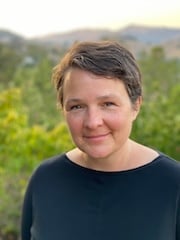
Dr. Emily Willingham is a 2022 MIT Knight Science Project Fellow, and the author of several books, including the upcoming If Your Adolescent Has Autism: An Essential Resource for Parents from Oxford University Press, and has served as a regular contributor to Scientific American and other national publications.
-
I am so sorry to Dr. Arday and all of his friends and loved ones. Thank you for the insight into the mess of coverage around him, although I wish this week's update hadn't been necessary. (Or last week's, for that matter, because I agree that the accusations against him shouldn't have ever gotten so much avid (inter)national news coverage. For the record, I'm writing this as a highly plagiarism-averse autistic failed academic - with a Ph.D., but without any remaining energy to use it - who winces whenever she hears about a scholarship-ethics fiasco, which is how I'd classify (actual) plagiarism by anyone with a graduate degree, and who was ridiculously overzealous in my efforts to crack down on students' plagiarism as a T.A.; even I know that no one deserves to die as a consequence for even the most egregious proven plagiarism, though, let alone after an accusation of possible plagiarism. I agree that most outlets' coverage of the accusations and of Dr. Arday's life was never really motivated by a general dislike of (alleged) plagiarism or exaggeration. Also, I was spared from reading that NYT article by the subscribe-and/or-pay-wall, but, as for the headline and sub-headline intro blurb: whoever wrote and (as an editor) signed off on that callous scrap of dogwhistling racist-bait should be wildly ashamed of themselves.)
...and, oof; totally to your point, I hadn't heard any of the horrifying details of Jack Horner's relationships, and, as a huge fan of maniraptoran dinosaurs, I'm having that way-too-familiar-by-now nauseated feeling of "Oh, hey, yet another relatively privileged person whose work I admired as a kid just lost all of my respect, and, yech." I am so sorry to the people he mistreated and preyed on, and I'm going to look up Marion Brandvold's work now! (Also, dinosaurs are still awesome, regardless of the moral character or lack thereof of any given human studying them. The household's charm of tiny passerine dinosaurs did not pay me to say this, nor would they ever need to.)


Reply: