The Tragedy of Mediocre Minds Weaponizing "Intellectual Freedom"
Scratch a bigot and what do you find? More layers of bigotry.

In the wake of Jason Arday’s death by suicide, Ghent University decided to place one of his chief critics on leave while it conducts an official investigation into his conduct. In the aftermath of this decision, a caboodle of bigots has decided to out themselves by way of not one but two letters (source credit) claiming that the university’s actions constitute retaliation and stifling of academic freedom. Following the law of unintended consequences, however, the letters instead are providing the rest of us with a handy list people we want to avoid.
That critic, Nathan Cofnas, is a treat of a fellow who has expressed a desire to one day, “after the revolution … be the head of the department of eugenics and race science at Harvard” (start at 24:28 in this video). In the same interview that featured this remark, there was a “joke” about having his “own ways to retaliate,” a reference to his having been released from a position at Cambridge. He styles himself as a “race realist” and embraces the discredited claim that the “races” have differences in intelligence that trace to genetic differences. He is not a geneticist, or even a biologist. He’s a different kind of –ist altogether.
Cofnas was let go from Cambridge in 2024, in part for saying that “under a true meritocracy,” Black people would "disappear from almost all high-profile positions outside of sports and entertainment.” Hence his “joke” about retaliating against the school, presumably by targeting a Black scholar who worked there. For those looking for where the retaliation is in this story, welp, this is it.
Cofnas began his attacks on Arday by claiming that Arday had committed plagiarism, based on results of running the Cambridge professor’s work through a plagiarism detection tool (those things suck, by the way, which I say as a scientific editor who’s had to deal with their useless, time-wasting results). But Cofnas didn’t stop there. Per the Ghent U letter, he gave interviews. He made videos, such as the one cited above. He was constantly linked in these venues to Ghent University, where he was ostensibly working as a postdoc, ostensibly on research that was not related to these pursuits.
The letter the university sent to Cofnas and that was apparently publicized by a friend of his (!)] details a number of law-breaking and other behaviors it attributes to him, including violations of Belgian federal law, university policies, and his own employment contract. It also offers detailed and referenced assertions that he willfully targeted an individual academic and a population of academics with the stated intention of causing harm, financial or otherwise. Amid a lengthy list of such infractions, the letter to Cofnas states:
In several public interviews, you repeatedly referred to the late professor Jason Arday as being "mentally disabled" and made various other disparaging remarks concerning him, including, among others, describing him as a "worthless scholar.”
Cofnas also used other terms, such as “retarded” and “illiterate” and is described in the Ghent U letter as “framing [his] interventions as a ‘crusade’ aimed at the systematic personal and professional destruction of colleagues.”
In other words, the letter characterizes him as someone who’s made bigotry his entire personality and as a result doesn’t do his actual job. It continues:
By framing the 'exposure' of a colleague not as scholarly debate but as a victorious act in a self-described 'hereditarian revolution,' and by publicly calling to 'purge' institutions of those you label as ideological enemies, you have created a climate of severe psychosocial distress.
What a guy.
Before the university’s letter became public, the two letters decrying Ghent U’s decision emerged, claiming that Cofnas had been suspended as a form of “retaliation” against his unsavory and unsubstantiated claims about race and academia, among many other things. As of this writing, 179 people have signed the first letter, and 568 have signed the second, with overlap between the two lists of signatories. For context, in 2022, the number of full-time faculty at US universities exceeded 800,000. Obviously, the global number of academic faculty is well into the millions. The numbers of signatories on these overlapping lists is not exactly overwhelming in this context.
Many of these signatories have always attempted to position themselves as cool-headed contrarians who can look past the petty squabbles of silly, flawed, regular humans and see cold hard truths that some people just can’t face. The first signer on one of the letters is none other than Peter Singer, a.k.a. Dr. Effective Altruism, a.k.a. the “bioethicist” who has argued that disabled infants should not receive medical care, and that “killing a disabled infant is not morally equivalent to killing a person.” Other usual suspects among the signers include Steven Pinker, Lawrence Krauss, and Michael Shermer. Jeffrey Epstein, anyone?
What these people appear to consider “contrarian” to me is “white men (mostly) once again exposing the usual biases of their kind,” trying to cloak their bigotry in the billowy gown and chevron-striped sleeves that mark them as academics.
Underneath those medieval-style robes sit regular human hearts, and under the velvet medieval tams reside totally unexceptional human minds. They aren’t above it all. They are there, in the scrum, like all defensive ingroups, fighting tooth and nail together to maintain the supremacy that people like them have long felt was their birthright in the academy. People of color and disabled people need not apply.
These letters claim to be a defense of the rights within the academy to academic freedom. Instead, they provide a database of academics and academic-adjacent people who do not do their own homework.
As a former academic and tenure-track faculty member, I will say this: I believe in the foundational need to protect academic freedom. But that freedom is not dispensed like protest flyers to just anyone who walks through the gates of a university campus and starts yelling. It is something that academics earn by developing a foundation of rigorous scholarship and evidence, along with intellectually honest engagement with other ideas.
Nathan Cofnas doesn’t seem to do this kind of work. He is (was?) just a postdoc at Ghent (and how he landed there is itself outside the normal lanes of academia, according to some sources). He is not on the tenure track. As of this writing, he’s not even working his way into a tenured position that provides those necessary guarantees of intellectual freedom to academics who have put in the time, done the work, and engaged with contrasting ideas with rigor, honesty, and transparency. That is the reason for tenure – to protect those doing this work from the vagaries of administrators, boards, elected officials, or presidents and prime ministers.
Cofnas hasn’t earned this, and indeed, his ideas are hot sulfurous air and widely discredited. His case isn’t even one that calls for protection of a budding academic who showed courage and intellectual rigor in developing an evidence base that supports controversial claims. No. He is someone who used slurs against another academic who was both Black and disabled. He is someone who relies on discredited ideas to make claims in a field that is not anywhere near his own. This is not bravery warranting protection. It is just bigmouthed bigotry.
As I noted on social media, Ghent U has carefully made clear that their reasons for taking a formal look at Cofnas’s behaviors are based on apparent violations of university policies and local and federal laws. They have made clear that Cofnas’s ad hominems and statements regarding harm to a specific individual and population are part of their basis for this suspension and investigation. They are careful to highlight that a key issue is not his intellectual freedom to engage academically in controversial subjects.
Anyone willing to die on the hill of academic/intellectual freedom is on the wrong hill if they are defending Cofnas.
Generously interpreted, each academic signing these letters seems to have failed the most basic test of what supports their own rights to be members of the academy. Generously speaking, they seem to have failed to do their own due diligence and check the evidence of the claims made in these letters before appending their names to them. They seem either to have followed their worst reflexive instincts or to not have cared about what that evidence clearly shows. That is the opposite of scholarship and intellectual rigor, and it is shameful. But at least they are telling us who they are.
NB: As an antidote and a reality check against all of this misdirected energy from the ivory tower, I also want to share this page where people can submit their positive recollections of Dr. Jason Arday, a target of Cofnas’s attacks and slurs. Some form of the word “kind” appears dozens of times in these recollections. Give them a read and expect a full heart. As those who established the page note:
Small things count. Small things are usually the whole point.
News you can use
TPGA co-founder and editor Shannon Rosa has some commentary about RFK the Lesser’s Missing Person’s Initiative. On the surface, it looks like a good idea – after all, families whose loved ones are at risk of going missing definitely need more support and resources (and those at risk are not only autistic kids and adults, BTW). But what lies beneath? As Rosa says:
Below the surface, I don’t trust RFK Jr. on a single thing, especially since the initiative also includes an ABA toolkit—despite the research showing that ABA caused long-term mental health problems for autistic people, including suicidality.
Rosa notes that RFK the Lesser’s current IACC members include three people affiliated with the National Autism Association, a U.S. organization that highlights danger and safety — but which is unsurprisingly also cure-focused, still recommending “treating” autism via the GFCF diet and advising parents to seek medical “interventions” through the sketchiest “medical” curebie org ever, MAPS, or Medical Academy of Pediatric and Special Needs (formerly known as Defeat Autism Now!, or DAN!).
She also highlights that these people are unlikely to truly “help” autistic people in any way since they focus on fixing and saving them, rather than on understanding and supporting them through direct engagement, such as seeking autistic insights on why autistic children might “wander.”
Speaking of harms the policies that the lesser RFK will wreak, here’s a detailed look at the effects on one family of policies that will gut community-living funding and support for disabled people. The implications are stunning and profound, with a shift of community-living people into institutional settings if the current administration has its way.
Speaking of active efforts to hurt and harm others, the U.S. government wants to take supports away from our youngest children by spiking the Head Start program. The outcome will be dire:
Head Start’s performance standards make sure children are given early support and opportunities that can shape their entire future. If those requirements disappear, children with disabilities lose the services, protections and pathways that make inclusion possible.
Helen Edgar explains the association of autistic burnout with struggles in daily life: “Autistic burnout may be one reason for persistent or increasing difficulties in everyday life. Burnout isn't a behaviour problem to be managed. It is usually a sign that the demands being placed on a person have exceeded the resources they have available to meet them."
Despite higher rates of depression and anxiety among autistic vs nonautistic people, services and programs tailored to autistic people are few and far between. This study of a free, globally available, co-designed “Autism and Mental Health” massive open online course as a potential tool to help reduce poor mental health outcomes yielded largely positive feedback from participants.
I’m not on Threads, but I’m told that this is an excellent video explainer on how vaccines work.
The problem with “deserving” vs “undeserving” autism: “Bizarrely, Greta Thunberg – who very famously almost died from an eating disorder as a child, and who has been publicly mocked for her directness and overload responses for as long as she’s been famous – is often thrown around as the ‘not disabled by their autism’ example. It’s an illustration of how flimsy these categories often are – less than a decade ago, the same people would have framed Thunberg as one of the ‘really autistic children’ that we autistic adults are apparently depriving with our existence somehow.”
Ayanna Sanaa Davis at Phenomenally Autistic writes on the loneliness that can accompany being autistic and disabled:
If you see a disabled person online and they seem happy, remember that you are seeing one moment of their life. You don’t know what happened before they opened the app. You don’t know what will happen after they close it."
People you should know
From the editors: In the aftermath of the tragic death of Jason Arday, we should be lauding Mychal Threets, another high-profile Black autistic man, for publicly sharing his very difficult mental health journey. Thank you, Mychal, for your role modeling and declaring it OK for people to seek help during crises. (The comments are not unlike the testimonials for Arday. These men are beloved.)
Check out the new book, The Informed Parent, by Anne Borden King, blurbed by TPGA’s own Shannon Rosa:
The Informed Parent is a practical guide designed to empower families in making their own choices in school, autism services and parenting. Anne Borden King speaks with psychologists, ethicists, teachers, parents and advocates about the practical challenges of raising an autistic child today.
And check out another excellent book (we don’t know why both books feature repeat titles of other books): Growing Up on the Spectrum is a 190-page graphic novel created by autistic writer and artist Tess Langston. It is part educational guide and part personal memoir, designed to help readers on and off the autism spectrum better understand autistic experiences. Tess was diagnosed autistic and nonspeaking at a very young age. Through years of learning, support, and self-discovery, she found ways to communicate with a world that was not built with her in mind. Art became one of her most powerful languages.
Thanks for reading, and here’s to making sure that we count the small things.
Got something autism-related to share with us? Send it along to [email protected].
Got a comment? We’d love to hear from you, so drop us a line below. Please note that comments are moderated per TPGA guidelines.
About the Author
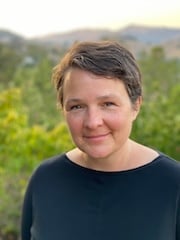
Dr. Emily Willingham is a 2022 MIT Knight Science Project Fellow, and the author of several books, including the upcoming If Your Adolescent Has Autism: An Essential Resource for Parents from Oxford University Press, and has served as a regular contributor to Scientific American and other national publications.


Add a comment: