A first-class seat and a life-changing moment with an autistic child
“I listen to my music because it soothes me. I am autistic. I am an anxious flyer.”

On the Handsome podcast, comedian Tig Notaro told cohosts Mae Martin and Fortune Feimster a story that underlines why both awareness and acceptance of autistic people are a social version of universal design that can boost quality of life for everyone.
Notaro relates that she was sitting in first class on a recent flight and found herself next to a boy, about 11 years old, who was wearing headphones and “outwardly jamming,” as Notaro put it, to what was streaming into his ears. Notaro said she was “a little irritated” and found herself judging the situation as involving a likely spoiled child with a lot of technology enjoying a first-class seat with no situational awareness. As she mentally created this story, though, the boy suddenly spoke to her, saying, “I listen to my music because it soothes me. I am autistic. I am an anxious flyer.”
Notaro, who said she has a lot of autistic people in her life, learned that the boy and his father had been split up on the flight, and his father had let him have the first class seat to give him more space to calm himself. The boy also told her that he had ADHD. Notaro went from “irritated to so moved,” and then the boy confided, “I don’t have any friends. People don’t like me. But I haven’t done anything wrong.” She replied to him: “You have not done anything wrong. I’m your friend, I am your friend.”
They went on to have a “nice conversation,” and Notaro lingered with him after deplaning to wait for his father to catch up.
She reflected that it was hard for her to look back on her attitude in the first minutes of the flight before she learned the real story about the boy. Notaro told her co-hosts that “as soon as I had the information, I didn’t care what this guy did. It’s such an example of like, once you have information, everything changes.” She came away from the experience thinking “on a broader scale” about the need to assume the best about people, saying, “He truly changed my life on that flight.”
News you can use
Perhaps other clothing stores could follow, um, suit: Beth Clark, parent of an autistic young man, has established a pared-down sensory-friendly bridal boutique with close attention to the details that reduce the overwhelm of shopping.
A parent of an autistic child got a lot of attention recently for tattooing a keyboard on her arm to support her boy in communicating when his devices were unavailable or couldn’t be used. In fact, she reportedly got more than 100 million views on her Facebook post describing the decision, made in the last couple of months.
And it’s a great idea and great that she thought of doing that! It just happens to be something that’s been done before but somehow – somehow – did not attract breathless, feel-good coverage. Tiffany Hammond’s Facebook page Fidgets and Fries featured her arm tattoo of a keyboard back in June. And The Autistic Teacher page, also at Facebook, is run by a trans man and parent who showed his tattoo on the page back in July 2025. As TPGA editor Shannon Rosa noted on Bluesky, both parents also are openly autistic.
A report describing the experiences of five women who received dual diagnoses of hypermobile Ehlers-Danlos syndrome and autism offers a look at what often is a long journey. Study participants described how the two conditions can interact in the healthcare context in positive and negative ways. For example, being autistic could support a systematic approach to having hEDS, but having hEDS could exacerbate some of the obstacles autistic people encounter in seeking care.
Bioethicists aren’t too thrilled to see the current (ongoing, exacerbated) attempts to leverage false claims about autism as a way to normalize eugenics. A trio of bioethicists, writing in the American Journal of Bioethics, notes that:
Autism is not the scourge on society that RFK, Jr. would have us believe; rather, it is rampant elite ableism that is the true epidemic. In fact, one could argue that an ableist classism has animated much of the policy decisions to eliminate vaccine recommendations—tools that in the absence of a universal health care system have greatly benefited marginalized groups. The tools and language of public health would be better applied in preventing and reducing the burden of this narrowmindedness rather than being bastardized to promote harmful, dangerous, and bigoted ideology.
As part and parcel of these eugenicist efforts, the state of Florida is making it harder and harder for families to ensure care for their medically fragile children at home — or anywhere. The Webbs are losing half of their home care coverage for their son Dylan, who is tube fed and requires 24-hour care. They are faced with impossible choices, and even care in a nursing home isn’t a likely option as facilities won’t accept children with his care needs. “We have worked so hard to keep him alive, and here we are talking about potentially having to put him into a facility, but there is no facility to keep him alive and safe,” Webb said, adding:
As a parent, I should have never been put in the place where I needed to find or try to find a facility to put my son. And we can’t even do that. We’re stuck.
Relatedly, from KFF: “For families who believe their child’s rights were violated based on race, disability, or gender in school, the federal agency (U.S. Department of Education’s Office for Civil Rights) often has been one of the main places to turn. But the White House cut its offices and weakened its ability to follow up with cases, as well as slashed funding to research on disparities that people of color face in getting diagnosed and attaining resources for disabilities.
As expected, the most recent meeting of the Interagency Autism Coordinating Committee (IACC) was the opposite of professional and rational. Sam Crane, a former member of the IACC, attended the meeting in person and covered it in real time. You can find that coverage at TPGA, including details about the “AI shenanigans” and the resurrection of “regressive autism” as a clinical entity warranting a “massive” infusion of funding. We are in our “two steps back” moment in public health and for autistic people – or maybe it’s one of several of such moments in a series at this point.
From Dr. Steven Kapp: “A new paper is out that found few autistic people and parents liked ‘profound autism’ or support levels to refer to diverse needs among autistic people, even with a pathology paradigm recruitment strategy (the Simon Foundation's SPARK data).”
From the editors: Part of the reason professionals miss or misunderstand motor difficulties is that the types of tests we use can be uncomfortable or confusing for autistic people. We need a guide on how to adapt testing procedures to make them more accessible for autistic people, so that they can complete the tests and the results will reflect their real level of ability.
This article explains the importance of respecting autistic people’s support needs in many different areas that can affect movement and coordination, including sensory processing, communication, anxiety about new environments, and endurance. It introduces a new Adapted Motor Assessment Toolkit for Autism that shows examiners how to change the way they give tests so that autistic people can show their true abilities.
On RFK the Lesser’s plan to split the MMR into three separate shots based on his utterly unfounded claims of links to autism: We can’t do that now because we don’t have those three separate vaccines in the US. It would take a decade to manufacture them. For those who do like evidence, Japan tried splitting up the shot into separate measles, mumps, and rubella injections and there was — shocked, shocked I say — no effect on autism rates. Dr. Celine Gounder expands on this and other facts in this Facebook post, and FactCheck.org offers an even more-detailed body check on The Lesser’s claims.
Even click-bait stalwart the NY Post understands that there’s no “tsunami” of “severe autism.”
Perhaps you’ve seen the headlines about a UCSF study that pinpoints “protein targets for treatment of profound autism.” I am not going to unpack all that’s overhyped about this study, but I will note that (1) the paper itself doesn’t mention “profound autism,” which was a term introduced in the news release UCSF put out about the work; (2) the findings are nowhere close to realizing anything like a treatment for anything, much less for yet another artificially defined subset of the autistic population; and (3) the UCSF institute that conducted the work just received $46 million from an investment outfit funded by Google co-founder Sergey Brin, who has an autistic child with his former wife Nicole Shanahan, erstwhile VP pick for RFK the Lesser when he had the gall to think he could be president someday.
As TPGA editor Shannon Rosa notes and I concur, our personal experience from being Silicon Valley– and Silicon Hills–adjacent to tech bros who think they need to “solve” autism leaves us very wary when their money is involved. The coverage of this study was generally starry-eyed output such as this from NPR and this from CNN, both foregrounding Alison Singer’s remarks in her ongoing effort to make “profound autism” a thing. As a science journalist who understands what I’m reading, I can say that there was a whole lot to read between the lines from the actual experts providing outside comment for both of these pieces. Readers would have been better served by clearer statements of the many cautions related to this work.
We’ve written a lot here about Jason Arday and the relentless hounding from press and others that led to his dying by suicide. Nathan Cofnas, the man who held the banner for these attacks, implied on social media that the university where he was employed as a postdoc had dropped its investigation of his own alleged transgressions and reinstated him. The university begged to differ and posted a statement to its update site about the situation:
Ghent University will therefore limit itself to confirming the disciplinary measure and the fact that investigations are ongoing, and will await their outcome.
The US ambassador to the Netherlands also posted to social media making a similar claim to Cofnas’s and taking credit for the alleged about-face by the school. The university posted a note about that, too:
Ghent University confirms that it has been in contact with the US Ambassador. The Ambassador provided further context regarding his statements on X. Ghent University informed him about the preliminary disciplinary inquiry, the confidentiality of the procedure and the measures that have been taken.
Meanwhile, Netherlands reader Amanda Rohrberger drew our attention to this post calling for humanization of peer review through an open process, which Rohrberger suggests could serve as one way to prevent future tragedies involving autistic and other marginalized academics.
People you should know
Ashlee Yates Flanagan has founded a new research lab at Children’s Hospital of Philadelphia, where she hopes to bring her 15 years of expertise to work with underrepresented autistic populations. The lab has already geared up a suite of studies looking at code switching and masking in Black adolescents and the shared experiences of Black autistic women and bloggers.
Susan Te Kahurangi King is a nonspeaking autistic New Zealand artist recently profiled by the New Yorker, which dubbed her possibly “New Zealand’s greatest living artist.” You can see some of her work in this older piece at Hyperallergic.
New at TPGA
Sensory Tales: On Being Tender-Headed While Black and Autistic
Thanks for reading, and here’s to social universal design that benefits all of us.
Got something autism-related to share with us? Send it along to [email protected].
Got a comment? We’d love to hear from you, so drop us a line below. Please note that comments are moderated per TPGA guidelines.
About the Author
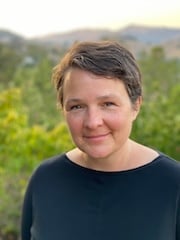
Dr. Emily Willingham is a 2022 MIT Knight Science Project Fellow, and the author of several books, including the upcoming If Your Adolescent Has Autism: An Essential Resource for Parents from Oxford University Press, and has served as a regular contributor to Scientific American and other national publications.


Add a comment: