Sensory integration therapy: worth the cost?
Plus, a new post at TPGA, covering the evolving state of autism research at INSAR 2026.

Risen from the dead, part kazillion: This time, it’s about sensory integration therapy.
Back in 2017, over at Forbes, I covered a pair of systematic reviews that had just come out in the journal Pediatrics on several “interventions” for autism, including sensory integration therapy. I framed the findings with some commentary, but devoted the piece to what the study authors reported and to comments from an accompanying expert perspective published in the journal. Here’s how my piece opens:
If you've spent money and time for your autistic child to receive therapies targeting "sensory integration" or other sensory-related methods and wondered if they do anything, here is your answer: No. Or probably not. Or who knows? In other words, the evidence base for these therapies is fragile or nonexistent, at least according to a systematic review just published in Pediatrics, covering the findings of 24 studies. The review […] focused on massage, sensory integration approaches, environmental enrichment and auditory enrichment, tossing in the available few studies of music therapy and weighted blankets for good measure. That list likely sounds familiar to parents of autistic children.
It’s been a minute, but I’m guessing it still sounds familiar.
Apparently, coverage of newly published research is a new concept to some people, no matter how old that coverage is. Thus it was that I discovered this post from 2024, a rebuttal of sorts written seven years after my Forbes coverage. That piece I’d written was making the rounds (thanks to ABA practitioners for some reason) and causing offense to some corners of the autism-therapy world.
The denizens of one corner took it upon themselves to tilt at strawmen they themselves constructed, seeming not to have grasped that the piece was coverage of research findings and not an expression of my opinions. The piece was straight up “here are two new studies” with some personal (and kind of positive!) framing of my experiences. No more, no less. But the sensory integration practitioners were very het up despite the passage of time. Posting on their site, one of them wrote:
As a 20-year experienced Occupational Therapist, private practice director at Occupational Therapy for Children (OTFC), provider of Sensory integration therapy – certified in Sensory Integration Assessment (SIPT) and treatment through the University of Southern California, advocate for families with disabilities (especially children with Autism Spectrum disorder) and mentor/clinical director to 10 amazing occupational therapists I feel compelled to respond to the article “Sensory Therapies For Autism: How much sense do they make?” written by Emily Willingham.
The compelled writer seems to have felt compelled to call on a master’s student in the OT practice to go to a great deal of trouble to assess the two 2017 studies I covered. What they had to say would have better been directed at the people who conducted the research.
The therapists state that my “article purported to criticize sensory integration as a treatment modality for autism,” which it did not; it attributes findings to the authors of these studies, who themselves found little evidence to support the modality. In the therapists’ summary of their own “findings,” they assert that my piece concludes “that the evidence for Jean Ayres Sensory Integration for autism is non-existent.” What is non-existent is any mention in my piece about “Jean Ayres Sensory Integration.” What I did say was this:
… the evidence base for these therapies is fragile or nonexistent, at least according to a systematic review just published in Pediatrics, covering the findings of 24 studies.
It was the conclusion of the studies!
The master’s student averred that I should have mentioned studies suggesting that this specific approach is effective and committed a sin of omission by not having done so. I guess I might have done that had I been (a) assessing the value of this specific approach, (b) doing a piece on the general evidence around sensory integration as a therapy, and/or (c) not specifically covering two then-newly published studies with a broad look at therapies that happened to include sensory integration. The findings of limited evidence weren’t even that novel, as I noted:
The thing is, these conclusions aren't especially novel. As the authors themselves note, a half dozen previous reviews stretching back to 2011 have yielded similar results: limited support for most of these approaches.
I write about this now because the person who posted this “rebuttal” accused me of something pretty serious:
I understand that the author, Emily Willingham, is employed to provide ‘her opinion’ and that Forbes clearly states that ‘opinions expressed by Forbes contributors are their own’, however [sic] this does not excuse incorrect citation or one person’s opinion that can have a direct impact on many families and their children with autism worldwide.
My piece has no “incorrect citations” and shitty media literacy doesn’t excuse someone from the crime of making such a weird, unfounded accusation of implied harm. What’s harmful is the distraction of a costly “intervention” for autistic children that rests on a wobbly-at-best evidence base. What’s harmful is the lack of equitable access to the big tent of what will actually improve the lives of autistic people.
I included in my piece information from an expert commentary that accompanied publication of the two studies. This expert (it was Geraldine Dawson, actually) stated that sometimes, what looks like a positive therapeutic effect is a placebo effect. I made clear that the source of this suggestion was Dawson. The rebuttal sources it to me instead, framing it as my opinion, and concludes with what I can only describe as a wild self-own on the extremely interesting question of a placebo effect and the evidence for sensory integration:
Many honest parents have questioned the effectiveness of ‘Sensory Integration’ in contributing to the gains their children have made at my practice over the last 15 years and whilst I sincerely thank them for their honesty, my response in question is always the same: “Given the progress your child has made, the money you have spent and what your family life is like today, if you had the time again, would you choose to include Sensory Integration at this practice as part of the coordinated approach to supporting your child’s development?” The answer is always the same.
The answer here is “sunk costs.” That’s the answer. And those costs are not negligible.
The only personal opinion I rendered in the piece is the same one I offer in the context of all expensive, evidence-weak therapies for autistic people:
So it might be worth looking into the "placebo" part of these effects as much as the "therapy" aspects of it to determine what's really working for autistic children receiving them. And it might be worth asking autistic people, including autistic adults, what works best for them. Autistic adults, especially those who have had to devise their own accommodations, often develop their own methods for managing sensory overload, tactics that might be completely translatable to the pediatric setting … if only someone would ask them.
And I stand by that opinion, still and always.
Meanwhile, studies in this area remain subject to considerable confounding, a persistent problem. And a randomized trial from 2022 showed no effect of the intervention. The authors of that study concluded:
… sensory integration therapy was not significantly better than the usual care and is a more expensive option.
They also concluded that:
Health economic evaluation suggests that sensory integration therapy is not cost-effective compared with usual care alone.
Media literacy, scientific literacy – get some.
News you can use
-
As one of our editors notes, autistic socializing is different — not broken:
Brain imaging supports the idea that social struggles might arise from a mismatch in cognitive strategies, rather than an inherent inability to connect.
- Autistic relationships to nature vary. For sensory reasons, nature can be overwhelming, but many autistic people find it soothing and feel a deep, intrinsic connection. The downside of the latter is that it can lead to increased "eco-grief" over the state of our planet.
- While Robert F Kennedy the Lesser wastes money on self-interested vaccine “research,” people try to split autism into two or four subtypes or divide autistic people based on some concept of “profound,” and others want to dismantle the spectrum and shrink the tent, autistic children suffer at the hands of underpaid, undermanaged, undertrained “aides” and programs. What are we doing here?
- RFK the Lesser’s also on the attack against antidepressants and possibly readying to deprive people of access to them. Meanwhile, yet another study shows no link between antidepressant use in pregnancy and having an autistic child.
- A TPGA editor notes the announcement of a new meeting of the Independent Autism Coordinating Committee (or I-ACC, definitely to be confused with the Interagency Autism Coordinating Committee, or IACC). The I-ACC added two new autistic members, including former IACC member Jenny Mai Phan, who our editor says is “awesome.” The other is John P. Hegarty II, who conducts basic research that does not address quality of life for autistic people. Unlike previous seatings, none of the members of the I-ACC (remember: to be confused with the IACC) have intellectual disability or are non-speaking autistic people, both groups represented in the previous IACC seating. The IACC (not to be confused with the I-ACC) does have three non-speaking members.
New at TPGA
Even the most cynical among us can’t deny the ever-increasing autistic presence seen at the annual meeting for the International Society for Autism Research, INSAR 2026. For many autistic attendees this year, the joy of representation was palpable. We hope, as INSAR continues, it will also take more note of the need to improve the quality of autistic lives, as measured by autistic people’s own standards.

INSAR 2026: The State of Autism Research, Prague Version — THINKING PERSON'S GUIDE TO AUTISM
We've been covering INSAR for 15 years. It is fascinating how the autism research landscape both has and has not evolved during that stretch.
Thanks for reading, and here’s to equitable access to everything that’s actually useful for autistic people.
Got something autism-related to share with us? Send it along to [email protected].
Got a comment? We’d love to hear from you, so drop us a line below. Please note that comments are moderated per TPGA guidelines.
About the Author
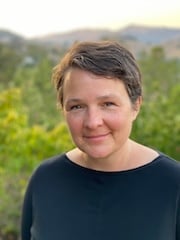
Dr. Emily Willingham is a 2022 MIT Knight Science Project Fellow, and the author of several books, including the upcoming If Your Adolescent Has Autism: An Essential Resource for Parents from Oxford University Press, and has served as a regular contributor to Scientific American and other national publications.


Add a comment: