Facilitated spelling: we need rigorous research, not polemics
When it comes to “facilitated spelling” as a communication method for nonspeaking autistic people, the polarization rivals that between the antivaxxers and everyone else.

When it comes to “facilitated spelling” as a communication method for nonspeaking autistic people, the polarization rivals that between the antivaxxers and everyone else. As with many areas of autism-related research, in the realm of “facilitated spelling,” small cadres stake a claim on a hill where they’re willing to metaphorically die rather than give an inch. Whether they stand at the extremes of “infallible autism therapy that uncovers secret powers in everyone” or “only delusional people buy the shit they’re selling,” people at both ends refuse to see the evident but unsettled middle ground.
The current “facilitated spelling” practices at the center of these controversies are Rapid Prompting Method (RPM) and Spelling to Communicate (S2C). Both involve a second party serving as a facilitator for an autistic person, usually by holding up a letterboard or device for the autistic person to use to spell words. A premise of these methods is that autistic people often struggle with motor planning and execution, both for speech and for other purposes (can attest). Facilitation and practice, the idea goes, help them overcome some aspects of these challenges and reveal expressive language abilities (expressing thoughts with words) that otherwise go undetected.
Evidence exists that at least some nonspeaking autistic people using these methods move on to communicating independently – without being guided in some way, consciously or unconsciously, by a facilitator. Along with a motor-related physiological rationale that I can’t dismiss, examples like these leave me open to the possibilities of such practices, along with my closely held, gotta-take-it-from-my-cold-dead-hands ethos of presuming competence and not rejecting lived experience.
Yet those who cannot bear the idea that “nonverbal” does not equal “utterly incapable” refuse to accept that such people exist. These ultraskeptics, often co-occurring with enthusiasts of the “profound autism” label and applied behavioral analysis (ABA), assert that without exception, facilitator cues underlie any apparently coherent communication. Yes, they refer to the “Clever Hans” phenomenon as the explanation.
In their eyes, nonspeaking autistic people are no more capable than horses of understanding or expressing language and do so “successfully” only because of cues from facilitators. Paradoxically, the ultraskeptics also claim that autistic people aren’t pointing on their letterboards where facilitators say they are. It’s unclear how the ultraskeptics reconcile these mutually exclusive claims (you can’t argue that there’s unlikely accuracy because of the facilitator at the same time you argue there’s inaccuracy because of the communicator).
I’m writing about this subject because The Transmitter has just published a piece on “facilitated spelling” with a headline that makes the claim that there is “Still no proof for facilitated spelling methods.” The subject of this piece is a weird little “systematic review” that its own authors self-describe as “empty.” The Transmitter piece describes the review as “an analysis,” despite the fact that it analyzed precisely nothing, which seems to have been precisely the authors’ intent.
Among many concerns, my primary one is that this group of authors – who the public record attests are clearly obsessed with attacking these methods at sometimes a very personal level – pretended to conduct a systematic review at all. They had to have been quite aware going in of what they would conclude. The only thing systematic about this “review” is that they systematically set the constraints to produce no studies to review. Indeed, they noted as much in a protocol they posted on a registry for groups planning to conduct these kinds of reviews, saying, “We expect that there will be no or a low number of studies, not enabling meta-analyses across studies.”
The authors of this “systematic review,” published in the Review Journal of Autism and Developmental Disorders, are listed below. They all declared no conflict of interest; note that conflicts of interest can be financial, professional, or intellectual:
- Ralf W. Schlosser, a professor at Northeastern U who runs a consultancy in augmentative and alternative communication, offering himself for speaking engagements and professional development in, among other things, “Pseudoscientific interventions: How to identify and resist them” and “systematic reviews,” and for “Training/Development and Coaching of Teachers, SLPs, and BCBAs” (an ABA aficionado!), complete with testimonials (my favorite of the 10 red flags of fake science)
- Howard C. Shane, a professor and developer of assistive technology devices, including a recent one that appears to be a direct competitor with facilitated-spelling–related approaches, and a frequent expert witness in court cases involving facilitated communication
- Lucy Bryant, a speech pathologist/lecturer at the University of Technology Sydney whose funded research focuses on AAC technology, specifically augmented reality, like this one in prototype in 2025
- Katharine Beals, an adjunct assistant professor at U Penn, parent of an autistic child, “architect” of a “linguistic software program for language-impaired children,” and very focused on writing ultraskeptical commentaries on FC
- James Todd, psychology professor at Eastern Michigan whose sole focus seems to be ultraskepticism about FC and a seeming fan of BF Skinner and ABA, who also serves as an expert witness in FC-related court cases
- Russell Lang, a committed ABA enthusiast now at Texas State University
- Sharon Skinner, mystery person with no affiliation and a location given simply as “Scotland”
- Bronwyn Hemsley, a speech–language pathologist who co-authors lots of anti-FC commentaries and AAC tech studies, such as these, with Lucy Bryant
Schlosser et al.’s introduction to this particular “systematic review” has the tone of a barely controlled polemic and is overtly condescending in its treatment of studies that counter the authors’ clearly pre-determined opinions. The opening section often and repeatedly cites the authors’ own work as counter evidence – including citations to non-peer-reviewed blog posts one of the authors wrote for an explicitly anti-facilitated communication site where at least two of them post. [NB: It is bonkers that this “systematic review” contains so many citations of blog posts and even a memoir, but they’ve done it before.]
In this particular systematic review, these authors have a specific target, Vikram Jaswal, professor of psychology at the University of Virginia and the father of a user of S2C. Jaswal has worked with I-ASC, a key organization promoting S2C, in some of his research. He’s long been an apparent target of the ultraskeptics. One of the current systematic review authors, Katharine Beals, writes lengthy, granular ripostes to his work, mostly on a blog, but occasionally published in journals, such as the snidely titled, “Illusions of literacy in nonspeaking autistic people: a response to Jaswal, Lampi & Stockwell.” In the empty systematic review, Schlosser, Beals, and their co-authors shift between citing work from Jaswal and colleagues and their own motley assortment of publications. The result is an opening section that reads like a debate involving two parties – except in this debate, just one party gets to speak or produce evidence. The only drum these authors seem to own is one labeled “anti-facilitated communication,” and they are intent on beating it.
In their polemicist introduction, Schlosser et al. marshal the weakest possible citations to support their claims of facilitator control over output from “facilitated spelling.” Only one of these citations was published in a scientific journal. It’s a sole-author possibly-peer-reviewed narrative review by Beals, responding to a peer-reviewed study by Jaswal et al. The other citations they offer as sources are this blog post that describes a letterboard user’s personal experience, a personal memoir, two court cases, and the Telepathy Tapes podcast. Rigorous scholarship this is not.
A systematic review, as the descriptor implies, means that the authors ostensibly undertook a review of evidence in a pre-determined, systematic way, including setting the parameters for including or excluding published research. Schlosser et al. self-describe their review as “empty,” meaning that in their search for studies, they turned up nothing relevant to review. In setting the inclusion and exclusion criteria for publications to include, they essentially guaranteed they’d come up empty. Their main criterion, related to study design, was markedly narrow, requiring a study to have:
… a quantitative experimental design involving (a) a priori controlled manipulation of knowledge/stimuli presented to the facilitator and the individual to (b) empirically establish who was authoring the messages produced in response to the stimuli to evaluate authorship of messages produced using RPM/S2C and its variants.
The translation of that is that any included study had to confirm authorship of produced communication in a very specific way.
Their exclusions were telling, as well, ruling out any study that relied on linguistic analysis, analysis of eye or finger movements, and observations or interviews. In other words, the only studies they would have allowed would have been those that used their very narrow inclusion criterion regarding study design.
Schlosser told The Transmitter that he and his co-authors conducted the “review” because they “felt that there was a need to see if there was any direct authorship testing.” It’s a specious rationale given the vanishingly small chance that these authors, of all people, would have overlooked publication of any study relying on their pet study design. They knew they wouldn’t find anything. Color me a curious one, but when I think there’s a gap in the literature and I have access to resources to address it — well, I address it. These authors apparently have not.
Here’s what their search process yielded: More than 7000 records; with duplicates removed, a total of 5,857 records.
They excluded 5,830 publications based on reading the abstract alone. We do not know what the 5,830 publications they excluded said, described, reported, or concluded. We just have to take their word that they weren’t relevant within the constraints they imposed. We don’t know what the research designs were. Despite the authors’ insistence on the validity of only a single method – one they favor – there is more than one reasonable method for this research. All we know from this review is their claim that the specific experimental design they sought wasn’t used in any of the thousands of excluded publications.
They did a closer, full-text examination of 25 publications and decided that none of those met their criteria, either.
So, the “systematic review” was “empty.” I, too, would come up empty if I conducted a search for studies that don’t exist using a design that I know no one – including myself – has used for this purpose.
The Transmitter chose to cover this “systematic review” that set aside thousands of publications on the subject of “facilitated spelling,” but the piece did not mention these details about it.
The Transmitter headline claiming “still no proof” is belied by comments from sources in the piece such as David Amaral, distinguished professor of psychiatry and behavioral sciences at the University of California, Davis MIND Institute. Amaral is framed as viewing the entire debate as “too polarized and too dogmatic” and says that “a subset of autistic people may benefit from facilitated communication … particularly those who go on to become independent spellers.”
Indeed, another source in the Transmitter piece, Helen Tager-Flusberg, director of the Center for Autism Research Excellence at Boston University, is author on a study suggesting that a quarter of nonspeaking autistic people have receptive language capacities that outpace their expressive language ability. Is this proportion somehow not substantial enough to warrant further investigation and consideration for supports?
Unlike the authors of the empty review, Amaral told The Transmitter that he would like to see a variety of methods applied to identify this group. He felt this strongly enough that he asked Jaswal and colleagues to write a commentary to accompany the empty review. In a published explanation of this decision, Amaral writes that he was motivated in part after attending a conference that [boldface mine]:
… featured adult autistic individuals who used letterboards, iPads, or keyboards as their primary means of communication. My goal was to determine whether I thought that these individuals were being manipulated by their facilitators or conversely whether they were communicating their own thoughts. My general impression was that there was little or no manipulation and that individuals who could not express themselves verbally had found an alternative method to do so. Of course, I am not an expert in this area, and my impression is only anecdotal.
The commentary that Amaral solicited from Jaswal and colleagues is a thoughtful, measured, and evidence-based appeal for studies to sort out how and which autistic people can benefit from these approaches. In addition, similarly to Amaral, the authors of the Jaswal et al. commentary leverage their sum total decades of experience with autistic people to note that the type of study design Schlosser et al. insist on:
… [does] not show that assisted methods to teach typing never help learners achieve the goal of typing independently. As noted earlier, in our research labs, clinical practices, and community partnerships, we have gotten to know nonspeaking autistic people who now type independently and who attribute their success, in part, to the assisted teaching methods by which they were taught. In our experience, developing that level of independence can take years, but this is not surprising given the complexity of typing; the variable skill level of the assistants; the neuromotor, attentional, and sensory challenges that many nonspeaking autistic people face …
In addition to omitting the particulars of the empty review’s inclusion/exclusion choices, The Transmitter piece omitted these key observations from established autism researchers. Jaswal submitted comments to The Transmitter, but the piece included only his observations that the empty review’s multiple red flags didn’t strike him “as a form of serious academic engagement” and that “other methodologies that are standard [in these fields] … were excluded” from the empty review. [TPGA has the full text of comments that Jaswal provided to The Transmitter and has appended them below, with his permission.]
Here are the words Amaral used to end his explanation for asking for a commentary from Jaswal and co-authors [boldface mine]:
I hope that autism scientists will keep an open mind on this article and think of innovative ways to carry out robust science on this topic. What if there is a sizable subset of autistic individuals who are cognitively capable but cannot communicate their wishes because they are unable to talk? Should not we be devoting additional resources to figuring this out?
Given that even the ultraskeptics admit that studies they’d consider gold standard to settle this question don’t even exist and they themselves don’t seem to have conducted them – well, yes, of course we should.
Jaswal’s emailed comment to The Transmitter, in full:
I was surprised that almost all of the references the authors used to motivate this empty review are to commentaries published in journals they edit, blog posts they wrote, policy statements they authored, or prior empty reviews they have written—one of which (Schlosser et al., 2014\) was not even peer-reviewed. This scholarship by self-reference to non-empirical, often non-peer-reviewed material does not strike me as a form of serious academic engagement.
I was less surprised about what the authors found. The only studies they considered including involved message passing tests. Other methodologies that are standard in contemporary communication science, psycholinguistics, and neuroscience (e.g., eyetracking, movement analyses, stylistic analyses) were excluded. This would be like conducting a systematic review on object permanence, limiting eligible papers to those between 2016 and 2026 that investigated whether 6-month-old infants reach for hidden objects. There are unlikely to be any studies (positive or negative) meeting those criteria. But it would be incorrect to conclude from that empty review that 6-month-olds do not understand object permanence. Countless studies over the past 40 years using other methodologies have demonstrated that they do."
News you can use
- Awwww. Look. Another “autism gene” has been found. I believe this is the 2,395,617th one. But seriously, my favorite line from this news coverage is the description of whole-genome sequencing as “revolutionary technology.” It’s been decades long, this revolution.
- The AASPIRE Measurement Toolkit is a set of accessible survey instruments for use in research or clinical settings. The Academic Autism Spectrum Partnership in Research and Education (AASPIRE) created or adapted each of these instruments using a community-based participatory research (CBPR) process, that had academics and community members working together in all stages of the research. (Note: TPGA editor Shannon Rosa was a community partner for this project.)
-
Autistic researcher Dr. Steven Kapp has developed this useful neurodiversity vs. medical model explainer. The conclusion:
While a world free of stigma or discrimination may remain pursuable but elusive, neurodiversity and mainstream cure proponents can maximize common ground in the autism community to fight for shared values in science and services (even if their goals are different) at a time when both are threatened.
- From our editors: Even the NY Times is outraged about the mistreatment of autistic children in for-profit autism "clinics." Will we see change? Will autistic children finally be supported fairly? (And will our poor littles be allowed to nap when they need to?)
New at TPGA

AuDHD Isn’t Just Autism Plus ADHD: The Tie Dye Model — THINKING PERSON'S GUIDE TO AUTISM
Autistic & ADHD traits combine to create AuDHD, just like red & blue overlap, intersect, & interact in tie-dye to make unique color combos.
“Just like red and blue overlap, intersect, and interact in a tie-dye t-shirt to make unique color combinations, Autistic and ADHD traits combine to create AuDHD.”

Neurodiversity Needs Neuroinclusive Leadership — THINKING PERSON'S GUIDE TO AUTISM
"Nothing about us without us” shouldn’t be read as exclusion. After all, every single community needs allies.
“Neurodivergent communities also have a responsibility to include the needs and perspectives of those whose lives intersect with our own. Instead, it should be understood as a call for more accurate, grounded, and accountable leadership.”
People you should know
- Daniel Wendler is an autistic clinical psychologist and workplace advocate who has a way with words. He uses a polar bear analogy to describe how it feels for an autistic person to be plonked down in a workplace built for non-autistic people: The polar bear is great in its own environment of Arctic ice (as long as it is around), but in a cubicle farm, not so much. The bear hasn’t lost its capabilities – the new environment just isn’t built for its talents. For autistic people, the standard open-office plan can make them feel like that displaced polar bear. Yet research suggests that there are “suppressed talents” waiting to be released, if only the environment would allow it. The solution? Wendler suggests an emphasis on universal design, developing accommodations for the autistic polar bears that likely will end up benefiting everyone.
Thanks for reading, and here’s to academic rigor and presuming competence.
Got something autism-related to share with us? Send it along to [email protected].
Got a comment? We’d love to hear from you, so drop us a line below. Please note that comments are moderated per TPGA guidelines.
About the Author
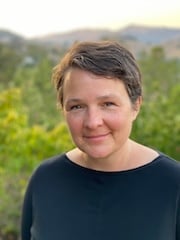
Dr. Emily Willingham is a 2022 MIT Knight Science Project Fellow, and the author of several books, including the upcoming If Your Adolescent Has Autism: An Essential Resource for Parents from Oxford University Press, and has served as a regular contributor to Scientific American and other national publications.
-
This was a great article. Thank you for writing it. I run a program for typers in Connecticut called STeP Supported Typing Program. If you are ever in the area please come by and visit us.


Add a comment: