Autism Overdiagnosis, my ass
We need a bigger tent, not a smaller one.

Two clinicians have written an op-ed published in JAMA Pediatrics, arguing that autism is overdiagnosed. The essay begins with a slippery definition and proceeds to weave yet another medicalized just-so story. It is saturated with the attitude that only those whose struggles are most obvious to clinicians deserve a diagnosis and any benefits that follow on one.
This call to shrink the tent instead of calling for its expansion for a population that is actually underdiagnosed and overlooked is coldly utilitarian and dismissive. It also ignores the realities that autistic people have been trying to communicate forever.
The essay authors begin by defining “overdiagnosis” as “a misdiagnosis or a diagnosis of a profile that is mild and not significantly impairing.” It is wild how much clinicians insist on using disease terminology to describe autism. It’s a complex way of existing, a construct of a human brain in all of its layers and manifestations. Yet here, being autistic is framed as though it could be categorized like virus symptoms as “mild,” “moderate,” and “severe” and addressed accordingly. It’s like taking an entire human and categorizing them as mildly, moderate, or severely human.
Likewise, it is extraordinary to make the assumption that a diagnosis should not be attached to a condition that is “not significantly impairing.” The very phrasing implies that some impairment exists. Any accommodations or understanding unlocked by a diagnostic ‘label’ might ameliorate that impairment and enhance how others understand that person. Of note and probably not by accident, their definition is strangely expansive and not in keeping with common usage.
The authors then list several phenomena they say play into the claimed “overdiagnosis.” Not one of them sets aside the validity of an autism diagnosis.
First, they list a diagnostic shift that has included more autistic people without intellectual disability. They acknowledge that this phenomenon is not necessarily overdiagnosis (so why is it given here?) but say that it implies “diagnostic ambiguity” and “evolving terminology.” They seem to believe that evolving terminology toward accuracy and reducing ambiguity are bad things. And plenty of studies have shown that factors in diagnostic shift include awareness about autism and a drop in diagnoses of autistic children of color with intellectual disability or other conditions instead of autism.
The next two items on their list blame clinicians. They say that clinicians “may stretch diagnostic boundaries” so that patients can access supports they would not otherwise receive (the horror). These authors offer this statement unaccompanied by evidence and seemingly without real-world understanding of the hoops families and autistic people must clear to obtain services. Yet the duo conclude that “overdiagnosis could occur via misdiagnosis or milder impairments,” which again implies that impairments do, in fact, exist. They position themselves once again as seeking to shrink the tent to exclude people who actually belong in it.
They also blame “mechanical reliance” by clinicians on scores from standardized diagnostic tools instead of sorting out nuances around a child’s eye contact or the complexities introduced by the apparent presence of anxiety and other conditions. Among their very limited offering of citations as evidence in this essay, one of the authors cites their own study, begun in 2011, of 242 children diagnosed as autistic and referred for participation in research.
In that study, when the autism research team re-evaluated the children, they found that 47% did not meet the team’s criteria for autism. The study participants were almost all white children, and none had intellectual disability or medical complications (which immediately skews outcomes toward the ostensible “gray areas” these authors are handwringing about). The original diagnoses for participants were from the DSM-IV, back when Aspergers and PDD-NOS were in there, with 37.2% of the participants falling into those two categories. There were concerns at the brink of the DSM-5 rollout that those in these categories would be excluded by new criteria, and the results of this study seem to confirm that outcome. The authors relied on DSM-IV and DSM-5 criteria to adjudicate which children qualified as autistic in their eyes. More than half of those entering the study with Aspergers or PDD-NOS were un-diagnosed by the researchers. In contrast, well over half entering with a DSM-IV diagnosis of autistic disorder retained the autism diagnosis. The researchers also concluded that many children whose autism diagnoses they reversed instead had other conditions, yet they are conditions that happen to co-occur quite often with autism.
The fourth and fifth phenomena the two authors offer make their aim to shrink the tent even clearer. In a bizarre analogy, they claim clinicians might see toe-walking and sensory sensitivity and immediately think “autism” because of its close association with these features, but that it would be atypical to see a tall person and “refer to Marfan symptoms.” The thing is, toe-walking and a sensory aversion together do raise the possibility that a person could be autistic. Being tall is just a single feature, but if I see someone who is both quite tall and lanky and has very long arms relative to the usual height:arm ratio, I do, in fact, “refer to Marfan symptoms.” Perhaps that makes me atypical.
The authors move on to bemoan that autism has been defined as a spectrum rather than as a “categorical disorder.” The latter likely is much more convenient for clinicians and others who want a tidy box for everything, even the suite of behaviors of an entire human being. Relatedly, they bemoan the “decreasing severity of presentations” and that “milder presentations are deemed increasingly impairing.” The tent shrinks further.
Of course, this urgency for tidy labeled buckets with no complexity placed within the smallest-possible tent takes the op-ed exactly where we all know it will go: “profound autism.” The authors write,
Camouflaging presupposes a person understands acceptable behavior and then adjusts their more natural behavioral pattern accordingly, even if it is uncomfortable. Children with profound autism may not understand the norms in the first place, let alone adjust. Camouflaging involves a much milder form of autism, ie, an expansion of the autism concept.
If it is still a form of autism, how is this overdiagnosing?
What follows is the usual ableist utilitarian argument predicated on handwringing about the “dilution” of resources and the “trivializing” of children with “profound autism” (as opposed to the profound limitations imposed on a child shoved into a bucket with that label). The authors then proceed to erase the very children they claim to be arguing for:
Many people will encounter milder autism but never encounter profound autism. The latter presentation is rarer, and these children tend to be in segregated settings, whether in specialized education or because behavioral profiles make public settings challenging. Thus, to speak of ‘autism’ today and bring to mind the former but not the latter child exacerbates resource diversion. The latter child is barely even known to exist.
Wow. Just … wow. Ahistoric erasure of the very population of autistic people they want so badly to label as having “profound autism.” All amid an argument to exclude the people who could serve as guides within a broader tent to the possibilities, needs, and potential for autistic people with the most obvious high-support needs. The people who are, I will add, very fucking visible if you bother to engage with them and advocate for their right to be visible and included in all walks of public life.
Finally, these two authors present a scenario for “mild autism” that I personally have never witnessed in all my decades in the autism community:
A self-fulfilling prophecy can develop. A child who is socially withdrawn is permitted to isolate, minimizing habituation to social circumstances and decreasing social opportunities, thereby reducing social practice. The same applies to behavioral rigidities or sensory aversions. There is a risk of attributing all the child’s troubles to autism, as opposed to, say, a circumstance, thereby reinforcing one’s concept of the child. This does not allow a child to develop their full capacity.
This description is almost unhinged in the unreality it presents. We have so many autistic advocates out there calling for visibility for autistic people, places and spaces where they are welcome, full realization of the promise of a free and appropriate education in the least restrictive environment, and recognition of the beauty that a big tent represents. And then we have this off-the-wall assertion that acknowledging the needs of an autistic person and accommodating them risks rendering them into unformed troglodytes lurking in cavelike basements, with potential forever unfulfilled. I have to say, I’ve never seen such a stark disconnect between the messaging of the autistic self-advocate community and this bizarre, manufactured “risk” of an autism diagnosis for all but those with the most visible support needs.
They have more! They know they can’t dispense with the spectrum concept entirely, so they say: “There’s a significant difference between a child who has difficulty doing something and a child who utterly cannot. A spectrum does not negate this. Even on the taller end, there’s still a world of difference between being 7 or 6 ft tall.”
Actually, there is only one foot of difference. And unlike autism, which characterizes the complexity of a human brain, height is a single measure of a contained feature – all you need to measure it is measuring tape. Lucky for me, a previous newsletter offering my argument against the “profound autism” label and for a big, inclusive tent for autistic people, is a pre-written riposte to this comparison. Readers, I cannot help but wonder if perhaps they came across the analogy I presented about height in this earlier newsletter and then let it live rent-free in their heads as they wrote their essay.
Here’s a bit of what I wrote:
All people who are taller than average must deal with a similar set of incommoding issues in daily life, including airplane seats, doorways, dangling light fixtures, tiny cars, weirdly small toilets, clothing at regular clothing stores, and not-tall people asking constantly “How’s the weather up there?” as though they were the first to ever, ever make that “joke.” Anyone who is tall would benefit from accommodations for tall people, no matter how over-average in height they are. There’s not a category of ceiling height that would be great only for some tall people and not others – they all would have to duck a little less and sustain fewer banged heads. There’s not an embiggening of an airplane seat that wouldn’t help tall people be at least a little less painfully uncomfortable – they’d all have a little more room for their femurs. Accommodations for tallness are useful for all tall people.
Overdiagnosis is a simplistic category on its own, one that apparently people can define according to the story they want to tell. The real landscape of autism diagnosis is far more complex, as identified in an interim report published in March by a UK independent review committee responding to such claims. Those authors say that “underdiagnosis, misdiagnosis, and overdiagnosis are not mutually exclusive possibilities” and that evidence indicates that “under-recognition persists, particularly among older adults. This appears especially marked beyond the age of 30, with the extent of underdiagnosis increasing with each passing decade.”
Finally, back here in the USA, it is risible to argue that this country, which throws billions away on the adolescent delusions of the men who lead it, cannot afford a tent big enough to serve, support, and accommodate all autistic people. It is a matter of priorities. There is no question that arguing for winnowing a population down only to those who seem to need the most shows us all exactly where some people’s priorities lie.
News you can use
- RFK the Lesser has left quite a track record behind in his first year “leading” Health and Human Services. The Autistic Self Advocacy Network (ASAN) unpacks the “year of misinformation” associated with his wretched, reckless statements and decisions.
- Among the many, many reckless and dangerous choices made under his watch is the packing of the Interagency Autism Coordinating Committee with some of the most vitriolic uninformed parents ever to disgrace the autism community. The result has been the displacement of multiple perspectives and voices of parents – autistic and not – with a single shrill note of ignorance and, possibly, with illegality. Sara Luterman over at The 19th unpacks how who represents mothers in the autism community has been narrowed to a tiny, vocal, vicious slice, and ASAN has detailed the potential illegality and irregularities of the proceedings.
-
Among the many, many things RFK the Lesser does not understand (or just straight up lies about) is disability policy. ASAN explains:
RFK Jr. does not seem to care about helping people with disabilities to live in our communities. He said that many workers and families who help with HCBS lie about if they’re actually giving people HCBS. That is not true. The disability community is hurt by what RFK Jr. says and how he ignores our needs. RFK Jr. lied about trying to cut money for programs that support people with disabilities, like Medicaid. He said that there are no cuts to Medicaid, but that’s a lie. HHS is also trying to cut many other programs that help people with disabilities.
-
Relatedly: ProPublica reports on the horrific pincer movement the federal government is exerting against people with disability and their families:
A rule change pushed by White House officials would slash benefits or end support for as many as 400,000 Supplemental Security Income recipients with Down syndrome, dementia and other disabilities whose parents or relatives receive SNAP benefits.” The government wants to count the SNAP benefits as part of the disability money: “President Donald Trump’s administration is poised to penalize people like Burton simply for living in the same home as their families, according to four federal officials, internal emails and a federal regulatory listing. The administration is working on a rule change that would deduct the value of a disabled adult’s bedroom from their SSI allotment, even if the family members they live with are poor enough to qualify for food stamps. This would mean slashing the benefits of some of the most low-income SSI recipients by up to a third … or ending their support altogether.
Australia’s “national autism strategy” includes promoting self-employment for autistic people. Carmel Riley, an autistic parent of an autistic teen, is quoted in the piece: “That's the other beautiful thing around self-employment for neurodivergence. You can actually create the environments that you can thrive in and deliver really good quality products and services." I don’t know how things are in Australia, but self-employment in the US carries a heavier tax burden than W2 employment. As big a fan as I have been during my own self-employment, I think it would still be better if workplaces could, I dunno, accommodate all people.
-
We will believe it when we see it. From Mother Jones:
In March 2024, the Food and Drug Administration under President Joe Biden introduced a new rule that would have banned, after decades, the use of electric shocks on disabled children as a form of punishment. A ban on forcibly shocking kids—which the American Academy of Pediatrics says causes “long-lasting adverse physical and psychological impacts,” was set to come into force last year—but the Trump FDA kicked the can down the road, giving itself more time to decide whether its new leadership was on board. Now, two years later, the FDA’s website claims that a decision will be made in the coming days on whether or not to follow through.
Yes, in this year of our lords 2026, the news media still insists on both-sidesing when obvious, unavoidable, demonstrable harm lies on one side. Bloomberg interviewed TPGA’s Shannon Rosa for this piece [gift link], who noted on social media that the outlet’s “recent ABA therapy article featured many voices, but put the pro-ABA actors front and center. We think people need to hear from autistic ABA survivors first and foremost, such as Ido Kedar's take, ‘How many toddlers like toiling at bullshit 40 hours a week?’”
New at TPGA
A first look at what came out of this year’s INSAR
Two INSAR 2026 summaries so far:

Double Empathy On Stage: Damian Milton's INSAR 2026 Keynote — THINKING PERSON'S GUIDE TO AUTISM
To combat double empathy problem fallout for autistics, we need collaboration. Autistic people themselves need to be setting the agenda.
And the AutINSAR autistic research priorities discussion:

AutINSAR 2026: Highlighting Autistic Priorities in Autism Research — THINKING PERSON'S GUIDE TO AUTISM
AutINSAR is an annual discussion on autistic research priorities, during the annual meeting of the International Society for Autism Research.
More to come once our editors who attended recover from jetlag and people overwhelm.
People you should know
-
Because autistic people can’t have nice things, apparently, they must become the targets of not one but two giant media outlets. We featured autistic author Woody Brown as a “person you should know” in a previous issue of the newsletter. Since then, a couple of pieces have come out calling into question his use of facilitated communication. One was published in The Atlantic and I’m not going to link to it. The other was published in the New York Times, and I’m not going to link to that, either. The tl;dr is that because some facilitators have been found to be placing their own interpretations on what’s being communicated, making false accusations of abuse, and in one case engaging in abuse – then all such uses must be suspect.
I’d love to see this kind of scrutiny applied to all of the non-autistic writers out there, including, famously, journalists, who are turning to genAI to do their work for them, but I guess that would be punching up rather than down. Instead of linking to those pieces, I’m linking to this TPGA interview with Dr. Vikram Jaswal, whose research focuses on autistic people using alternative forms of communication, including facilitated communication. As he notes (and as I have confirmed for myself), “some individuals who used to require assistance now type independently.” He has conducted eye-tracking research that supports autonomous letter-finding and spelling by autistic people using these methods. - I love this Lightbulb Moments video by autistic creators about being autistic. The visuals – their color, design, contours, and playfulness – speak to me, as does this quote: “People expect me to think in lines, but I think in constellations.”
Thanks for reading, and here’s to thinking outside the lines.
Got something autism-related to share with us? Send it along to [email protected].
Got a comment? We’d love to hear from you, so drop us a line below. Please note that comments are moderated per TPGA guidelines.
About the Author
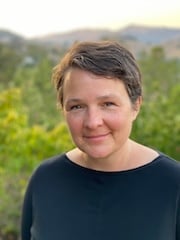
Dr. Emily Willingham is a 2022 MIT Knight Science Project Fellow, and the author of several books, including the upcoming If Your Adolescent Has Autism: An Essential Resource for Parents from Oxford University Press, and has served as a regular contributor to Scientific American and other national publications.


Add a comment: