Autism news you can use, and get you some TPGA gear!
Help us keep up this good work while you wear (or gift) a kickin’ TPGA t-shirt. :-)
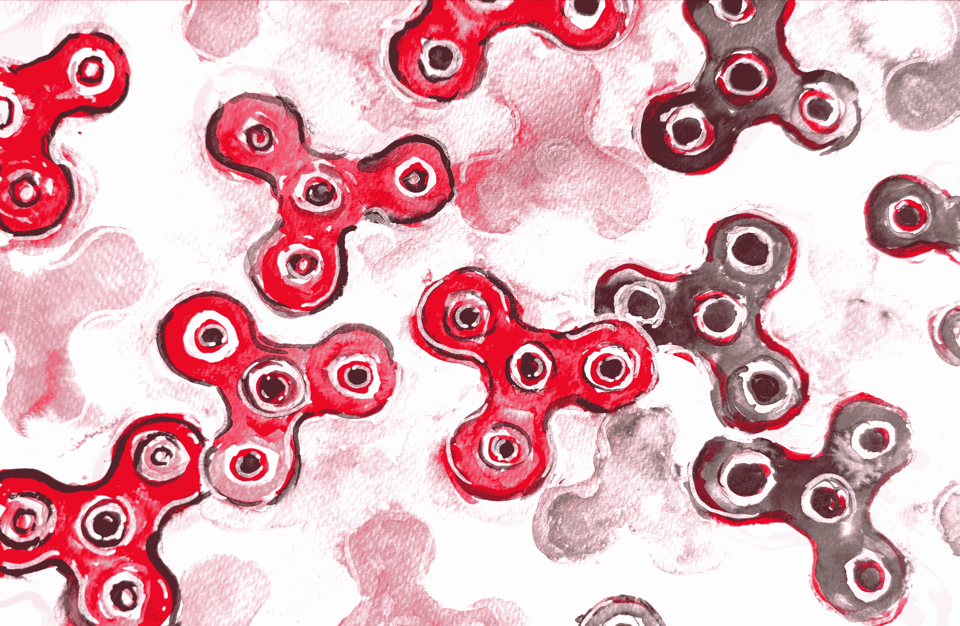
Support pride in stimming! Funds support our writers & art. Original image ©Sonny Hallett.
Swag alert
Get you some TGPA gear! Help us support our writers and artists (and pride in stimming)! We are an all-volunteer neurodiversity and autism resource, and we pay our contributors, almost all of whom are ND. Help us keep up this good work while you also wear or gift a kickin’ TPGA t-shirt. And spread the word if you can!
Tune in next week …
… for a close look at that WaPo article claiming links between autism and Alzheimer’s disease.
News you can use
- Please enjoy this delicious smackdown Kristen Bottema-Beutel has deployed against the current federal autism guidance. From the title – “When Ableism Supplants Evidence: Federal Autism Guidance in the United States" – to tidbits like “While these ableist assumptions are not novel, the incoherence of US federal guidance is now on full view,” you’ll be nodding along and enjoying a rejuvenating catharsis from seeing it all in black and white.
- In our last newsletter, we linked to TPGA’s list of autism-related organizations that support autistic people and those that come with a giant warning label. Here are some more orgs that specifically support the Black autism community.
- The next Interagency Autism Coordinating Committee (a.k.a., IACC) meeting has been moved to April 28, and comments are due tomorrow (April 14). The cast of the Usual Suspects remains the same.
- I’m not gonna link to the NY Post, but if you’ve seen a headline there and elsewhere hinting that an “FDA-approved drug” could “treat” autism, please take that with the standard grain of salt. The FDA approves drugs for specific conditions, and an approval for one condition doesn’t magically translate to approval for another condition. And the work on which this claim is based was done in zebrafish. I know that sounds silly, but that’s a widely used animal model for starter research into links among development, genes, and behavior in animals with backbones. Very early starter work. Let’s just say that there’s a really, really really long distance from A(utism) to Z(ebrafish).
- Autistic people tend to have more gut issues than non-autistic people, and constipation is high on the list of gastrointestinally related problems, as recent results published in the American Journal of Gastroenterology confirm. Although anxiety, which also is extremely common among autistic people, can certainly contribute to GI issues, a recent study in Nature Communications suggests an association of some genetic variants associated with the “little brain” in our gut, too. The work, however, was done in frogs. Yes, frogs, and in fact, an especially weird little frog species known as Xenopus tropicalis, a relative of another common lab model, Xenopus laevis. Like zebrafish, the Xenopus species are models for teasing out associations between genes and development. Also like zebrafish, it’s a long way from A(utism) to X(enopus). That said, it would be super helpful to know the origins of some of these GI difficulties, as they can be physically distressing and life-disrupting.
People you should know
- Mychal Threets, possibly the world’s most famous librarian, has delightedly posted on Instagram that he’s been formally diagnosed with autism and ADHD. From his post: “Mychal felt seen, he is still feeling a lot but is hopeful he can begin to love himself.”
- Woody Brown is being profiled by a few outlets, including People (the “severe” reference, no thank you), for publishing his new novel, Upward Bound. Brown uses a letterboard to communicate. Despite warnings from clinicians that he would never be able to process language, he was graduated from UCLA and earned a master’s from Columbia University in creative writing.
Thanks for reading, and here’s to feeling seen.
Got something autism-related to share with us? Send it along to [email protected].
Got a comment? We’d love to hear from you, so drop us a line below. Please note that comments are moderated per TPGA guidelines.
About the Author

Dr. Emily Willingham is a 2022 MIT Knight Science Project Fellow, and the author of several books, including the upcoming If Your Adolescent Has Autism: An Essential Resource for Parents from Oxford University Press, and has served as a regular contributor to Scientific American and other national publications.


Add a comment: