Can the Blue Wave wash away RFK the Lesser?
We the people are fed up with his assaults on public health and the autistic community

One result of the midterm election blue tsunami for a certain secretary of health was the immediate emergence of calls for investigations of his department and for his impeachment. It is helpful to know that these are two strategies for putting a stop to the assault on public health and human services that has been the hallmark of his regime, along with refusal to fund and denial of attempted cancellations of funding. Audits also are on the table.
To the best of my recollection and understanding, this country has never gone through such a prolonged undermining of the mission of Health and Human Services and everything under oversight of that department. The results have been death, loss, attacks on disability rights, and, of course, give that this is RFK the Lesser, lies, more lies, and useless, wasteful diversion of funds in favor of attacks on the rights of autistic people to exist.
News you can use
There is an overlap in motor-related manifestations of autism and Parkinson’s disease that has been on the research radar for decades. The research interest arises in part because of similarities in these motor symptoms and in part because autistic people may have a higher risk of developing parkinsonian conditions. The latter have been somewhat confounded by the fact that the antipsychotic drugs some autistic people need can themselves lead to Parkinson’s-like motor symptoms, so teasing out that cause from other links has been important. A recent enormous database study involving data for almost 57 million people controlled for this particular confounding factor and still showed an increased Parkinson’s risk for autistic people, and more so for those who had co-occurring intellectual disability. This study does not resolve any shared causative pathways between the two, but does highlight the need for clinical awareness of this risk and attention to the specific needs of this population.
Thanks to the recklessness and greed of RFK the Lesser, the United States is about to lose its status as a measles-free country, as we pass the 5000-case mark, and Wisconsin reports the first infant death from measles in decades.
At least one school has seen teachers in “special needs” classrooms attempt to use AI in working with autistic children, in this case a teacher having used AI to create images of a boy in the class making facial expressions that the boy never makes. The parent, according to the Washington Post, was “disturbed” to learn about this use of her child’s image with AI, clearly without permission. Could we just … not?
Autistic people may have a worse-than-average experience with menopause, and mediators of the association may include addressable factors such as mental health and quality of life. Addressable, I mean, if resources and attention were allocated to address them.
People you should know
Questlove mentioned in a recent interview that he had undergone testing for both autism and ADHD, but he did not reveal the results. Respect to him for modeling that adults who need evaluation can seek it!
There is an interesting set of letters in The Guardian in response to a recent commentary on autism, masking, and Uta Frith. They’re all worth reading, but I was most taken by the last one, in which psychologists Louise Legg and Emma Bede take up a glossed-over claim in the original commentary that “masking is completely unfalsifiable.” My favorite part of their riposte is that “The neuroscientist Francesca Happé has described watching the mask slip in a tired house guest. That is an observation, not a feeling.”
From the TPGA feeds, curated by the editors
Once again, RFK the Lesser (so much lesser) bloviates and lies. Medicare does not pay physicians to recommend a vaccine; VAERS (The Vaccine Adverse Event Reporting System) is for data collection, not evidence of vaccine injury; and the RFK tL-led Department of Health and Human Service’s proposed actions on vaccine injury are yet another costly, public health–compromising derailment.
Even though yet another investigation failed to find evidence of plagiarism by Black autistic professor Jason Arday, the "race realist"- and billionaire-aligned group that campaigned to malign Arday is doubling down with a "private inquiry” into his Cambridge appointment.
In a posted preprint, Harvard researchers "find no evidence supporting 'profound autism' as a biologically distinct phenotypic group" and "suggest that future research into severe impairment may be more productive if focused on specific traits-such as speech impairment."
[CN: Eating disorders] "I heard someone describe a late autism diagnosis like this: It’s like watching a movie that has a surprise ending, except the movie is your life. So now, when you go back and rewatch the movie of your life, you know the ending and therefore see everything in a new light."
"A person’s disability-related communication challenges must never be mistaken for defiance, used to justify unnecessary force, or become a barrier to receiving medical attention." Thank you Arc of California for condemning ICE’s violent detention of a disabled student.Autistic people report that 'autistic flow' helps "with emotional regulation, feeling connected to themselves and others, and generally improved their wellbeing, [and] left them less anxious and overwhelmed even after the 'autistic flow' had ended.
New research suggests that if you are autistic and have sleep problems, you are not alone. Plus those problems can get worse in middle and older age. However, "Addressing anxiety, and mental health problems more broadly, may improve sleep quality in ageing autistic populations."
TPGA asks questions, and autistic people answer them (autism researchers, pay attention, please).
TPGA prompt: Autistic people who are sensitive to clothing and textures: What is the one clothing issue you wish other people would understand?
TPGA prompt: If you are autistic: What is one guaranteed anxiety trigger that non-autistic people not only don’t understand but rarely even notice?
New at TPGA
Kade Elphinstone writes: “It’s well known by now in trauma-informed practice that when people—whether children or adults—have more control over their environments and their lives, they become happier about changes. Even unexpected ones. And this rule, perhaps not surprisingly, applies to autistic people, too. To put it simply: people who are autistic, traumatized (or both) tend to be okay with changes that they themselves instigate and carry through with.”
Thanks for reading, and here’s to feeling that autistic flow.
Got something autism-related to share with us? Send it along to [email protected].
Got a comment? We’d love to hear from you, so drop us a line below. Please note that comments are moderated per TPGA guidelines.
About the Author
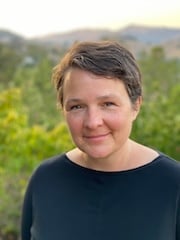
Dr. Emily Willingham is a 2022 MIT Knight Science Project Fellow, and the author of several books, including the upcoming If Your Adolescent Has Autism: An Essential Resource for Parents from Oxford University Press, and has served as a regular contributor to Scientific American and other national publications.
-
Belatedly (now that I've scraped my ironically sleep-disorder-encumbered brain together): I'm extremely glad the newsletter is back! (I figured you all might be taking a break, election-related or otherwise, and am happy that the hiatus wasn't permanent!) Thank you, as always, for the links; some of the preprint/article links are especially personally relevant to me this week, and, now that I'm no longer trying to phonebank, I'm finally getting to use my screentime for some reading (beyond bare-minimum email-skimming).
-
Glad you are doing better!! -SR


Add a comment: