"Diagnosis can be enormously helpful"
... But it is not the whole person, and it does not tell us everything about what someone needs.

Last week, this newsletter mentioned that some outlets (ahem, BBC, ahem) were once again covering – or “bleating” about – how autism and ADHD are being “overdiagnosed.” Editor Shannon Rosa has taken note of something that Peter Fonagy, chair of the independent review committee responsible for the report, has said. In his “Letter to a young person,” an adapted version of the forward to the report, Fonagy wrote:
One of the things I hope we can change is the assumption that people must first be given a diagnostic label before their difficulties deserve to be understood or supported. Diagnosis can be enormously helpful. It can explain experiences that have been confusing for years and open the way to effective treatment. But it is not the whole person, and it does not tell us everything about what someone needs. It tells us about deficit but says nothing about strengths.
Rosa notes that this difference between intention versus general reception reminds her “not a little” of the 2021 Lancet Commission on the future of care and clinical research in autism on behalf of the Global Autistic Task Force on Autism Research. That task force involved autistic advocates and was supposed to be about better supporting autistic people. Instead, Rosa says, it was hijacked by PR-savvy “profound autism” lobbyists to promote their cause.
The need to be and feel “seen” – whether formally with a diagnosis or not – is a real and existential need. Rosa notes that a lack of supports at any “level” of autism or ADHD entails an increased risk of dying by suicide. In that sense, even people with “lower-level” or “milder” appearing manifestations of these conditions still have a risk for premature death, which the authors of a published perspective say makes it unjustifiable “to suggest that those with ‘milder’ ADHD are not at elevated risk of adverse outcomes and thus do not require assessment or risk management.”
New you can use
- One explanation for why autistic girls often get later diagnoses than boys is not that girls lack autistic traits but that at young ages, autistic girls are better able to mask, or “keep it together,” in school than autistic boys. And school is often where the data gathering happens.
- This year’s 28th mass murder in the United States took place in a special education classroom in Bend, Oregon. As editor Shannon Rosa notes, kids with disabilities are already overlooked in school safety matters like active shooter drills. Over on Instagram, Jen White-Johnson has offered some potent commentary as a neurodivergent parent to an autistic teen.
- October is National Bullying Prevention Month, and the Disability Rights Education and Defense Fund recently updated their excellent Bullying and Harassment of Students with Disabilities toolkit to mark the occasion.
-
Some parents feel that they have no choice but to homeschool their neurodivergent, disabled children (ask me how I know). As this AP story illustrates, loss of trust that systems will provide necessary supports or even the basic assurance that their child will be safe leads parents away from classroom-based education. One parent put it this way:
I never set out to homeschool my kids […] We wanted our kids to have all of the big milestones you have when you attend the public schools. ... But we needed the school to say they would never restrain a child to the floor again.”
As needs must, these days I tend to sit pretty quietly when people make fun of homeschooled children or homeschooling families as some monolithic group of evangelical Christians who think dinosaurs and humans shared time on earth together or who assume that homeschool parents are ignorant and incompetent educators inflicting only harm on their children. Generally.
-
TJ from Nigh Functioning Autism writes about autism and “eloping” in a post describing their own experiences as a child and offering some safety tips:
Oftentimes, an Autistic person runs away from their so-called safety because it’s actually not safe at all. Many chronically abused Disabled people escape from their surroundings whenever they get the chance. A lot of times, police automatically send the Disabled person back because they can’t express their abuse, and authorities almost always take the side of the caregivers.
- I’ve written before about tempering tech panic around screentime and sandbox games, noting, for example, that the latter supports collaboration and social experiences. So it’s good to see research that also tempers these assumptions. A study published in JAMA Network Open suggests no association between time spent on screens and negative outcomes.
- For AAC Awareness Month, the editors offer a reminder and highlight new research "that depression does exist and can be identified in minimally speaking autistic adults. There exists a clear need for mental health monitoring and screening to be implemented with this population."
- From Erin Biba on BlueSky: “Holy shit ASOS released an adaptive clothing line specifically for people with disabilities?!?!!! Magnets instead of buttons, special pockets and holes to hold wearable medical devices that have tubes, and zippers to make them more comfortable for wheelchair users.” And actually stylish, too! See the collection here.
People you should know
-
Autistic journalist Eric Garcia talks with Autistic Mom Julie M Green about stimming (sorry for all of the Substack links in this newsletter):
My day job requires me to be around a lot of people with tons of noises. Stimming just helps me deal with it. Usually when I am at work, I stim with my press credential or with my tie since I have to wear a suit. I have also learned not to apologize for why I stim; I do it when I am excited and when I am nervous and overwhelmed, but either way, it’s when I kind of need to let out what I am processing in my head. I have told people that suppressing a stim is akin to suppressing a cough or a sneeze; delaying it only makes it worse.
- Jennifer Msumba’s film “The Fish Don’t Care When It Rains” is about building her amazing life and musical career after, and despite, enduring institutional abuse at the infamous and somehow still open Judge Rotenberg Center in Massachusetts. Check here to learn when the film will screen near you.
- Seemingly out of nowhere, Mike Tomlin, who was head coach of the dang Pittsburgh Steelers for 19 years, has disclosed that he is “probably on the spectrum,” which he offered in part to explain why he spent 12 years building a “massive” Minecraft city.
New at TPGA
- Are neurotypical readers ready for a middle grade ghost story in which the horror is how neurodivergent society suppresses neurodivergence? Autistic author Meg Eden Kuyatt has noticed a pattern among her readership.
- Ann Memmott writes: "Profound autism campaigners have it wrong: Autistic adults who can speak/write are not getting the funds meant for profoundly autistic children. We’re usually not getting any of the money for services at all."
Thanks for reading, and here’s to being alive, seen, and understood.
Got something autism-related to share with us? Send it along to [email protected].
Got a comment? We’d love to hear from you, so drop us a line below. Please note that comments are moderated per TPGA guidelines.
About the Author
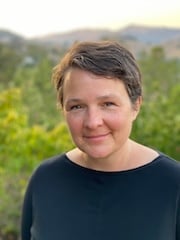
Dr. Emily Willingham is a 2022 MIT Knight Science Project Fellow, and the author of several books, including the upcoming If Your Adolescent Has Autism: An Essential Resource for Parents from Oxford University Press, and has served as a regular contributor to Scientific American and other national publications.


Add a comment: