Genetics and the brain will never be a simple story
Also: Perhaps don’t use squishy adjectives when communicating medical risk to autistic people.

Turns out, the exact same gene sequences in two people may not be used in the same way because cells can edit the sequences, resulting in different final molecules with different effects.
A study published in October in the journal Nature compared autistic and non-autistic people for genetic variants that might be involved in editing other gene sequences. The researchers focused on how these brain-related gene variants affect whether cells edit out tiny parts of these sequences or keep them, which in turn can affect brain development.
The authors concluded that some gene variants related to autism could influence how the cell edits these short sequences. But variants predicted to have these effects also were found in samples from non-autistic people.
The authors write in terms of “genetic burden” and “other neurological disorders” to contextualize these findings and imply their relevance to “not-normal” brains. But what the comparator should be seems unclear if more than a third, regardless of autism status, bear some of these variants. Also unclear is whether tiny edits of these sequences are just a regular part of brain development and if so, which patterns would represent “deviations” from some sort of “norm.”
All of that aside, the work is a good reminder that the genetics story of human neurological development isn’t a simple one. Instead, it involves complex and variable uses of gene sequences, all related to timing and availability, editing, packaging, and layers of regulation.
News you can use
Perhaps don’t use squishy adjectives when communicating medical risk to autistic people. A study done in Japan suggests that autistic people may concretize fuzzy probability terms like “possible” or “likely” as definitive terms. The study indicated that autistic people tend to use their personal interpretation of these descriptors rather than direct comparison of risk percentage values, potentially undermining informed consent. What’s a clinician to do? Present the numbers and state clearly what they imply.
A whole lot of children don’t get screened for developmental milestones, which can leave some who need supports falling further and further behind. Relatedly, a study out of UC Davis suggests that access barriers to these screenings could be safely lowered through telehealth, with results from video visits being just as robust as those from in-person screening.
People you should know
We’ve mentioned Tony Snell before, when he discussed his autism diagnosis that followed on his son’s being diagnosed. Snell also recently talked about how his basketball skill gave him a route to forming friendship that he thinks he otherwise might not have had. “Outside of the court, I could see other people having really close connections, and I didn't have the same," he said.
In a previous newsletter, we also gave a shoutout to young Ledger Mann, an autistic boy who put together special kits for first-responders to use with other autistic children during stressful encounters. Now Ledger has been highlighted on the larger stage of Time magazine, which has named him its “kid of the year” for his work.
From the TPGA feeds, curated by the editors
Disability activist Judy Heumann “always said, 'disability only becomes a tragedy for me when society fails to provide the things we need to lead our lives' — job opportunities or barrier-free buildings, for example.” Young disabled members of Judy’s “ADA generation” discussed the new film and her legacy with NPR.
Today in comeuppance for RFK the Lesser, by way of Senator Ron Wyden: "We intend to hold Secretary Kennedy accountable for the grave harm he has caused to vulnerable children. We also intend to hold him accountable for any false statements made to Congress, a crime that undermines the Senate’s ability to fulfill its constitutional duties.”
"Hearing the stories of other late-diagnosed Black autistic people, I realize we have a lot in common. When you view autism through a cultural lens, there are things people who don’t live it wouldn’t understand." From Ayanna Davis @phenomenallyautistic, who "got in trouble for existing.”
Check out the five things every attorney should know about the Americans With Disabilities Act, including that "Attorneys carry an obligation to ensure that disabled clients receive the same equal access to the court’s services as a nondisabled person. Although the court must provide the accommodation, attorneys are in the unique position of identifying those needs for the court.”
Do you want to learn more about AAC (augmentative and alternative communication) and best practices? The Autistic Self Advocacy Network and International Association for Spelling as Communication are hosting a webinar just for you, on Tuesday, November 17. Panelists will discuss their experiences as spellers, best practices, and more. Register here.
Reported by Sara Luterman at The 19th: “There’s a number of medical professionals who will be part of the new federal change in the House and Senate, and I am hopeful that they can reverse some of the federal impact to Medicaid because they know how important it is.”
Aliya Rahman, who is autistic, wants to unmask the ICE agents who dragged her from her car: The disabled US citizen filed a tort claim against ICE. Then she petitioned their civil rights watchdog team. Neither approach worked—so now she’s suing, according to @motherjones.com.
When it comes to helping nonspeakers, “identifying the right tool should be a priority. For me, it was learning to communicate by spelling each word on stencil boards. Each individual may require their own unique supports. Do not deny anyone this right, regardless of what your opinion may be.” —24-year-old autistic writer Payam, as reported by CNN.
A personal story from Chantelle Hyde about the deep pitfalls of seclusion and restraint: "Disagreement does not necessarily mean a person needs a clearer instruction, another visual, or a more effective incentive. Sometimes, it means we need to listen, not just to verbal attempts and AAC use, but also to her stress tones, her body language, the changes in her movements and facial expressions, etc."
TPGA asks questions, and autistic people answer them (autism researchers, pay attention, please).
TPGA prompt: What kinds of things do people unfairly assume you know—and then get mad when you don’t know?
New at TPGA
"Unfortunately for AAC research, the prospect of interviewing autistic kids who actually use AAC tends to make researchers flee in a panic. Hence this series of AAC researcher statement parodies." – Satirical responses to rage reads by Xavier Penn, at TPGA.
Thanks for reading, and here’s to having the things we need to lead our lives.
Got something autism-related to share with us? Send it along to [email protected].
Got a comment? We’d love to hear from you, so drop us a line below. Please note that comments are moderated per TPGA guidelines.
About the Author
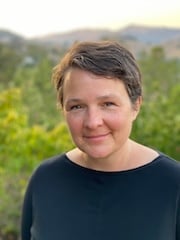
Dr. Emily Willingham is a 2022 MIT Knight Science Project Fellow, and the author of several books, including the upcoming If Your Adolescent Has Autism: An Essential Resource for Parents from Oxford University Press, and has served as a regular contributor to Scientific American and other national publications.


Add a comment: