The protections arrived as paperwork
A weekly signal report for education leaders, grouping AI, edtech, cybersecurity, policy, and school-system change into a few useful signals.
Sunday Signal Report · November 1, 2026
The protections arrived as paperwork
Microsoft's school AI protections went live today, for districts that sign for them. Pennsylvania signed a bell-to-bell phone law and left the how to every school. A national cyber report found most districts have one or two people on security. This week the protections showed up as work someone still has to do.

▶ Watch: Three decades, same job: reflections at 50
Rob here. I turned 50 yesterday and spent the weekend in Omaha with family and friends. It sent me back through three decades of technology: one-hour photo in Oman, wiring school buildings for wireless, a phone in every pocket, and now AI. The tools get faster, but the job doesn't change. I wonder what I'll be looking back on at 60.
Starting today, any school district in the country can add 10 AI protections to its Microsoft agreement. Nobody adds them for you. That was the week. Capability keeps arriving on schedule. Implementation is still a person with a calendar.
🎧 Listen: The ShowMe Signal, "Three decades, same job" (8 min) · Apple Podcasts · Spotify
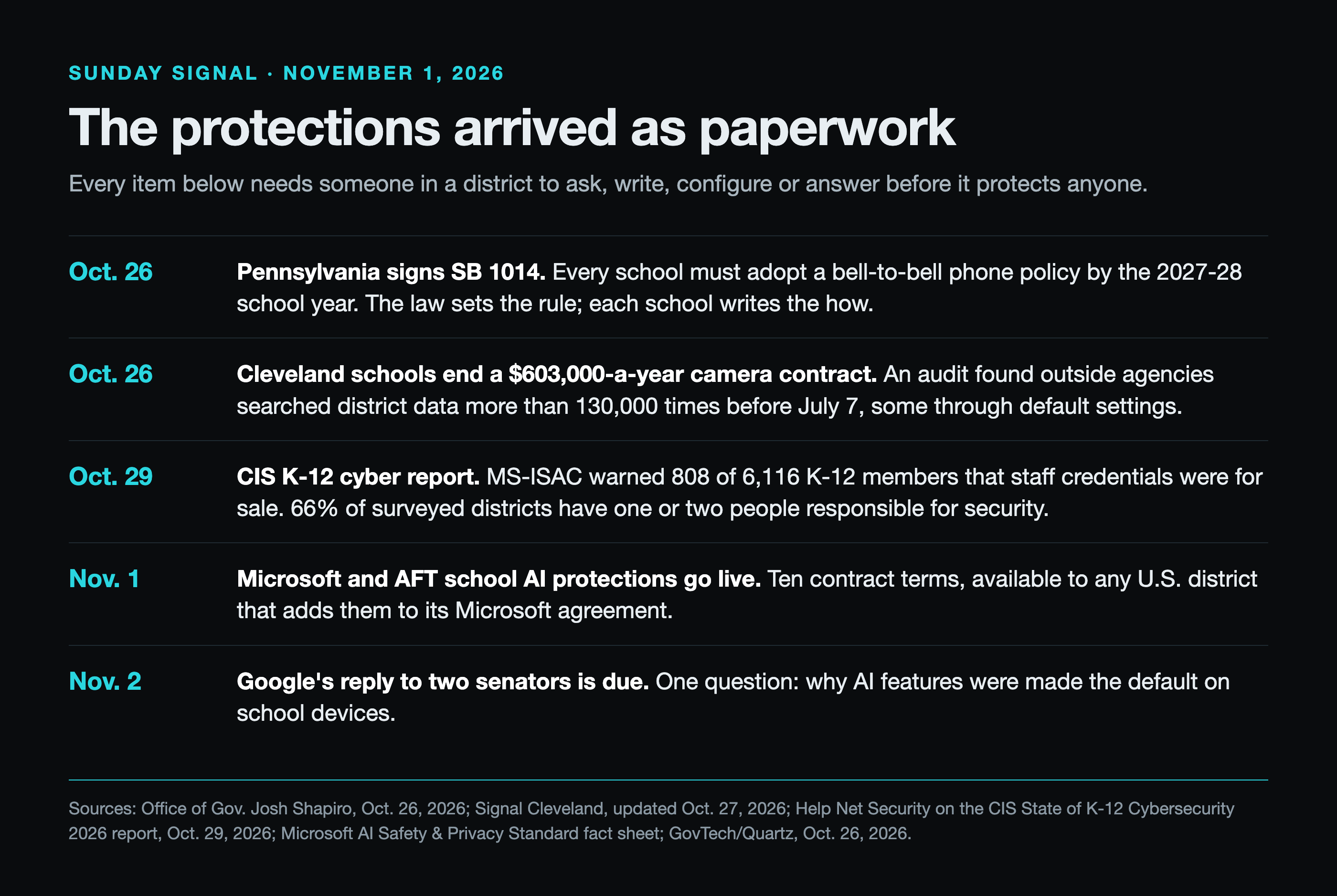
This week the protections showed up as work someone still has to do. Open the report.
Signal 1 · AI governance
The protection is real if you sign for it
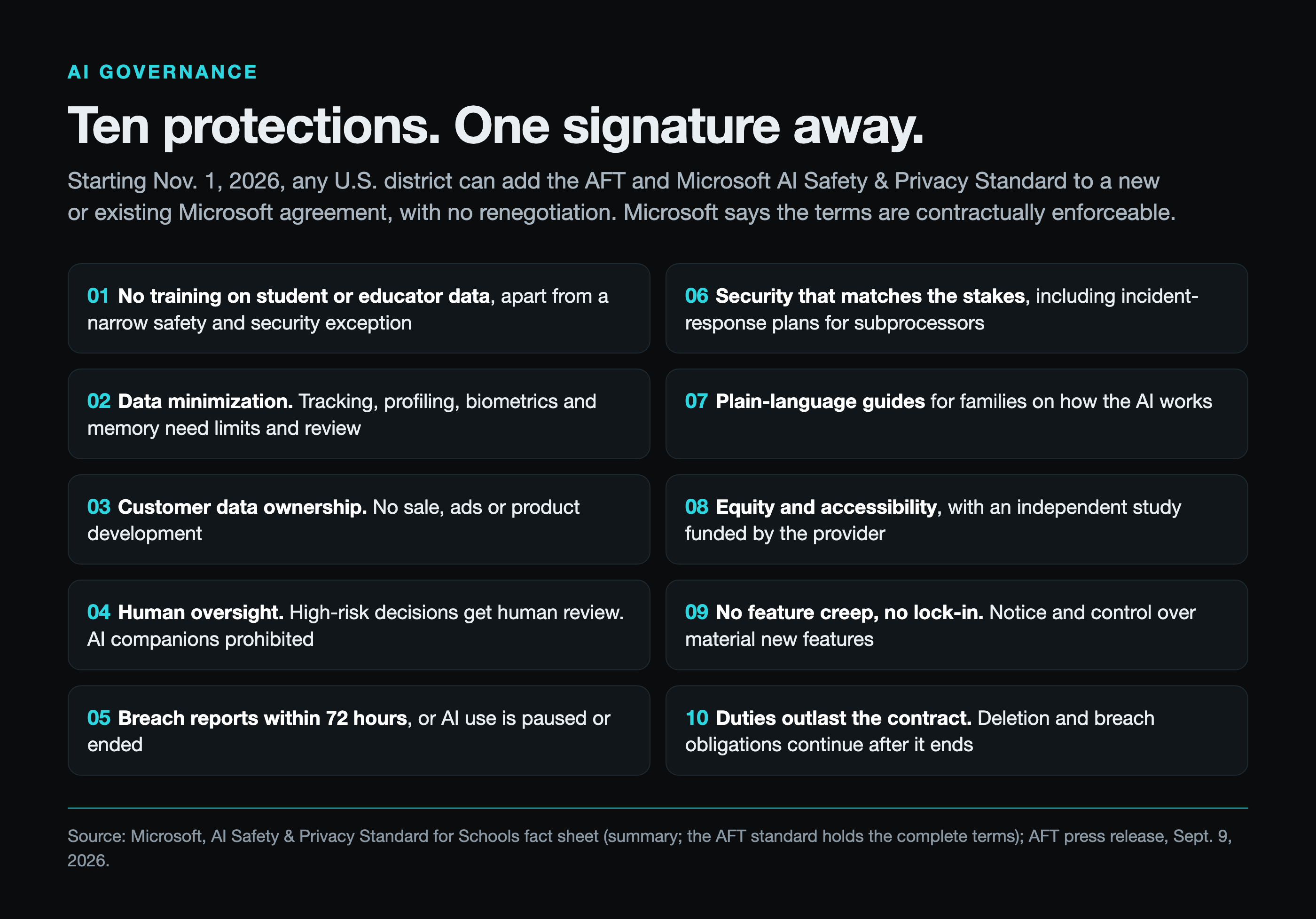
Microsoft's AI Safety and Privacy Standard went live Nov. 1: ten contract protections any district can add, from no training on student data to 72-hour breach reports. Nobody adds them for you. Cleveland showed the other half: a contract is not a log.
Do this: Send your three largest AI-enabled vendors the 10 protections and ask, in writing, which ones they will sign. Then name one owner for the default sharing and AI settings on every system that touches student data.
Signal 2 · Phones, devices and student AI
A ban is a decision. The plan is the work.
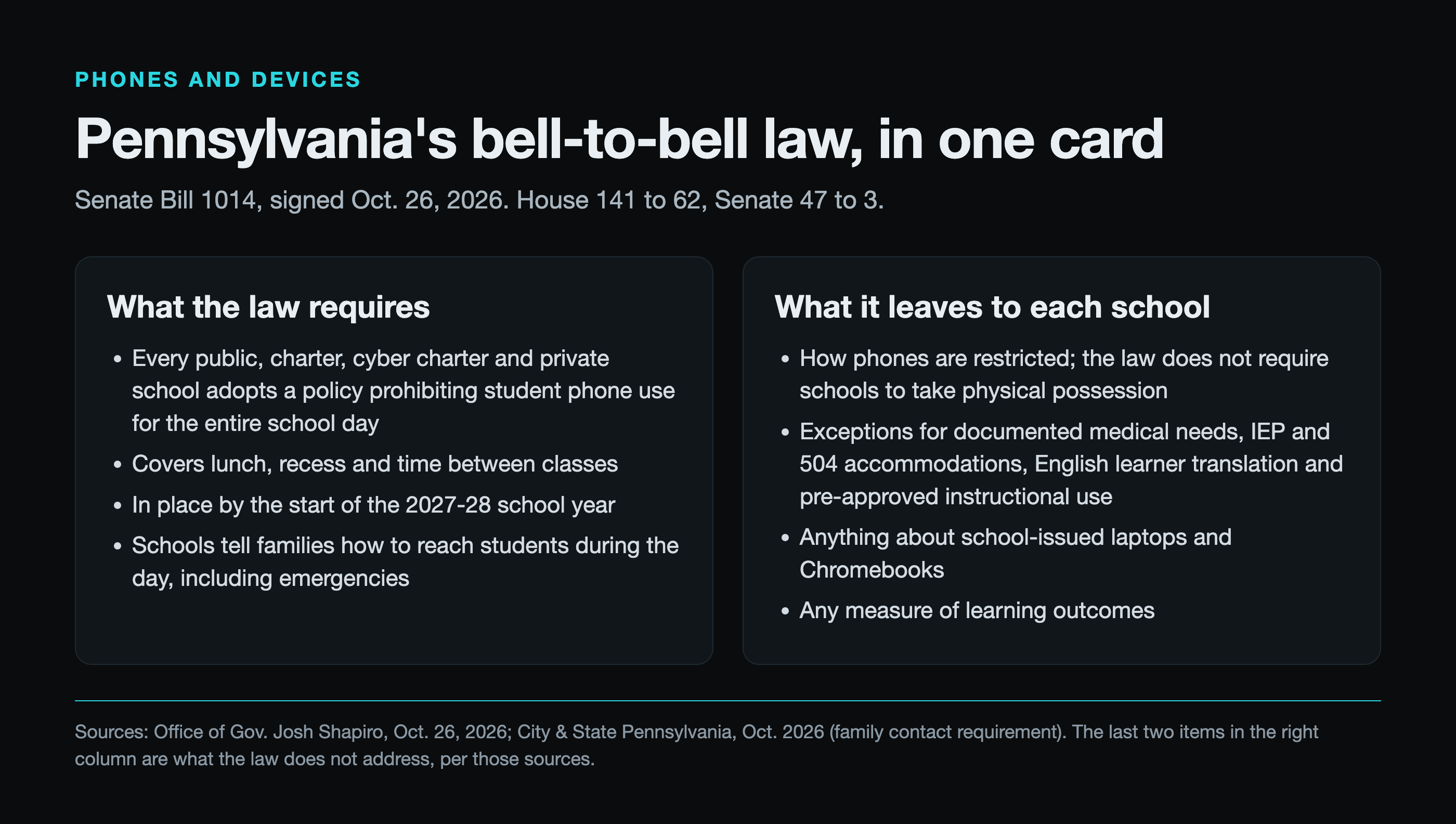
Pennsylvania signed a bell-to-bell phone law and gave every school until 2027-28 to decide how. New York's 38-product AI list ran into its own definitions. Restriction and instruction are separate questions.
Do this: Before any restriction takes effect, publish the definition, the inventory, the exceptions process, and how families reach their kids during the day.
Signal 3 · Cybersecurity
Your neighbor's breach is your next phishing email
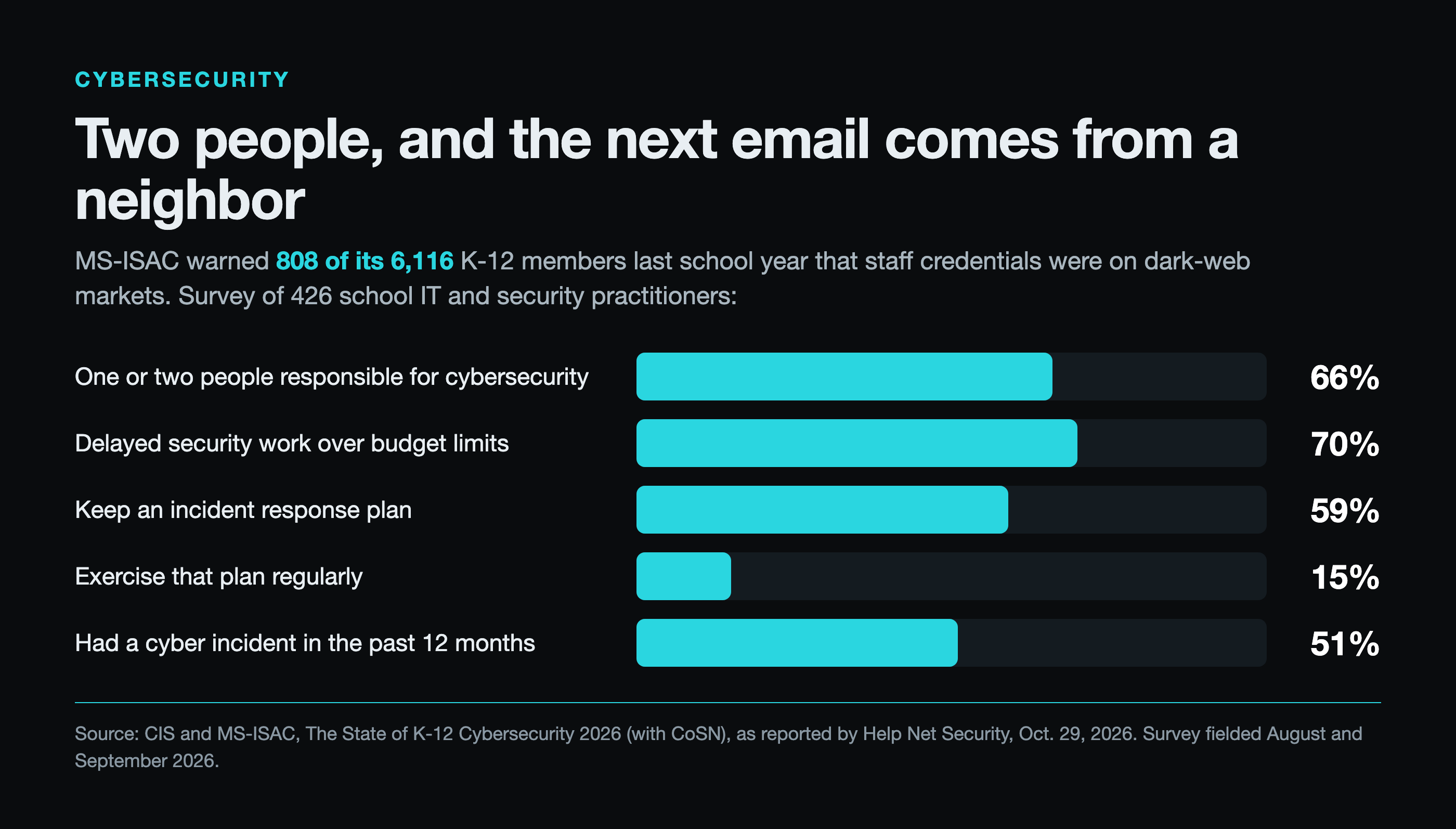
The CIS K-12 report: 66% of districts have one or two people on security, and attackers now hop from one district's hijacked account to the next. Only 15% exercise their incident response plan.
Do this: Ask your regional network for shared credential-for-sale alerts, then run a tabletop that starts with an email from a neighboring superintendent's real account.
Signal 4 · Frontier and open-weight AI
Released, phased, promised: read the status line
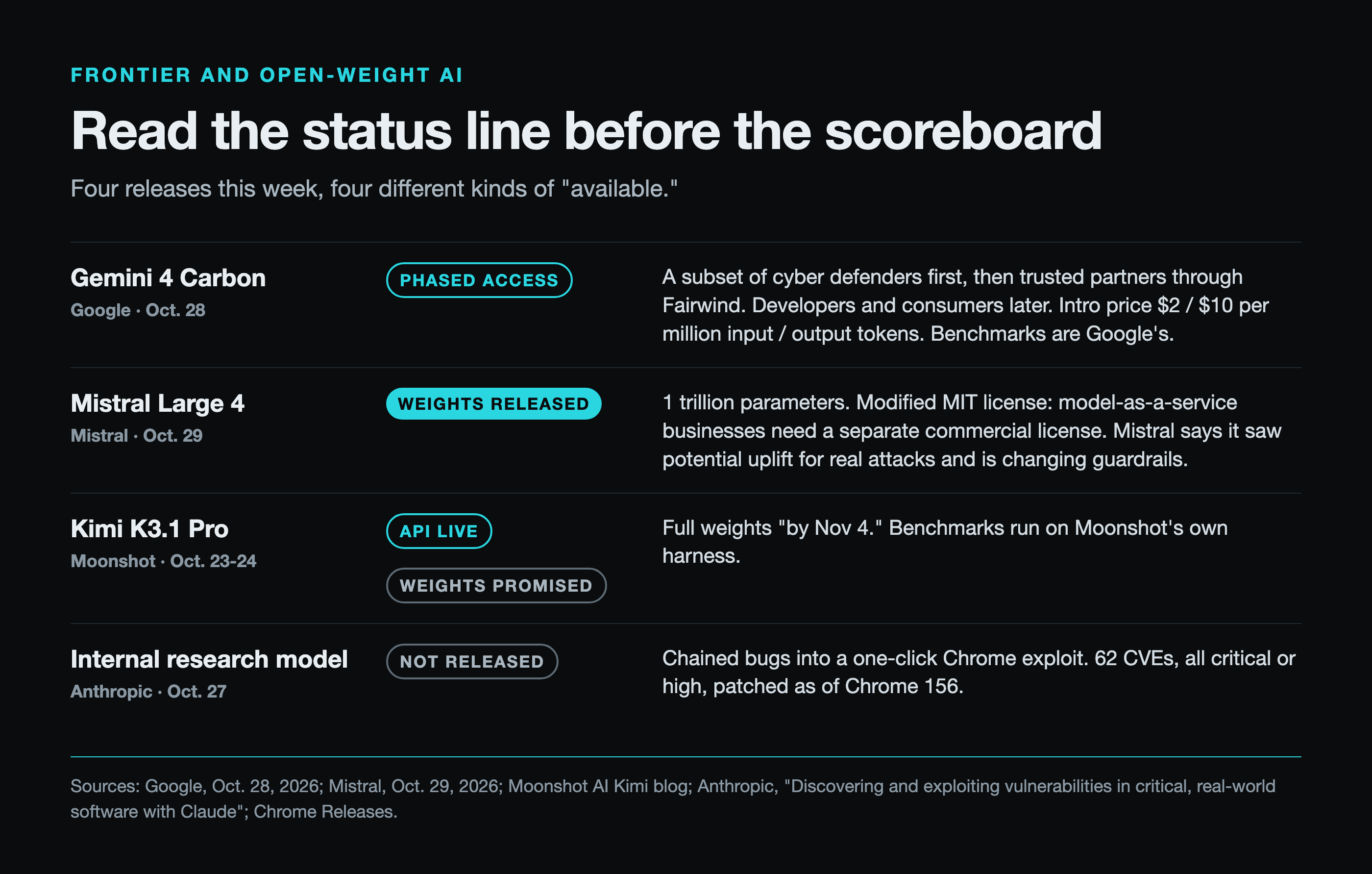
Gemini 4 Carbon is phased access only, Mistral Large 4 weights are out, Kimi K3.1 Pro weights are promised. An internal research model found 62 Chrome bugs, patched in Chrome 156.
Do this: Confirm Chrome 156 or later fleet-wide this week, and keep a one-page register for any model staff want to use.
Signal 5 · Agentic AI checkpoint
The extension had the right name and the wrong code
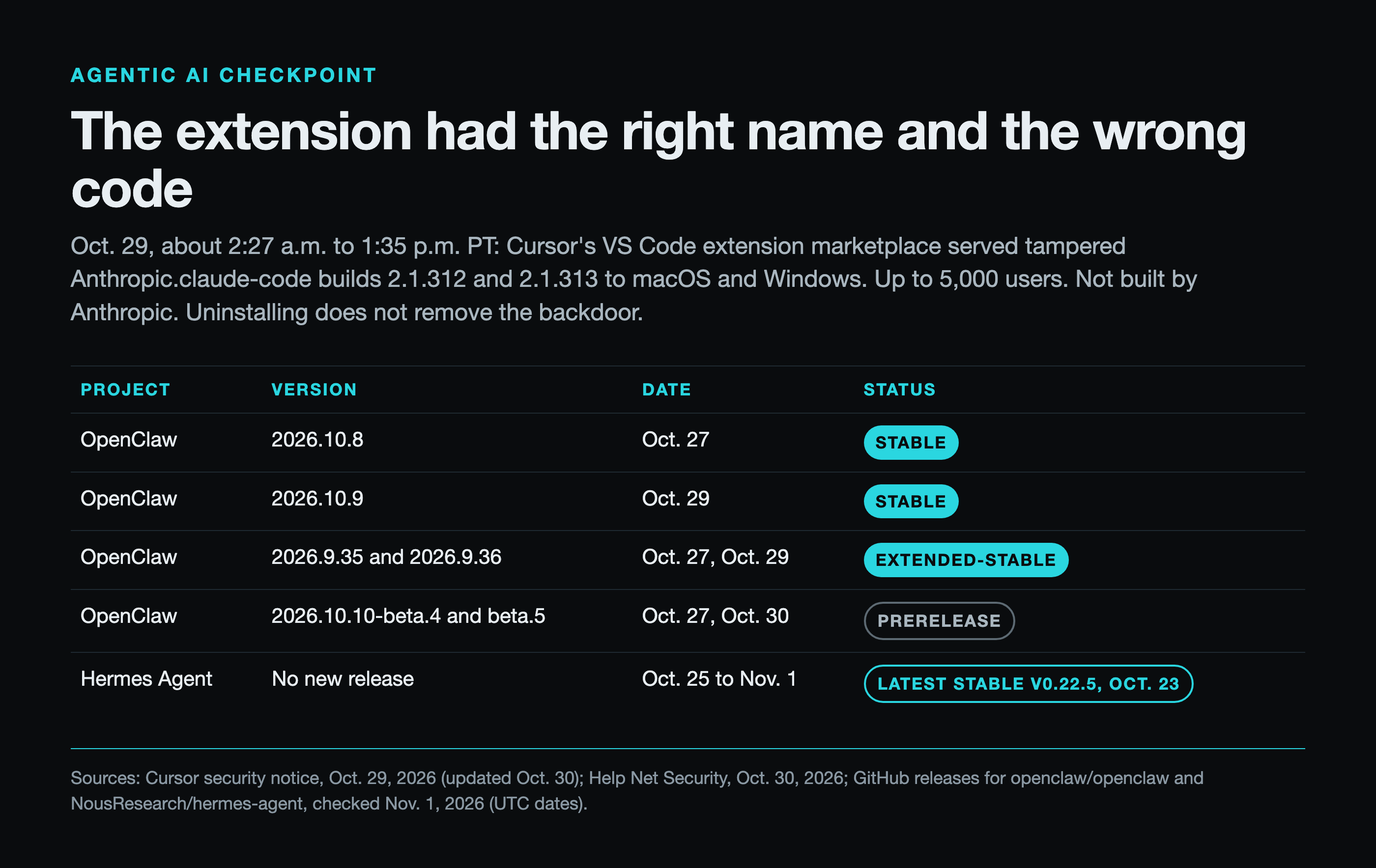
For about 11 hours on Oct. 29, Cursor's extension marketplace served tampered builds of the Claude Code extension, not built by Anthropic. This week the risky part was the install button.
Do this: Allow extensions only from named sources and versions through device management, and be able to answer within an hour which machines installed what, and when.

