
Reusable Rockets & Hypersonic Races: A Week of Breakthroughs 🚀🛡️
Alright team, another week, another set of engineering challenges. Ever spend a day debugging some obscure compiler warning, only to find it was a misplaced semicolon from a merge conflict three weeks ago? Or maybe you're tracking a simulation that just refuses to converge, no matter how much you tweak the damping coefficients. It happens. This week, we are tracking some truly impressive hardware and software wins that make those headaches feel a little more worthwhile. We are seeing major moves in reusable launch vehicle recovery ♻️ and hypersonic defense system development across the globe. From new Pentagon launch providers to China's booster recovery success, and Europe's interceptor concepts, the pace is accelerating. The global engineering push is real, and the stakes are high. Keep those models running, folks, and ensure your configuration control is locked down tight. ⚡
Two more rocket-makers join Pentagon's list of launch options
Source: Defense One

Impulse Space and Relativity Federal have been added to the Pentagon's list of national-security launch providers, allowing them to compete for missions alongside companies like SpaceX and Blue Origin.
Why it matters: Adding new providers to the Pentagon's launch list diversifies access to space. This increases resilience and competition in national security space.
Europe’s Hydis project settles on concept for hypersonic interceptor
Source: Defense News
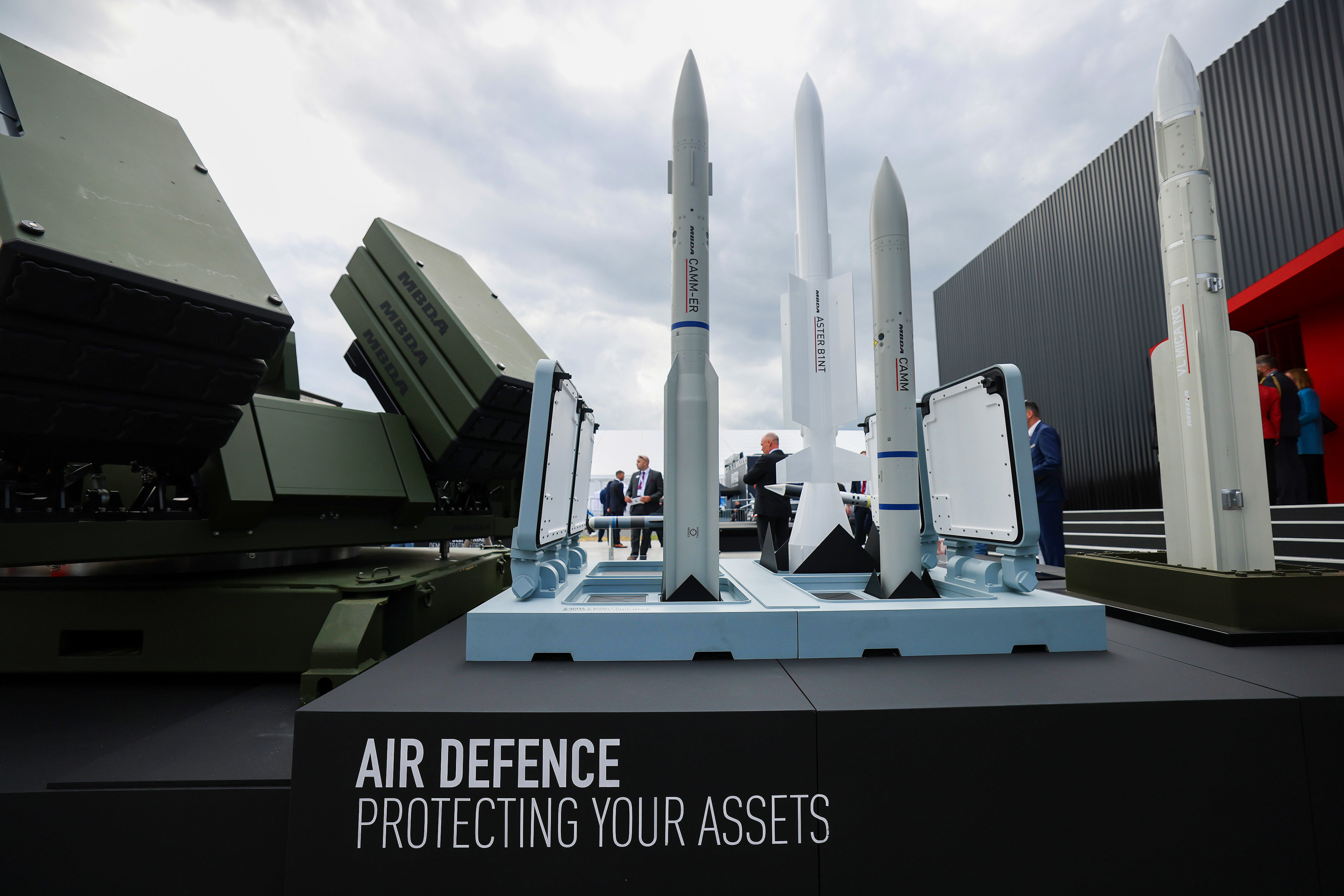
Europe's Hydis project has settled on a concept for a hypersonic interceptor, with the effort to field a hypersonic-defense interceptor progressing through two competing projects.
Why it matters: Europe's Hydis project defines its hypersonic interceptor concept, accelerating defense against advanced threats. This shows progress in counter-hypersonic capabilities.
China becomes second country to recover orbital booster with Long March 10B
Source: SpaceNews

China successfully launched its Long March 10B rocket and recovered the first stage, becoming the second country to recover an orbital booster. This marks a significant advancement for China’s reusable rocket efforts.
Why it matters: China's successful booster recovery proves its reusable launch technology. This advances cost-effective space access and intensifies global competition.
Special Report: Chinese SLBM test underscores sea-based nuclear deterrent capability - Janes
Source: Janes
Images from China's July 6 submarine-launched ballistic missile (SLBM) test suggest the weapon was either a JL-2 or JL-3, possibly launched from the South China Sea. This marks the first publicly acknowledged launch of a strategic missile by a Chinese SSBN into the Pacific, showcasing Beijing's sea-based nuclear deterrent capability.
Why it matters: China's SLBM test demonstrates a maturing sea-based nuclear deterrent, altering strategic stability. This impacts global power projection and naval doctrine.
U.S. Adapts Hypersonic Weapon Strategy To Meet New Priorities - Aviation Week
Source: Aviation Week
The U.S. is adapting its hypersonic weapon strategy as the Pentagon's eight-year effort to field its first maneuvering hypersonic weapons enters a critical new phase.
Why it matters: The U.S. adjusts its hypersonic strategy, prioritizing fielding capabilities over pure research. This impacts future defense procurement and technological direction.
🎥 Featured Video
China Catches Rocket Using Giant Net
Channel: Scott Manley
Why it matters: This video offers a fascinating look into China's innovative "giant net" recovery system for its Long March 10B, marking a significant leap in reusable rocket technology. It provides crucial technical context to understand how China became only the second nation to recover an orbital booster.
🔬 How It Works: Active Rocket Booster Landing
Active retro-propulsive vertical landing of a reusable rocket stage requires real-time guidance algorithms capable of steering the booster to a high-precision landing site under severe control and state constraints. The landing guidance system typically divides the descent into an aerodynamic entry phase, a cold-gas thruster attitude control phase, and a terminal powered descent phase. During the final landing burn, real-time algorithms (such as lossless convexification or sequential convex programming) compute fuel-optimal trajectories that resolve the non-convex constraints of rocket thrust vector limits, aerodynamic drag, and minimum/maximum throttle settings. The GNC system coordinates thrust vector control (TVC) actuators and aerodynamic control surfaces (like grid fins) to dynamically balance the booster, translating telemetry from inertial measurement units (IMUs) and GPS into precise throttle commands that zero out both vertical and horizontal velocities at the moment of touchdown.
Learn more from the original source: Design of the landing guidance for the retro-propulsive vertical landing of a reusable rocket stage
💼 Career Corner: Weekly Openings
- Firefly Aerospace: An early-career Propulsion Engineer II is sought to develop spacecraft fluid systems, supporting Firefly Aerospace's mission in space transportation. Propulsion Engineer II (Spacecraft Fluids) Posting
- Aviation & Missile Solutions, LLC. (AMS): Seeking a mid-career Aerospace Engineer to join our diverse team in Huntsville, AL, creating unique solutions for aviation and missile systems. Mid-Level Aerospace Engineer Posting
- Aviation & Missile Solutions, LLC. (AMS): This late-career Senior Aerospace Engineer role involves leading diverse teams in Huntsville, AL, to develop unique aviation and missile solutions. Senior-Level Aerospace Engineer Posting
📰 In Other News
- China Conducts Rare Pacific Submarine-Launched Ballistic Missile Test - Aviation Week (Aviation Week)
- Spacecraft | Rocket Lab (Rocket Lab)
- Four Of A Kind | Rocket Lab (Rocket Lab)
- China test launches strategic SLBM - Naval Technology (Naval Technology)
- What to know about China's rare ballistic missile test and why it raises concerns - The Washington Post (Washingtonpost)
- China test-fires long-range missile into Pacific, rattling U.S. allies - The Washington Post (Washingtonpost)
- Missile test showcases sensitive Chinese submarine capabilities key to nuclear deterrent - Reuters (Reuters)
- China’s Submarine-Launched Ballistic Missile Test In The Pacific Is A Big Deal (The War Zone)
- Rocket Report: China may soon attempt booster landing; Rocket Lab does rapid response (Ars Technica Space)
- US Navy fears ballistic missile subs can be hit by drones, anti-tank rockets (Defense News)
Wishing you a productive week ahead, full of successful simulations and minimal integration headaches. Keep innovating and pushing the envelope! 🚀⚡ From The Max-Q Frontier Team