A Christmas Carol, Part 2 of 3: Christmas in the Present
Dickens · Part 2 of 3: Christmas in the Present
A Christmas Carol
Charles Dickens (1843) · Stave 3
A generous spirit takes Scrooge through Christmas Day, showing him the lives his choices affect.
The story so far: Scrooge’s dead partner, Marley, warned him that he must change. The Ghost of Christmas Past then showed him the loneliness and choices that helped make him hard-hearted.
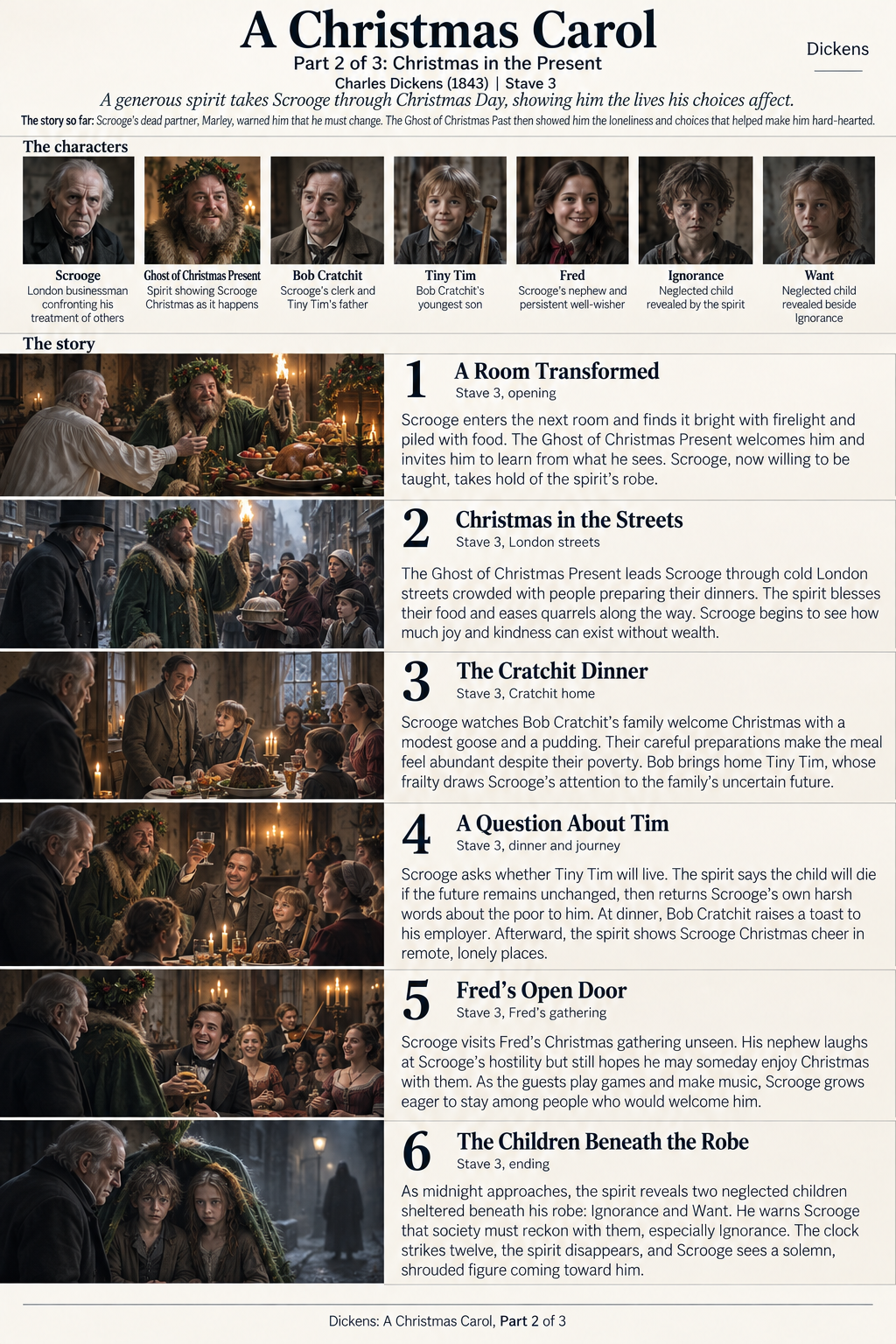
Ebenezer Scrooge has been warned by the ghost of his dead partner, Jacob Marley, that his selfish life has consequences. The Ghost of Christmas Past then made him revisit his childhood, his lost love and the choices that hardened him. Now Scrooge waits for the next visitor. He enters the room adjoining his bedroom and finds it transformed with greenery, a blazing fire and a great spread of food. There the Ghost of Christmas Present welcomes him. Scrooge, no longer resisting the lessons offered to him, asks to be taught.
The spirit takes Scrooge into the London streets on Christmas morning. People hurry to prepare their meals, and the spirit scatters blessings from his torch. Their cheer does not depend on being rich: neighbours make something festive of what they have. When Scrooge asks about the spirit’s power, their conversation also touches on people who claim religious authority while denying the poor a chance to enjoy their day. The spirit refuses responsibility for cruelty committed in his name. This journey leads Scrooge to the modest home of his clerk, Bob Cratchit.
The Cratchits are preparing a goose and, later, a pudding. The meal requires effort and thrift, but the family meets it with excitement and affection. Bob arrives carrying his youngest son, Tiny Tim, who uses a crutch. Scrooge watches the family’s pleasure and asks whether the boy will live. The spirit answers that, if the future does not change, he sees an empty place at the table. When Scrooge protests, the spirit repeats Scrooge’s earlier talk of reducing the ‘surplus population’. The words sound different when Scrooge is thinking of a particular child. Mrs. Cratchit resents her husband’s harsh employer, but Bob persuades her to join a Christmas toast to him.
The journey continues beyond London. Scrooge sees miners celebrating in a remote home, lighthouse keepers marking the day and sailors remembering those they love. Their circumstances differ, yet companionship reaches each place. The spirit then brings him to the home of Fred, Scrooge’s nephew. Fred knows that Scrooge rejects his invitations and ridicules Christmas, but refuses to answer him with bitterness. He thinks Scrooge’s isolation harms Scrooge most of all. Unseen by the guests, Scrooge enjoys their games, laughter and music so much that he wishes to remain longer.
As Christmas Day passes, the spirit grows visibly older. Near midnight, he shows Scrooge two ragged children hidden beneath his robe: Ignorance and Want. They are not guests at any of the dinners Scrooge has seen. The spirit warns him particularly against Ignorance, and throws Scrooge’s own dismissive questions about prisons and workhouses back at him. The scene widens the stave’s concern from one family’s hardship to society’s treatment of neglected children. It also makes Scrooge’s change of heart more demanding: feeling sorry for Tiny Tim is a beginning, but he must question the judgments that let him disregard other people. The clock strikes twelve. The spirit vanishes, and Scrooge sees a solemn, hooded figure approaching.
Further reading
- Charles Dickens, A Christmas Carol and Other Christmas Books (2006)
- John O. Jordan, The Cambridge Companion to Charles Dickens (2001)
- Michael Slater, Charles Dickens (2009)