
Robots, Romance, Wait, Didn't We Already Do This? - Earth 7
So excited to read this robot book, I said. Maybe this will finally be the one, I said. The perfect robot book for me specifically. Like a fool.
Okay everyone, what did I say about robots in fiction?
I need you to get weird with it.
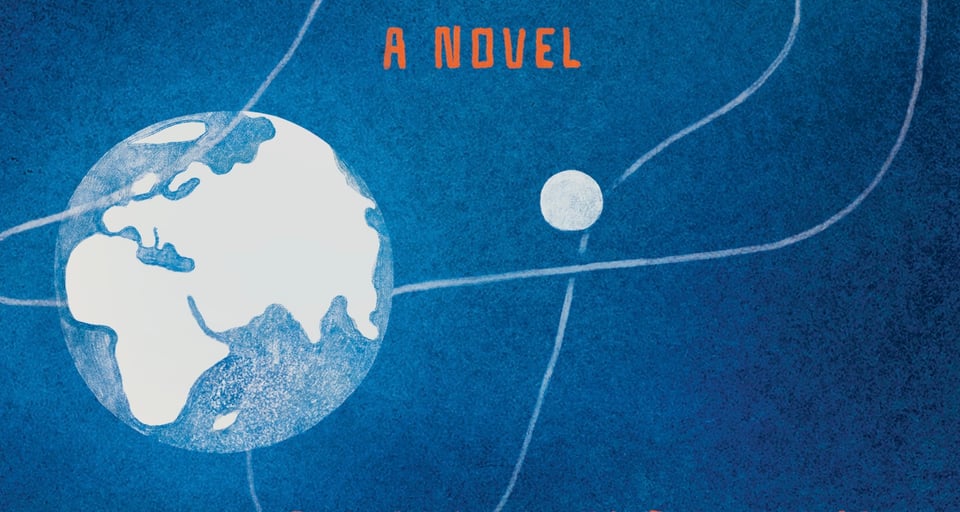
Okay, this is rather a different situation than the last time I sent out a newsletter about my disappointment in a robot book, since arguably Earth 7, by Deb Olin Unferth, is not a robot book. Except…it kind of is. I’ll get to it.
Since that last newsletter was a special email-only edition (read, I’m too shy to leave it up on the archives), a brief summary of my points:
Robots as a fictional construct allow explorations of the human condition in a non-standard way, the particular elements which I care most about being sexuality, attraction, and gender. There are a number of marginalized groups who, for quite a time, saw their experiences largely represented only through robots (see, asexual and autistic people), which is of course an issue of and failure of limited representation. However, in a market more open to exploring those ideas, a robot character can be very compelling and relatable—if the piece of media effectively explores those themes.
I picked up Earth 7 from one of my favourite small bookstores, because they had a display table full of them and I had never heard of either the book or the publisher. Of course, I am not on top of every single book being published in the upmarket spec-fic space, but considering this was a sapphic post-apocalyptic story about a woman raised at the bottom of the ocean and a woman who may-or-may-not be a robot, I was genuinely surprised it had slipped under my radar.
Robots and femininity have been intertwined for almost as long as we’ve had the concept of a robot.
The Maschinenmensch of Fritz Lang’s Metropolis was one of the first fictional humanoid robots to ever be depicted in cinema. She, the robot, was created to replace (or, perhaps, to resurrect) her creator’s late wife, and she becomes a tool of corruption and control wielded by a man’s hand. Women have already been treated as property of their husbands and their fathers, as tools and extensions of them, why should that not be made literal through the woman as machine, as constructed? The feminine robot has been seen innumerable times since Metropolis, in Blade Runner1 and Ex Machina and the recent Goodreads choice nominee Annie Bot, and often these feminine robots are presented as the peak of womanhood, of femininity; of desirability.
The main concept of one of Earth 7’s main characters, Melanie, our Schrödinger’s robot if you will2, is that she is a server working at a high-end vacation resort terraformed along the dead shore of our decaying earth, and the vacationers whisper to one another that beneath the skin she’s actually servos and mechanical grease, silicone and silicon both. She is too perfect, too still, too perfectly formed and too perfectly poised to be anything but machine. These things are not necessarily untrue, though the silicon/silicone is actually due to being a repeated participant in an extended plastic surgery reality TV show, but beneath the experimental fillers and the tiny CRISPR device in her jaw, she is still just a woman3.
It feels wrong to complain about this book as a ‘robot book’, because that’s really not what it was at all, and there’s nothing wrong with that, let it be known that this was NOT a World Running Down moment. Beyond my brief flash of disappointment (the book did not mislead me, after all, I knew that the distinction between being a person and being perceived as a robot was likely to be at play), this actually presents a fascinating idea:
What happens when you perform femininity so well, so perfectly, that you stop being a woman? Not just stop being a person, but stop being a woman.
Femininity is a performances; indeed, all gender is performance, and I think that I am perhaps both more and less qualified to analyze that fact than your average person. I am a woman-shaped thing, and even though I don’t identify with womanhood in the same way as I once did, there are certain performances I am still expected to undertake. Hold your body this way, smile, shave your legs, clean your face, style your hair, style your clothes, show your body, not too much, stay still, stay quiet, pitch your voice up, don’t walk like that, don’t sit like that. Often when we talk about performing femininity we talk about the makeup industry, clothing branding and expectations, even pink-washing of simple everyday objects, but femininity is a never-ending performance in each and every moment of our girl-shaped lives.
Melanie has done all these things. She wears her light dresses, her skin shines under the light, she holds her head still, poised as a dancer, motions fluid and perfectly balanced (to avoid the experimental acrylic filler in her face exploding its way out of her skin, you know how it is), all the things which should land her squarely into womanhood. And yet. And yet men sneer at her, call her plastic, women treat her as furniture, even our main character Dylan is attracted to her at first because she mistakes Melanie for a robot. When you fail at this impossible performance, you are nothing. Less than nothing.
By the end of this chapter, this idea will never properly come up again.
This is not an issue solely with this particular theme—indeed my major issue with this book is that things just sort of…happen, and then stop happening, without any analysis or consideration of why they came to be or what the implications of those things may be. Maybe I’ve never meant ‘I need you to get weird with it’, maybe I just mean engage with your own themes please.
If our idea of the ideal woman is an artificial being programmed for men’s pleasure, what does it mean when a human woman changes herself over and over again to fit closer to that ideal and passes beyond it? Is she actually treated less human, or is she just working a shitty service job where humans are treated like robots no matter what. Why is it safer to be a machine, rather than a messy, organic woman-shaped thing? Then, of course, how does all of that fit into lesbian desire?
There is so much more to be said about robots, AIs, fiction, and gender, none of which I will do here.
The fact that this book left me with some of these questions is, I will say, a serious point in its favour, but that’s also because these are themes that I am already interested in engaging in and have the background social and cultural knowledge required to properly contextualize them. I just wanted a little bit more, a little bit more consideration of the impacts of those themes, a little bit more focus placed on them. Does this book have much to say beyond the idea of ‘you can fail at being a woman by trying too hard to be a woman’, and does it critically engage with that idea? Not really. I’m already biased, considering that much of what I write is, to some extent, attempting to interrogate the alienation and abstraction that I’ve experienced with regards to gender, femininity, and my presentations thereof. Earth 7 was simply another example of a book that didn’t quite meet my hopes or expectations, but I certainly wasn’t chucking it across the room in rage like my copy of World Running Down.
Final review: still needed more robot sex. Appreciated the small amount of robot sex we got. Cheers.
What I’m reading right now:
Wind, Sand, and Stars, by Antoine de Saint-Exupery, because I am in an atrocious reading slump and am uninterested in any of the books I’d usually read.
An album to listen to:
Give You The Ghost, by Polica. Appropriate amount of autotune for a robot newsletter.
I can’t talk about Blade Runner I JUST talked about Blade Runner ahhhh also I’m on a train with no wifi so I can’t do the level of research that I would really love to do to have a proper discussion about robots and femininity throughout the years beyond the stuff I have crammed in the back of my head. Another time maybe. ↩
I get to make this joke because I actually know what a linear combination is thank you very much leave me alone. ↩
This distinction gets muddied towards the end of the book, and I was glad that the whole Schrodinger’s robot thing was maintained beyond the ‘haha gotcha, it’s plastic surgery!’ ↩


Add a comment: