
What questions should you be asking yourself? - The Passenger
I slink now before you from the depths of my point in space to intrude upon yours. I have not forgotten this newsletter, I swear, but there is a thin line between forgetfulness and loss of time in a summer undelineated1 by work of schedule. What I’m saying is that it’s the end of July, and that’s a little bit terrifying. What I’m also saying is that I finished reading The Passenger after a spate of more-than-vaguely disappointing books.
There is a scene at the end of Against a Dark Background by Iain M Banks that I think of often. No, start that again. There is the feeling of a scene at the end of Against a Dark Background.
I’ve read the book twice I believe, though only once in my adult memory, for being fourteen is no longer so prominent in my recollection. Anyway, the point being, I haven’t been quite able to make myself reread this book amongst my other annual rereads of Banks’ science fiction, and so the scene in question has faded to more of a half-felt vibe. Here it is:
At the end of her journey, having lost each of her friends and combat team during the meandering narrative, our narrator has lost/given up on/otherwise no longer cares for the goal which cost her the lives of this friend. At the base of a broken tower, against the dark background (hah) of the sand dunes, she takes to her vehicle and drives away. Nothing is answered, nothing is solved. She is alone, and going out into the future, though the narrative does not seek to decide whether this is with pessimism or optimism.
Many of Banks’s books end in a similar way, some main part of the narrative gone, a ship, a civilization, and yet it is this ending that has most informed the ways that I approach endings.
I have, in the past, perhaps taken this a little too literally—I do so enjoy having a character, alone at the end of everything, setting out into…somewhere, but it is not that which draws me to this memory of Against a Dark Background, but rather a kind of ambiguity.
In both pulling from my own memories and a series of reviews posted on storygraph, perhaps the term that most comes to mind is ‘unresolved’. Questions left unanswered, plot threads left behind, any number of things which seem to so irritate many readers. Indeed, they often irritate me as well, though only in the case of more plot-focused works. In a work such as Against a Dark Background or, indeed, The Passenger, in which the work is less about the journey or mystery and indeed more about picking through the minds of its characters and reveling in its own themes, I think that ‘ambiguous endings’ are perhaps one of my favourite literary devices.
I realize I realize that I have already done a newsletter which took a detour into a ramble about how I enjoy ambiguity in works of fiction, though I am defending my choice to write this newsletter by the fact that 1) I needed to come up with an idea and my other three were uninteresting, and 2) that piece largely focused on people’s obsession with ‘figuring out’ the literal meaning of a text rather than accepting that ambiguity was a way of drawing attention to the thematic elements of a work. This is merely a further sidebar ramble about effective uses of ambiguity in fiction.
The point of ambiguity, and especially of ambiguous endings, is to force the audience to engage with certain questions being put forwards by the author, and through those questions the thematic core of the work (again, assuming a competent writer). The Blade Runner film2 (specifically in the Director’s Cut version sans-voiceover with the unicorn dream sequence) explores (obviously) questions of humanity—is there some innate quality that makes us ‘people’, that could be lost in construction rather than birth? Which, peeling back the first layer of meaning, further expands to: what happens when we start drawing lines, saying “you are human, you are not, and so may not be treated as such”. The replicants experience emotions (are these merely implanted?), they wish to live (is this merely mindless self-preservation?), they have goals and aims of their own, though these are forever overshadowed by their looming deaths and their lives sold to the corporation.
Of course, then, there is the question of Deckard himself. Is Deckard a replicant?
A better question, I think, is ‘what would it change if Deckard was a replicant?’
Whether Deckard is or is not constructed rather than born is perhaps a fun exercise in thought experiment, but what is more important to the understanding of the text is the ambiguity in the suggestion of that fact. Whether Deckard is a replicant or not is at the end of teh day largely immaterial, but the question asks viewers to engage further with those themes: you have spent this entire film watching this man. You have been saturated by his humanity. Would you cast him aside, if you learned what he was? Would your view of the film you have just seen change? Would you so easily see Deckard killed (and I struggle to believe his death would be anything so poignant as the famous tears in the rain scene).
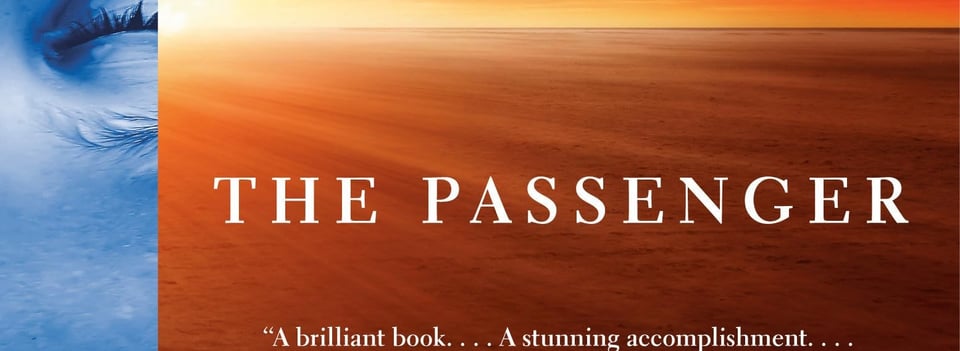
Before I began to read The Passenger, by Cormac McCarthy, my father warned me that the book was what he called a ‘feint’ rather than an actual novel. An exercise in prose without any kind of resolution, which ignores its own plot and cares little for its own implications. I think that it was that conversation which led me to so enjoy the novel. The Passenger is ostensibly about an underwater salvager who finds a crashed airplane with a passenger missing. This will never be resolved. Don’t worry about it. The novel is actually about a man buried beneath his own grief, moving about his life as a ghost. I read it, somewhat, as a story about what happens after the end of the world, whether that is the world we live in (though the novel is set in our own 1980s America, rather than one of McCarthy’s well-trod apocalypses), or the internal world of its characters. The text meanders through scientific and philosophical conversations between Western and his friends, people at the edge of society, doing little but what some might call ‘waiting to die’, where I would instead say simply…living. Old men live in trailers and have fights with their lovers. A trans woman just wants to send her sister to university. Western’s sister—ten years dead—is faced by hallucinations who seem to point towards the end of the world, and yet the only world that ends is her own, by her own hand.
the audience is encouraged to question that last, especially, whether Western’s sister was truly hallucinating, or instead visited by some other power. At points I began to wonder if Western’s own friends, with their meandering speeches and strange names, were hallucinations of his own. There is no good answer to this question, nor any other. Does it matter? This is a work that is curious about history, our own, our collective history, the ways that we overwrite history and forget the things we do not wish to see. We hallucinate a new past, present, and future for the world and countries we live in. Whether the hallucinations are ‘real’ or not is once again, unimportant, since at the end the only two things we can do are go on living or die.
Back to Against a Dark Background. All three of these works end in ways that, while not the same, do seem to echo each other. There is no neat resolution. There is no happily ever after. There is stepping out into the future because it is the one thing that you can do, each and every day, not because you will change the world but because you have no other choice. The characters step into the future and the audience is left sitting before a black screen, their own faces reflecting back at them, questions written upon their own faces. That, I suppose, is what so calls to be about the ending of these works. The vast open sky above you, the ground beneath, the end of the line somewhere ahead of you, but not just yet. I don’t want you to tell me what to think.
What I’m reading right now
A translation of Chretien de Troyes’ Perceval and the grail, which has been my bedtime book while my days have been filled with Elizabeth Bear and Cormac McCarthy. Next up, however, is a book I grabbed at my local indie, called Earth 7. We will see if it is finally the robot book that doesn’t disappoint me. Will report back.
An album to listen to
Incarnate, by THEATRE. Admittedly an EP, but when have I let that stop me?
Thank you, buttondown, for constantly being so confused by my spelling. Huzzah! ↩
Not entirely sure why I’m including that clarification, as someone who read Do Androids Dream of Electric Sheep long before I saw the film. Perhaps because I’m annoyed by the editions of Androids… that I see in bookshops with ‘BLADE RUNNER’ emblazoned across the front with the actual title relegated to 10pt font. ↩


Add a comment: