On writing without using the internet, and other trails worth following
On half-remembering The English Patient, being swallowed by slop-swamps, and relearning the neglected art called description.
Hoi!
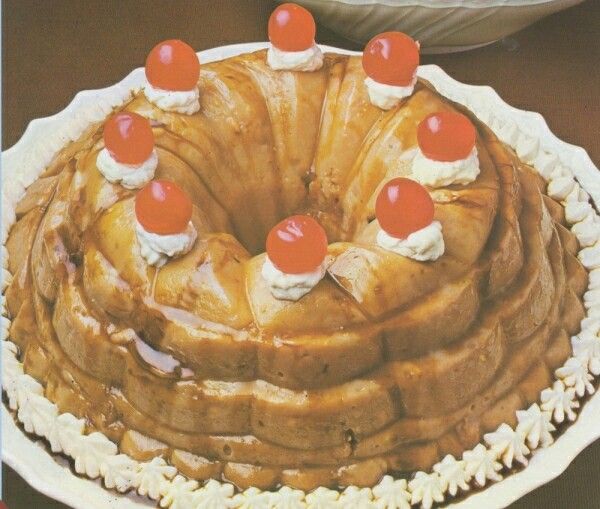
I watched The English Patient, which led me to write this pudding without using the internet. Life can be funny sometimes. No hyperlinks this month, just some good old words, served to you bone dry.
Have fun!
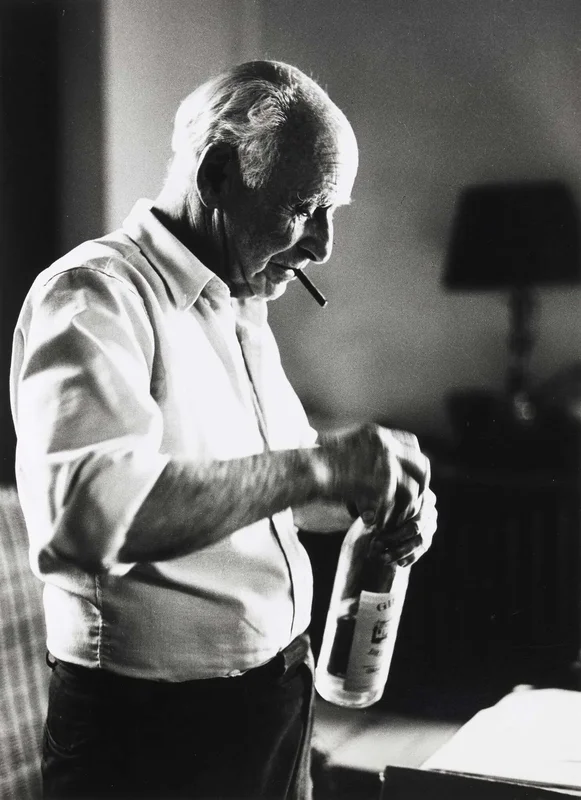
P.S. I used the internet to send this email to you, and also to find that portrait of Francis Ponge. I’m not a wizard.
From my desk
Words that found their way onto the page.
I have managed so far to not write about ‘the-technology-that-must-not-be-named’ outside of my day job. A technology that could also have been named ‘Complex Information Processing’ (CIP), had the inventors (a group of academics in 1956) not deemed those words too modest. Intelligence they were after, and seventy years later, we’re dealing with the semantic ripple effects of their naming decision. These men probably would have been disappointed that their intellectual dreams have turned into the reality we happen to be alive in, but here we are.
I write these emails to you without the aid of complex information processing. I do sometimes wonder if I’m doing myself a disservice. Most likely, CIP would have pushed me to make my point earlier on in this email. Most likely, it would have suggested a more soothing flow for this text by rearranging it into trinities. Most likely, it would have added adjectives that sound impressive but mean nothing. I started writing this email after watching The English Patient on linear tv. As the actor who plays Voldemort (Ralph something-that-starts-with-an-F; I’m resisting the urge to use the internet while I write this) says in that film: ‘an adjective doesn’t change the thing, a car is still a car’. The actress who plays ‘K’ (blonde, reminds me of Emma Thompson) replies: ‘what about love?’ These are not actual quotes, but you get the dilemma: a car is still a car, no matter if it’s big or yellow, but erotic love seems fundamentally different from motherly love. Most likely, they’re both right. Life can be reduced to the most likely adjectives, but in the end, it’s up to us to decide what’s what.
I’ve always loved a good adjective. Mercurial, banal, emerald. In the right combination, they can make words fly. What the tech lords don’t seem to understand is that the most likely combination of adjectives is also the emptiest. It comes from nowhere and belongs to no one. My eyeballs want solid ground to stand on, or something to trip over. Sometimes it’s fine to go from question to answer in one fell swoop. I’m happy to learn how to make a classic vinaigrette without scrolling through a stranger’s life story first. And I couldn’t resist letting a chatbot sift through a pile of reviews and hand me a pro-con list before I bought a washing machine. Life can be complicated, and if we’re going to search online for our day-to-day dilemmas, we might as well go hard.
That’s not what I’m talking about here. You don’t have to be a good reader to follow a recipe or look at a pro-con list: these are formulaic by nature. But reading or writing for the pleasure of language, or to think with it, requires you to move with and around words. And that is what I’m trying to do here. In large language models, words don’t move (it takes entire data centers to keep them still). They’re held prisoner, their wings pinned down by the verdict of probabilities. If we keep them there, without ever touching them, they will suffocate. I want our words to be wild again, even if that means they won’t land where we expect them to.
Now that we have everything we once fed the internet captured in easy-to-digest bullet points, it might seem as if we’re moving closer to exactitude; to a spotless place in which words and the things they describe are closely aligned. Instead, we’re stuck in a slop-swamp of words flattened into tokens, cut off from their genealogy. They clearly came from somewhere, but we can no longer follow their trails. Surfing this swamp makes me feel dirty, disoriented, and, well, dumb. Hence this attempt at writing something that frees me from this trinity-in-D-minor.
When I read something that sends my mind wandering, I try to write it down in a notebook, so I’ll remember it. I don’t do this on a daily basis, because I often find myself without a pen at hand. These notebooks represent a glimpse into my reading life, but more so, into my disorganised self who forgets important things, like pens. In reality, I mostly forget what I wrote down, so I started to write down how and when I wrote things down. Date, place, mood. Nov 19, 2022, park bench, socks that refuse to stay in place. While writing this email without using the internet, I flipped through my latest notebook, hoping I’d find something that would help me explain my specific annoyance that goes beyond ‘AI bad’. And there he was, Italo Calvino, being annoyed about the carelessness with which people used words in his day (1985, to be exact, just before he died). I guess there’s a timelessness to my annoyance.
The quote I wrote down comes from Six Memos for the Next Millennium. It’s long, so I’ll filter out two parts. One, an opening passage in which he notes that a plague is afflicting language:
”… revealing itself as a loss of cognition and immediacy, an automatism that tends to level out all expression into the most generic, anonymous, and abstract formulas, to dilute meanings, to blunt the edge of expressiveness, extinguishing the spark that shoots out from the collision of words and new circumstances.”
And secondly, the part where he talks about how he wants to use language:
”The proper use of language, for me personally, is one that enables us to approach things (present or absent) with discretion, attention, and caution, with respect for what things (present or absent) communicate without words.”
In this next millennium, I want to practice this approach, get better at it. In my writing, I’ve always liked small things more than I’ve liked big ideas, which I’ve (until now) considered to be a weakness. I felt ashamed of writing about silly old things (like puddings) in a burning world. That view is slowly shifting. Calvino writes in his memo on exactitude (where I found my quote) about seemingly simple exercises (‘describe a giraffe’), and how description has become a neglected art. Faced with the generic, anonymous, and abstract formulas machines churn out on our behalf, I feel (more than ever) the urge to sit down and describe a giraffe. Or rather, not merely describe it, but get to the heart of the giraffe. Or maybe not the giraffe, but a worm, or a cable. Things that fit the current age. To start with the word, follow it until it touches the history of the thing, and return to the word anew. Again, and again.
In my notes, Calvino’s quote is followed by some words by the French poet Francis Ponge. I assume Calvino mentioned him in his memo, and I gratefully followed the trail of words he left for me. I had forgotten about Ponge, but thanks to my notes, I bought a recent translation of Ponge’s book Le parti pris des choses (FR), or Taking the side of things (EN), or Namens de dingen (NL). Ponge wrote short ‘poems’ on things like pebbles, oysters, bread and the pleasures of the door. He published this poetic encyclopedia in 1942. You might say this was an odd time to describe the inner life of an orange, or a shipping crate. At first glance, it looks like escapism, an attempt at focusing on the small things to forget about the violence of existence. But, I think there’s more to it. In an occupied country, writing about a pebble might be a way to mark your terrain, to give words and things a new habitat. As Calvino remarks: Ponge invested all his humanity in things, and in turn, the things opened up a new world worth dwelling in.
In broad strokes, Ponge wanted to save young people from despair by teaching them to make their own rhetoric, rather than living inside language handed to them ready-made. He chose things. At a time when we are force-fed empty language, it’s up to us, desperate youth (although I no longer qualify as ‘young’, I still feel he’s speaking to me), to save ourselves. Let’s reclaim our words and give them their wings back, as an act of defiance, but mostly of generosity. This might sound uncharacteristically grand and abstract, but I feel it’s time for a new rhetoric to enter the stage. For years, I’ve been drawn to the sparse, well-weighted prose that marked the beginning of our millennium. I learned to write that way, too. Clean, sober, nothing to trip over; those were the markers of good writing. Now, as I’m about to be swallowed by the swamp, I crave words that are feral, impossible to predict or pin down, and yet invite us to move with them, towards the world. I would love these words to live a life of their own, long after I’ve wrestled with them. But most of all, I want them to take the side of things, not of tokens.
That’s it, that’s the pudding.
(I’m now thinking about starting a poetic encyclopedia of my own, with Aftershave as the first entry, but I’m open to suggestions.)
From other desks
Words/images that reached me from other rooms.
To keep things offline, here’s a selection of notebook entries:
February 8, London, with Julie, D&A, Dalston
Uit Collins English Thesaurus
Rattle v.
1. bang, clatter, jangle
2. bounce, jar, joggle, jolt, jounce, shake, vibrate
3. blether, cackle, chatter, gabble, gibber, jabber, prate, grattle, rabbit on, run on, witler, yak (away)
February 27, home, kitchen table, 10:00
Shelley: “Lift not the painted veil which those who live call life”
June 4, Meerkerk, Cas snores, Ilse makes portrait of Cas
Voor Cas:
“A dog painted in bright hues of sunrise
barks at the back of a passerby of midnight color. “
(uit So Forth, Joseph Brodsky)
‘Fif-faff-fuddled’ (source unknown)
Diptych
Two images that found each other across my desktop.
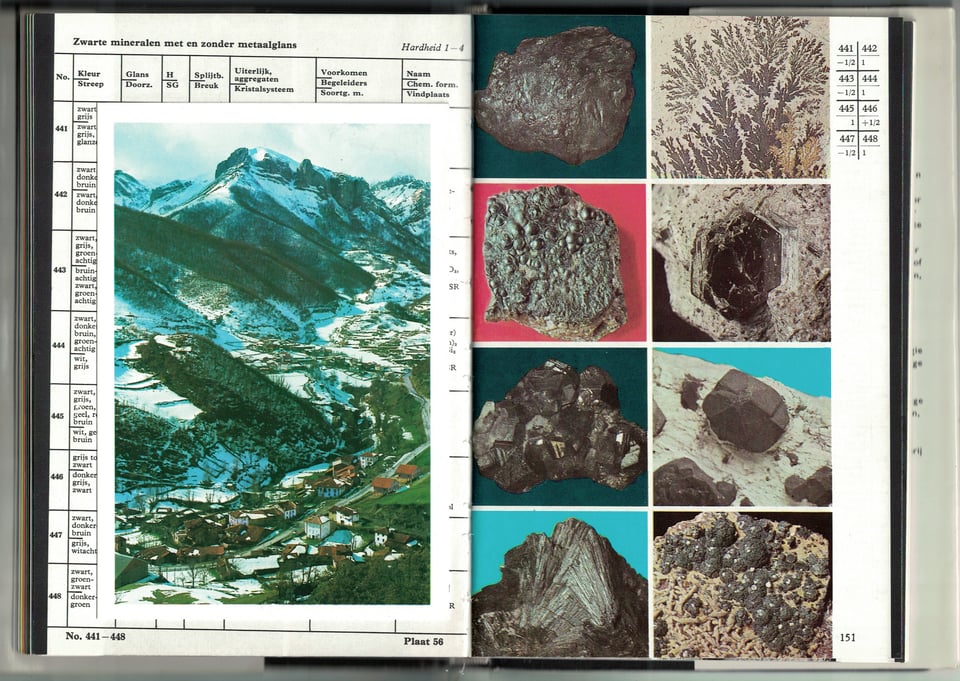
(To stay with the theme, an analogue diptych, made with my scanner)
Long live the word,
Iris
Add a comment: