On crater lakes, bus stops, and alien selves
A stalled essay written a day before labour and reopened two months later by someone who now answers to a different name.
Hoi!
This email is officially a newsletter, and well, I have news. I’m a mother now, of a beautiful son, Kobus, who I have been looking after day and night over the past two months, while my laptop gathered dust.
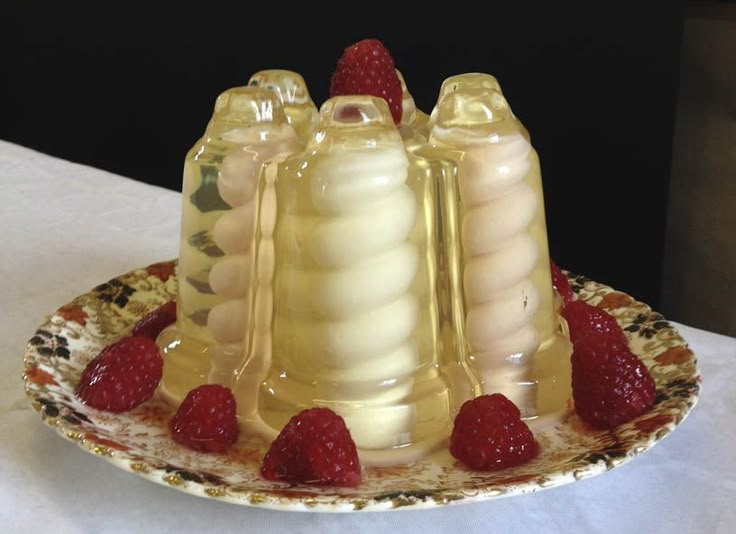
Last week, I opened it to find the beginning of an essay I started writing a day before I went into labour. The person who wrote it already feels like an alien self. I’m not sure what to think of what she wrote (yet), but it’s all I have to share right now. An unfinished pudding, which you’ll find below.
My baby is smiling, so I better close this machine again. Let me know your thoughts (on the beginning of this (maybe?) essay, Glück’s dark poetry, or the scorching summer of ‘26), while I tend to this new life. I’d love to hear from you, as always.
From my desk
Words that found their way onto the page.
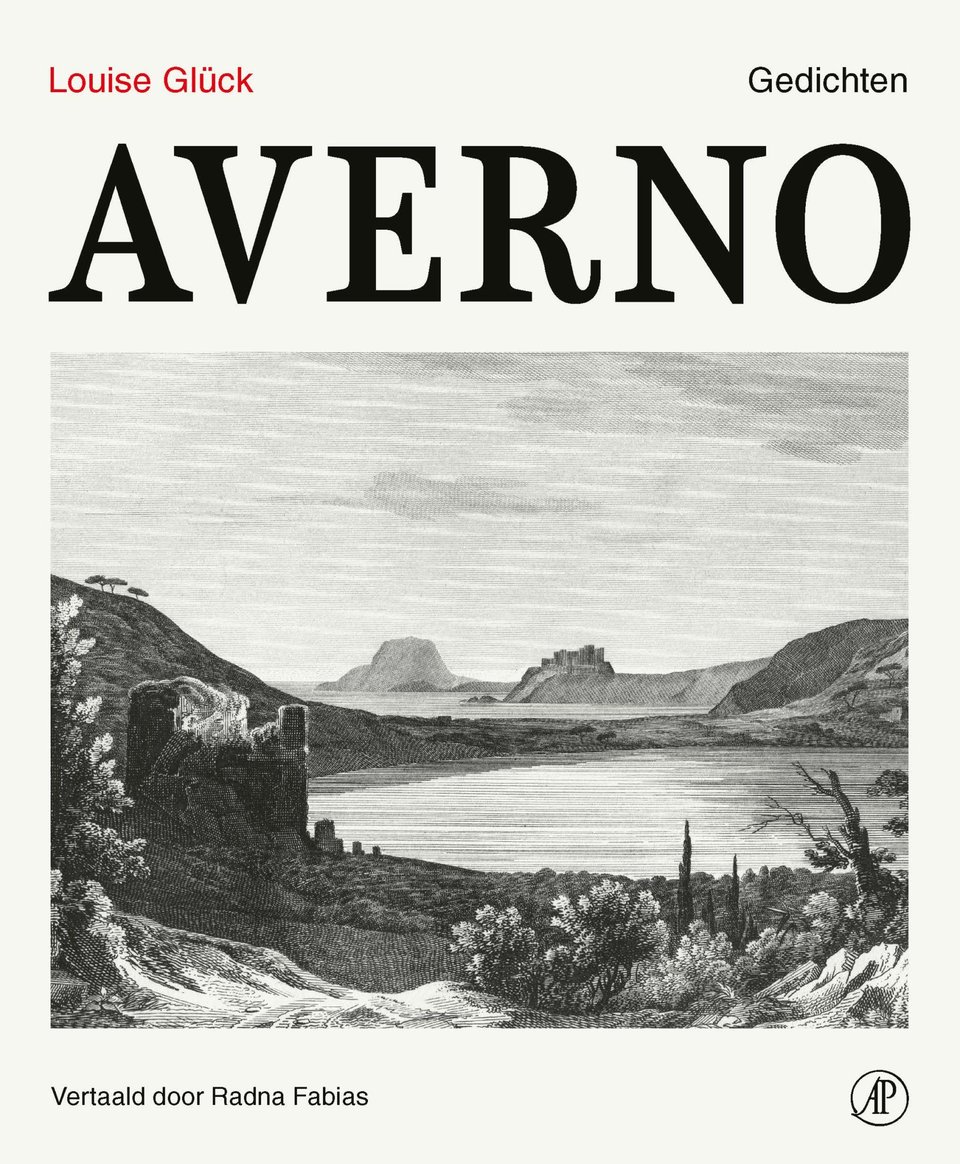
I am 41 weeks pregnant, and I’m looking at pictures of a crater lake on my phone. Averno, considered by the Romans to be the entrance to the underworld, lies just outside Naples. A place I have never been, and most likely will not go to anytime soon, and yet, I can imagine myself standing there. It’s warm, I guess. Empty bottles are scattered about, the fences are rusted, my legs itch. Squinting my eyes into slits, I try to filter out the tangible remnants of the present. I’m searching for the mythical place Louise Glück wrote about in Averno, the poetry collection lying open beside me. A place where the dead and the (re)born converge, time and time again.
Glück’s words lend this unknown place a shimmer in which I hopelessly try to recognise my unborn child. He’s in there somewhere. Behind the pixels, where he can hear my voice humming, my intestines rustling, my waters sloshing. What does it mean to be there, on the other side? I ask the sonographer as we look at a screen where grey shadows dance. “I imagine that not-yet-being-born is a memory that comes back to us when we die, but we’ll never know,” she says. “Shake your bottom again,” she continues, pressing deeper into my belly, “hopefully the little man will show himself to us if you do so.”
Over the past few months I’ve been reading other people’s words in an attempt to picture the (almost) life unfolding in my own body, but it slowly dawns on me that books aren’t going to save me this time. My child is the only one who knows what it’s like there, but the moment he’s here, he will leave that twilight world behind. In the world outside the womb, my child will have to drink every three hours, and sleep in between, that’s all I know. It will be my job to decipher his wordless cries, and offer him what he needs to move forward in this life. He can cry for my breast or wail and refuse his bed, but he can’t tell me what it was like, on the other side. To be born is to forget, as I once did. Once we learn the words to say it, we will no longer know.
In my last weeks before his first, I turned to Glück. Famous for a haunting poem in which children drown, she might be an unconventional poet to turn to as a mother-to-be. And yet, I couldn’t think of another writer who has explored the immemorial, that time before birth and after death we can’t speak of, in such vivid ways.
In Averno, we follow Persephone, who crosses worlds, forever stuck at the threshold between this life and the afterlife. In two poems with the same name (‘Persephone the Wanderer’), her tale is told. The first imagines Persephone’s experience (‘unlike the rest of us, she doesn’t know / what winter is, only that / she is what causes it’). In this first version, she is at the mercy of her overbearing mother above ground, and her abductor below ground, passed around like meat. The second version focuses on Demeter, the mother.
On my first read, I barely noticed this last poem, as I was mostly interested in the voice given to Persephone, the daughter, my first role in this world. But now, on the verge of giving birth, this stanza stood out to me:
‘We have here
a mother and a cipher: this is
accurate to the experience
of the mother
as she looks into the infant’s face.
She thinks: I remember when you didn’t exist. The infant
is puzzled; later, the child’s opinion is
she has always existed, just as
her mother has always existed
in her present form. Her mother
is like a figure at a bus stop,
an audience for the bus’s arrival. Before that,
she was the bus, a temporary
home or convenience.’
My son’s destiny is not to cause winter without ever seeing it. I’m not Demeter, I can’t bargain with the gods or control the seasons, but I am that bus. Soon, I’ll become a figure at the bus stop, where time will stop for a brief second as my son steps into this world, in which we both have always existed.
(I hope he’ll one day forgive me for reading Glück while pregnant, but he’ll probably have little interest in such trivial matters.)
From other desks
Words/images that reached me from other rooms.
It’s fair to say that the words that reached me from other rooms weren’t necessarily words, but mostly babbling sounds that somehow always seem to translate to ‘milk’. My world has become significantly smaller, even on the internet, as my searches now contain words like ‘colic’ and ‘co-sleeping’. So, a short list of links this month. It’s summer, after all.
It was thanks to a recommendation on Reddit that I first started reading Glück’s work. Wild Iris was on a list of books for “readers who love Anne Carson”, and since I am an Iris who had devoured everything by Carson, I ordered the collection, however ridiculous that may sound. It took me a while to get into it. All the poems are written from the perspective of flowers), which felt like a strange conceit until I stumbled on this interview where Glück talks about writing the collection after two years of not writing anything at all. In that barren period, she only read garden catalogues and listened to Don Giovanni on repeat, one line haunting her throughout: ‘at the end of my suffering / there was a door’. A beautiful line that opens the first poem of the collection, an Iris finding her way out of the stiff earth. It all starts to make sense to me now.
I watched this BBC documentary on Georgia O’Keeffe, who famously painted Irises. When her future husband, the photographer Alfred Stieglitz, saw her paintings for the first time, he apparently said: ‘finally, a woman on paper’. A line that has been haunting me. I didn’t know much about O’Keeffe’s paintings, beyond the ‘flowers-that-resemble-genitals’ part, thanks to male critics who described her flowers as ‘ecstatic climaxes’ or expressed feelings ‘through the womb’. Naturally, these descriptions irritated O’Keeffe. ‘They make me seem like some strange unearthly sort of creature floating in the air,’ she said in 1922. The fact was, she continued, ‘I like beef steak, and like it rare at that.’
Not that there is anything wrong with unearthly creatures, or aliens for that matter. During late night feedings, I have been browsing through Barlowe’s Guide to Extraterrestrials, a wonderful overview of ‘great aliens’ from science fiction literature. So far, Salaman (that hat!), Riim (that dress!), The Thing (those legs!) are my favourites, while the Overlord has given me nightmares. Can’t wait to show these creatures to Kobus, hoping he will one day draw his own.
But, as it goes with babies, it will take a while before he can hold up a pencil, let alone his own head. Patience is required when it comes to parenting. A problem salesmen try to solve in this film from 1901, ominously named ‘An Over-incubated Baby’. It only takes one minute, but there’s a lot to take in.
Oh, and apparently, desserts (including puddings) are all the rage in contemporary art.
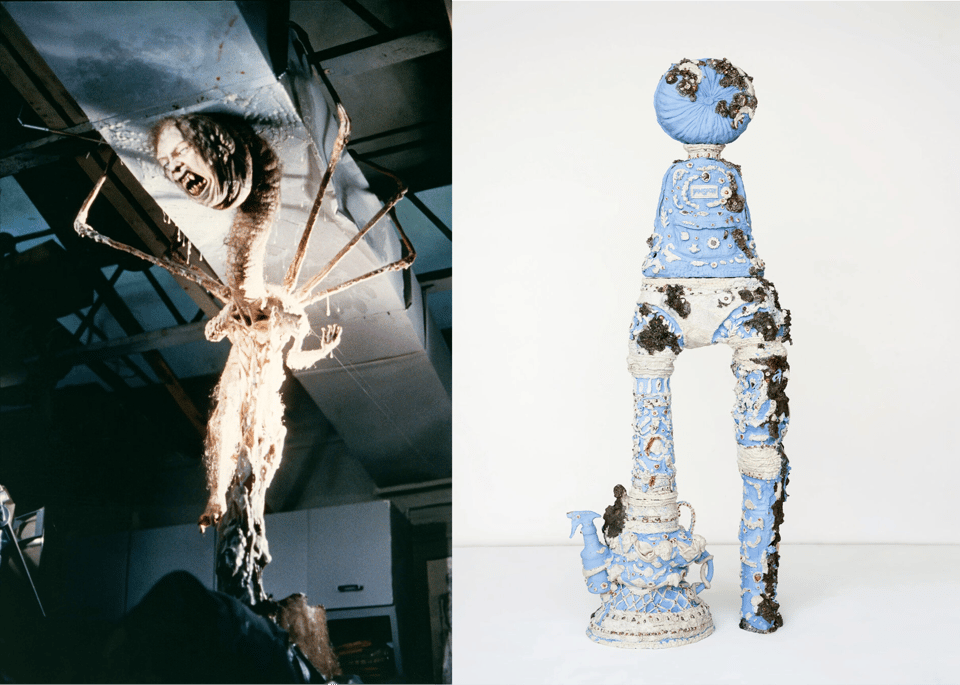
Diptych
Two images that found each other across my desktop.
Long live the pudding,
Iris
Add a comment: