On fire mouths, impressive chests, and the ultimate expression of love
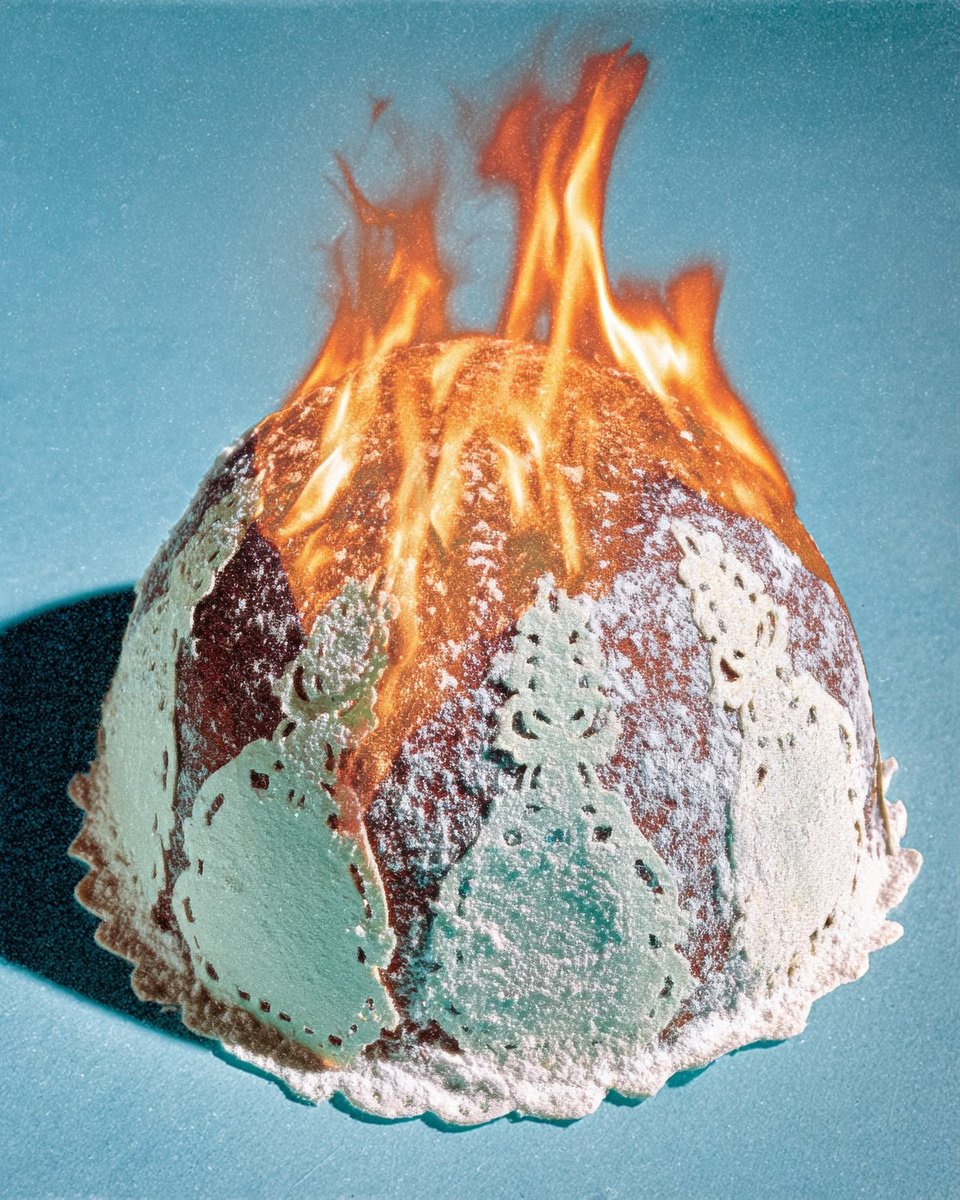
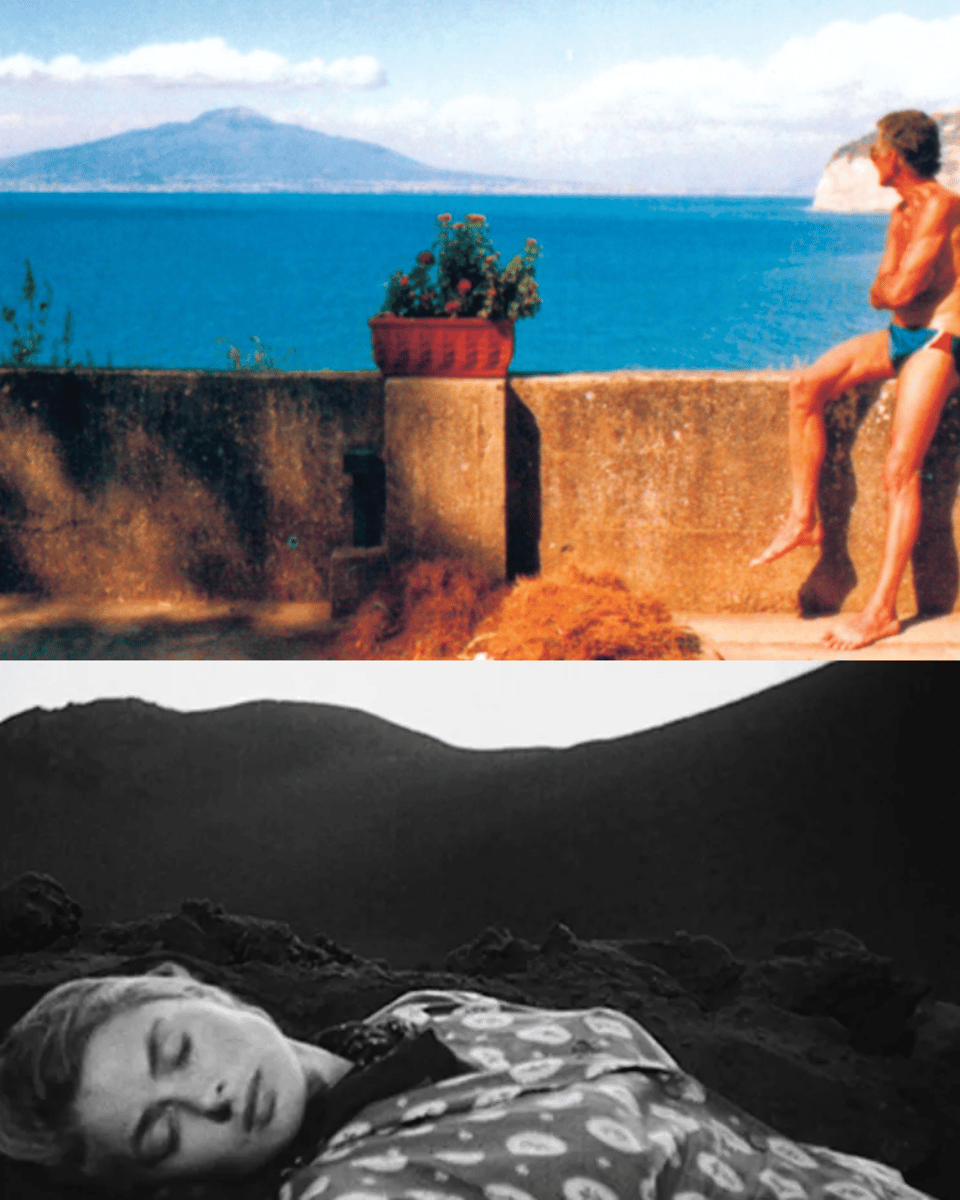
This month's pudding includes a volcano bought for $78, Ingrid Bergman lying on Stromboli, and a translated excerpt of my recently published essay.
Hoi!
I have news! My essay was published in De Gids, a Dutch literary magazine that has been in print since 1837 (!). An essay on volcanoes (mostly the Popocatépetl), poetry (Dickinson, again!) and desire (those tasty apples we can’t seem to reach).
As some (most?) of my readers (yes, you!) don’t speak Dutch, I figured it would be nice to translate an excerpt into English, which formed its own little puzzle. Turns out my Dutch sentences are longer than my English ones; they contain more commas, more caution. I tried to keep that spirit alive, even though it sometimes makes for some funky Dunglish.
Have fun!
From my desk
Words that found their way onto the page.
I remember how casually I pulled the book from its shelf. I was housesitting with a friend in the French Pyrenees. A house in which every wall was lined with books, sorted in the most loving manner. Seemingly at random. I was drawn in by the volcano on the cover, and by the title: Autobiography of Red. A novel in verse. On the back cover, the author's bio: Anne Carson. She lives in Canada. That was all. I devoured her words on the cool tiles, line by line, only to spit them back out in the garden where I found my friend again, hours later. Red, wings, Geryon, Herakles, LOLA LOVES GOD. She looked at me as if I’d lost my mind, and I had.
For the rest of the afternoon I felt like Geryon, the shy red winged boy hopelessly in love with Herakles, the classic fuckboy. They both play a role in a Greek anecdote that the poet Stesichorus turned into a long lyric poem, around 600 BC. In it, the hero Herakles kills the monster Geryon and disappears with Geryon’s magical cattle. Carson, like Stesichorus, tells this tragic story from Geryon’s perspective, but in her hands he isn’t killed but seduced. Not by a bronzed hero in sandals, but by a sixteen-year-old dropout. Carson’s Geryon feels in colours and speaks in stanzas, but he also wears t-shirts, makes out in bus shelters, eats peaches from a can. You forget he’s red. You forget he has wings. You forget he’s a monster.
You could say Carson turned an ancient poem into a contemporary queer coming-of-age rom-com. Boy falls for boy. Boy leaves him. Boy turns his grief into an autobiography not yet worthy of the label ‘art’. Years later the two boys run into each other again, this time with a third boy in the mix. The three of them go on holiday, giddy and reckless. It’s intensely fun and intensely sad. Dead serious, and unexpectedly funny. Despite the poetry label, I read this book like prose, hungry for an ending that would let me start reading it all over again.
It ends well for Geryon. He frees himself from Herakles’ grip by flying into a volcano and coming back unharmed. During his flight he takes a photograph, titled #1748, which forms the closing piece of his autobiography. He laughs mysteriously into the volcano, which doubles as a camera. The title of the photograph refers to the Emily Dickinson poem of the same name. Carson uses that poem as an epigraph. It begins: “The reticent volcano keeps / His never slumbering plan—.” It ends: “The only secret people keep, / is immortality.”
On that French mountain I accidentally clicked two loose puzzle pieces together. Carson and Dickinson share a secret, and that secret lies in the eye of that reticent volcano, #1748. Like Geryon, I wanted to fly into the crater of the volcano and become part of that same secret. With a pounding heart, I walked back to the cool poetry corner. There, on the same shelf as Carson, was Dickinson. I opened her collected works, where I found not one but many volcanoes. Sleeping volcanoes promising devastation but not yet making good on that promise. Living volcanoes that take “villages for breakfast” with “lips that never lie.” It was the start of a crush. I was falling for Dickinson, and for Carson, but mostly for the volcanoes.
Since that autumn, the volcano has become the protagonist of my search history. I watched films, visited exhibitions, studied illustrations. In encyclopaedias and etymologies, my finger automatically slides toward the letter V. Vulcan: smith of the gods, mountain of fire, fire god. Hellish mouths with fire-tongues that caress the stars. Passages to the underworld, where rivers of fire flow. Beacons for the Sirens in their search for Persephone. Pele’s vagina, whose menstrual blood pours across the earth. Prison of the giant Typhon, who writhes underneath, trying to throw the earth off like a coat. Cause of black summers and bloody revolutions. Backdrop to royal expeditions and scientific exercises. But above all, a desire which, after a twelve-hour flight, will finally be slaked. Or that is my hope.
So far, two volcanoes have been found in the Netherlands. One in the Wadden Sea, the other in the North Sea. Both were buried under thousands of metres of shale, sandstone, and sea. No one has ever heard of them. So I decided, together with my friend, to travel to Mexico, to a mutual friend who lives under a volcano. We set course for Cholula, “the place of those who escaped.” On a tourist website there’s a picture of a volcano the way a child would draw it: steep, cone-shaped, like a tower reaching for the sky. I couldn’t wish for a better destination.
On the plane, I read another book about volcanoes. Not a poetry collection this time, but a book of facts. Passages about tectonic plates moving at the same speed as our toenails grow, that kind of trivia. I look at the dew trapped between the double panes. Behind it, a few clouds and the sea, that blue-grey expanse concealing the shifting plates. It was Empedocles who, 2,400 years ago, named the four elements: water, air, fire, and earth. That he could conceive of such a thing must have meant he stood on equal footing with the gods. To prove it, he threw himself into the crater of Etna, convinced he would climb back out as a god himself. According to popular legend, though, the volcano spat out nothing but his sandals. Empedocles disappeared; the elements remained.
This anecdote teaches us: when it’s man versus volcano, the volcano always wins. People are vain; they fancy themselves mighty. But face to face with a volcano, we’re reminded that our lives pass in the blink of an eye. That sense of insignificance can feel good, it invites us to surrender to the sheer wonder of being alive, but it can also spark a desire to become mighty ourselves, to fathom the volcano. Those two feelings often go hand in hand. Approaching a volcano carries contradictory risks: there’s the danger of fire, but also the danger of disappointment. What if the volcano I’m flying toward leaves me cold? What if it turns out to be just a foul-smelling mountain?
For the full essay (in Dutch), buy De Gids! Beautifully designed by Felix Salut, illustrations by Lara Lotte Schröder.
From other desks
Words/images that reached me from other rooms.
While writing this essay, which I’ve spent many months on, I descended deep into the crater. Here are some things I’ve watched and read while trying to make sense of my fiery feels.
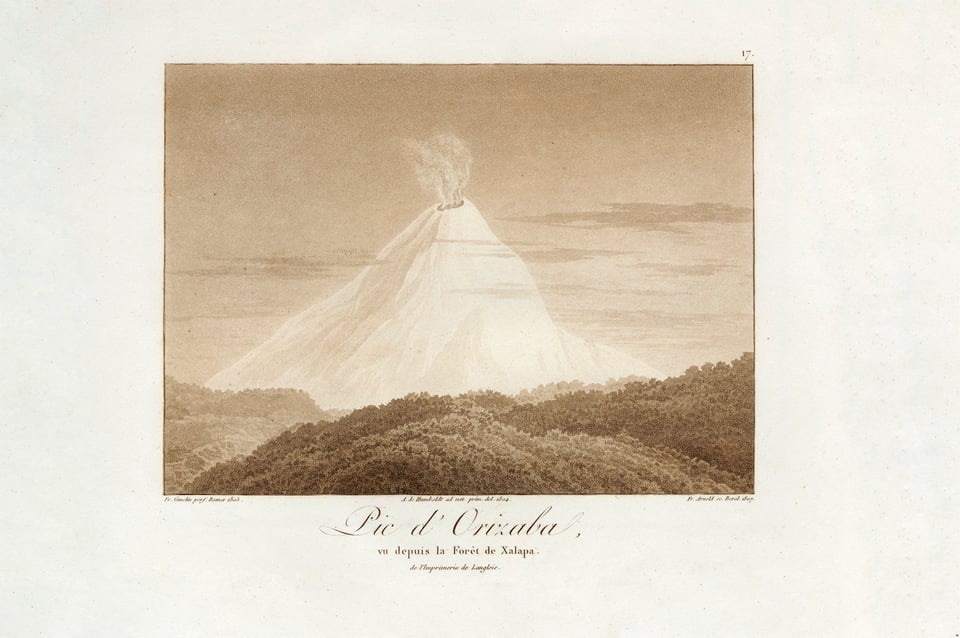
I first encountered an image of Popocatépetl on the cover of the mezcal-soaked book Under the Volcano by Malcolm Lowry (spoiler: the volcano I was flying towards in the essay was ‘El Popo’). Summary on the back cover: “Under the Volcano is a book about downfall, total disintegration, hell, and also the autobiographical sketch of a permanent drunkenness.” Sign me up. Lowry based the book on his own drunkenness, a condition that dominated his life. “My secrets are of the grave and must be kept,” we hear Lowry say (voiced by Richard Burton) in the documentary Volcano: An Inquiry into the Life and Death of Malcolm Lowry. His friend tells us that he was handsome, that he had an impressive chest, but that he was still insecure. That was because of his small hands and his small penis, the same friend tells us. Apparently everyone knew about it. Friend and foe alike. Sad documentary, delirious book.
I also read this article on Dr. Atl, a strange painter who left his pro-Nazi politics behind when he encountered the birth of a volcano, Paricutín (which he bought for $78). Considering his wide-ranging (and often controversial) pursuits, from writing a book on petroleum to arguing with Lenin in Lausanne, Diego Rivera was indeed right when he said that “Dr. Atl is one of the most curious personalities born to the modern New World—his story is the most picturesque of all the painters, impossible to recount in fewer than several volumes.” As I’m short on time these days, I simply looked at his paintings. I imagine that Geryon’s last photo somewhat looked like one of Dr. Atl’s ‘aerolandscapes’ (or ‘aeropaisajes’, in Spanish). Like this one, titled: El Popocatépetl desde un avión (1948).
In my essay, I dive a bit deeper into the poems Emily Dickinson wrote on volcanoes. Six of them were left behind in her bedroom after she died. 601 is my favourite, with this wonderful line: “A still — Volcano — Life — / That flickered in the night — / When it was dark enough to do / Without erasing sight —.” For those who have read more of my essays, it has become pretty clear that I can’t get enough of her poems. She never saw volcanoes, and yet she was able to use them, like no other poet, to express an internal landscape. Except, of course, for Anne Carson, who not only writes about them, but also paints them. In this interview from 2013, I read that her husband “Currie” prints these paintings on t-shirts and wears them, which seems to me the ultimate expression of love.
Which brings me to Fire of Love, a documentary about the married volcanologists Katia and Maurice Krafft, who spent decades filming and studying volcanoes together. They died in 1991 while filming an eruption in Japan. Told largely through their own archival footage, the film traces their shared obsession with volcanoes and their deepening love for each other. Together, they dance on firestones, wearing their handmade suits. Together, they lie flat on their bellies, their heads dangling above the abyss. Together, they witness volcanoes as characters, fully aware of the dangers. Katia takes still photographs, while Maurice wields the movie camera. She is cautious, while he takes risks. “I want to float down a molten lava flow. Katia doesn’t want to. She said that she’d take my last photo as I set off,” Maurice says. I wonder if she did.
(There’s something about photos and volcanoes worth exploring, potentially in a second essay on volcanoes?)
Diptych
Two images that found each other across my desktop.
Long live the pudding,
Iris
Add a comment: