
If You Hate the Democratic Party, Don’t Run as a Democrat
Jaime Harrison’s blunt assessment of the DSA’s relationship with the Democratic Party is exactly right.

(ABC/Lorenzo Bevilaqua)
There is a difference between being a progressive Democrat and wanting to dismantle the constitutional structure of the United States.
That distinction matters.
The Democratic Socialists of America’s newly adopted platform is not a list of ambitious policy goals. It is not a more aggressive version of the New Deal. It is not Medicare for All, stronger unions, or higher taxes on billionaires. It is a document that openly calls for abolishing the Senate, replacing the presidency and Supreme Court with institutions subordinate to Congress, eliminating what it describes as the “carceral forces of the capitalist state,” ending economic sanctions against hostile regimes, and creating what it explicitly calls a “democratic socialist republic.”
At some point, we have to stop pretending this is simply another faction within the Democratic Party.
Upgrade nowPolitical parties are coalitions. Democrats have always contained liberals, moderates, progressives, labor activists, civil rights advocates, environmentalists, and centrists. We argue. We fight. We disagree on taxes, regulations, foreign policy, and strategy. But there is a difference between arguing over policy and rejecting the basic framework of American constitutional government.
If your political project involves abolishing the Senate, replacing the presidency, subordinating the judiciary to the legislature, and building an entirely new constitutional order, you are not debating the future direction of the Democratic Party. You are proposing a fundamentally different country. If that’s what you believe, then former DNC Chairman Jaime Harrison’s comments are exactly right.
“I say this with no ill will or animosity: if you hate the Democratic Party, then please don't run for our nomination.”
That shouldn’t be a controversial statement. In fact, it should be self-evident.
Political parties exist for a reason. They are not rental cars. They are not temporary vehicles for candidates looking for the easiest path onto a ballot. They are organizations built by millions of volunteers, activists, donors, organizers, elected officials, and ordinary voters who share a broad set of values and goals. No one is entitled to a party nomination. No one is entitled to a party’s resources. And no one is entitled to spend years attacking a party while simultaneously demanding access to its infrastructure.
The contradiction becomes even harder to ignore when DSA leaders themselves acknowledge that many of their elected officials do not currently govern according to the organization’s platform. During the debate over the new document, participants openly discussed the gap between the organization’s stated goals and the reality facing DSA-backed elected officials. In other words, the people writing the platform recognize that many of the politicians carrying the DSA label are governing far to the right of the organization’s actual agenda because that agenda is politically untenable in the districts they represent.
That should tell us something.
If your candidates cannot honestly campaign on your platform, perhaps the problem is not messaging. Perhaps the problem is the platform.
The most revealing aspect of the debate was not any single proposal. It was the repeated insistence that these positions represent the organization’s true direction even if voters find them radical. Supporters of the platform argued that abolishing the Senate is becoming increasingly reasonable. Others defended the abolition of police and prisons as a fundamental socialist principle. Still others argued that restructuring the American state itself is necessary to achieve socialism.
Taken together, these are not the positions of an organization seeking to influence the Democratic Party from within. They are the positions of an organization pursuing a fundamentally different political project.
That distinction matters because many voters are still encouraged to believe that the DSA is simply another progressive advocacy group operating under the broad Democratic umbrella. The organization’s own leaders are making clear that this is not how they see themselves. They are talking openly about drafting a new constitution, creating a democratic socialist republic, and transforming the structure of American government to achieve their goals.
People are free to advocate for those ideas. That’s how democracy works. If Americans want to campaign for a parliamentary system, the abolition of the Senate, or a radically different constitutional order, they have every right to make that case to voters. But they should make that case honestly and under their own banner.
Build the party. Recruit the candidates. Raise the money. Organize supporters. Win elections.
What should not happen is a situation where activists spend years denouncing Democrats as corrupt, compromised, inadequate, or morally bankrupt while simultaneously relying on Democratic ballot lines, Democratic donors, Democratic volunteers, and Democratic infrastructure to gain power. At some point, voters are entitled to ask a simple question: if you believe the Democratic Party is fundamentally broken, why are you seeking its nomination?
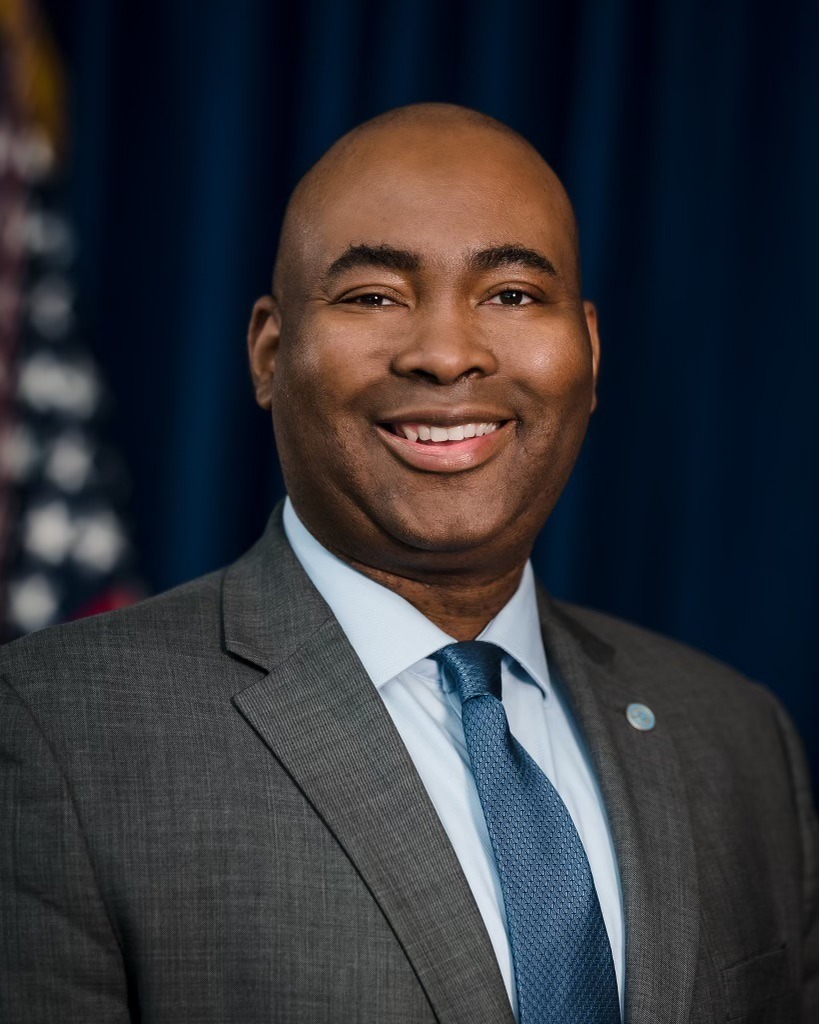
Jaime Harrison’s answer is straightforward. If you don’t believe in the Democratic Party, don’t ask Democrats to carry you across the finish line.
That is not an attack on progressives. It is not an argument against ideological diversity. It is not even an argument against democratic socialism as a political philosophy. It is an argument for intellectual honesty and political accountability.
The Democratic Party has plenty of room for debate. It always has. There are legitimate disagreements over healthcare, housing, labor rights, taxes, climate policy, foreign affairs, and the size of government. Those debates should continue. They are healthy and necessary.
What is harder to defend is the notion that an organization whose leadership openly advocates replacing major pillars of the American constitutional system is merely another faction within the Democratic coalition. The DSA’s own platform suggests otherwise.
The organization now faces a choice. It can continue presenting itself as a movement working within the Democratic Party while advancing goals that many Democrats reject outright. Or it can embrace the implications of its own platform and build an independent political movement around those ideas.
Either path is available.
But Jaime Harrison was right. Political parties are built by people who believe in them. If you do not believe in the Democratic Party, if you view it primarily as a vehicle to be used rather than a coalition to be strengthened, then perhaps the most honest course is to stop asking Democrats to do the work for you.
Upgrade now