
Finding hope while kidnapped
What happens when a fundamentalist cult kidnaps an obstetrician?
Note from Tucker
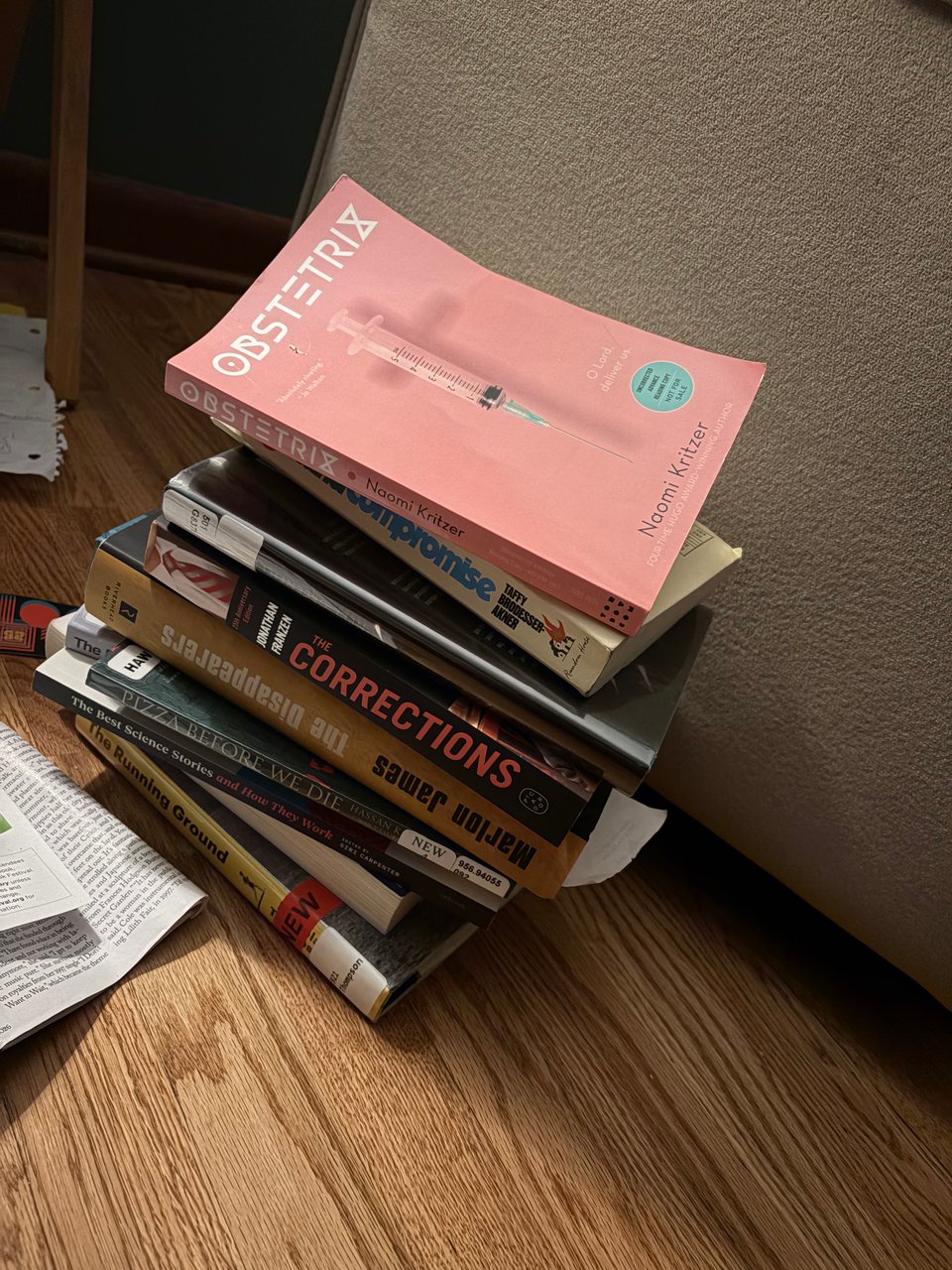
On the podcast this week, I chatted with Minnesota-based and award-winning science fiction writer Naomi Kritzer. We talked about her novella OBSTETRIX. If you like a good near-futuristic medical thriller, I highly recommend this book. HERE’s my write-up in Chicago Review of Books
Set in a speculative future, OBSTETRIX follows Obstetrician Dr. Elizabeth Gwinn who goes by Liz who leaves North Dakota for Minnesota after a messy trial over a medically necessary abortion to save the life of the mother. The patient’s kidneys were failing, Liz felt like the abortion would give the patient the best chance to live. Liz is acquitted after a trail, she escapes prosecution and soon leaves only to find more trouble.
So far, this isn’t that speculative; as these scenarios can and do play out, especially with the several states with such abortion bans in place. In a national survey from 2023, 61% of OBGYNs in abortion-ban states were worried about legal risks about their decisions around abortion care for their patients. In the same survey, 48% of OBGYNs in abortion-ban states offer just information about abortions — or where to go to get an abortion — while 30% don’t offer referrals to other clinics.
Abortion bans, being legally responsible as a medical professional are all too real. Call this law-fi or med-fi or a feminist thriller. The thrill part of this book starts early. Soon, thinking she is following a job lead, Liz is tricked, drugged, and kidnapped by a fundamentalist cult to care for the young pregnant women. Liz is taken to a remote compound where there are strict gender roles, no internet, no books, and surveillance teams of armed men. Liz feels trapped.
I kept coming back to this feeling of being trapped. How does someone survive that feeling. Liz shows us how: using stories and words, and hidden books, to help her and her patients get through impossibly tough situation.
A sense of hopelessness and uncertainty of how — if at all — circumstances might change. With only her aging father as a social connection, and no job, living alone, Liz is worried no one will notice she is gone, let alone where to look.
Like Liz, it’s easy to feel trapped in a set of circumstances. Political, law, socioeconomic, climate forces can all trap us, but that doesn’t mean we can’t find ways to survive. Thomas M. Disch’s novel THE GENOCIDES fits this description with characters trapped on a destroyed earth with giant alien plants having taken over the world. People and their civilization are nothing to these ecological alien forces; the band of humans struggle to even understand what’s happening to their world, let alone having control to change the circumstance.
I felt this feeling of trapped for a brief time when Alabama’s Supreme Court called embryos children and nearly blocked our ability to have a child with IVF. I feel this sometimes when I think about climate change or technological destruction. But alas, hope still exists. Babies still get born; people often find the help they need. Liz finds a way to hope in this novel — words, as in the power of a book and a story — play a role in making that possible.
Text feels precious for Liz. With all texts and tech banned on the compound, she reads toothpaste ingredients with fondness. “As a child, I’d read the nutrition facts on the cereal box in the morning while eating,” Liz reflects. “I would read an entire library of cereal boxes, if I could. I’d read drug package inserts, if I had any. I’d read a licensing agreement for a phone app. It felt almost like a hunger.”
She eventually writes the word, “courage” on a steamed mirror and looks at it for a long time. Words help us understand the world. They carry a power, too, in the name of surviving powerful and often unbeatable forces.
Bookmarked (Links to more reads and stuff I learned while researching to chat to Naomi)
Naomi’s 2025 WisCon Guest of Honor Speech, which we touch on in the podcast, but is worth a read if you’re a struggling writer: “The core true thing about fiction writing, I think, is that you have to believe that your words matter. That your voice matters. That what you write matters.”
Interview with Naomi in Clarkesworld Magazine.
I first learned about Naomi because of her local political coverage around ICE’s decent into Minneapolis in Winter 2026. If you’re in Minneapolis and St. Paul area, I highly recommend you follow Naomi’s candidate guides she posts on the homepage of her website and coverage behind local political candidates. Local news should take a note — we could all use this kind of voice and breakdown of politicians for interested voters.
Criminal Penalties for Physicians in State Abortion Bans from KFF
Bookshelf photo


Add a comment: