
Expedition 24
The Bathysphere
Yoho! Welcome back to The Bathysphere! Today, Chris is looking at knots and puzzling over a quote by T.H. White. Meanwhile, Florence gets entwined in a sci-fi murder mystery that involves, you guessed it, games! Keith is away this week but will be back for more retrospective adventures soon.
The Bathysphere crew
Christian Donlan
Florence Smith Nicholls
Keith Stuart
Contact us at [email protected]
Delightful games
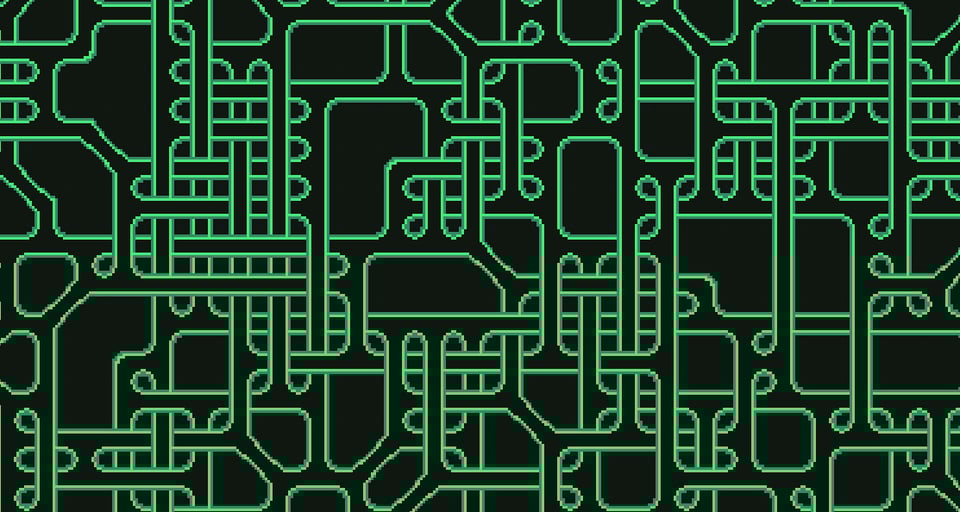
I decided to follow the thread of Chris’ essay on knots and tried out the Gordian Knot Automaton on itch.io. Its a free digital toy that allows you to place cells that will then become linked to create intricate knots. It feels like doing embroidery in cyberspace. FSN
Interesting things
I borrowed The Lonely Planet Armchair Explorer from the library this week. It’s a lovely idea for a book, taking the various parts of the world and exploring their literary, musical and cinematic gems. Inevitably, the only thing that would make it even better is if it looked at their games too. CD
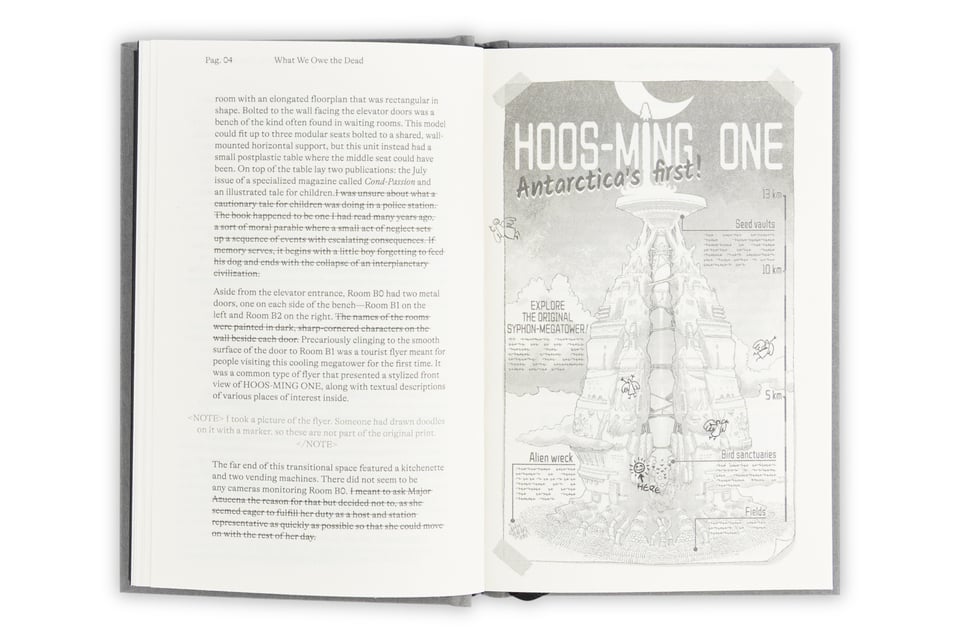
Hopefully you can forgive this blatant case of self-promotion, but next Thursday 11th of September I’ll be at Village Books in Leeds talking with Stefano Gualeni about his experimental sci-fi novel, What We Owe the Dead. The book follows a murder mystery that hinges around the cultural significance of a mysterious board game that was discovered by archaeologists. Naturally, I’m obsessed. FSN
An article on Archaeology as Worldbuilding by Dr Colleen Morgan, argues, among other things, that the field could take inspiration from non-linear video game stories. There’s even discussion of an archaeological reconstruction in the multiplayer virtual world Second Life. FSN
Sorry, I just can’t resist recommending Tim Ingold’s book The Life of Lines this week-it’s too on theme. To quote the book blurb itself “A world of life is woven from knots; not built from blocks as commonly thought.” In games, we spend a lot of time thinking about blocks and bricks, maybe we could try building virtual communities around different, messier materialities. FSN
Essay: The magic of knots
There are things you worry about mentioning because people might start to suspect you’re a bit boring. And then there’s the time I spent a surprisingly great afternoon undoing a knot. The knot was in one of those nylon cords that hangs down from the side of the cheap window blinds we have in our back room. In fact, for any proper knot sickos out there, it was in three of the cords that had become densely tangled together. It took me an hour, all told, to get everything free.
Cor. But what an hour. This knot wasn’t just an annoyance, it was thought provoking. For example, is a tangle like this technically a knot, or does a knot require the origin story that it was once tied on purpose? But more: this knot also had structure. I think this knot had been gathering for many years, certainly before we moved into the house and unknowingly took full ownership of it. The more I explored, pulling at one string and then another, the more I realised it was a series of super knots that were looped together with minor knots.
So in effect, it was a knot with a bit of narrative to it. It was a knot with set-pieces. One of which, not the biggest of the tangles but the tightest, I took to calling Big Bertie. I feel like I learned so many unknotting techniques just hanging out with Big Bertie that afternoon, working out where to loosen which cord, where to create slack, where to go for the high pressure moment where you follow a line through three or four tight switchbacks and then loop it over everything.
And here is the thing: once I was done, I was left with two thoughts. The first is that this mega knot had accidentally been one of the best games I had played in an age. And that’s not a reflection on the games I was playing at the time. Listen: it was compelling, it was fiercely technical, and it had a wonderful pay-off and sense of achievement. I learned things I could probably take away with me and apply to future knots. Furthermore, I am an anxious person by nature and teasing away at Big Bertie definitely improved my mood.
The second thought I was left with was an awareness that videogames were nowhere near the point that they could meaningfully recreate what I had just spent an hour doing (or undoing). I know there are knot games on iOS and Steam - I know this without looking because it’s so obvious. Knots are so compelling. I reckon many of these games create beautiful abstractions that combine graphical style with a pared back approach to knots. But I also know that the technology to digitally recreate the true knot experience does not exist yet. I think there are two aspects to it: the close-up physical reality of cord tightly bound to cord, and then the fidelity offered by your fingers working away at it all, even MS-addled fingers like mine with little or no feeling left in them.
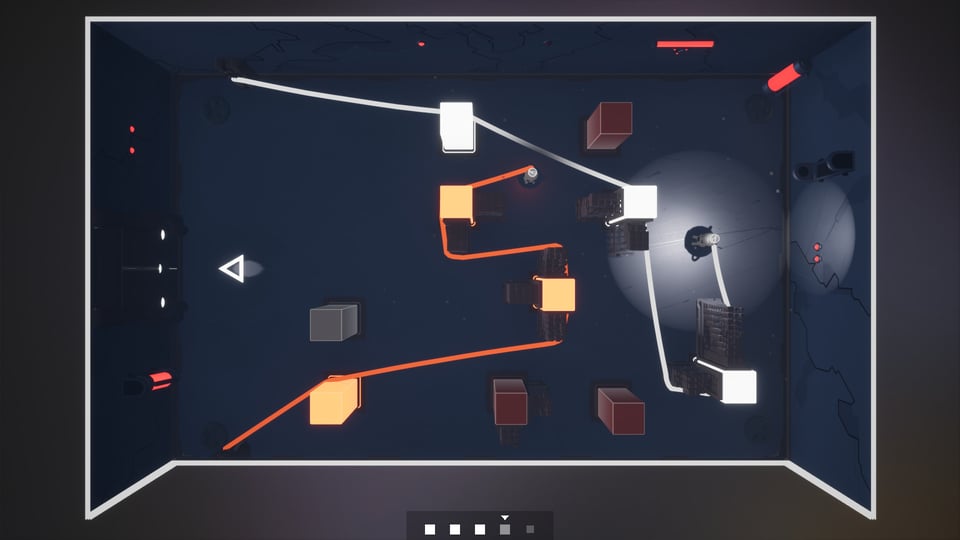
Since my afternoon with Big Bertie, I have played at least one game that tried to get at the beauty of knots. Filament, by Beard Envy, is a wonderful game about connecting power outlets on a space station, but it’s about making knots rather than undoing them. Similarly, the tabletop game The Sailor’s Knot is an absolute delight, but it’s about the tidy kind of knots you find in Ashley’s Book of Knots (buy this book, it’s wonderful), rather than fearsome accidental snarls of cord.
Speaking of books, years ago, in H is for Hawk by Helen Macdonald, I came across this thought from T. H. White, which I still don’t fully understand: “Knots were probably the earliest spells... I am convinced that if nobody had ever invented knots, nobody would ever have imagined magicians.”
I get a little of that: here is a dense and tricky kind of work that links things together in surprising ways, and that in itself is a kind of magic, surely. But with the knot that contained Big Bertie, I felt that I had found another kind of magical thing: here was a boundary, a coastline, that digital games had yet to cross. I am sure there are many others - a friend of mine once mentioned how impossible, even just graphically, it would be for a game to render a character putting on a coat in a believable manner - and that sense that there are many others is quietly thrilling. The boundaries are where new things happen. The boundaries are where the really great things are done and undone. CD
Add a comment: