
Expedition 23
The Bathysphere
Greetings fellow travellers! On this, the 23rd submergence, we have all sorts of fine things to share with you. Chris delves into the creative mode of Mini Motorways. Floss returns from their Big LARP Summer for an essay on the concept of “bleed” and how this might apply to video games as well as live-action roleplaying. Finally, Keith wants you to read a classic video game bibliography.
The Bathysphere crew
Christian Donlan
Florence Smith Nicholls
Keith Stuart
Contact us at [email protected]
Delightful games
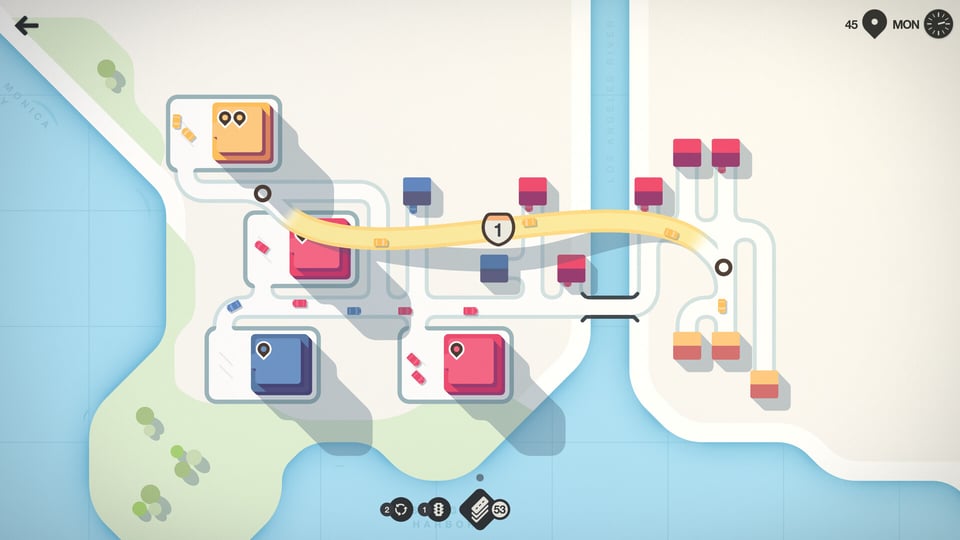
Mini Motorways has just received a new Creative mode, which allows you to place buildings and have a little more control over the landscape you’re playing on. I’m fascinated by this idea, since the core of the game as-is is the gap that opens between your plans and your general lack of control over things. More Mini Motorways is always good news - and this is a free download wherever you purchased the game. CD
Interesting things

This is a fascinating response to something I’ve been thinking of quite a lot recently: what forms can neurological art and literature take? I guess the correct question is, are there any forms they can’t take? CD
This week, I’m making two recommendations of things that you may have already heard of, but which I experienced recently and would like to share anyway. The first is the Mucha Museum in Prague, which includes a lovely collection of the Art Nouveau artist’s work. I particularly appreciated seeing the theatrical posters that he made a name for himself with, and couldn’t help but wonder what he would think of video games. FSN
My second recommendation is the speculative fiction novel Piranesi by Susanna Clarke. One of the two LARPs I took part in recently was inspired by the book, which centres around a House with infinite rooms, lined with statues and with its own strange ecosystem, including an ocean that causes floods. I’ve seen people refer to it affectionately as “a video game,” and it definitely has the aura of a roguelike. FSN
Essay: Bleed Between Worlds
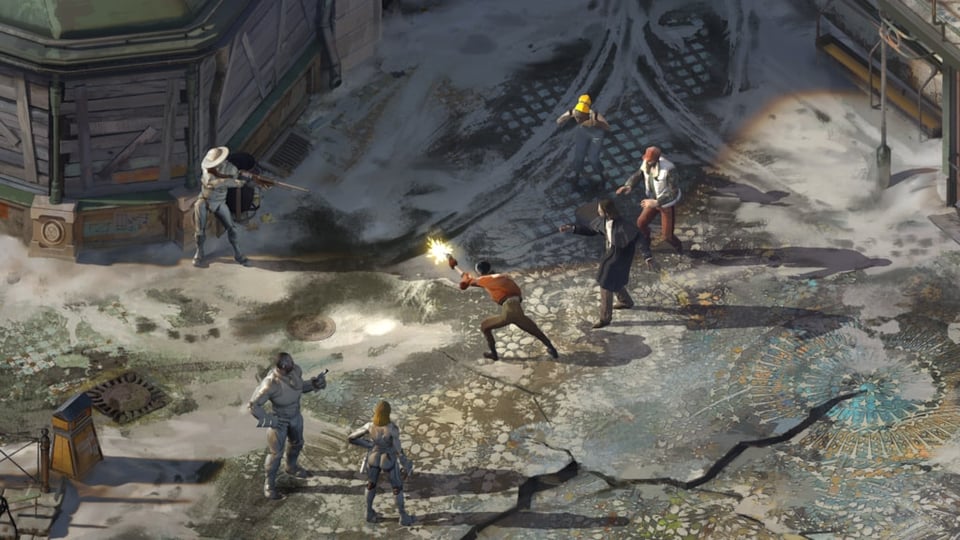
For the past few weeks I’ve been pretending to be two people who are very definitely not me. Well, I say people, one was essentially a giant rat and the embodiment of a community’s greed, but still. The point is, I took part in two LARPs, that is, live-action roleplaying scenarios. Looking back over my memories, the thoughts and feelings belonging to my character bleed into my own. Where do I start and they end? This phenomenon of emotional transference between player and character is indeed known as “bleed,” and it can have both positive and negative consequences. Now reflecting on my intense experiences, I’m wondering if it’s possible to experience bleed when playing video games, and what could developers learn from LARP designers in terms of managing it?
The first time I played a longer form LARP, I really struggled with bleed between the character and myself. My role was an 80s Civil Servant working closely with a Conservative MP, and funnily enough I found it much more difficult to play a character with political beliefs different to my own than dealing with the LARP’s time loop plot. When other characters jeered at me for being a Tory accomplice, I struggled not to take it personally, even though I knew intellectually it was just roleplay. To give a more silly example, I recently got back from the Disco Elysium-inspired LARP 97 Poets of Revachol, in which I played a character known, among other things, as the “Rat King.” I always thought rats were kind of cute (perhaps in moderation) but I now have an overwhelming affection for them that feels like an odd kind of rodent-based emotional hangover.
Some LARP designers actually intentionally design for bleed. I talked with Narrative Designer, Game Narrative and Roleplaying Researcher Raymond Vermeulen about this. “When designing around bleed you're first and foremost designing with player safety in mind. Heavy feelings will never be completely safe to experience, but you can hand players the tools to understand what they're signing up for beforehand, and process the feelings when they do happen.” One thing I really admire about LARP design is this emphasis on safety tools, which often includes safe words and techniques for checking in with your fellow players. LARPs usually include some kind of introductory workshop in which all players will be briefed on this. As to why you might want to design for bleed, there can be all sorts of reasons, from heightening the experience of a horror LARP to safely exploring difficult subject matter. As Raymond puts it: “We're in the business of making art, and safe art is boring!”
The term “immersion” is frequently thrown around in video game discourse. This is often discussed in terms of high definition graphics or that other oft-quoted term “player agency.” But what of bleed? Is that even possible in video games? Raymond thinks so: “Roleplaying games are conversations, you talk with a game and share bits of yourself with it, and if you listen closely you can hear it talking back.” Video games are not an embodied experience in the same way that LARPs are, but that doesn’t mean you can’t identify with your player character. However, this kind of affective immersion is perhaps not as openly sought after because it raises concerns about player wellbeing without a predetermined in-person support framework. There has even been research on the connection between players identifying with customised avatars and “problem gaming,” which is defined as an addictive behaviour, though in my opinion such work reflects anxieties about this kind of emotional involvement in the medium as much as anything else.
It seems to me that if there is potential to experience bleed in video games, then game designers could learn from LARP techniques. As well as pre-game workshops, LARPs also commonly include post-game debriefs. As Raymond suggests “consider ample content warnings and ways for your players to offramp after something likely to be emotionally harrowing. Try and think about what aftercare could look like for your game--NPCs checking in with the PC? Explicit fourth wall breaking? Out-of-game community?” I’ve heard of LARPers having personal rituals to help them get in and out of character, such as listening to music, or writing about their experiences. I wonder what space there is to incorporate these kinds of practices into video game design.
As I come out of my own LARP and travel fugue, writing this piece has been my own kind of personal ritual for taking a detached look at bleed. The transition back to reality has not been a smooth journey, so, even if at a distance, thanks for joining me. FSN
Retrospective adventures
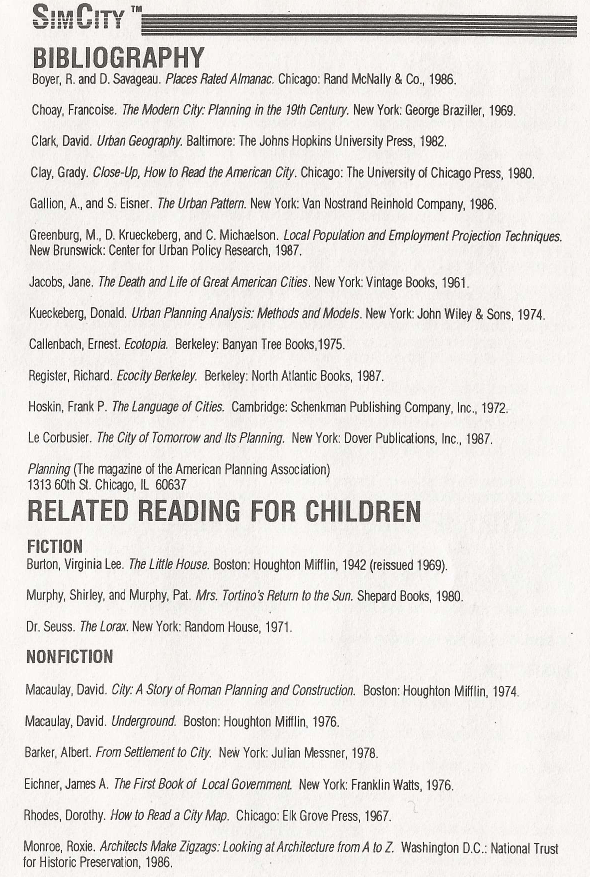
Chris’s reference to Mini Motorways got me thinking of games about road networks, which naturally led me to Sim City, Will Wright’s classic 1989 urban planning simulation. I was absolutely besotted with this game and it inspired in me a lifelong fascination with how cities function. Handily, the instruction booklet came with a bibliography (why don’t ALL games do this?!) and I spent years tracking down these books and reading them. What’s more, they also felt relevant to me as a video game player and critic, as they dealt with similar challenges to those faced by game designers looking to construct fictional cities. Anyway, I wanted to share the list with you because these books really fed my interest in spatial design and how the systems that surround us shape our lives. KS
Add a comment: