Thursday, May 21, 2026. Annette’s Roundup for Democracy.
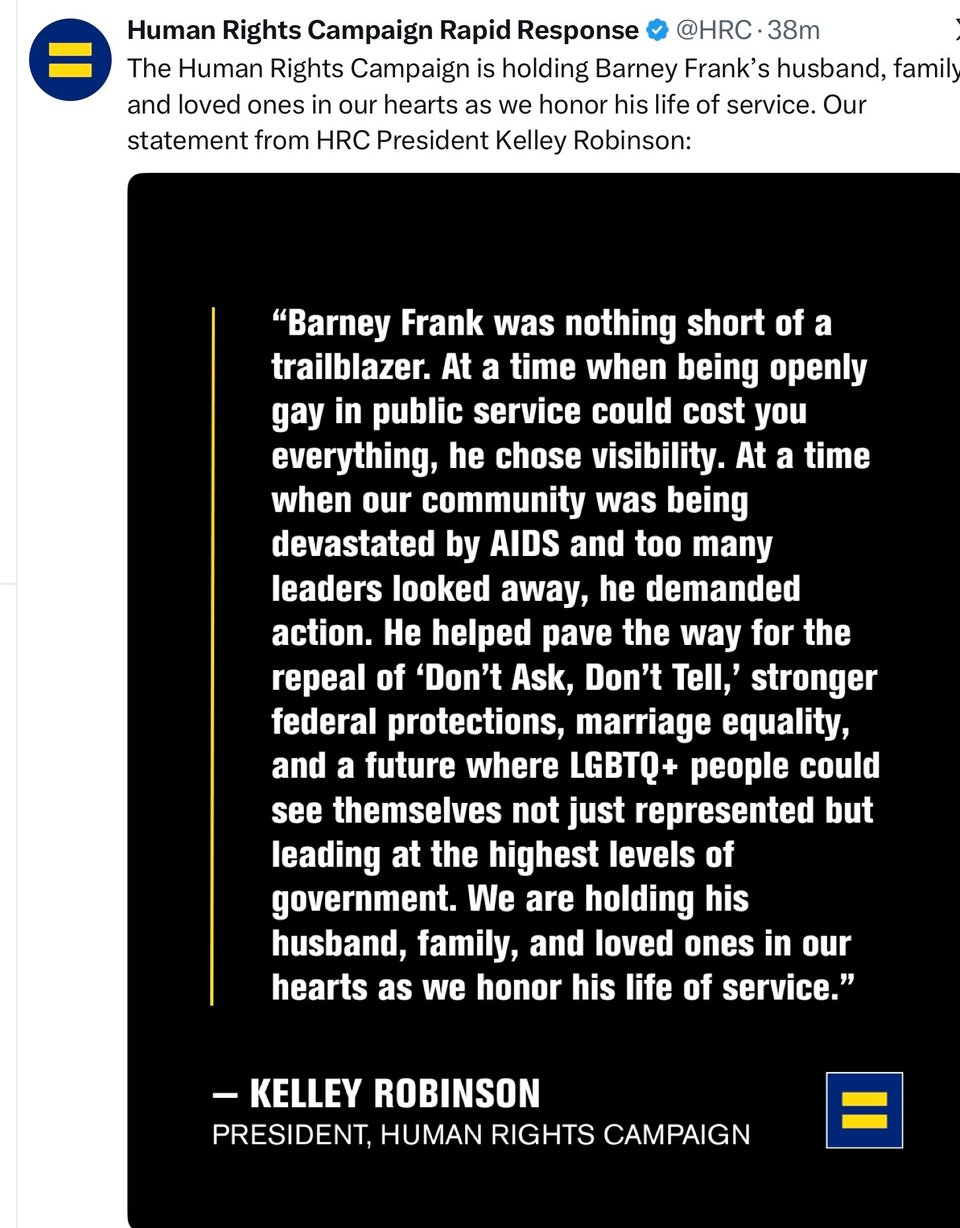
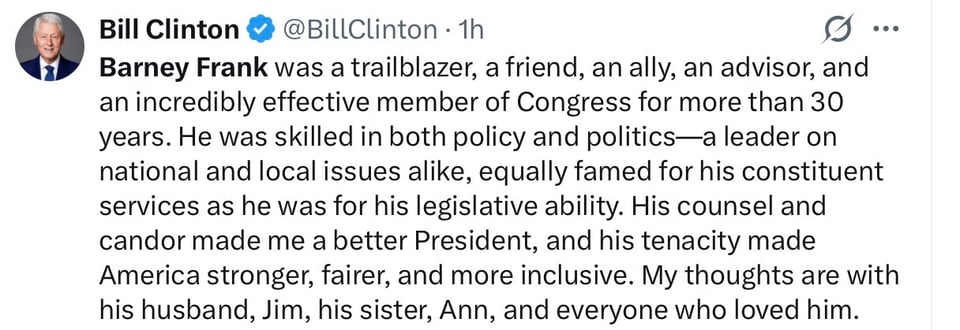
Barney Frank is gone.
Former Rep. Barney Frank, outspoken LGBTQ+ figure, dies at 86.

Barney Frank, a sharp-tongued Massachusetts Democrat who became the first LGBTQ+ member of Congress to out himself, has died, according to his longtime friend Jim Segel. He was 86.
Frank came out to a Boston Globe reporter in May 1987, a first for a sitting member of Congress.
“Representative Frank Discloses He is Homosexual” was the formal-sounding New York Times headline.
“I don’t think my sex life is relevant to my job, but on the other hand, I don’t want to leave the impression that I’m embarrassed about my life,” Frank said. He was 47 years old and had been in Congress for six years at that point.
In 2012, he became the first member of Congress to marry someone of the same gender, longtime partner James Ready, in a wedding officiated by Massachusetts Gov. Deval Patrick. By then, the world had moved forward a bit, but Frank wanted to push his colleagues on Capitol Hill to grow with him.
“I did want to get married while I was still in office,” he said. “I think it’s important that my colleagues interact with a married gay man."
During Frank's four years as chair of the House Financial Services Committee, he helped steer Congress’ reaction to the 2008 subprime mortgage catastrophe, which had sent the economy spiraling into recession. The 2010 Dodd-Frank Act, which was designed to help the financial system avoid a repeat of that disaster, bore his name and brought a lot of heat his way from Wall Street.
“This country has never had a congressman like Barney Frank, and the House of Representatives will not be the same without him,” President Barack Obama said about Frank’s retirement, adding: “He has stood up for the rights of LGBT Americans and fought to end discrimination against them. And it is only thanks to his leadership that we were able to pass the most sweeping financial reform in history designed to protect consumers and prevent the kind of excessive risk-taking that led to the financial crisis from ever happening again.”
It was often said about him: Barney is frank. During his 32 years in Congress, Frank was a cerebral champion of progressive causes with a caustic wit and no tolerance for fools or mindless chit-chat.
President George W. Bush dubbed him “saber tooth,” perhaps the most fitting of the many nicknames that Bush came up with.
“My verbal skills, both oral and written, are highly developed and the rest is abysmal. In politics, that played to my strengths,” Frank wrote of himself.
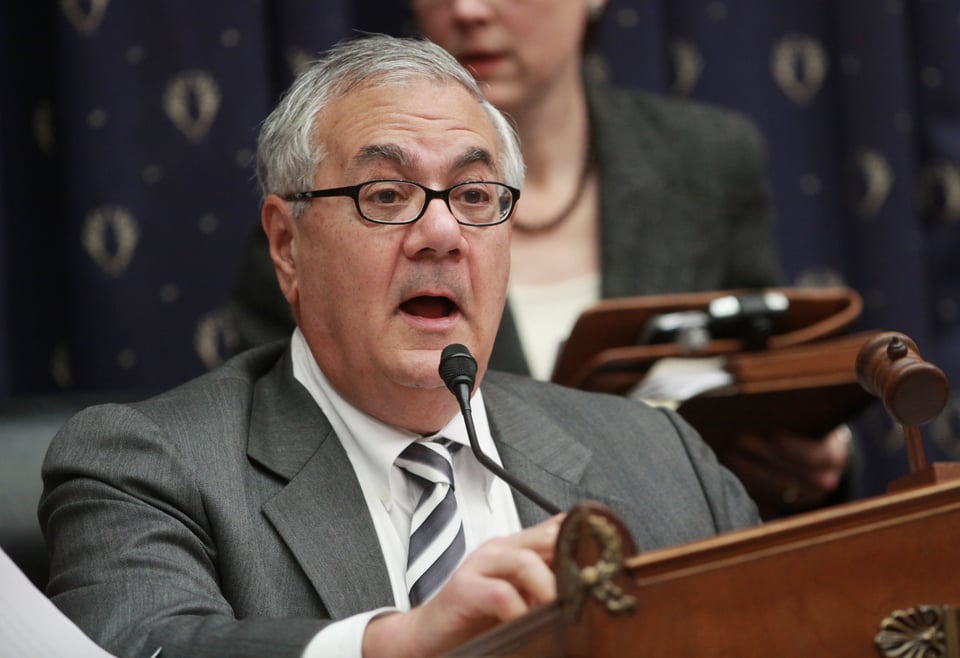
Barnett Frank was born March 31, 1940, in Bayonne, a New Jersey city known as the home of an enormous oil refinery.
“I worked at my father's truck stop in Jersey City and went to a large public high school and then Harvard,” he wrote years later in his autobiography. “It helped because, by the time I was ready to enter the job world, I had had a pretty broad exposure to a wide range of people. I had been at Harvard, but had also met truck drivers and people from my school. Bayonne High School had Polish, Irish, Italian, some Eastern European.”
In 1964, Frank was a Freedom Summer volunteer in Mississippi. Civil rights would be one of Frank’s leading causes in Congress; Frank said he was always deeply troubled by intolerance and poverty.
“I remember Emmett Till, who I think was about my age,” he said in an interview with Esquire in 1988, “a black kid from Chicago who was killed in Mississippi — lynched. And I remember being in high school and seeing a Life magazine spread on that and just being furious. It’s probably bigotry that bothers me most. Bigotry and undeserved poverty.”
Frank did graduate work at Harvard but left before completing his doctorate to work for Boston Mayor Kevin White, then moved on to a job with Rep. Michael Harrington (D-Mass.). In 1972, Frank was elected to the Massachusetts legislature, and he served for eight years. He also earned his law degree during those years.
He later wrote that it was not his hidden sexuality he was worried about when it came to seeking public office but his religion. “There were Jews who worked for other people, but Jewish elected officials were very rare,” he wrote in his autobiography.
“But as I worked in politics, I found I had some of the skills that would be helpful for an elected official and I was gaining some popularity. It turned out that, once elected, I was good enough at some aspects of being an elected official that it overcame being closeted. The handicap was not being closeted — some people knew I was gay — but that I did not have the family life that is very helpful for people politically.”
In 1980, Frank ran for Congress.
One Massachusetts seat had been held for a decade by Rep. Robert Drinan, a liberal Catholic priest. But in 1980, Drinan opted not to run again because Pope John Paul II, who became the pontiff in 1978, ordered him not to. Frank jumped into that race.
Frank edged Republican Richard Jones for the seat, then defeated Republican Rep. Margaret Heckler in a high-profile battle in a merged district in 1982. After that, Frank didn’t have another significant challenger until 2010.
Frank certainly was not the first LGBTQ+ member of the House. There were undoubtedly some elected officials who concealed their sexuality; others tried to do so and failed. In 1983, Rep. Gerry Studds (D-Mass.) had been outed when it was disclosed he had an sexual relationship with a 17-year-old male page.
Four years later, Rep. Stewart McKinney (D-Conn.) died of AIDS; speculation over McKinney’s sexuality was part of what drove Frank to out himself.
Frank gave the how and when considerable thought.
He wrote in a 2015 POLITICO essay: “I was as ready to leave the closet as I would ever be — but how would I do so? Though I was a third term Democratic congressman from Massachusetts, I had lived too long with the burden of ‘the gay thing’ to treat coming out as a political matter alone.”
Frank said he knew he would need to say something when “The Gentleman from Maryland: The Conscience of a Gay Conservative,” a 1986 book, mentioned Frank in such a way that smart readers could put two-and-two together about Frank’s sexuality. Frank said he gave a heads-up to House Speaker Tip O’Neill, a fellow Massachusetts liberal, but didn’t go public at that point.
The Boston Globe’s Bob Healy had seen that book and encouraged Frank, if he came out, to do so to his newspaper. Ultimately, Frank did that in the most low-key way possible: Reporter Kay Longcope asked him if he was gay, and Frank said, “Yeah. So what?”
The response from his colleagues on both sides of the aisle, Frank said, was “overwhelmingly supportive,” with his fellow Democrats becoming protective toward him.
But a subsequent sexual scandal was a blot on Frank’s record. In 1989, the Washington Times revealed that Frank had hired as a personal aide a male prostitute named Stephen Gobie, with whom he had had a personal relationship. Frank fired and evicted Gobie in 1987, he said, when he learned Gobie was still working as a prostitute. Frank also stood accused of using his influence to help Gobie, among other things, with 33 parking tickets.
There were calls for Frank to resign, and Rep. Newt Gingrich (R-Ga.) introduced a resolution to have him censured. The House ultimately voted 287-141 against censuring him, but did approve a reprimand by a margin of 408-18.
"I should have known better," Frank said by way of apology. "I now do. But it's a little too late."
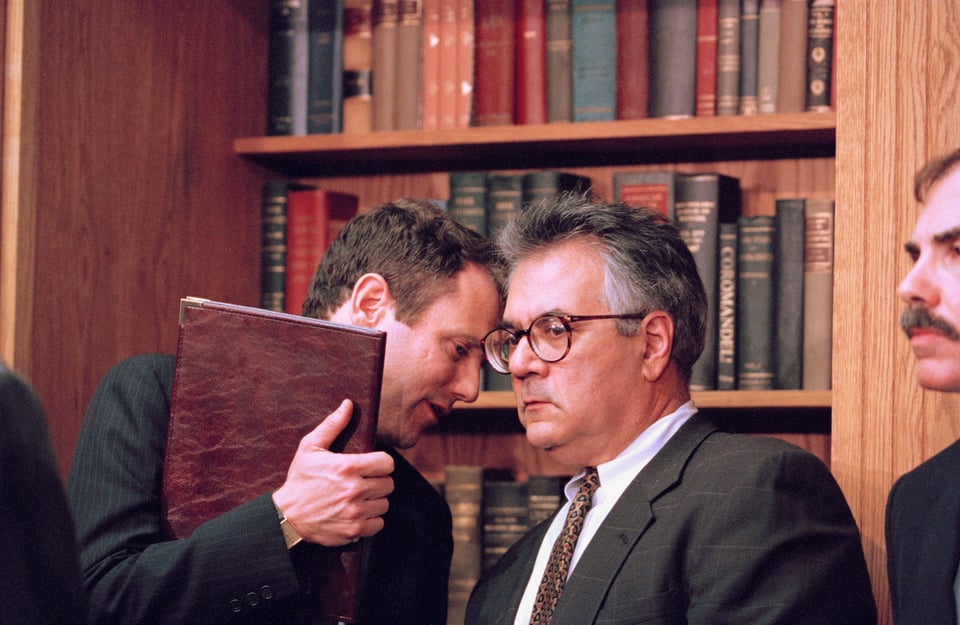
The Gobie scandal did not ruin Frank's career. Instead, over the succeeding years, he was increasingly singled out as possessing one of the sharpest minds in Congress.
"Having a conversation with Barney is like delivering oral arguments in front of the Supreme Court," former Rep. Steve Bartlett (R-Texas) said of him in 2008.
After the Republican landslide in the 1994 midterms, House Minority Whip David Bonior (D-Mich.) asked Frank to be the party’s point person in floor debates. According to “The Almanac of American Politics 1996”: “Frank prowled the floor, ready to take up a microphone and deliver stinging attacks on Republicans’ hypocrisy or cross-examine a freshman with all the mercy of a Harvard Law professor questioning a not quite prepared first-year student.”
In 2008, he told Leslie Stahl on “60 Minutes” that there was some validity to the idea that he was, well, mean.
"I'm antisocial, there's no question about it,” Frank said. “I think that I love this job. But the biggest problem is there are thousands of people in Washington who earn a living by trying to waste my time."
From a legislative standpoint, Frank’s greatest impact came after he became House Financial Service Committee chair in 2007.
He was one of the loudest voices in the room as the meltdown of the financial system unfolded in 2008, working to craft and approve the massive bailout meant to keep the economy afloat. He was persistent and argumentative, parrying objections from Republicans or anyone who might object to helping out reckless giants of finance, mocking those who complained without offering their own solutions.
Or as the New Republic’s Michelle Cottle wrote: “Barney Frank simply would not shut up.”
In 2009, Frank was one of the prime movers behind the Credit Cardholders’ Bill of Rights, which was designed to help consumers avoid surprise fees and unexpected rate hikes.
Bigger and more fiercely contested was the Dodd-Frank Wall Street Reform and Consumer Protection Act, soon shortened to Dodd-Frank for Sen. Christopher Dodd (D-Conn.) and Frank. After the financial system’s meltdown, with all its accompanying damage to the economy and American consumers, Obama and other Democrats wanted to put new guardrails in place. The basic premise was that the heavyweights of the financial industry could not be trusted to police themselves, something the giants of finance understandably found problematic.
In his memoir “A Promised Land,” Obama wrote that Dodd and Frank made an odd pair, describing Dodd as “the consummate Washington insider.” In contrast, Obama said Frank’s “thick glasses, disheveled suits and strong Jersey accent lent him a workingman’s vibe,” adding that Frank had “a withering rapid-fire wit.”
After some long and difficult battles over the provisions of the legislation, Dodd-Frank passed both chambers and was signed into law by Obama on July 21, 2010.
“It was a significant triumph: the most sweeping change to the rules governing America’s financial sector since the New Deal,” Obama wrote in “A Promised Land,” adding: “Dodd-Frank would check a number of reckless practices, give regulators the tools to put out financial fires before they got out of hand, and make crises on the scale we’d just seen far less likely.”
The Gobie scandal did not ruin Frank's career. Instead, over the succeeding years, he was increasingly singled out as possessing one of the sharpest minds in Congress.
"Having a conversation with Barney is like delivering oral arguments in front of the Supreme Court," former Rep. Steve Bartlett (R-Texas) said of him in 2008.
After the Republican landslide in the 1994 midterms, House Minority Whip David Bonior (D-Mich.) asked Frank to be the party’s point person in floor debates. According to “The Almanac of American Politics 1996”: “Frank prowled the floor, ready to take up a microphone and deliver stinging attacks on Republicans’ hypocrisy or cross-examine a freshman with all the mercy of a Harvard Law professor questioning a not quite prepared first-year student.”
In 2008, he told Leslie Stahl on “60 Minutes” that there was some validity to the idea that he was, well, mean.
"I'm antisocial, there's no question about it,” Frank said. “I think that I love this job. But the biggest problem is there are thousands of people in Washington who earn a living by trying to waste my time."
From a legislative standpoint, Frank’s greatest impact came after he became House Financial Service Committee chair in 2007.
He was one of the loudest voices in the room as the meltdown of the financial system unfolded in 2008, working to craft and approve the massive bailout meant to keep the economy afloat. He was persistent and argumentative, parrying objections from Republicans or anyone who might object to helping out reckless giants of finance, mocking those who complained without offering their own solutions.
Or as the New Republic’s Michelle Cottle wrote: “Barney Frank simply would not shut up.”
In 2009, Frank was one of the prime movers behind the Credit Cardholders’ Bill of Rights, which was designed to help consumers avoid surprise fees and unexpected rate hikes.
Bigger and more fiercely contested was the Dodd-Frank Wall Street Reform and Consumer Protection Act, soon shortened to Dodd-Frank for Sen. Christopher Dodd (D-Conn.) and Frank. After the financial system’s meltdown, with all its accompanying damage to the economy and American consumers, Obama and other Democrats wanted to put new guardrails in place. The basic premise was that the heavyweights of the financial industry could not be trusted to police themselves, something the giants of finance understandably found problematic.
In his memoir “A Promised Land,” Obama wrote that Dodd and Frank made an odd pair, describing Dodd as “the consummate Washington insider.” In contrast, Obama said Frank’s “thick glasses, disheveled suits and strong Jersey accent lent him a workingman’s vibe,” adding that Frank had “a withering rapid-fire wit.”
After some long and difficult battles over the provisions of the legislation, Dodd-Frank passed both chambers and was signed into law by Obama on July 21, 2010.
“It was a significant triumph: the most sweeping change to the rules governing America’s financial sector since the New Deal,” Obama wrote in “A Promised Land,” adding: “Dodd-Frank would check a number of reckless practices, give regulators the tools to put out financial fires before they got out of hand, and make crises on the scale we’d just seen far less likely.”
In 2011, Frank announced he would not seek another term. His district had been redrawn, and Frank was not eager to try to win over new voters after all these years.
“The fact that it’s so new makes it harder — learning about new areas, introducing myself to new people,” Frank said at the time.
Frank and Ready exchanged their wedding vows in July 2012 during a ceremony that Patrick said Frank had requested “be short and to the point.”
Among other things, Frank and Ready pledged to love each other "in Congress or in retirement."
A few months later, it was indeed retirement.
“After 45 years, I’m tired,” Frank said at the time. “I look forward to a situation where when the phone rings, I won’t be apprehensive that it’s some problem I have to deal with: some crisis — maybe that somebody else has done something stupid that I have to deal with, or in the worst case, something stupid I’ve done that I have to deal with.”
In 2018, Republicans rolled back some of the provisions of Dodd-Frank with Frank going on the record as supporting some of what was in their legislation. He also noted that circumstances had changed in the interim: Frank was now on the board of Signature Bank.
“My being on the board has not changed my position on this at all,” Frank told the Washington Post. But in what some of his old foes might have considered a fitting twist, Signature Bank collapsed in March 2023.
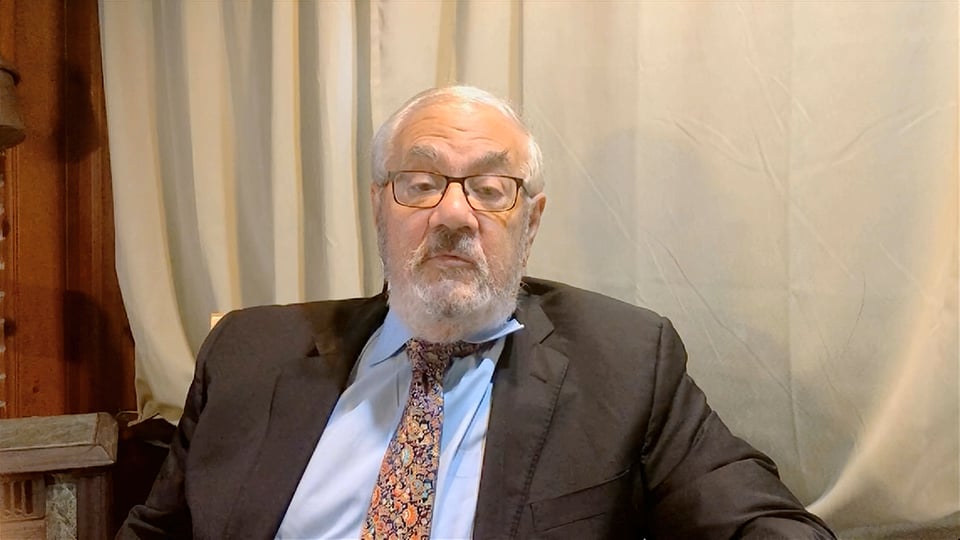
A graphic novel-biography, “Smahtguy: The Life and Times of Barney Frank,” was published in 2022. The author was Eric Orner, a former press secretary for Frank who included himself as a character (an inept driver who gets lost driving Frank around).
“He’d turned what could have been a life defined by sadness or fear or revulsion into one that was the opposite of those things,” Orner wrote of Frank.
Frank was present in Washington in December 2022 to mark the enactment of the Respect for Marriage Act, which enshrined same-sex marriage in federal law. A prime mover on the legislation was Sen. Tammy Baldwin (D-Wis.), who had succeeded Frank as perhaps the best known LGBTQ+ member of Congress.
"Oh my God, Barney Frank," a startled and obviously delighted Baldwin said when she saw him there.
In April 2026, Frank — who had entered hospice care at his home — offered words of caution to his fellow Democrats, saying the party had gone beyond what many Americans were willing to accept.
“For a lot of my colleagues, the argument has been, ‘Well, we don’t support defund the police or open borders, and we don’t say we do,’” Frank said. “But my point is, no, it’s not enough … to be silent. We have to explicitly repudiate it.”
He also said he understood his time was limited.
“At 86, I’ve made it longer than I thought,” Frank said. “At some point, my heart’s just going to give out, and it’s reaching that stage. So I’m taking it easy at home and dealing with it by relaxing.” (Politico.)

Two police officers who defended the U.S. Capitol in 2021 during the Jan. 6 attack are suing to stop the creation of President Donald Trump's $1.7 billion "Anti-Weaponization Fund," calling it the "most brazen act of presidential corruption this century." (NBC News)
The two are Former Capitol Police Officer Harry Dunn and Metropolitan Police Department Officer Daniel Hodges.
One more thing.
More Trump illegality and criminality.
Talking to the Coast Guard cadets.

One more thing.
Something Trump never accepts. Win some. Lose some. He is losing on the Ballroom.
Let’s bring Jon Ossof (running for re-election as Senator) and Keisha Lance Bottoms(running for Governor)to victory in Georgia.
This is how we do it. Numbers.
Mayor Mamdani of New York City speaks the truth.
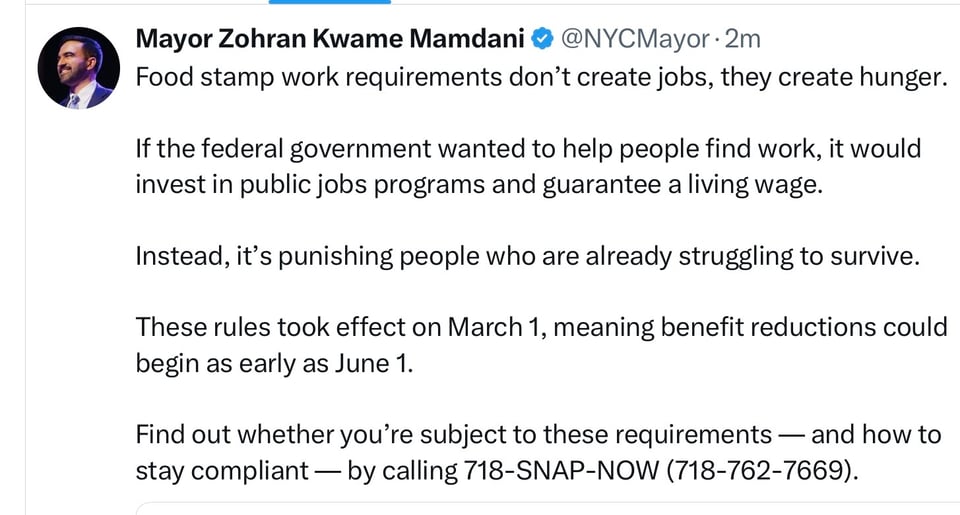
Republicans want to humiliate poor people. Democrats want to help them.

Billie Jean King graduates from college at age 82 after leaving for tennis: ‘Yeah baby, only 61 years!
King distinguished herself as a tennis champ at Cal State Los Angeles, winning Wimbledon doubles while enrolled.
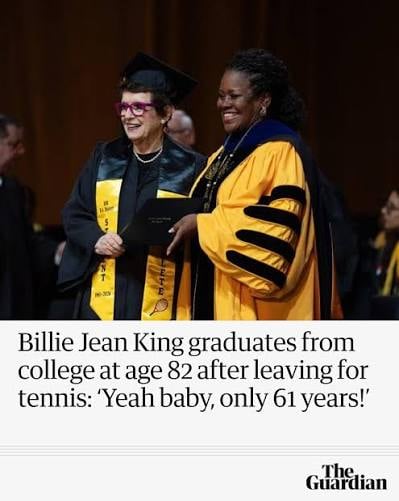
Tennis legend Billie Jean King receives her diploma during commencement in Los Angeles. Photograph: Jae C Hong/AP.
When Billie Jean King left college in 1964, she had a purpose. Within a few years, she had become the top-ranked tennis professional in the world. Over a trailblazing career, she won 39 championships, a Presidential Medal of Freedom and a Congressional Gold Medal – all while pushing publicly for gender and pay equality.
Last year, she finally returned to finish the degree in history she started more than six decades ago. On Monday, she graduated at 82 years old.
“It is a privilege for me to be here as a member of your graduating class,” King said at her commencement. “Yeah baby, only 61 years!”
King recalled growing up in a working-class family, the daughter of a firefighter father and homemaker mother.
“Like so many of my fellow graduates, I am the first member of my immediate family to graduate college, like many of you,” King said.
She chose Cal State Los Angeles, then known as Los Angeles State College, because the tennis coach, Scotty Deeds, trained men and women together. He said it would help give her the level of competition she needed to excel.

Billie Jean King hits tennis balls to graduates after delivering remarks during commencement at California State University, Los Angeles. Photograph: Jae C Hong/AP
“Their approach to winning in tennis was revolutionary at the time,” King said of Deeds and the women’s coach Dr Joan Johnson. “Even today, most collegiate D-1 and D-2 tennis teams do not have the women and men practice together. Scotty and Dr Johnson had it right and they took the extra step for their student athletes.”
King distinguished herself as a tennis champ in college, winning Wimbledon doubles while enrolled. King was 18 and her partner, Karen Hantze, was 17, making them the youngest team to win at the time.
But King told the crowd that her true motivation since childhood had been to fight discrimination, a calling she first remembered feeling at age 12, when she realized that virtually everyone at the tennis clubs where she trained was white.
“I asked myself, where is everybody else?” King said. “From that day forward, I committed my life to equality and inclusion for all. Tennis is a global sport and it became my platform, but equality was my dream – to make the world a better place.”
She added: “We can never understand inclusion unless we’ve been excluded.”
King, one of the first openly gay professional athletes, founded the Women’s Tennis Association in 1973 and successfully campaigned to get the US Open to pay equal purses at the US Open. That same year, she defeated Bobby Riggs in a historic match billed “The Battle of the Sexes” – a feat later dramatized in a Hollywood film staring Emma Stone and Steve Carell.
King ended her speech with words of advice for her fellow graduates.
“Have fun,” King said. “Be fearless. And make history.” (The Guardian)

