Friday, May 22, 2026. Annette’s Roundup for Democracy.
The New York Times and Reuters make clear how corrupt Trump’s slush fund and IRS immunity are.
There Has Never Been an Example of Presidential Corruption Like This.

Has there ever been an episode of presidential corruption so blatant and threatening to constitutional order? Certainly not in modern times. President Trump’s Justice Department is using taxpayer money to create a $1.8 billion political slush fund. Ostensibly set up to compensate those who the department claims have “suffered weaponization and lawfare,” it will in fact reward loyalists willing to defy the law and commit violence on behalf of the president.
The fund manages to combine three of Mr. Trump’s most alarming behaviors. One, it is an obvious form of corruption, coming from a president who has used his office to enrich himself, his family and his allies. Two, the fund continues his pattern of using the Justice Department as an enforcer to punish his perceived opponents and protect his friends and allies. Three, the fund is his latest attempt to rewrite history about the 2020 election and the Jan. 6, 2021, attack on Congress.
It is worth pausing to put the fund into the larger context of Mr. Trump’s political project: He is destroying pillars of American democracy to empower himself. He claims elections are legitimate only if he wins. He uses federal law enforcement to investigate and prosecute his perceived enemies. He purges his party of officials who defy him. He describes members of the other party and civil society as traitors and enemies. He incentivizes his supporters to break the law on his behalf and rewards them when they do. He directs his allies to change election rules to keep his party in power.
Mr. Trump’s project has not yet succeeded, at least not fully. Many Americans — in the judicial system, in Congress, in state governments and elsewhere — continue to stand up for democracy and oppose his autocratic ambitions. By now, though, nobody should have illusions about what he is attempting to do.
The fund’s existence is a story of political self-dealing. It is nominally the product of a flimsy personal lawsuit that Mr. Trump filed this year against the Internal Revenue Service, which he oversees, over the leaking of his tax returns during his first term. That lawsuit led to an absurd negotiation, in which the lawyers on one side worked for Mr. Trump the citizen and those on the other side worked for Mr. Trump the president.
Adding to absurdity, the government lawyers reported to Todd Blanche, the acting attorney general, who previously worked as Mr. Trump’s personal lawyer. A federal judge in Miami helping to oversee the case, Kathleen Williams, pointed out that the two sides were not adversaries, which called into question the process. Even Mr. Trump acknowledged the situation shortly after filing the suit by saying, “I am supposed to work out a settlement with myself.”
Yet the talks proceeded because Mr. Trump’s Justice Department was in charge. Unsurprisingly, they led to a deal that was extremely favorable to him.
In exchange for the president’s dropping the suit against the I.R.S., both he and his supporters will receive government handouts. For Mr. Trump, the handout comes in the form of permission to have cheated on his taxes. The government has granted him and his family immunity from ongoing audits of his tax payments. He has a long history of using questionable accounting maneuvers, and the audits could have cost him more than $100 million, experts have said. Now they will cost him nothing.
For his supporters, the handouts will come from the slush fund. The Justice Department will tap a permanent stream of revenue that Congress created in 1956, known as the Judgment Fund, to settle lawsuits against the federal government. As Paul Figley, a former Justice Department official, noted, the new fund appears to be both legal and at odds with Congress’s intent. “It’s horrible policy,” Mr. Figley told The Times.
The department has allocated $1.8 billion for what it calls, in an Orwellian flourish, an Anti-Weaponization Fund and invited applications from people who have been targeted for “political, personal or ideological reasons.” Mr. Blanche — who holds his position as acting attorney general largely because of his willingness to use federal power in service of Mr. Trump’s personal whims — will appoint a five-member board, with congressional leaders given input on one of the five. Mr. Trump can fire any of the members at any time.
To understand who is likely to receive payments, look at who has previously received settlements from the Justice Department. Michael Flynn, who was briefly Mr. Trump’s national security adviser in 2017, received $1.25 million, even though he pleaded guilty to lying to F.B.I. agents. The family of Ashli Babbitt, who participated in the Jan. 6 riot, and whom federal agents shot as she and others approached the House floor, received nearly $5 million, even though investigators cleared the shooters of wrongdoing. The Trump administration is paying off people who committed violence and crimes, as long as they are Trump allies.
The fund’s timeline is the giveaway of how Mr. Trump plans to use it. The Justice Department said the fund would stop processing claims on Dec. 15, 2028, weeks before the president is to leave office, ensuring the money is distributed while he still holds the power to fire anyone who objects. The window is precisely the window of Mr. Trump’s authority.
Even some of Mr. Trump’s usual defenders are unhappy. Senator John Thune, Republican of South Dakota and the majority leader, meekly said that he was “not a big fan” of the fund. Brian Morrissey, the Treasury Department’s general counsel, resigned within hours of the announcement, seven months after the Senate had confirmed him.
Providing payoffs is only part of the point. Another, according to Mr. Blanche, is “ensuring this never happens again.” What, exactly, is “this”? The evenhanded enforcement of the law.
The Trump administration has already fired federal agents who did their duties by investigating the president’s attempts to overturn the 2020 election. Mr. Trump has issued blanket clemency to more than 1,500 Jan. 6 rioters, some of whom may soon receive payments. His Justice Department secured an indictment of James Comey, the former F.B.I. director, on dubious charges as retribution for his role in the investigation of the 2016 Trump campaign’s Russia ties. The fund continues the effort to turn law enforcement into a tool of raw political power.
The fund also encourages future lawlessness on Mr. Trump’s behalf. It sends the message that he will use his power not only to shield people who break the law from accountability but also to shower benefits on them. Just as punishment is a deterrent, rewards are an incentive.
After President Richard Nixon’s abuses in the Watergate scandal, Congress and the executive branch built rules and traditions to ensure that federal agencies, especially the Justice Department, operated in the public interest, rather than that of the president. Mr. Trump has tried to break this system. Once he is gone, it will need to be rebuilt, and better than before. He has exposed and exploited its flaws and gaps. Unless they are filled, Mr. Trump’s corruption and perversion of justice risk becoming the norm.
In the meantime, Americans should be cleareyed about what the president is doing. He is taking their money and showering it on criminals. (New York Times Editorial)
How the $1.8 Billion Trump Fund May Violate Past Practice and Policy.
The fund that could offer payouts to Trump allies who accuse the government of mistreatment is not only highly unusual but also appears to violate the administration’s own policies.
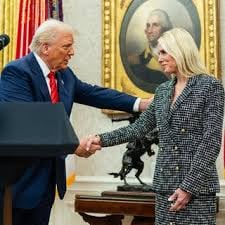
On Pam Bondi’s first day as attorney general in February 2025, she signed a directive that appeared to prohibit the kind of fund the Trump administration established this week.Credit...Eric Lee/The New York Times
The $1.8 billion fund created by the Trump administration this week to pay people who claim mistreatment by the federal government appears to violate longstanding Justice Department standards and practices, as well as a policy directive issued by the administration last year, legal experts said on Wednesday.
Todd Blanche, the acting attorney general, defended the fund at a Senate hearing on Tuesday, calling it “unusual” but insisting it was appropriate and reflective of past settlements.
Justice Department veterans have been deeply skeptical of those claims, particularly when it comes to a provision in the deal that offers President Trump, his sons Eric and Donald Trump Jr., and the Trump Organization immunity from tax penalties. They have also been critical of the decision to resolve a lawsuit filed by one group of people in a way that gives more than a billion dollars to an entirely different category of people.
“I have never heard of the department ever being willing to grant blanket immunity,” said Jennifer Ricketts, a former branch director in the department’s civil division. “That seems blatantly corrupt. It’s a shocking gift to the president.”
Justice Department veterans also said the new fund appeared to contradict a specific policy instituted by the Trump administration last year under former Attorney General Pam Bondi that largely prohibited payments to groups not involved in an underlying lawsuit.
A Justice Department spokeswoman did not respond to a request for comment.
The deal struck between the president’s lawyers and his own administration, without oversight of a judge, could involve major payouts to people who had not sued the government, as well.
“I’ve just never seen litigation risk outside the four corners of the complaint being used as justification for something in a totally unrelated lawsuit,” Ms. Ricketts added.
Here is more about how the fund could work.
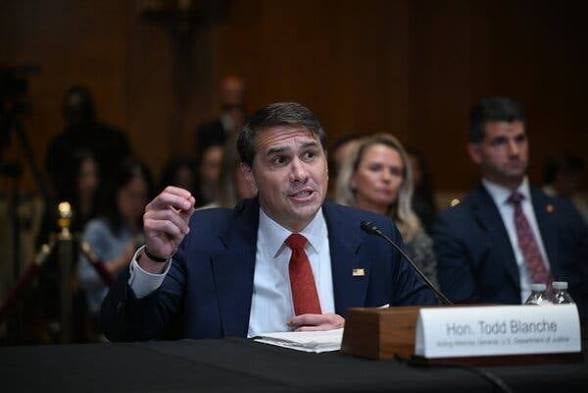
Todd Blanche, the acting attorney general, has said it will take time to appoint commissioners who will craft rules for payouts from the fund.Credit...Kenny Holston/The New York Times.
Who would qualify?
Mr. Blanche has not placed limits on who can apply for money from the fund. He has suggested that even President Joseph R. Biden Jr.’s son Hunter, who was prosecuted and convicted by the Biden administration, could apply. At the same time, officials have not explained who is likely to receive money, beyond general statements that the fund is for people victimized by past administrations. Factors that will be considered include legal fees or time in prison.
The president’s words suggest that Eric Adams, the former New York City mayor whose indictment was dropped by the Trump administration last year, would be eligible.
“We were persecuted, Eric. I was persecuted, and so are you,” Mr. Trump told the mayor at a 2024 charity event.
Another possible recipient is Kash Patel, the F.B.I. director, who has long claimed to be a victim of weaponization. At a congressional hearing last year, Mr. Patel said: “You want to know who was targeted by a weaponized F.B.I.? Me.”
The president and his supporters have used the term “weaponization” to broadly define perceived government mistreatment of and misconduct toward them. If the fund’s five commissioners, who will be appointed by Mr. Blanche, adopt that same expansive definition, those eligible for payments could include people such as Jim Hoft, the owner of the right wing site The Gateway Pundit, who sued the government over what he claimed was censorship as a result of federal agencies pressuring social media companies on topics like the 2020 election and the coronavirus pandemic.
Mr. Blanche has said it will take time to appoint commissioners who will craft rules for payouts from the fund, which involves taxpayer money in a Treasury Department account known as the Judgment Fund.
How will the public know who gets the money?
At a congressional hearing this week, Mr. Blanche said quarterly reports about the fund expenditures would be made public in order to provide “full transparency.” He added an important caveat — that the department would still have to follow federal privacy laws when releasing the reports.
That means there may not be a public list of people who received specific amounts from the fund, because the Privacy Act of 1974 generally prohibits an agency from disclosing a government record unless the person in question gives written consent before the disclosure. The rule, however, has about a dozen exceptions to it, and it is not clear if administration officials believe one or more of those exceptions apply to recipients of money from the fund.
How payouts have worked in the past
Treasury Department officials normally authorize payouts from the Judgment Fund when a court ruling is entered against the federal government, or when Justice Department lawyers provide an assessment of the litigation risk posed by a lawsuit or claim. In essence, Justice Department lawyers must explain their rationale to the Treasury Department for why settling a case for a certain amount is in the government’s interest.
The early version of the Judgment Fund was created in 1956 to authorize payments of court judgments below a certain limit without requiring congressional action. The scope of the fund expanded in 1961 to include settlements reached before a court judgment.
In justifying the new fund for what the administration claims are victims of weaponized government, Mr. Blanche cited the Obama-era resolution of a case called Keepseagle, a class-action lawsuit over discrimination against Native American farmers.
Josh Gardner, a former Justice Department lawyer who worked on the Keepseagle case, said there were stark differences between that arrangement and the new fund.
“When you’re going to tap the judgment fund, you need to justify why taxpayer dollars are being expended, and you have to justify that by explaining why there is litigation risk,” Mr. Gardner said. “How can you do that when you don’t even know who is a potential member of this claims process?”
The Keepseagle discrimination settlement was overseen by a federal judge after years of litigation and analysis of the claims and evidence. After the members of the class-action suit were given payments, the remaining money was given to organizations concerned with Native American farming and ranching.
By contrast, Mr. Gardner said, the new initiative “is decidedly not a fund for the plaintiffs.”
The fund seems to contradict a Trump administration policy
On Pam Bondi’s first day as attorney general in February 2025, she signed a directive that appeared to prohibit an arrangement like the $1.8 billion fund. The memo, titled “Reinstating the Prohibitions on Improper Third Party Settlements,” revived a Justice Department policy that the Trump administration adopted in 2017 and the Biden administration subsequently canceled.
The memo said that except in “limited circumstances,” the department should not use settlements “to require payments to nongovernmental, third-party organizations that were neither victims nor parties to the lawsuits.”
The new fund, however, appears to be structured to steer a large pot of money to third-party claimants, most of whom have not filed suits and may never file suits now that there is a fund.
The purpose of the Bondi memo was to bar the kinds of arrangements sometimes made during the Obama administration, particularly with large financial institutions, that directed money to nongovernmental organizations. To conservatives, the Obama administration too often used the money to advance ideological goals, and the Bondi memo was designed to prevent that.
A year after issuing that memo, the Trump administration plans to give out money to an unspecified number of people for the general purpose of paying “victims” of purported governmental weaponization. The exact size of the fund — $1.776 billion — is intended to convey patriotic symbolism, a highly unusual choice for such a program.
Normally, proposed figures are calculated based on the legal claims lodged against the government, and a risk calculation by Justice Department lawyers about how much juries may ultimately award in the cases. For Mr. Trump’s “anti-weaponization fund,” it is unclear what set of cases or claims formed the basis of a calculation that landed on the $1.776 billion figure.
The paperwork establishing the fund says it can be used to pay “entities,” which seems to trample on the purpose of the Bondi memo. (New York Times)
From Reuters.
The settlement also drew scrutiny from legal scholars. The Tax Law Center at NYU Law raised separate legal questions about the order’s authority. Policy Director Brandon DeBot described the settlement as a “breathtaking abuse of the tax and legal system,” particularly the broad waiver of tax claims.
DeBot argued that the DOJ, on its own, does not have the authority to grant such extraordinary protections, noting that “the IRS would need to act to make the release of claims effective, which could raise additional questions about whether there has been unlawful political interference in the audit process.”
Norm Eisen, co-founder and executive chair of Democracy Defenders Fund, called the settlement fund “the most outrageous example of corruption of any U.S. presidency in American history.” He added that the “public is rightfully outraged, and the legal fights have only just begun.”
This ‘n That.
A Night at the Theater May Be Just as Good for Your Health as Exercise, According to New Research.
Grab your tickets now!
__

We all know that healthy eating and physical activity can boost our health and longevity, but new research suggests that enjoying a little culture can be just as good for us as that HIIT workout or long walk. (And it can be a lot more fun, too!)
The study, published in Innovation in Aging, followed 3,556 adults taking part in the UK Household Longitudinal Study, and asked them how many times in the past year they took part in different arts activities—including participating in the arts (i.e., singing, painting, dancing, crafting), attending arts events, visiting historic sites, and enjoying other arts activities—such as visiting libraries.
They made similar measures about physical activity, breaking it down into how often they participated in physical activities and how vigorous the workouts were (so high-intensity workouts like swimming and boxing outranked gentler workouts like yoga and walking).
The participants were ranked by how often they participated in each activity and measured against several different longevity clock measures. When they analyzed the data, they accounted for common health and behavioral factors, such as smoking and drinking habits, chronic illnesses, and BMI, which can have a strong influence on aging and health.
The study found that people who enjoyed arts activities at least monthly slowed their biological aging by about a year, compared to people who only took part in arts activities one or two times per year. And there's a bigger benefit if you enjoy a range of arts activities, as the people who engaged in more different types of arts activities also slowed their epigenetic aging—.75 years for every full chronological year. (So go ahead and take that dance class and hit up the museum, too!)
In the study, people who participated in weekly physical activity reduced their epigenetic aging by .59 years, and people who varied their type of workouts lowered it by .76 years.
In other words, engaging in the arts offered the same (or even slightly better!) longevity benefits as physical activity, thanks to its "active ingredients" that reduce stress and improve mental and physical health: social interaction, cognitive stimulation, multi-sensory stimulation, and creativity.
To reap the biggest benefits, the study suggests adding weekly arts and physical activities to your repertoire and engaging in a variety of activities. So go ahead and grab those concert tickets or get your craft on—it's good for you! (Real Simple)
Six Artists Vie to Design Billie Holiday Monument in New York
The public is invited to weigh in on proposals submitted by artists including Thomas J. Price and Tavares Strachan.

Nekisha Durrett, Bending the Note artwork proposal. Photo courtesy of the New York City Department of Cultural Affairs.
In the late 1920s, Eleanora Fagan left Baltimore for New York City, singing to dive bars in the outer boroughs. Within a couple of years, she had changed her name to Billie Holiday and was cutting jazz records with the likes of Teddy Wilson and Benny Goodman.
Now, the borough of Queens, which heard Holiday’s haunting voice early on and became her on-and-off home in the 1950s, is commissioning a public monument to the singer outside the Jamaica Performing Arts Center.

Photo by William P. Gottlieb/Ira and Leonore S. Gershwin Fund Collection, Music Division, Library of Congress.
On May 19, the New York City Department of Cultural Affairs released the proposals of its six finalists and invited the public to review and comment on the designs. The feedback period will run through the end of May, with the selection panel set to choose its final design later in the year.
The finalists are La Vaughn Belle, Nikesha Breeze, Nekisha Durrett, Tanda Francis, Thomas J. Price, and Tavares Strachan. After responding to an open call put out in late 2025, all six finalists participated in a site visit as well as discussions with Holiday scholars and family members.
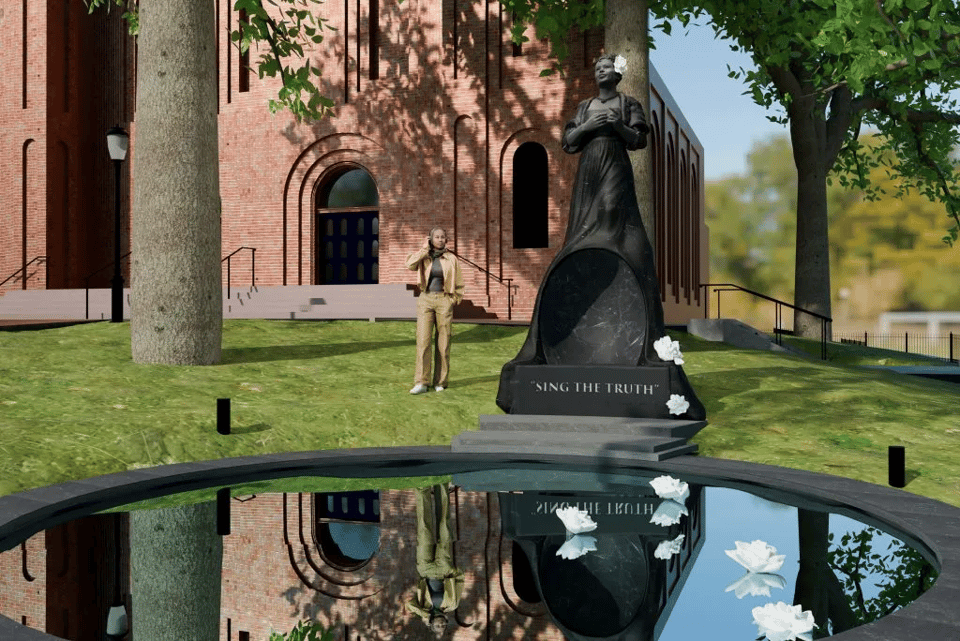
Lady Sings the Truth: A Monument to Billie Holiday artwork proposal. Photo courtesy of the New York City Department of Cultural Affairs.
Breeze’s proposal offers an image of Holiday mid-performance, her hands clasped to her chest, with white marble gardenias in her hair. Its base bears the engraving, “Sing the Truth.” Durrett’s Bending the Note, meanwhile, is a white marble carving based on the singer’s profile, which glides upward revealing to reveal a gold underside. A rendering of Holiday’s beloved pooch Pepe sits at the base of the statue, gazing upward.
Strachan, who represented Bahamas at the 55th Venice Biennale and previously cast a monumental sculpture critiquing colonialism outside London’s Royal Academy, is taking a minimalist approach. His proposal offers Holiday’s silhouette in the form of a white vessel, one the artist calls a “container for memory.”

Held Within artwork proposal. Photo courtesy of the New York City Department of Cultural
Price, a British sculptor whose work recently inaugurated V&A East, presents two sleek bronze beans resting against one another on a plinth. Drawing off a photograph of Holiday cuddling with a beloved dog, Price hopes to create a portrait of authentic joy.
The other proposals approach the subject in a more conventionally representative way. Belle suggests a larger-than-life Holiday sat at the edge of a reflecting pool and enjoying some calm, offering what the artist calls “a pre-stage moment.” Davis proposes a large rendering of the musician’s head, with gardenia petals spiraling from her crown into a pond lined with blood red tiles—a nod to “Strange Fruit,” a protest song made famous by Holiday.
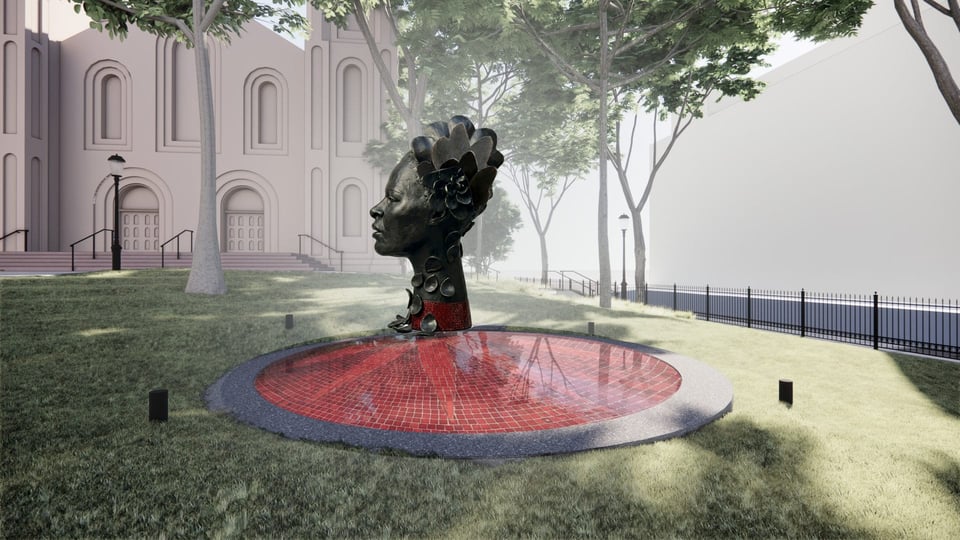
Tanda Francis, Blood at the Root artwork proposal. Photo courtesy of the New York City Department of Cultural Affairs.
The project is being funded by Percent for Art program, which since 1982 has ensured that one percent of New York City’s construction project budget is spent on public artworks.
“Honoring her here in Queens, where she lived, performed, and contributed to the cultural life of the borough, makes this project especially meaningful,” Nantasha Williams, who represents New York’s 27th district, said in a statement. “This monument is an opportunity to create a lasting cultural landmark that connects residents and visitors alike to the history, creativity, and influence rooted in Queens.”(ArtNet)

