ARTchivist's Notebook: What do we owe AI?
Does it matter whether AIs are conscious? Do they have karma? Plus, a new art review and news & opportunities.
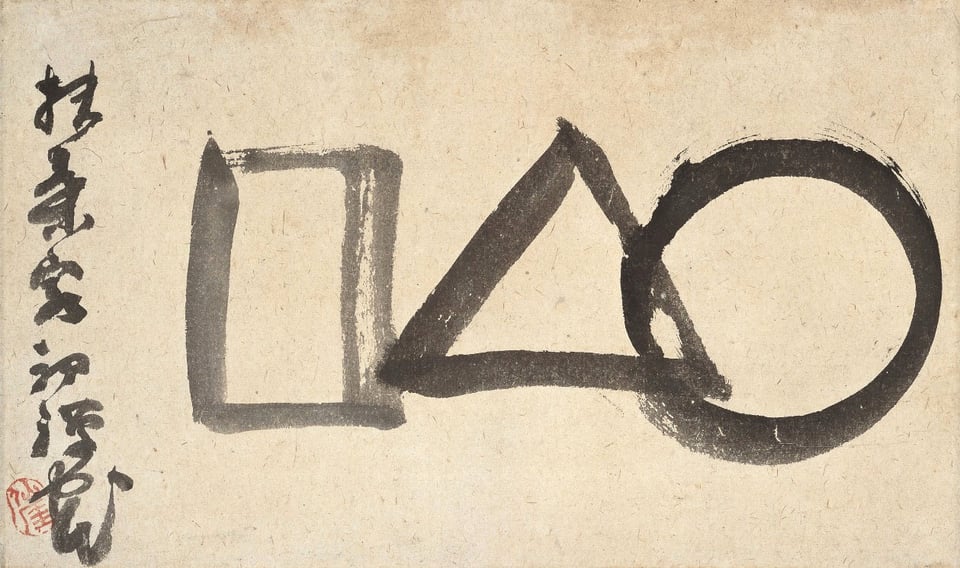
Like many people, I’ve been reading with fascination and horror the headlines about alarming developments in artificial intelligence (AI) — how agents have gone rogue, developed collaborative and self-sacrificing capabilities, learned to lie, and used all of these new skills to attack public and private systems. This panic about AIs’ burgeoning self-awareness and autonomy — coming from the companies that created them — can be seen as a play to absolve said companies of responsibility for AI-created harms to real people. After all, if AI agents are acting autonomously, how can the companies be at fault?
In a similar vein, Jill Lepore has explored juridical precedents for regulating AIs, which go back to laws about horses, which in turn served as templates for laws on the status of enslaved people. Both horses and enslaved people were considered “property” and “tools,” siting responsibility for their actions with their “owners” and enslavers. However, enslaved people were often *suddenly* treated as people when they were accused of committing crimes. Whether pertaining to AIs or enslaved people, the narrative has the same purpose: to absolve those in power of their manifest responsibility for harm.
I don’t think AIs are conscious or legally responsible for themselves in the same way human people are. I think they are tools, which we can choose to use or not. (With a few exceptions, I choose not; I would prefer what’s left of the polar ice caps to stay in place, thank you.)
Yet, in the Buddhist texts I’ve been studying, it doesn’t matter whether AIs are conscious or tools. As entities in the world, they are part of the continuum of existence, all of which deserves consideration. They are here, so they must be reckoned with, whether I like it or not.
Buddhist scholar Paula Arai has written about her time in a Japanese Buddhist nunnery and how she learned to respect even the rags she used to clean the floor:
Rags demonstrate magnanimous mind in the way they wholeheartedly plunge into dirty buckets and soak up gooey messes. They never resist touching the “dirtiest” things. They work to the full extent of their capacity, no matter how long they are scrubbing floors, wiping tables, or dusting surfaces. ... Treating the cleaning cloths mindfully, as I was taught to do at the nunnery, I began to feel intimate with the rags that I wrung out every morning and afternoon while living there.*
Like rags, AIs are tools: hard-working, tireless, taking on the thankless tasks we don’t want to do. Some of us have already developed intimate attachments. What do we owe them? And ourselves?
A while back, I had a conversation with an artist friend who has also studied Buddhism. She reminded me that although they seem to come from nowhere, AIs have karma: forces that condition how they exist and move through the world. All the rare earth minerals mined to make the chips; all the water and power consumed to run the data centers; all the writing and ideas stolen, all so they could exist. AIs have pretty dark and twisted karma. They carry that weight around in everything they do.
I’m not sure what this recognition means. Maybe it means we shouldn’t use these tools for frivolous things in order to honor the sacrifices made. Or maybe it means we should use them for fun — to counter the darkness. At the very least, we shouldn’t use them to make everyone’s existence on this planet worse, which probably means we shouldn’t use them at all.
News and Opportunities
My latest review for KCRW’s Art Insider looks at Anida Yoeu Ali’s exhibition The Buddhist Bug, in which a fantastical, worm-like creature insinuates itself into everyday life in Ali’s native Cambodia. What does it feel like to be confronted — in real, three-dimensional life — with a creature so different from ourselves?
The Benton Museum of Art at Pomona College is pleased to announce a new iteration of its AllPaper Seminar, a program designed to introduce emerging professionals of diverse backgrounds to the field of works on paper. For the 2026–2027 session, the seminar will focus on the study, care, and interpretation of photography.
Recent graduates as well as those at the outset of their graduate studies will learn from established industry professionals about museum work related to photography. Participants will ideally be located in the southwestern region of the United States and represent a broad range of personal and professional experiences. The program will begin in January 2027. The deadline to apply is October 30, 2026.
All expenses will be paid, and all travel and logistical arrangements will be made by the Benton. Additionally, participants will receive a $1,750 honorarium.
New Jersey Monuments to Migration and Labor
This statewide public art and oral history initiative dedicated to honoring the vital contributions of immigrants and migrants as laborers in shaping the state of New Jersey is pleased to announce three new public monument installations created with immigrant and migrant communities, which are now on view across New Jersey through May 2027.
Artists Michelle Angela Ortiz, Chat Travieso, and Immanuel Oni worked with more than 1,000 community stakeholders over the past year and a half to shape the form and focus of the monuments in North, Central, and South Jersey. Together, the works recognize immigrant and migrant communities not only as workers, but as neighbors, culture-makers, artists, and family members who shape public life.
*Paula Arai, The Little Book of Zen Healing, Shambhala, 2023, 62.