ARTchivist's Notebook: Open Plan, Closed Agenda
What the new permanent collection galleries at LACMA say about the role of museums, and a fresh crop of news & opportunities
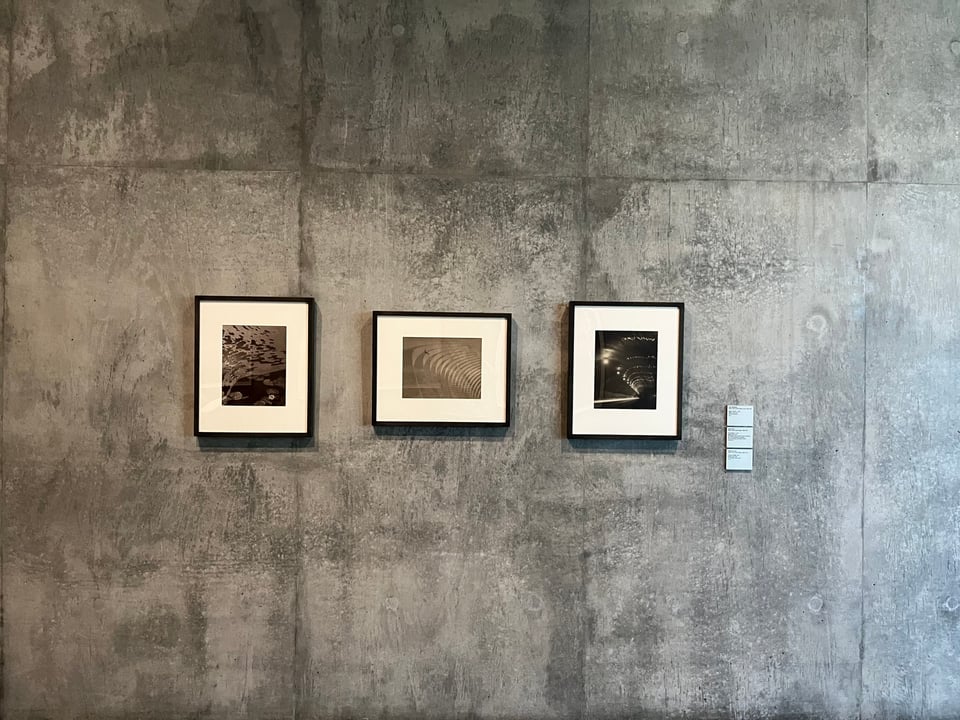
Everyone else has already weighed in on the new permanent collection galleries at the Los Angeles County Museum of Art, which opened in the spring, but I have to admit I only just visited a couple weeks ago. I have no excuse; I just wasn’t excited. I felt like I knew too much about the non-transparent design process; the immovable concrete walls that make it hard for art installers to, well, install art; the lack of on-site office space for staff, and the Erewhon cafe, home of the $22 smoothie. I was not in a rush to visit.
I had also seen the exterior of the building for several months before it opened, and it looked like a throwback to the 1960s: curving slabs of gray concrete sandwiching glass walls rimmed with brass. It reminded me of the lair of a James Bond villain, or a decorated freeway overpass rather than an exciting addition to the LA landscape.
So I did not enter the galleries with an entirely open mind, but I was hoping to be surprised. For one, LACMA’s ceramics collections look AMAZING. Because the outer glass walls of the galleries — all on one level, hiked up above the ground and spanning Wilshire Blvd — let in so much light, the majority of things that can be shown in this mostly open-plan space are works that will not fade or be damaged by direct sunlight. Sculpture and ceramics look exceedingly crisp and beautiful. And many pieces appear on tables without vitrines. You could reach out and touch them if you dared, and this proximity is great, allowing us to share the same space. But by contrast, things enclosed in glass are almost impossible to see, given the multiple reflections and refractions that happen in such uncontrollable sunlight.
The name of this inaugural installation of the permanent collection is “Wander,” encouraging a serendipitous perambulation through the galleries, and instead of the typical groupings by culture, nation, or continent, the works are arranged according to oceans: Pacific, Atlantic, Mediterranean, etc. This scheme is laudable, intended to bring into dialogue works that would not normally be seen together. However, it suffers greatly from a lack of contextualizing wall text or signage. One gray gallery flows into the next with nary a transition. I found, off to the side of a space devoted to design and popular culture, a trio of delicate black and white works by early Japanese American photographers. The wall labels had the artists’ names, and the titles and dates of the works, but there was nothing to indicate why these works were grouped together or how they related to works on either side. You wouldn’t know that the artists self-organized into Japanese American camera clubs in LA in the 1920s and 1930s and were creating some of the most innovative abstract photography in the country, so much so that they were the ones hosting exhibitions of non-JA peers like Edward Weston. What is a viewer who doesn’t already know this history to make of this lonely, unexplained ghetto?
This lack of context and opportunities to learn more is my main issue with the new galleries. Their open plan is so hell bent on circulation that it doesn’t create any opportunities to linger or contemplate, and even if you do stop, there isn’t much to learn. I was interested in an assemblage of Buddhist sculptures and reliefs, tacked awkwardly to a corner not far from the elevator. I don’t know much about Buddhist art history and have in recent years become curious about Gandharan art, which is said to incorporate ancient Greek influences. The wall text encouraged me to compare the Gandharan examples with pieces in the Mathura style for their formal differences, but didn’t tell me anything about either of those civilizations or schools, or the significance of the figures depicted. The emphasis was on how they looked, not what they might mean to the people who created them or to us, now. This struck me as a grave disservice, particularly for a museum in a part of the world where it cannot be assumed that people are familiar with Buddhist iconography or Buddhism in general.
At LACMA now, it seems art is purely a formal arrangement of interesting parts to be admired in passing like a product in a high-end design store or a prize possession in a collector’s modern home. No wonder the ceramics look so good; they are like beautiful purchases you pluck from the shelf and take home. I suppose in some ways the new galleries just say the quiet part out loud: museums are the treasure boxes of the rich who either already know the history and importance of the things they collect, or simply don’t care. It’s a real disappointment for the rest of us.
News & Opportunities
Creating Future Memory: Building the Field of Artist Legacy Stewardship
I’m very proud to have contributed to this new report from the Joan Mitchell Foundation! Based on notes and interviews around the Foundation's generative convening of artists and memory workers last year, it's a much-needed portrait of a wide-ranging field that is still in formation. It addresses important questions about what happens to artists' works, studios, and legacies after they pass, and how we can work together now to ensure a more sustainable future for this important sector of our cultural heritage. Because not everything ends up in a museum — and maybe that’s a good thing!
Open Call for Submissions: RECIPES
Sixty Inches from Center’s first open call for submissions asks you to consider what “recipes” you want to pass down to future generations. What cultural practices bring you and your community together, or disrupt the status quo? What are the ingredients needed to bring people together to move us to to build something new, steward something along, or tear something defunct apart? The call invites creative approaches to these questions that explore them literally or conceptually. Open call: September 9–29, 2026
Continuum: Artist Relief for Iran
An unprecedented collaboration featuring over 500 original artworks by more than 200 artists living and working across Iran, Continuum was created in direct response to the impact of the war on the country’s artists. Galleries throughout the country have waived their commissions, allowing 100% of artwork sale proceeds to go directly to participating artists. There are works in multiple price ranges, but it’s also just a way to get a glimpse of works and artists you might not otherwise see.
ACC supports artists, scholars, arts professionals, and organizations through fellowships and grants that advance cultural exchange between the U.S. and Asia, and within Asia. If you’ve got an arts & culture topic you want to learn about in Asia, this is a great opportunity. Applications open October 1.
Join a “Data Hunt”
I recently learned on a Consumer Reports call about how data brokers are constantly packaging and selling all kinds of data about us, and drawing conclusions from that data that may or may not be correct. Some claim to have data on every single household in the US! I also learned how in many states, you can request your data from companies to see for yourself what information about you is out there. It was sobering to understand how much we give away every time we click, hover, or just view. If you live in California, you can join CR’s Data Hunt to gather data for their research. Gen Z for Change also hosts Gimme My Data! where you can learn in a concise way about the stakes and how to get involved. If we’re going to live in a surveillance state, we might as well be informed.