
4 — Lunch in Pattaya and the Shifting World Around It.
Lunch with old friends, rising energy risks, and life in Thailand — changing dynamics, everyday life, and long-term perspective.
⚡️ Block 940657
Don't miss what's next. Subscribe to Sovereign Individual 🌏:
🇹🇭 Moments with Me
Last week, two friends from my previous job came to Pattaya, so we went out for lunch together.
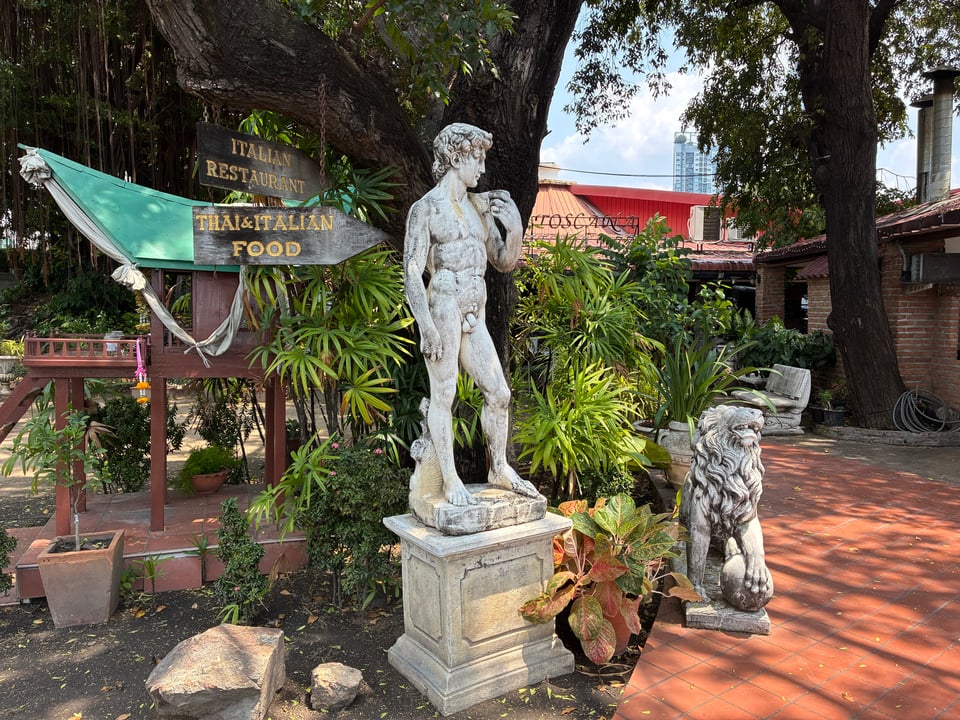
The restaurant was called Trattoria Pizzeria Toscana.
It’s located right in front of Pattaya Beach — probably one of those places that has been around for quite a while.
The pizza and pasta were both excellent 🍕🍝
But what stood out more than the food was the conversation.
We found ourselves talking mostly about the Strait of Hormuz and its potential impact on Thailand.
Thailand, after all, is a country deeply connected to manufacturing — especially the automotive industry, which is exactly the field they both work in.
From their perspective, the situation isn’t abstract.
It’s something that could directly affect supply chains, production costs, and ultimately the stability of entire industries.
They both seemed genuinely concerned.
Listening to them, I was reminded again that global events are never really “far away.”
Even something happening thousands of kilometers from here can quietly shape daily life — sometimes faster than we expect.
At the same time, sitting there, sharing good food with old friends, it also felt like a small moment of normalcy.
Somewhere between uncertainty and ordinary life.
And maybe that’s just how things are now.
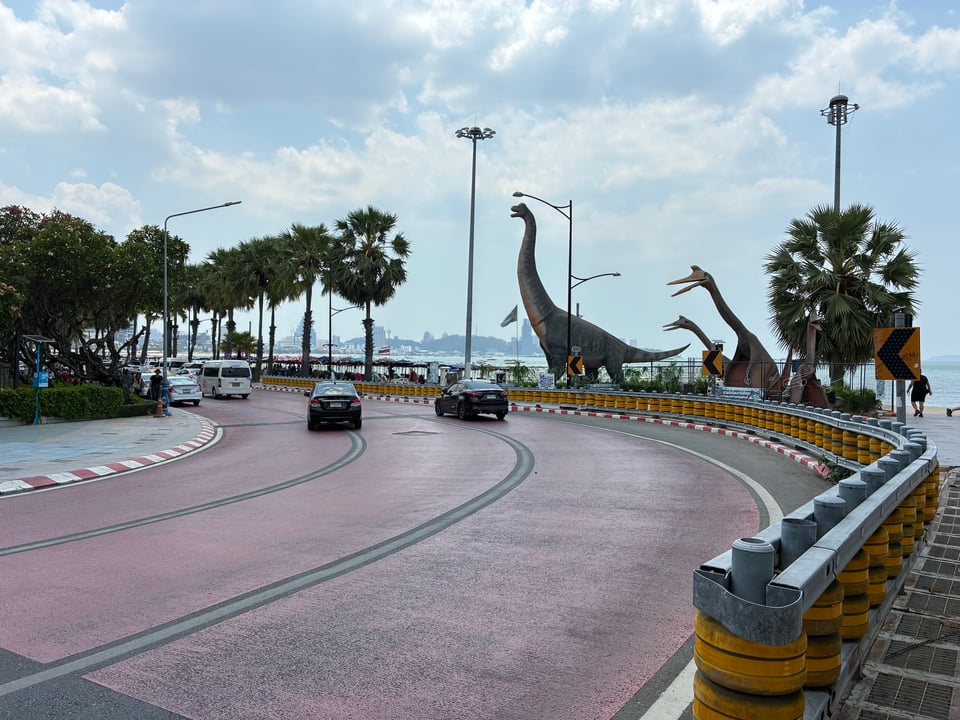
By the way, we walked along Pattaya Beach to get to the restaurant — something I hadn’t done in a while.
And somehow, it felt like a few dinosaurs had traveled all the way from the Cretaceous period just to visit 🏖️
✍️ What’s Happening
One of the most striking developments this past week happened right here in Thailand.
In response to rising energy risks triggered by the conflict in the Middle East, the Thai government introduced emergency measures almost overnight.
Civil servants were instructed to work from home, reduce electricity usage, avoid overseas travel, and even use stairs instead of elevators.
Air conditioning in offices is now limited, and energy-saving has effectively become a national priority.
According to reports, Thailand currently has roughly 95 days of energy reserves, and the government is urgently trying to secure additional LNG supplies while reducing domestic demand.
What stood out to me wasn’t just the policy itself — but how quickly things shifted.
This wasn’t a distant geopolitical story anymore.
It suddenly felt local — something we were casually discussing over lunch in Pattaya.
Living here, it becomes clear how exposed Thailand is to global energy flows.
When something happens thousands of kilometers away, it doesn’t stay abstract.
It quietly begins to shape daily life.
And in moments like this, you realize — uncertainty isn’t just something you read about.
It’s something you live through.
💻 Work & Projects

As I mentioned earlier, I’ve been experimenting with Meta ads for the first time, promoting an AI school for Japanese learners.
It’s been a surprisingly fresh experience for me.
There are two main types of ads you can run on Meta:
Banner ads (images)
Reels ads (videos)
These ads are distributed across Meta’s platforms, mainly Facebook and Instagram.
Since it was my first time, I decided to test both formats.
Here’s what I’ve seen so far:
Banner ads: 0.89% click-through rate
Reels ads: 5.21% click-through rate
I had heard that video tends to perform better, but the difference was still quite striking.
For now, I plan to keep running both and observe how things evolve.
That said, I don’t think this result alone is enough to draw a final conclusion.
With better creative, banner ads might still reach similar performance.
So I’ll keep testing, adjusting, and learning as I go.
⚡️ Bitcoin Notes of the Week
One of the more interesting developments recently comes from Blockstream.
With the latest update to the Blockstream app, the Jade hardware wallet can now interact with the Lightning Network— something that hasn’t really been possible before in this form.
You can now send and receive Lightning payments while keeping your keys secured by a hardware wallet.
In simple terms, this brings together two elements that didn’t fully overlap until now:
Lightning → speed and usability
Hardware wallets → security and self-custody
This update effectively bridges that gap.
Under the hood, the system uses swaps between ⚡️ Lightning, 🌊 Liquid, and 🔁 on-chain Bitcoin, allowing funds to move across layers while still being secured by the Jade device.
From a broader perspective, this feels like another step toward a more complete Bitcoin stack.
Not just a store of value or a payment system — but a layered system where each part plays a role.
You store value securely, spend instantly, and remain in control of your keys.
That’s a meaningful shift.
🤖 AI Notes of the Week
One AI moment that really caught my attention recently came from Figure.
Brett Adcock shared a new demo of Helix 02 cleaning a living room fully autonomously — picking things up, organizing, and resetting the space without human input.
What stood out to me wasn’t just the technology itself, but the direction it represents.
We’ve spent the past few years watching AI write, summarize, and generate images.
But honestly, that was never what I was most excited about.
What I’ve been waiting for is AI that actually improves everyday life.
Things like cleaning, organizing, doing laundry — the kinds of tasks no one really wants to spend time on.
This feels much closer to that future.
Of course, it’s still early.
Real homes are messier than demos, and there’s always a gap between what works in a controlled setting and what works in daily life.
But still — this is the kind of AI that feels meaningful.
Not just something that produces content, but something that quietly gives time back.
Because if I’m being honest… I’d much rather not do laundry 🤭
🤔 Closing Thoughts
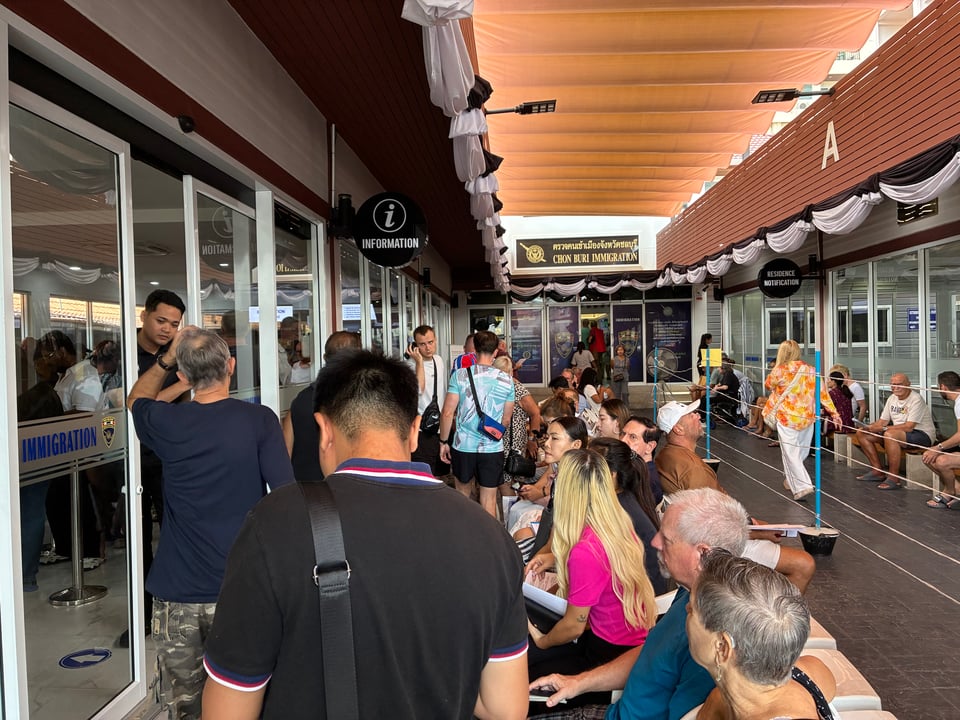
I recently visited the immigration office near Pattaya Beach — technically Jomtien Beach — to finally receive the approval stamp for my visa.
Thailand, thank you.
Every time I go to immigration, I’m struck by the sheer number of foreigners there.
Applying for a visa usually means one thing — you’re planning to stay here for at least a few months, if not much longer.
Compared to when I first visited Thailand nearly 20 years ago, prices have risen significantly.
And yet, it remains a place people are drawn to.
(For me — especially with the weakening yen — it no longer feels like the “affordable country” it once was… 😂)
When I take a step back and look at Thailand more objectively, a few realities stand out:
The demographic dividend has already passed, and the country now faces a rapidly aging population.
A stronger baht is making Thailand less accessible, while neighboring countries like Vietnam are becoming more attractive alternatives.
Income inequality continues to widen, leaving domestic demand weak and putting pressure on industries that once powered growth.
None of this paints a particularly optimistic picture.
…But please don’t get me wrong.
Thailand still holds so much charm — and even more potential.
In fact, just looking around at the immigration office, filled with people from all over the world, you can feel how strongly this country continues to attract others.
And as for me, I hope to keep building my life here — together with my family — for many years to come.
Past posts here: ARCHIVES
⚡️ If you’d like to support my work, you can send sats here.


Add a comment: