
8 — A Day in Nara (Japan), and a Few Things That Stayed With Me.
From a day in Nara to small moments along the way, a few things that stayed with me a little longer than expected.
Past posts here: ARCHIVES
⚡️ Block 944615
Don't miss what's next. Subscribe to Sovereign Individual 🌏:
🇯🇵 Moments with Me
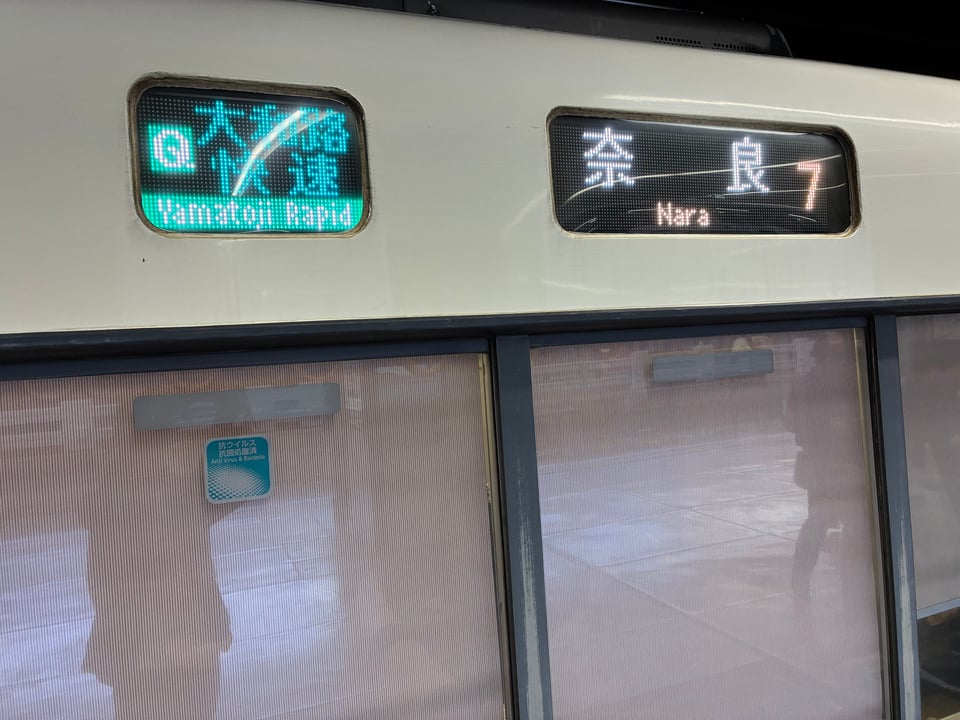
It had been a long time—probably since a school trip—but I found myself visiting Nara again.
I’ll be heading to Australia with my parents next week, and since we’re meeting in Osaka, I had a day to myself and decided to take the trip.
When people think of Nara, the Great Buddha is usually the first thing that comes to mind.
But this time, I had two shrines in mind.
Both are mentioned in the Kojiki, often considered Japan’s oldest historical text, compiled in the early 8th century.
The origins of these shrines go back far earlier—traditionally said to be over 2,000 years old, reaching into the early formation of Japan’s mythology and state.
Of course, like many ancient sites, the current structures have been rebuilt over time.
Isonokami Shrine (石上神宮)
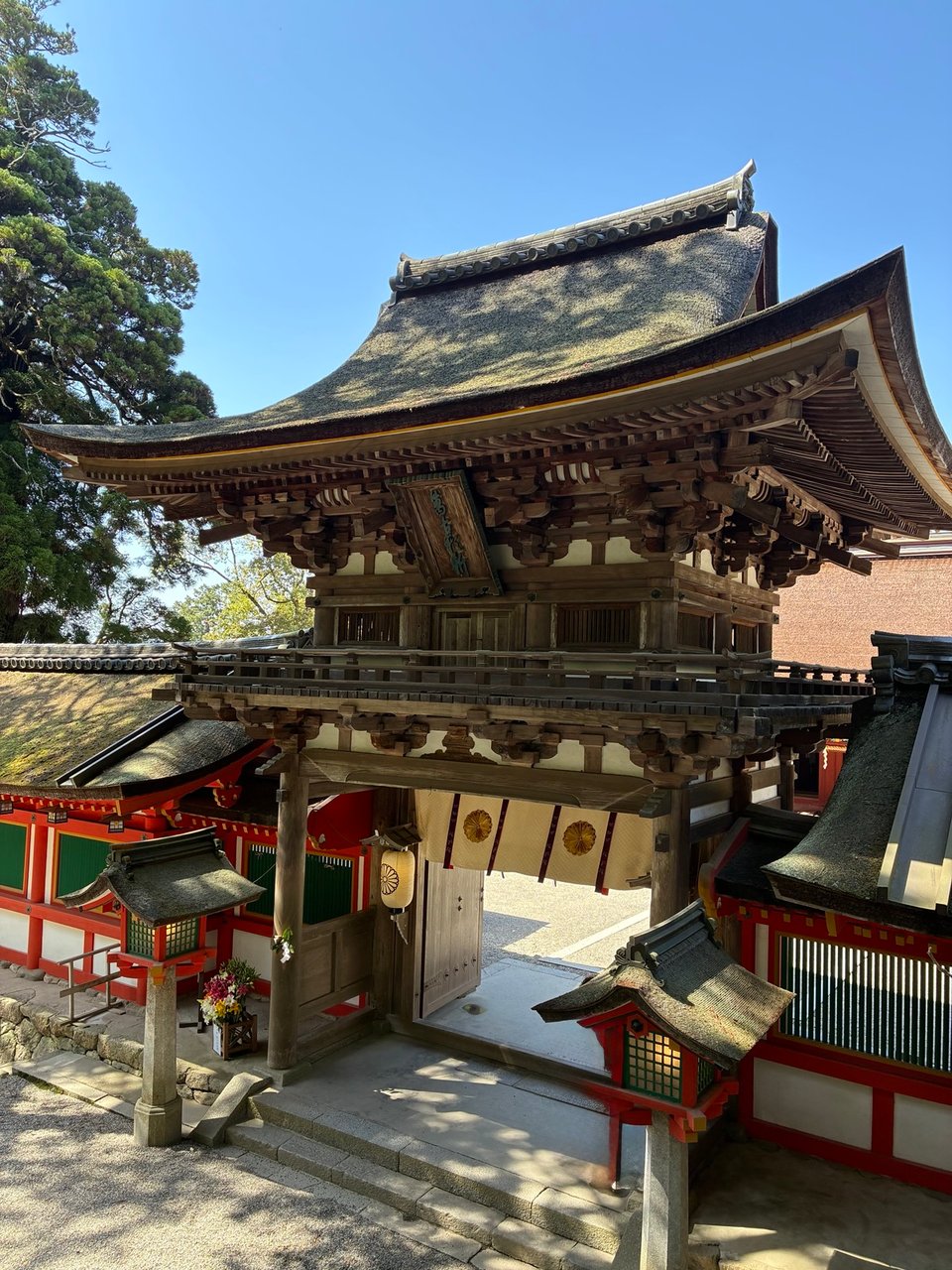
Isonokami Shrine is one of the oldest Shinto shrines in Japan, with deep ties to early mythology recorded in the Kojiki.
It is closely associated with Futsunomitama no Kami, a deity connected to the sacred sword used in the myths of Japan’s creation and unification.
Historically, the shrine was also linked to the imperial court, serving as a place where weapons were stored and protected.
There’s a quiet, grounded feeling to the space—something that feels less like a tourist destination and more like a place that has simply continued to exist.
Google Map: https://maps.app.goo.gl/C5dKsUCSNS6YFNt48
Ōmiwa Shrine (大神神社)
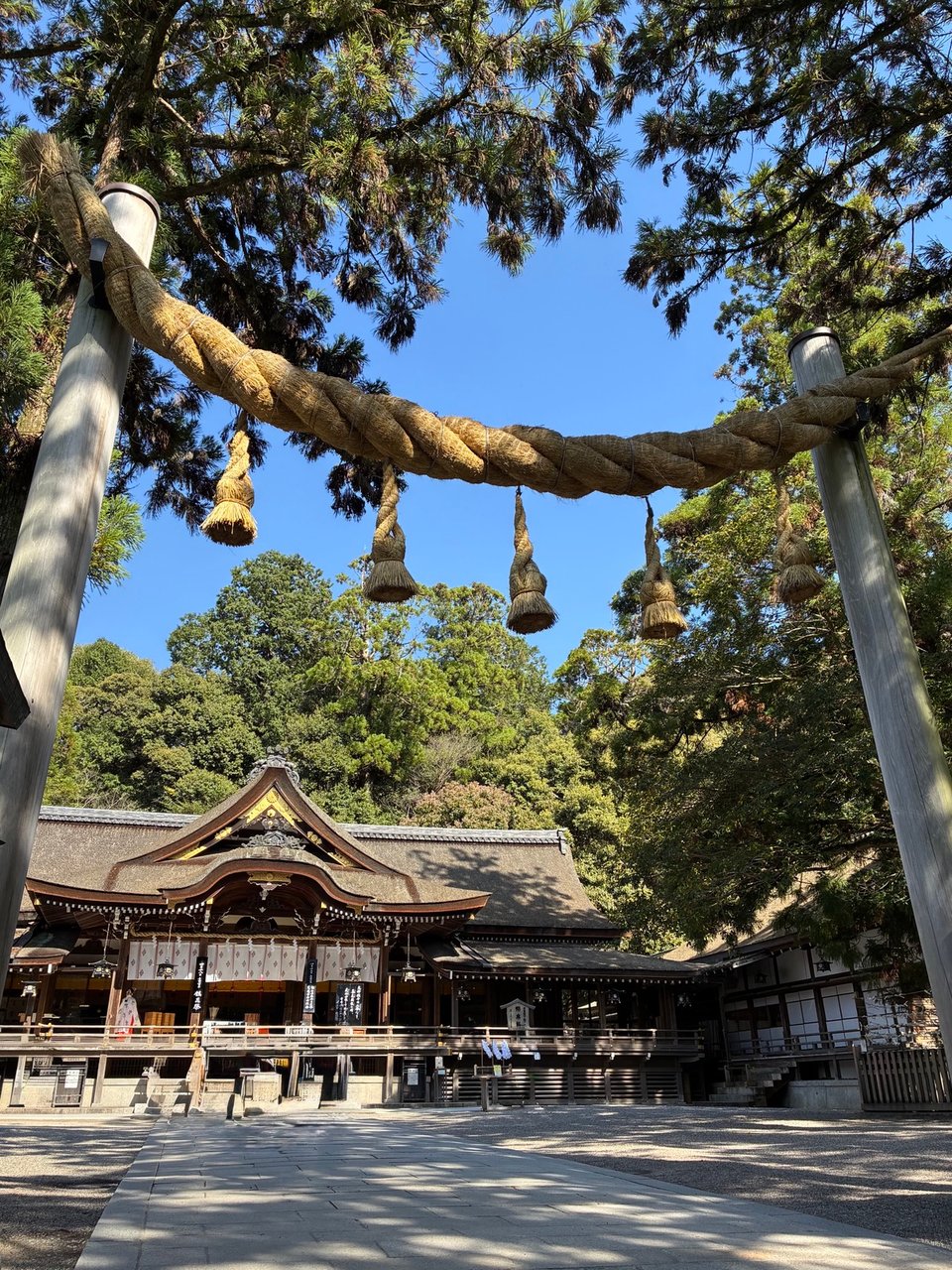
Ōmiwa Shrine is considered one of the oldest shrines in Japan, and it has a unique structure—it doesn’t have a main hall (honden).
Instead, Mount Miwa itself is worshipped as the sacred body of the deity.
This idea—that nature itself is the object of worship—feels very close to the roots of Shinto.
The shrine is also connected to early figures and myths described in the Kojiki, especially those tied to the origins of agriculture and settlement.
Standing there, it feels less like entering a building, and more like being part of something that extends beyond it.
Google Map: https://maps.app.goo.gl/m7DZvJc21T8pMh118
Japan really is a beautiful country.
It’s something you don’t always notice when you live there.
But after spending time abroad—in my case, in Thailand—and coming back occasionally, you start to see it differently.
There’s a depth to its history that quietly reveals itself.
If you ever have the chance, it’s a place worth experiencing for yourself.
If you’re curious, you can explore tours and activities in Nara: here (GetYourGuide)
✍️ What’s Happening

Iran's Strait of Hormuz Crypto Toll
Iran intends to demand cryptocurrency payments from oil tankers transiting the Strait of Hormuz during the two-week ceasefire.
I came across this report from Chainalysis, and it’s hard to ignore the implications.
Iran is reportedly demanding transit tolls in digital assets for ships passing through the Strait of Hormuz—one of the world’s most critical energy chokepoints.
The structure itself is surprisingly simple.
Ship operators submit details about their cargo and route, receive a permit, and pay a fee—often around $1 per barrel—in yuan or digital assets.
At a glance, it sounds like just another workaround in a heavily sanctioned environment.
But it also highlights something important.
Public statements have referenced Bitcoin, but in practice, what’s being used here is far more likely to be stablecoins.
And that distinction matters.
Stablecoins—and most of what’s broadly called “crypto”—are still deeply tied to existing financial systems.
They rely on issuers, counterparties, and, in many cases, can be frozen or controlled.
In that sense, they function more as an extension of the current system, rather than an alternative to it.
Bitcoin operates differently.
It’s not designed for this kind of controlled, high-volume transactional flow under intermediaries.
Its role has always been closer to something else—more about resilience than convenience.
So while this may be framed as a “crypto” development, it doesn’t really say much about Bitcoin itself.
If anything, it reinforces the difference.
At the same time, there’s still a lot that isn’t fully clear.
Much of this is based on reports and statements, and how it will actually function in practice remains uncertain.
There are also obvious legal and compliance risks—especially for global shipping companies operating under strict sanctions frameworks.
Still, even as a signal, it feels worth paying attention to.
Not necessarily because of what it says about Bitcoin, but because of what it reveals about how existing systems adapt under pressure.
💻 Work & Projects
With a 10-day trip to Australia (and Japan) coming up, last week felt a bit different.
I wrapped up roughly two weeks’ worth of work in the span of one.
At the same time, since I’ll be traveling with my parents, I was also going over the itinerary—double-checking safety, routes, and overall comfort.
The week passed quicker than I expected.
But going through that process reminded me of something.
Two weeks of work can, at times, fit into one—if I’m focused enough.
Since going independent, my sense of time has probably become a bit more relaxed than it used to be.
Not necessarily a bad thing, but maybe something worth being more aware of.
Once I’m back from Australia, I’d like to move projects forward with a bit more speed again—in a way that still keeps the freedom I’m working toward.
It was that kind of week.
⚡️ Bitcoin Notes of the Week
Another “Satoshi reveal” piece is making the rounds again.
This time, it suggests that Adam Back (Blockstream) might be Satoshi Nakamoto, based on writing style analysis, historical timing, and a collection of circumstantial signals.
At this point, it’s hard to see this as anything new.
We’ve seen similar claims before—Hal Finney, Nick Szabo, Craig Wright—and none of them led to anything definitive.
The structure is always the same.
A set of observations that seem to line up, followed by a conclusion that still relies on inference rather than proof.
In Bitcoin, the standard for this has always been simple.
If someone is Satoshi, they can prove it by signing with the keys.
Without that, everything else stays in the realm of speculation.
More importantly, it’s not clear how much any of this actually matters.
Even if the identity were known, it wouldn’t change how Bitcoin works or what it represents.
This whole discussion seems to keep circling slightly away from the core of what Bitcoin is.
It’s probably something best taken lightly.
🤖 AI Notes of the Week

Sam Altman May Control Our Future—Can He Be Trusted? | The New Yorker
New interviews and closely guarded documents shed light on the persistent doubts about the head of OpenAI.
I came across this piece from The New Yorker questioning whether Sam Altman can be trusted.
It’s not just a profile, but closer to an investigation, based on interviews and internal accounts that point to how decisions are made inside OpenAI, and how much power may be concentrating around a single figure.
What stood out wasn’t any single claim, but the structure behind it.
A company that started with a mission around safety and openness has gradually become one of the most powerful players in AI, now moving toward a potential trillion-dollar valuation with deep ties to governments and infrastructure.
At that point, the question shifts.
It’s no longer just about whether one person is trustworthy, but whether a system built like this should rely on trust in the first place.
There’s also a certain tension that keeps showing up.
On one side, AI leaders—including Altman himself—talk openly about the risks of the technology.
On the other, the same companies are racing to deploy it at scale.
That combination—warning about systemic risk while accelerating development—doesn’t always sit comfortably.
Of course, some of the claims in the article are difficult to verify from the outside, and narratives like this tend to lean toward the dramatic.
Still, even allowing for that, it highlights something worth paying attention to.
Power in AI isn’t just about models anymore.
It’s about who controls the direction, who sets the defaults, and who gets to decide how the technology is used.
This isn’t really a story about one person.
It feels more like a story about how much influence a small number of actors are starting to hold, and what that might mean over time.
🤔 Closing Thoughts
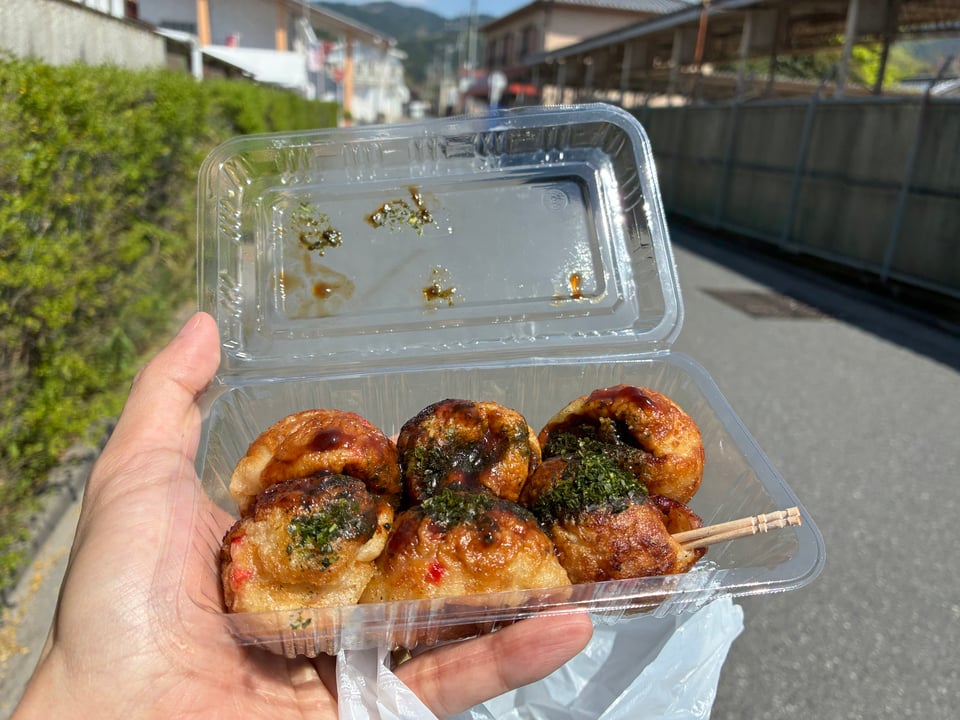
Takoyaki—one of those foods that’s closely tied to Osaka.
I suddenly felt like having some, and happened to come across a small street stall while I was on the move, so I picked up a box without thinking too much about it.
That familiar taste of the sauce.
It reminded me of something.
Back in elementary school, there was a small stand in front of the school, and I used to ask my parents for a bit of allowance just so I could buy takoyaki after class.
I’m not even from Osaka, though.
Later on, in university, I remember having takoyaki parties with friends, sometimes with someone I was dating at the time.
It wasn’t anything special.
But somehow, it brought back a few things I hadn’t thought about in a while.
Past posts here: ARCHIVES
⚡️ If you’d like to support my work, you can send sats here.


Add a comment: