
3 — A Birthday Party, A War, and the World in Between.
A birthday party, a war, and the strange feeling of living between two worlds — family moments, global tension, and quiet uncertainty.
⚡️ Block 939736
Don't miss what's next. Subscribe to Sovereign Individual 🌏:
🇹🇭 Moments with Me
One of last week’s small events was a birthday party for one of my daughter’s friends.
My daughter and I were invited, so the two of us went together.
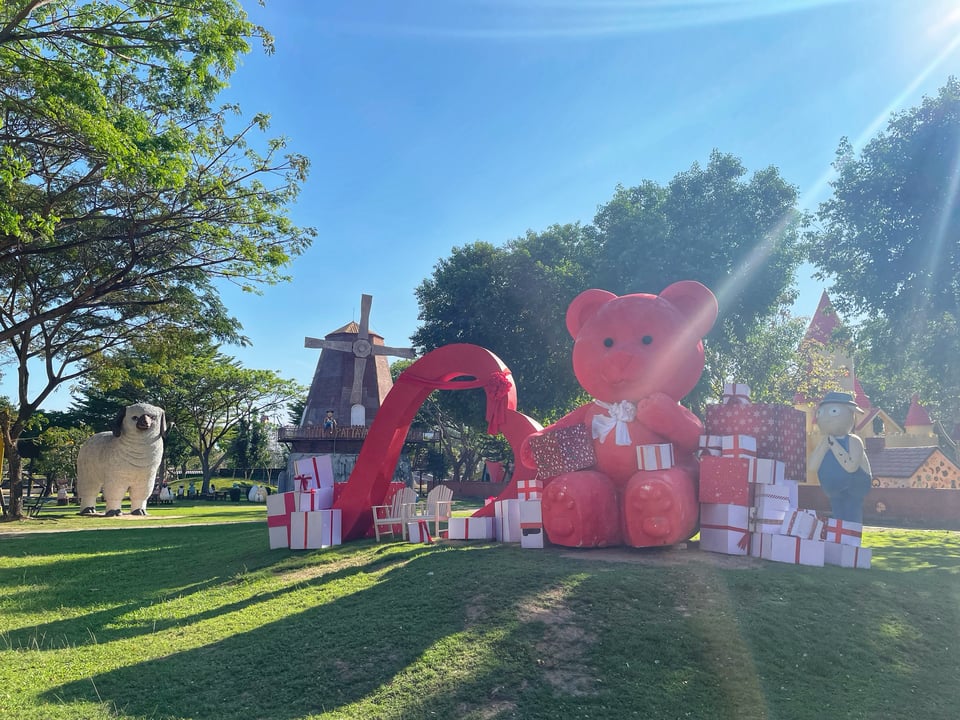
The party was held at a restaurant inside a place called Family Park Pattaya, a kind of small zoo and family park.
The kids spent the day playing around the animals, making pizza together, and joining different games.
I’m sure it will become a wonderful memory for my daughter.
For me, it was also a fresh experience.
In the past, work usually kept me from attending events like this.
So being there with my daughter felt surprisingly meaningful.
There was also a slightly strange but interesting feeling:
becoming friends with the parents of my daughter’s friends.
I had the chance to greet the parents who hosted the party and chat with several other families.
One conversation in particular stood out.
I ended up talking quite a bit with a father from a Russian family who moved to Thailand about four years ago.
He told me that the company he works for used to operate in Russia.
But after economic sanctions imposed by the United States and other countries following Russia’s invasion of Ukraine, the company closed its Russian office and moved operations to Bangkok.
He relocated to Thailand with his family and now works remotely from Pattaya.
He said Thailand feels very different from Russia — warmer, brighter, and easier to live in.
In fact, he told me he has grown to love it and hopes to stay here long term.
(I completely understand that feeling 🤭)
We ended up saying we should grab coffee together sometime soon.
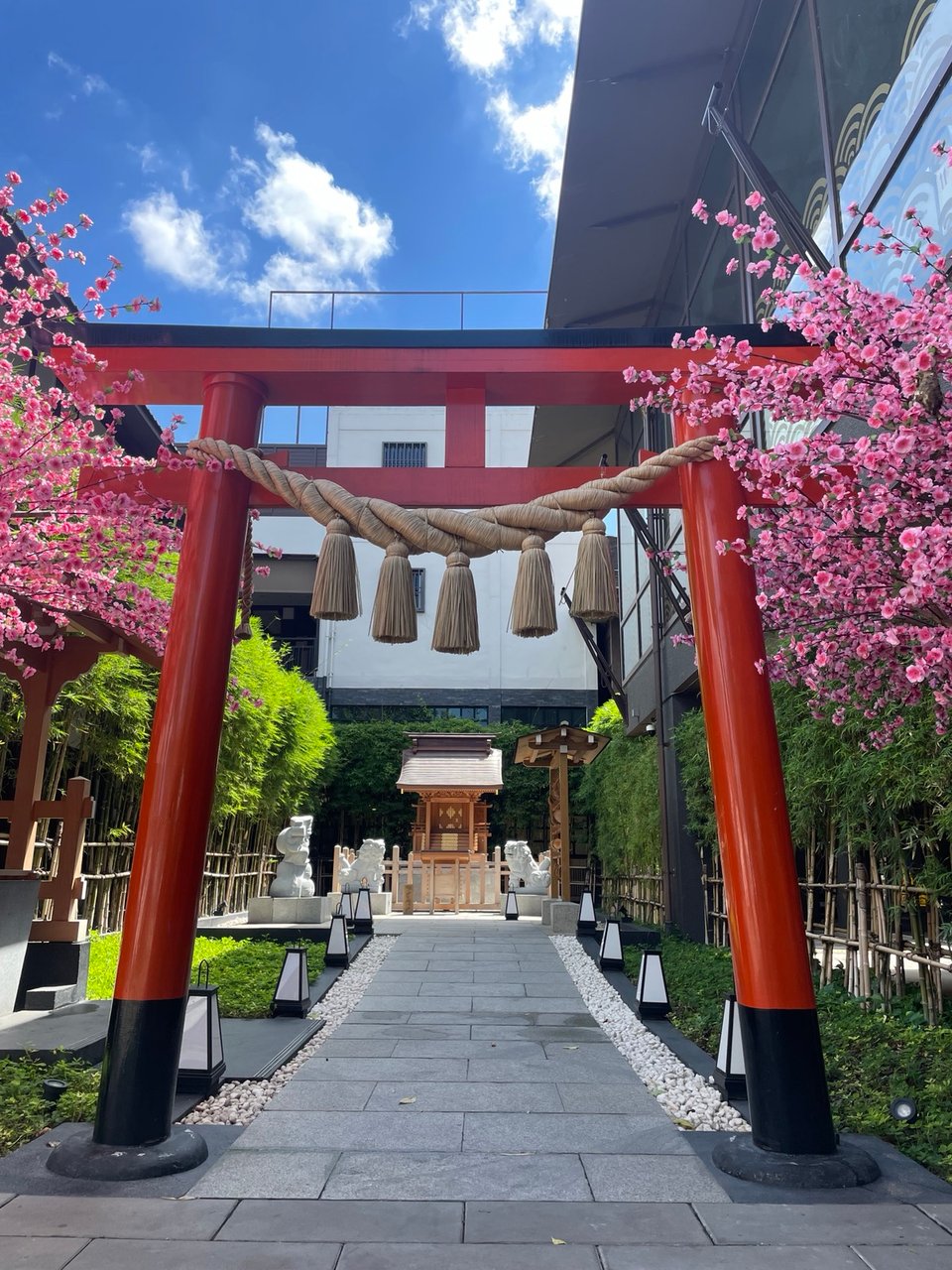
On another note, there’s a town next to Pattaya called Sriracha, where many Japanese people live.
I went there to buy Japanese rice and a few Japanese groceries.
The photo above is of a small Japanese-style shrine I stopped by while I was there.
If you’re curious, you can explore more tours and activities in Pattaya: here (GetYourGuide)
✍️ What’s Happening
One story from last week’s global news is impossible to ignore.
The conflict involving Israel, the United States, and Iran.
Honestly, the world feels increasingly unstable.
And since I just left my company job, it also means one more thing for me to worry about 😂
What worries me even more is the situation around the Strait of Hormuz.
If this disruption continues for a long time, countries like Thailand and Japan, which depend heavily on imported energy, could face very serious consequences.
Thailand’s strategic oil reserves are said to last about 95 days (earlier reports mentioned around 65 days).
Japan, on the other hand, reportedly has around 254 days of reserves.
But roughly 90% of Japan’s imported crude oil passes through the Strait of Hormuz.
In other words, if that route is blocked for an extended period, the ripple effects could be severe — possibly even stagflation-like conditions.
Thinking about things like this makes the world feel a little fragile.
And yet, in times like these, I still see many people saying Bitcoin is just a Ponzi scheme.
Honestly, I don’t really understand that.
Moments of global uncertainty like this are exactly when I become curious about how Bitcoin behaves.
Will it act as “Bitcoin in times of crisis”?
Or will it simply move with the rest of the market?
Either way, I’ll be watching closely.
Because sometimes it feels like the real conflict isn’t only between countries.
As one observer put it:
We are not in a war between Iran, Israel, and America. We are in a war between the military industrial complex and the financial industrial complex.
When you follow the money, the story often looks very different.
Some people even say this moment could be part of a much larger global transition.
I don’t know if that’s true.
But one thing is certain:
The world feels like it’s shifting beneath our feet.
And moments like this remind me why I’m trying to build a life that is a little more sovereign, a little more independent, step by step.
💻 Work & Projects
As I mentioned in a previous issue, I’m preparing to launch an AI school for Japanese learners.
One small but important step is collecting leads from the landing page — basically asking potential students to leave their email address.
For this, I’ve been using a service called Resend.
It’s a surprisingly simple way to add auto-reply email functionality to your own website.
The nice thing is that it works regardless of how your site is built.
Whether your site is:
simple HTML + CSS
Next.js + Tailwind
or something in between
you can still integrate email sending very easily.
A minimal example looks something like this:
import { Resend } from "resend";

const resend = new Resend(process.env.RESEND_API_KEY);

await resend.emails.send({
  from: "Your Name <hello@yourdomain.com>",
  to: "you@yourdomain.com",
  subject: "New lead from your website",
  html: "<p>You have a new subscriber.</p>",
});
With just a few lines of code, your site can send emails whenever someone submits a form.
Another reason I like Resend is that it works very well with AI-assisted coding.
Most of the time, I simply ask my AI coding partner to implement it for me 🤖
If you’re building landing pages, experiments, or small online products,
it’s definitely a tool worth trying.
⚡️ Bitcoin Notes of the Week
This time, the Bitcoin note is a bit more personal.
I’ve recently started writing beginner-friendly Bitcoin education content for a Japanese company called ANAP.
Some of you outside Japan may not be familiar with the name.
ANAP used to be known primarily as an apparel company, but in recent years it has been reinventing itself as a Bitcoin treasury company.
The project is supported by Fulgur Ventures, a globally recognized Bitcoin venture capital firm.
They’re also involved in initiatives like Tokyo Bitcoin Base, a space for Bitcoiners in Japan.
So being invited to contribute educational content for them feels like a real honor.
More than anything, I’m excited about the opportunity to help introduce Bitcoin to a wider audience in Japan.
If everything goes well, I’ll probably continue writing for them throughout this year.
…or at least until I run out of Bitcoin topics 🤓
Though, if you’ve been around Bitcoin long enough, you know that’s unlikely.
If you’re curious about how Bitcoin education is evolving in Japan, I’ll probably share more updates here from time to time.
🤖 AI Notes of the Week
This time, the AI note feels a little uncomfortable.
One story that caught my attention recently was OpenAI’s agreement with the Pentagon.
The partnership is being described as support for things like healthcare access, procurement data, and cybersecurity inside government systems.
But even with those explanations, I can’t say I feel comfortable about it.
Personally, I’m on the skeptical side of this one.
Once frontier AI companies become deeply integrated with military and state power, it becomes harder and harder to believe the line will stay where they promise it will.
Today it’s “support.”
Tomorrow it might be “infrastructure.”
And after that… who knows.
AI is quickly becoming part of the operating system of governments, economies, and geopolitics.
And once that happens, the conversation is no longer just about productivity.
It becomes a question of control.
That said, there’s a slightly ironic part of this story.
I still rely on Codex almost every day 🙃
So yes — I’m uneasy about the direction.
But at the same time, I’m still using the tools.
Maybe that contradiction is simply part of living in the AI era.
🤔 Closing Thoughts
Last weekend, the three of us — my daughter, my wife, and I — went to see the Disney movie Hoppers.
To be honest, I didn’t know much about the film before walking into the theater.
But it turned out that the main character is Mabel Tanaka, a Japanese-American college student (of course a fictional one).
The story itself was wonderful, but what surprised me were the small details.
There’s a scene where Mabel’s grandmother prepares breakfast — a very familiar Japanese-style meal that instantly felt nostalgic to me.
And the choice of making the protagonist someone connected to Japanese heritage — a culture that has long emphasized coexistence with nature — felt very intentional.
Watching that story unfold was already meaningful.
But watching it together with my daughter, who is half Japanese and half Thai, made the moment feel even more special.
I don’t know exactly why.
But something about that timing felt quietly significant.
Maybe it was just a movie night.
Or maybe it was one of those small moments that stay with you longer than you expect.
Either way, it was a beautiful evening for our little family.
Past posts here: ARCHIVES
⚡️ If you’d like to support my work, you can send sats here.


Add a comment: