
Yes, Please and Thank You
Welcome
BEFORE WE BEGIN
Hola, I'm Georgina. Most of you know me as Coka.
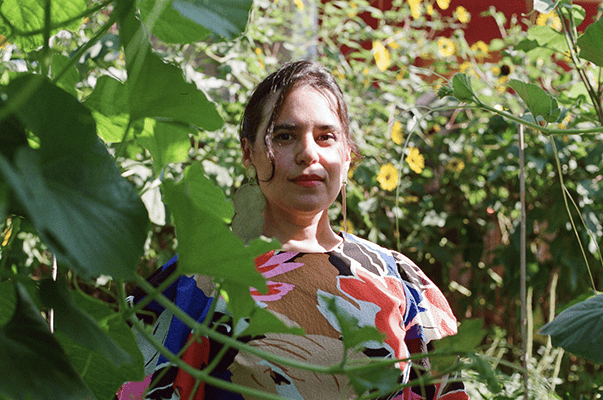
Mexican American, based in Austin, Texas, with twenty-plus years deeply engaged in art, culture, and the people making both.
I loved the work. I still do, but after two decades, I started noticing a pattern: the most talented, most generous people I knew were also the most depleted. I saw how the systems meant to support creativity were often the ones quietly hollowing it out.
I was craving something different. Not less ambition, a different kind of it, one that left people more whole than it found them.
That's what this newsletter is. Once a month, I'm bringing you the humans, places, and practices that are getting it right, building sustainably without sacrificing the people around them. The kind of work that holds up when you look closely at how it was made, who made it, and what it cost them.
In a moment when so much feels disposable, I keep finding people who refuse. I want you to know them too.
Vamos,
In this issue:
The datura and its other name
Shea Little's summer salad. Worth the wait.
Hakeem Adewumi on Juneteenth as Ethos
Nixta Taqueria: proof the other way works
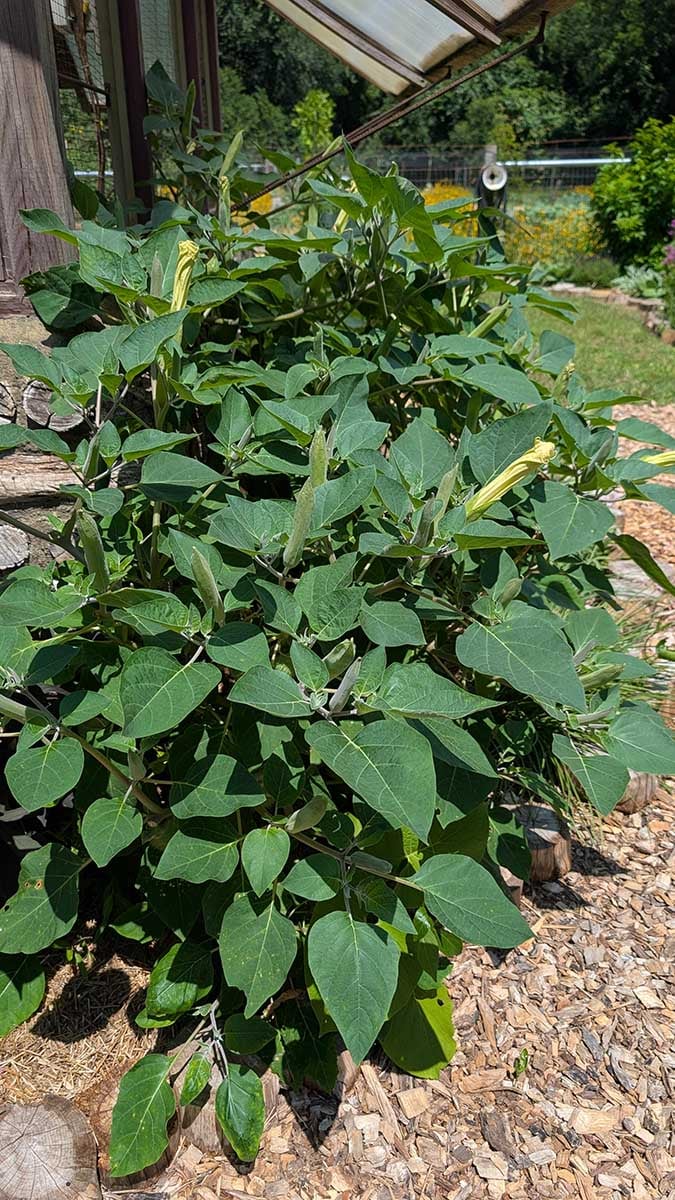
OPENING: The datura flower, its hidden legends, and what grows in my backyard.
We begin, intentionally, in the garden.
I have never been good with plants. I want to be, sometimes at an internal tantrum level. I have always hoped to be the kind of person who is surrounded by greenery, everything thriving and full of life. Instead, I get excited, buy the plants, go outside to tend to them, get bitten by every bug, and sadly retreat in defeat. “Nature hates me,” I've said in my most dramatic days while scratching vigorously.
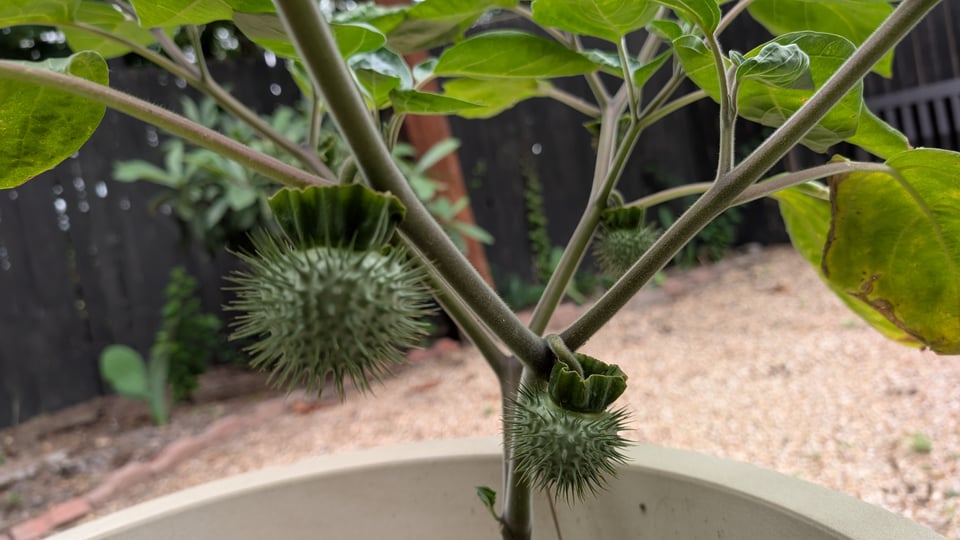
Last year, something shifted. Shea (who you’ll meet in a bit — he made a delicious salad that you’ll read about in a sec) planted a datura in my backyard, and who knows how, but my datura bloomed! Not once, not partially. Several times over. I couldn't explain it exactly, but I was proud of it in a way that felt disproportionate to my contribution.
This year, it propagated and bloomed every three or four days. And counting.
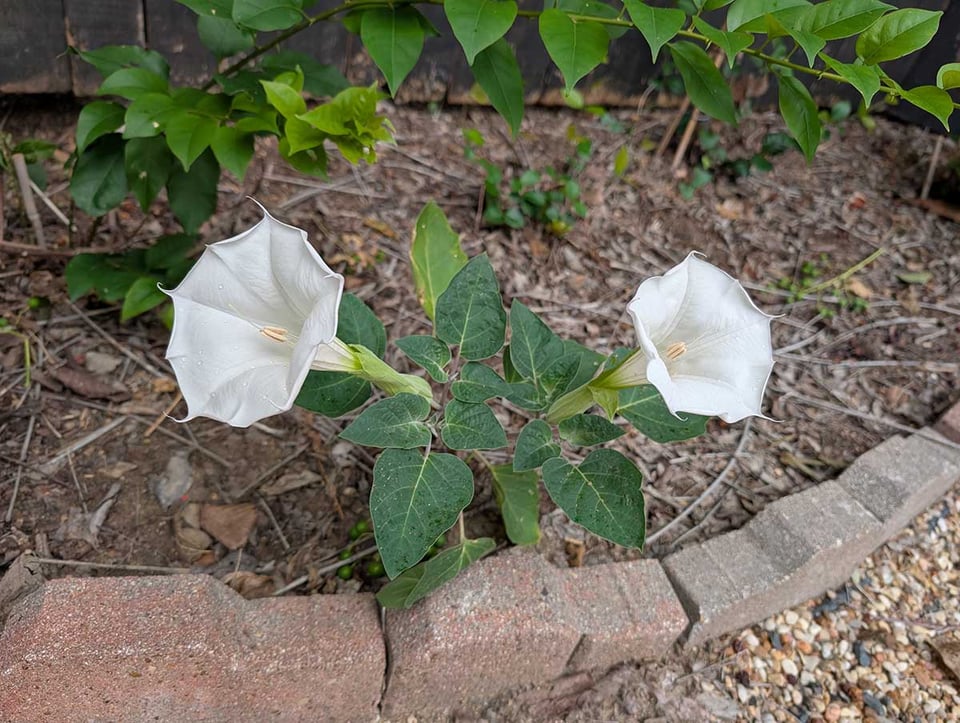
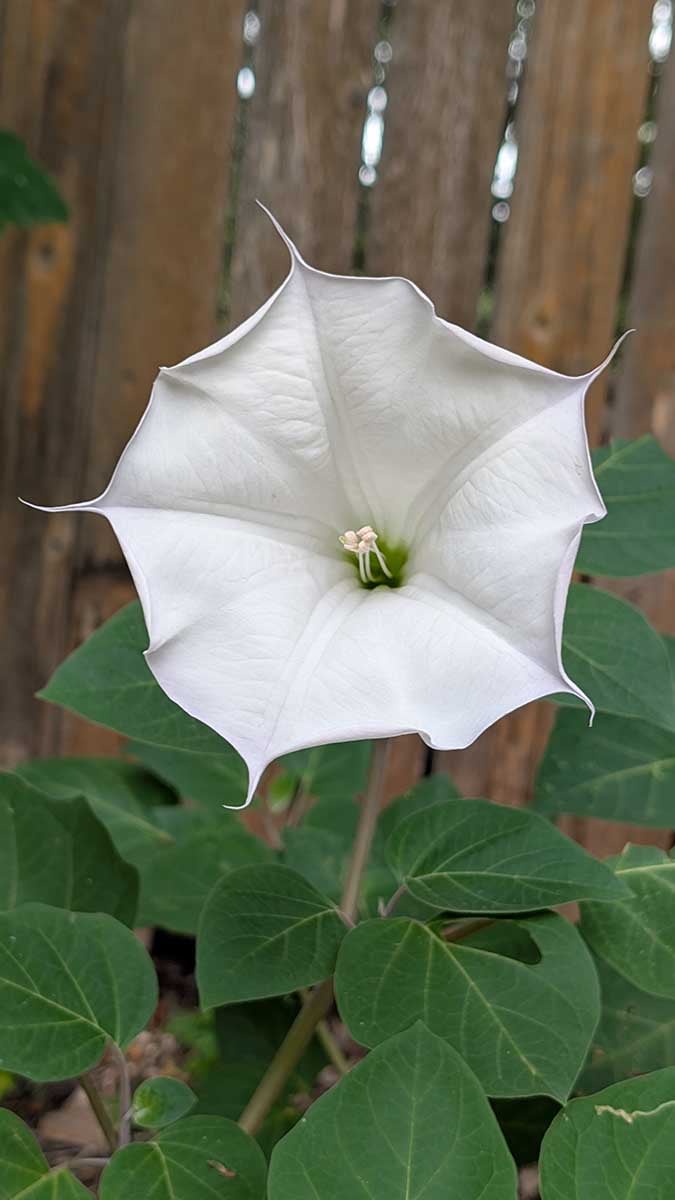
The flowers open at dusk. Trumpet-shaped, white, and pompous. They unfurl as the light dims and release a sweet and heavy scent into the air, meant for nocturnal pollinators, for the creatures of the in-between hour. By morning, they're done. Each bloom is its own event.
This year has been an unusual rainy season in Austin; my own energy and presence are also different. Something in me is slowly, carefully, getting more in touch with what's around me instead of moving past it. I don't want to over-read a flower. But I also don't want to under-read one.
This plant keeps asking for attention. Reading about it, the mysticism, the dichotomy between threat and beauty, is delightful. But the shock of learning that this flower is what every old school telenovela has referenced as "Toloache" — immeasurable!
Growing up in Mexico, you know toloache as a cautionary tale. "Le dieron toloache,” someone gave them toloache, is what you say about a person who is completely, unreasonably, helplessly in love with someone who doesn’t make sense. It's the love potion plant. The "amarre" plant. The one curanderas sell in esoteric shops in the form of soaps, perfumes, and little bags of something. The one whispered about as a way to make someone lose their will, their reason, their sense of self.
I grew up knowing toloache as that. It never crossed my mind that those two very different concepts were describing the same plant.
Datura. Toloache. The same genus, the same trumpet flowers, the same dusk blooming. The name comes from Nahuatl: tolohuaxihuitl, the plant with the nodding head. Or, in another reading: the plant that makes you dream. Aztec priests ingested it to visit ancestors. Shamans smoked its leaves for divination. The Huichol have an entire cosmology around it. The Seri used it to manipulate the climate. It is also, in high enough doses, extremely dangerous: hallucinations, psychosis, death. It has been called devil's powder in other contexts. Clearly not a party plant.
And now; here it is, in my yard in Austin, blooming on its own schedule, enormous and white and entirely unbothered.
The plant I have been observing, one that is finally thriving alongside me, has this entire world inside it: sacred and transgressive, medicinal and feared. That what I knew as a love potion and what I know as a flower are the same thing, and that neither fact cancels out the other.
Isn’t it bizarre that the word in Nahuatl doesn't translate to dangerous, magical, or bewitching? It translates to "nodding head." And in another telling, “the one that makes you dream.” Such wildly different perspectives.
I think about the rain this year. The blooms. The new terrain. I wonder who else is watching their datura open at dusk; who’s as excited as I am about possibly having something to do with it, in some other yard, not yet knowing its other name.
I hope y'all get one and we can have evening sightings and countdowns to the next flower.
BONUS NOVELA:
There is a Tepehuano legend that says Toloache was the husband of the Maiz Woman, and the Sun’s son in law. At some point, Toloache’s love affairs were discovered, so he was punished by making him lower his head and fulfill the wishes and whims of those who wanted his services.
Bloom!
TAKING A BEAT: Shea Little makes us a summer salad, and a case for slowing down.
Shea, whom you just met in the garden, also feeds people with that same quality of attention. Here's what he made this month.
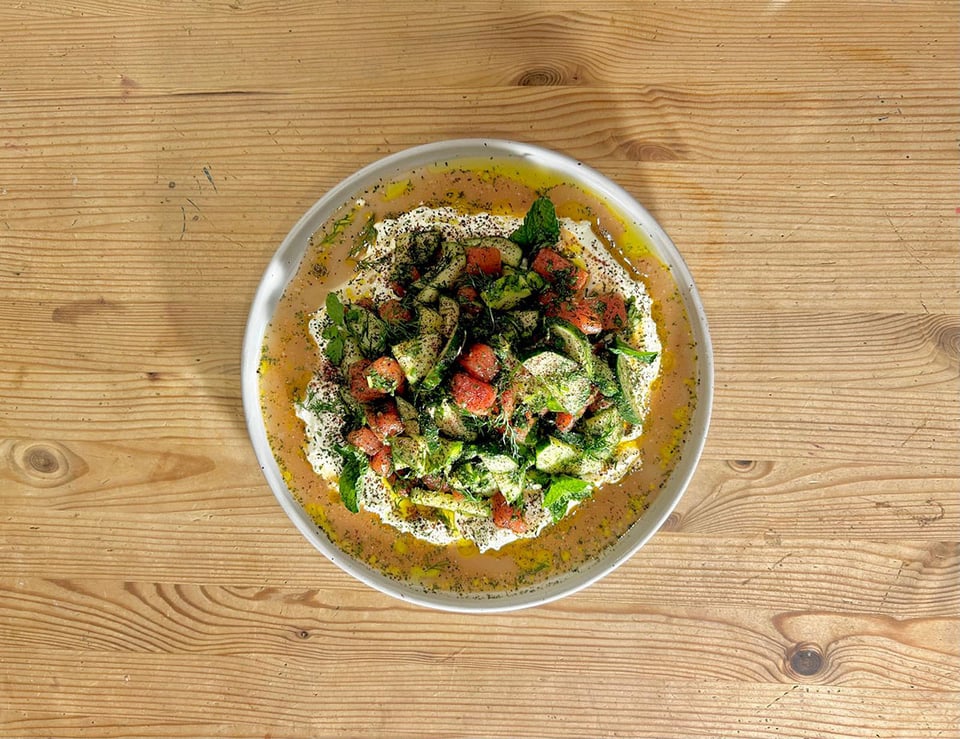
I love to cook. With three kids, I have to cook a lot, but I truly love to feed people. Cooking is also a much needed creative release. My previous work in the arts left me very little time to actually make art or be creative; cooking was my outlet. It might go without saying, but I don’t follow recipes very often, almost never, hence the creativity.
I love cookbooks and looking at beautiful pictures of food and the recipes and seeing what ingredients were used, often looking at a few recipes for the same dish, and then I go from there. Always adding and adjusting and putting my own twist on things, and as a visual person, I spend a fair amount of my cooking efforts making my food look good. As they say, we eat first with our eyes.
One of the best compliments I get is someone asking for the recipe. When someone asks, I laugh and say I don’t really know. I make up most of the food I cook, and the way I cook just lives in my head. This is my first actual recorded recipe, which might be apparent in how I share my process.
One of the perceived drawbacks, my least favorite comment on my cooking, is that it takes me forever to cook. My meals are rarely on time. When family gathers, they know to expect the food on the table well past that imaginary dinner bell.
I’m ok with that. Slow food is important, making time to nourish yourself and others with care and love, tasting along the way, adjusting as needed, and cooking with fluidity and flexibility is an art and a beautiful way to adapt meals to what you have available in your fridge or locally and seasonally.
I could go on, but I do often skip all the backstories people add to their recipes. I just look for that “jump to recipe” button and get on with it. So with that in mind, here is a lovely and bright summer salad.
Watermelon and Cucumber Summer Salad
This salad serves around 4, and it takes whatever time it takes to make.
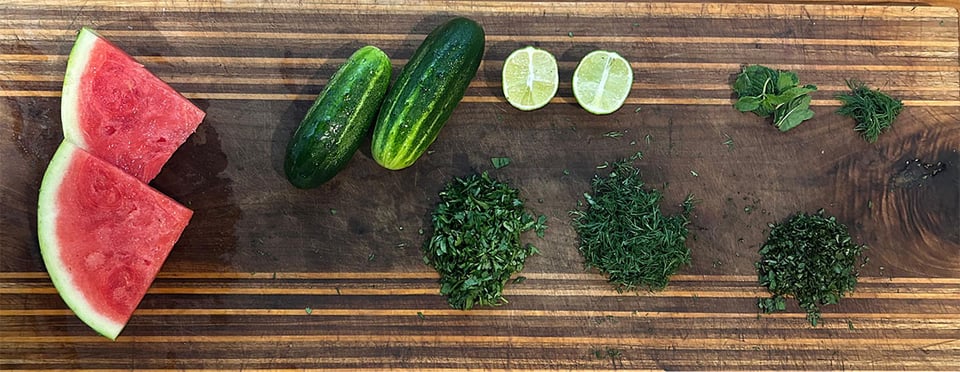
Ingredients:
Watermelon ~ 2 cups / 300 g
Cucumber ~ 2 cups / 300 g
Mint ~ 1 or 2 sprigs / 5 g
Dill ~ 1 bunch / 4 g
Cilantro ~ ½ bunch / 10 g
Labneh ~ 1 cup / 250 g
Olive oil
Lime
Salt
Optional Ingredients:
Sumac
Fig Leaves
Directions:
Coarsely chop the mint, dill, and cilantro. I like to leave larger pieces of dill. The fronds with a bit more branch like structure add a nice visual texture to the dish.
Cut the watermelon and cucumber into bite sized pieces. Each bite should have some cucumber and some watermelon, so use that as your guide for the size. I like larger-sized pieces, but smaller ones would be fine too. I also look to balance the size and shape of the red watermelon with the pale green of the cucumber.
Combine the watermelon, cucumber, mint, dill, and cilantro in a bowl. Add salt to taste. Drizzle with olive oil and lime juice. Loosely combine all ingredients. The lime juice is really to your taste. I like this dish to be more tangy than sweet, so I use at least half a lime if not more (see additional notes below).
Spread the labneh out evenly. Drizzle with a little more olive oil. Then carefully pile the rest of the ingredients in the middle of the labneh, leaving an edge of white. At this point, you can add some larger leaves of mint and cilantro and some bigger dill fronds to adorn your delicious salad pile. I like to serve this on a slightly cupped plate or shallow bowl.
Sprinkle the dish with sumac and fig leaves. This step is optional. You already have a complete dish that will satisfy. This last addition does add a bit more tang and color.
Additional Notes
One big factor is the labneh, the most important ingredient in this dish; it all depends on the labneh. Some labneh is tangier than others, or thicker than others. I am not an aficionado, but once I tried labneh, I was hooked, and I am exploring all the ways it can be used and how different it can be from one brand to the next. If the labneh is very tangy, consider using less lime and/or sumac. This dish is a balance of sweet and tangy.
Sumac is a delicious spice that I encourage people to add to their cooking. The color is rich, and the bright acidity and citrusy flavor add depth to dishes. The sumac in this dish is lightly sprinkled on top and adds another level of tanginess and a nice pop of color. Be sure to balance the amount of sumac added with the lime and labneh.
The fig leaves I used are dried and finely chopped into almost a powder. I just so happened to be trimming my fig tree recently and didn’t want to throw out the leaves, so I cooked them in the oven at 170 until they were lightly crispy. I used a food processor to chop them and then passed the chopped leaves through a fine mesh strainer to get all the stems out (I did that multiple times). The fig leaves have a chocolatey and coconut flavor, it’s very subtle and admittedly for this recipe it’s more about the aesthetics than the flavor.
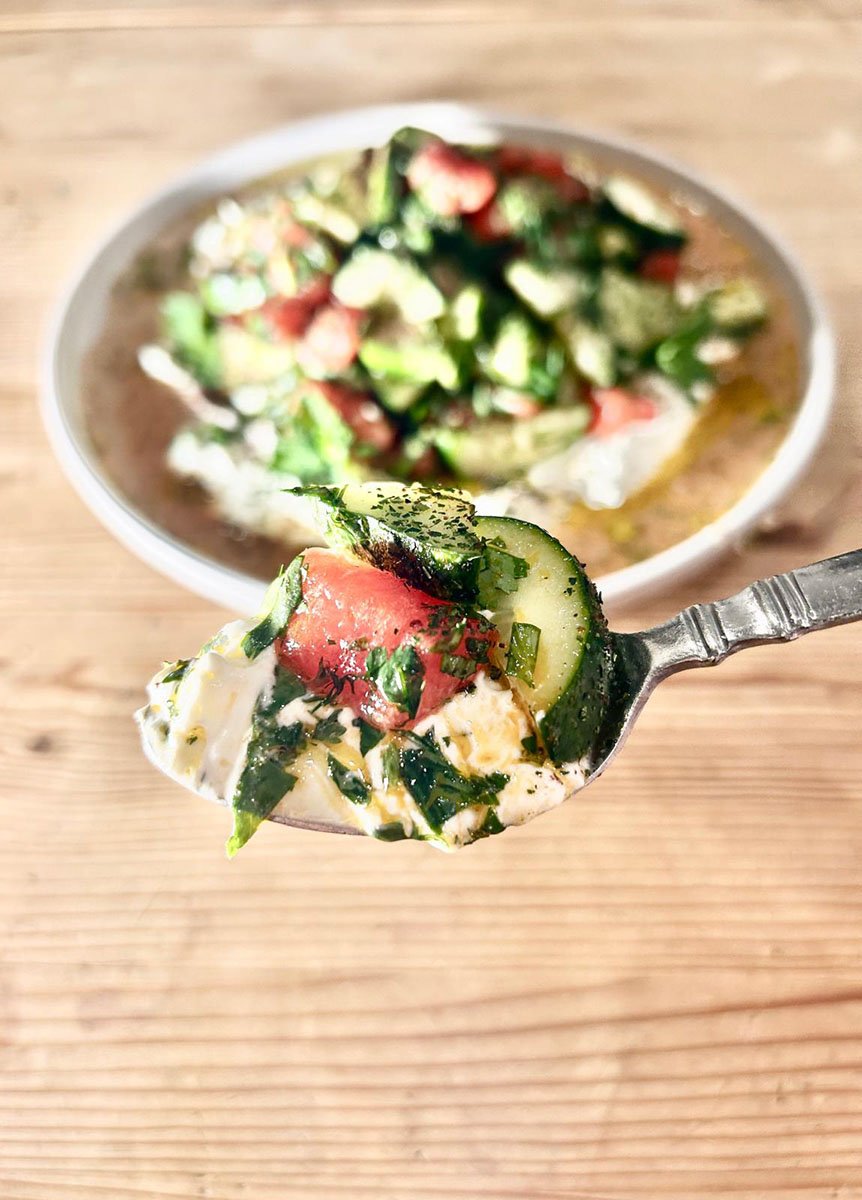
It gives me so much joy that Shea put this on paper. I’ve been a witness to his creations, and the world should know 🖤
I also love labneh, or in Spanish Jocoque, it took me forever to figure that out after moving to the US. Back in Monterrey, my hometown, I would eat it at least once a week with my grandma on buffet day at the Palestino Libanés. Good times.
Anywho, love it with the traditional food, but lately, thanks to my creative friends’ advice, I’ve been putting it on a baguette with huevito con jamón, and avocado, or tomatoes and mint, you name it; (If you eat dairy 😞) jocoquito always saves the day!
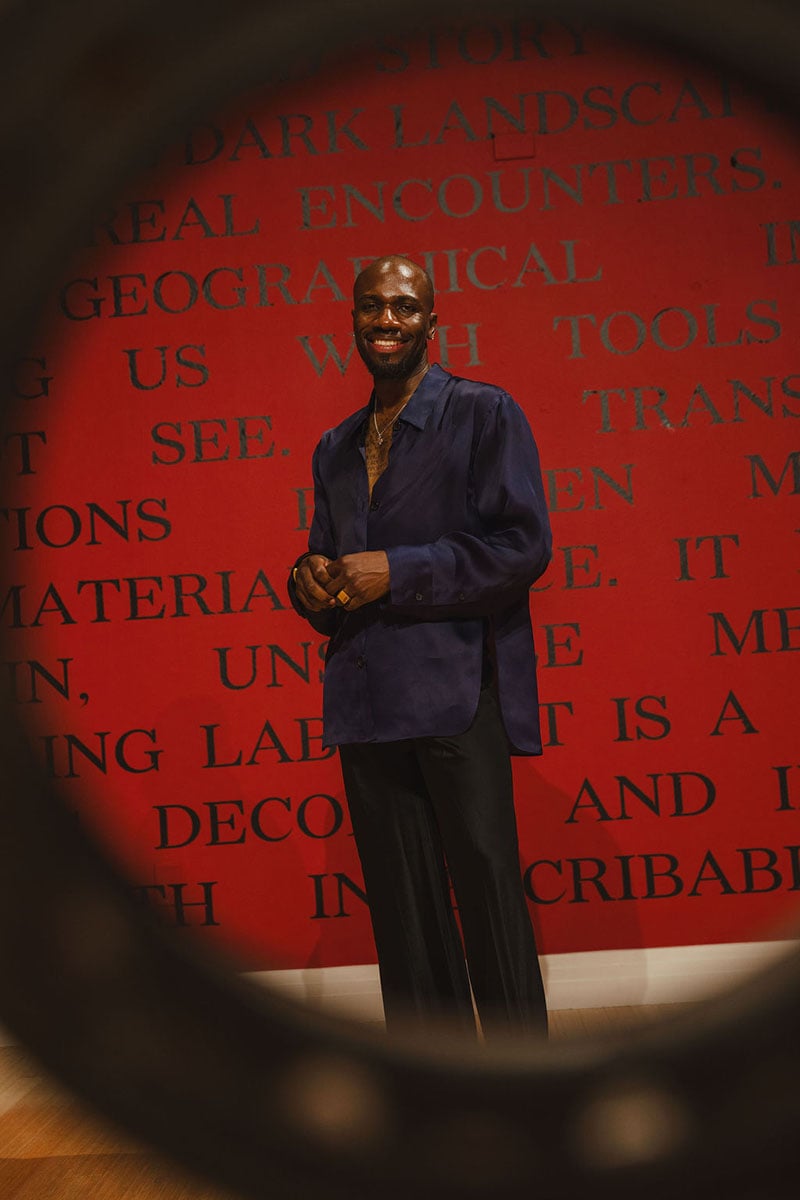
EXPANDING: Hakeem Adewumi, his practice, and what Juneteenth could still become.
Artist Hakeem Adewumi generously invited me to his home in Dallas to talk more about his latest exhibition, to show me objects he had been collecting in preparation for Seeing Further — now showing at the George Washington Carver Museum in Austin, TX — and to talk about his travels and where he lands after this huge moment.
Spending time listening to this brilliant human was a huge privilege; I want to share some of it with you. I hope you feel like you’re accompanying us in conversation, get to know him better, and discover the depths of knowledge and vulnerability he poured into this ongoing project.
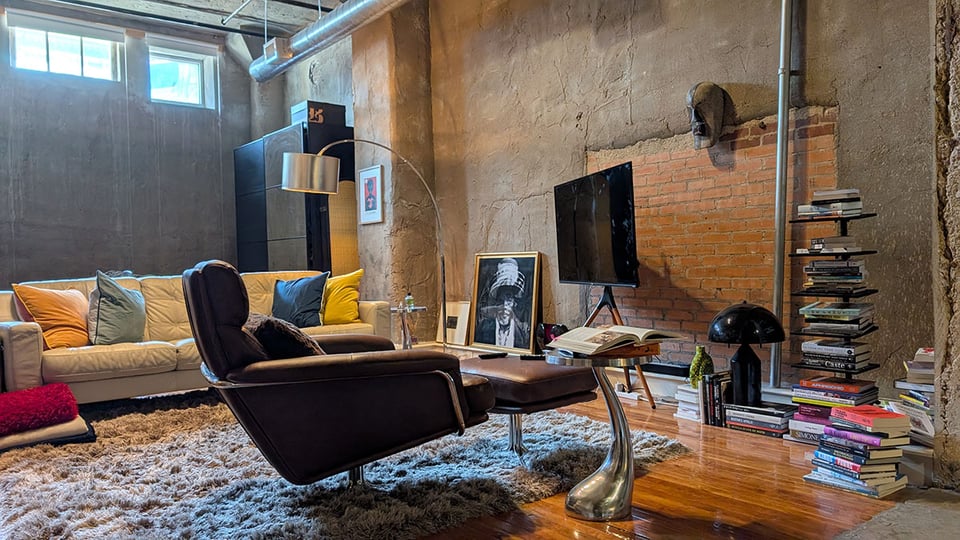
“I'm always eager about my seasons of evolution, but not in a way that mirrors external success-seeking or validation. I was always about: am I really comfortable with who I am? Everything is leading me back towards answering that question confidently. The work evolves with self-discovery. The source of the message becomes more concrete: my heart is always leading me into the unknown. I know my capacity is to mirror things that I want people to digest and understand.”
I move similarly. As I am starting a new chapter in my life, going back to the beginning, to who I actually am, not the work, was the most valuable thing I could do. Rediscovering that, and figuring out what I want to do with it: huge. Life changing. A big challenge and commitment to oneself. The good and the bad.
He continues: “My work with Juneteenth is about transformation: self-transformation and communal transformation through self-transformation. We have to have very clear ideas of who we are and courage to claim ownership of that self. Jung’s theory of 'individuation’, going in and facing that dark shadow and really coming through it, integrating that as part of who you are. Acknowledging the collective shadow, giving space to hold truth, that teaches us a lot about who we are going to become.”
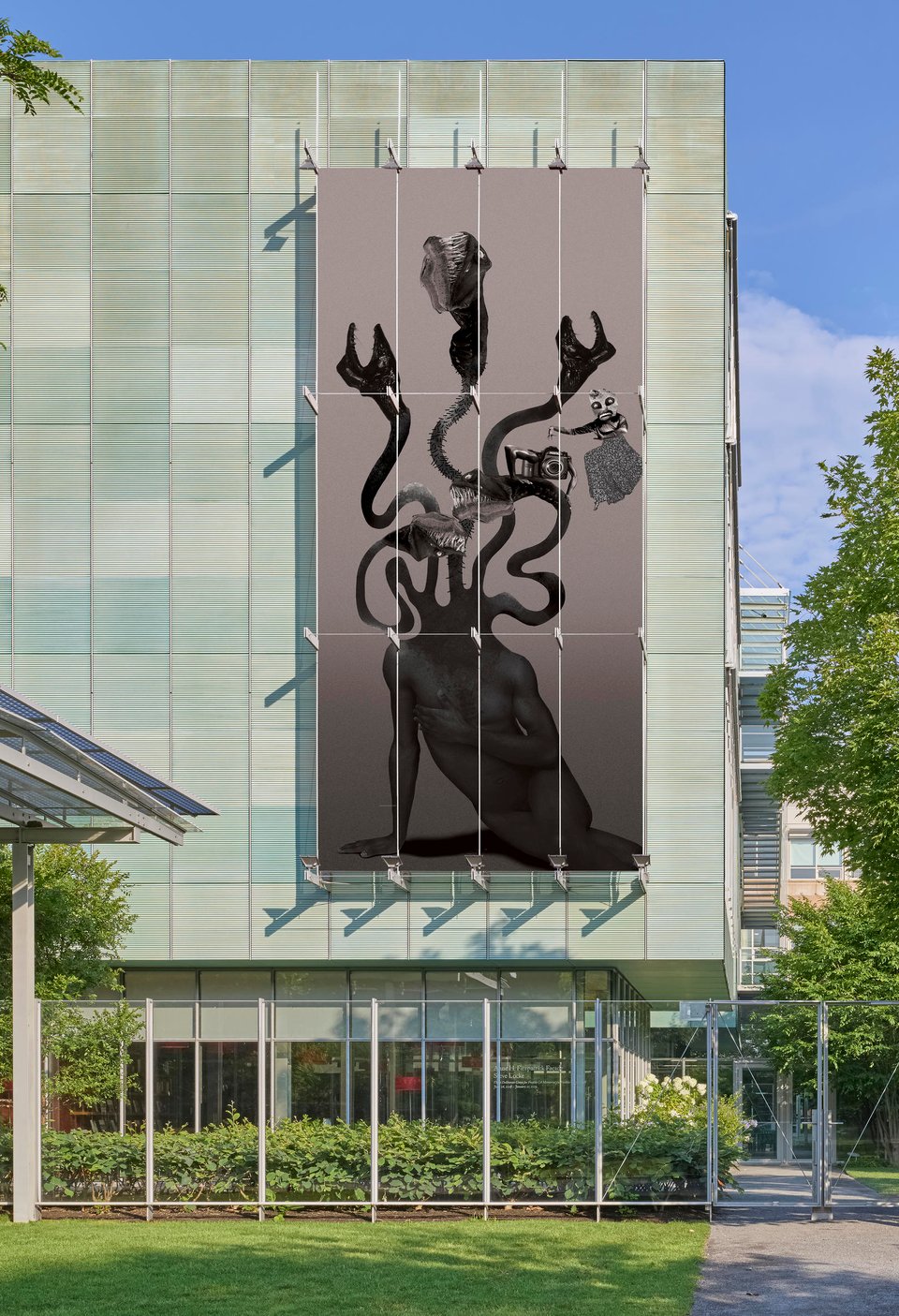
In 2024, the Isabella Stewart Gardner Museum commissioned Hakeem for a 45-foot vinyl facade work: Possession of a Recalcitrant Dream, a self-portrait in which his body is rendered in shadow, and a Hydra replaces his head; the creature that regenerates after harm. The monster reclaimed as protector.
He drew inspiration from trans writer Anne Tagonist’s essay Transexual! A Horror Movie from the 1990s zine who said, essentially, “I don't want my human rights. I want my in-human rights. You called me a monster, and I want to own that.” He wanted to make his own version of that: "The transformation between a monster and a human. I really kind of want to claim ownership of this ferocious person." And he did something fierce and tender, on the outside wall of a major American institution.
“Slowing down wasn’t a choice; it was a condition. In that stillness, something clarified. It took five years to find the language for what the work was trying to say through me.”
His latest exhibition, Seeing Further, is a different kind of bold. "There was no need to create anything new, I was guided by a simple philosophy: use what you have,” he says. "I have my family archives here already. This is the story. This is the origin of the work.” At its center: his great-grandmothers, both born in Texas in 1885 and 1910. His grandfather’s homestead, a freedmen town named Rhode Island, is a 65 acres plot of land that once held thirteen children, thriving agriculture, animals, and life. A vibrant world that now carries the quiet that disused things convey.
The exhibition includes those found agricultural objects, and tools salvaged from that Rhode Island, Texas and invasive vines from Summerfield, Texas, a freedmen town just miles outside of Gilmer.
"I wanted to find objects that carried the potential for renewed value. I had to trust the eyes of the unseen,” he says. "Looking for the miracles of what's around us. We're always surrounded by them."
The show is spare and deliberate. He’s committed to sharing this work in a way that can be experienced slowly, where the heaviness is supported, and the spectator can process along.
He reflects, “For some people, the meaning clicks with a sound. It clicks with a photo. It clicks with the log or the branches or the lighting. There are different pathways to invite people in.” For this approach, he created a soundtrack together with Houston based artist Corey De'Juan Sherrard Jr., built from field recordings of Texas wind in trees, old gospel hymns layered with frequency music designed to encourage relaxation and meditation in the nervous system.
Bass was the foundation of the sound, both Sherrard and Adewumi identify bass as a very deliberate Black sound.
“It has to be dark, because there's a heaviness to this work. There's emotional and physical weight in these objects and ideas that has to be acknowledged. And darkness encourages us to be quieter, more reserved, more focused on what’s happening. This is not something we should be in a place of lightly. There’s a lot of reverence and quiet required. A lot has happened to get us to this point.”
Become a member
You can read the rest of this article and have full access to the many more to come. Become a member to support independent work.
Hakeem Adewumi will be in conversation with curatorial advisor Rachel E. Winston on June 18 at the George Washington Carver Museum in Austin, TX. Details and RSVP.
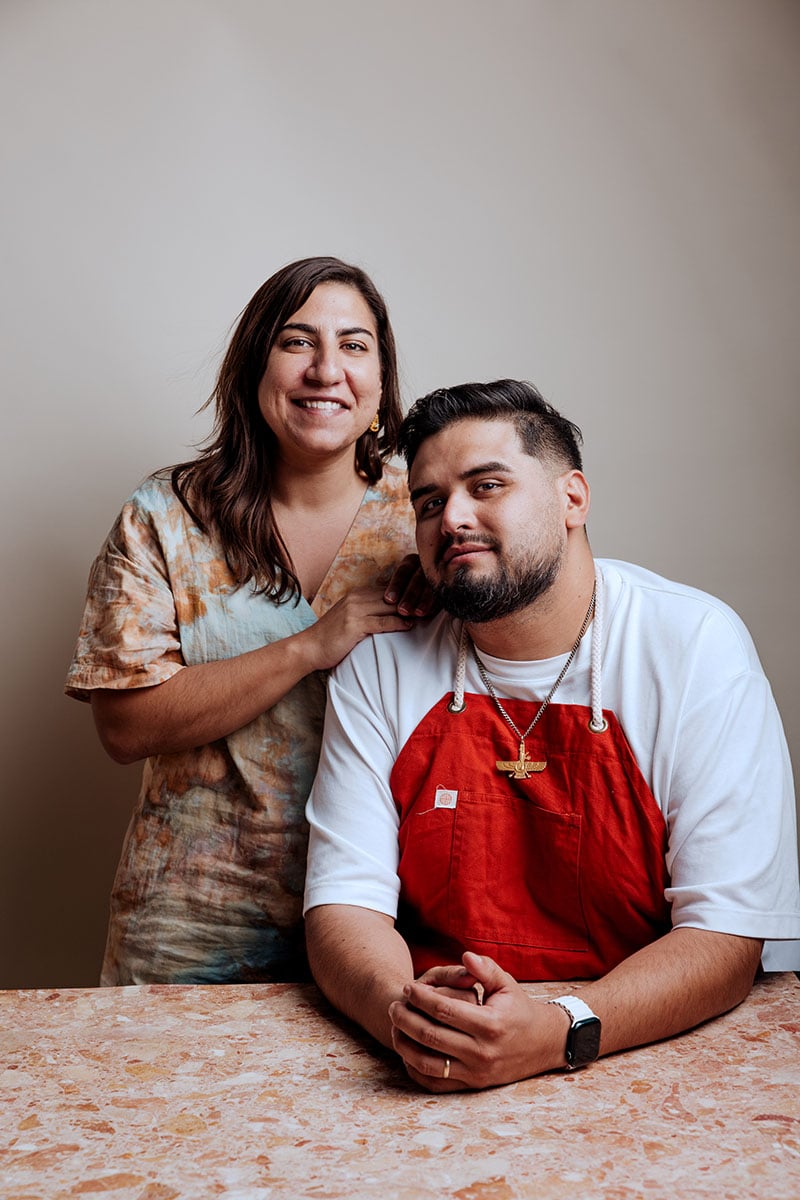
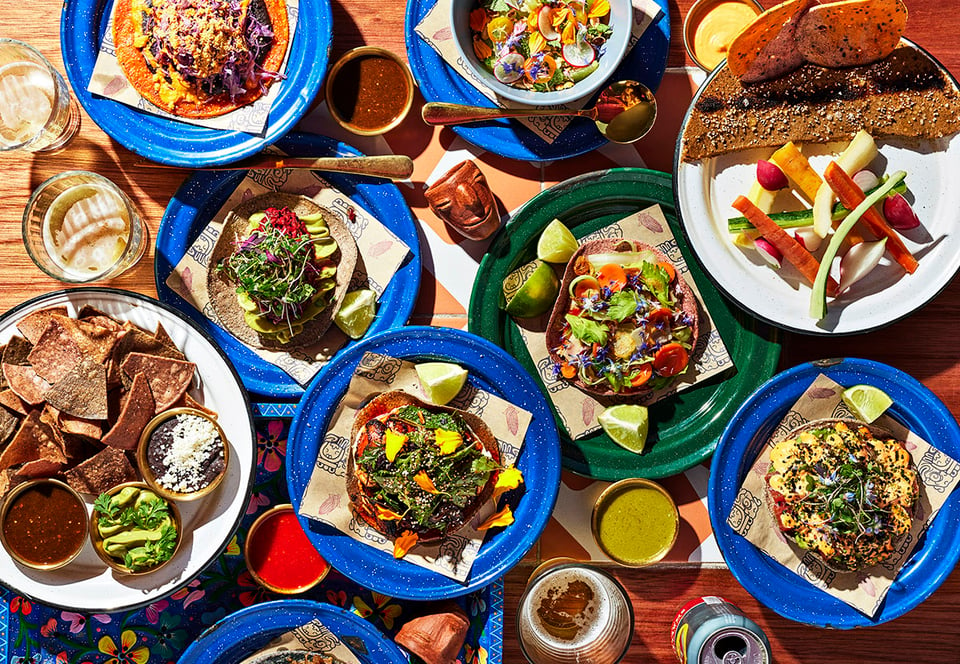
SUSTAINING: Seven years, same heart, a conversation with Sara Mardanbigi and Edgar Rico of Nixta Taqueria.
I met Sara and Edgar before any of it; before the lines around the block, before the James Beard recognition, before the cookbook, before the Aston Martin collaboration that made them both stop and ask, what the hell is this whole world? I watched it all happen closely enough to know what it actually means when I tell you this: they are the same people.
That is not a small thing. That is, in fact, the whole story.
Coming up on seven years, Nixta Taqueria has become one of those rare places that functions as both a restaurant and a proof of concept; proof that you can build something beloved without burning your people, that you can grow without losing the plot, that a taqueria in Austin, Texas, can hold the soul of Mexico City and the warmth of an Iranian household and somehow make perfect sense. What Sara and Edgar have built is an amalgam of two first-generation American stories, and that is only a portion of their individual and collective amazingness.
“The imposter syndrome doesn't leave. You just give it less of your time.”
When I ask Sara if anything fundamental has changed after all the years of recognition, awards, and a cookbook written at midnight after long shifts, she laughs. "Maybe a few extra gray hairs. But at the end of the day, I think Edgar and I have stayed true to ourselves. The imposter syndrome remains strong, even after 'proving' ourselves."
There is something quietly radical about a person who has earned recognition at every level of their industry and still leads with that kind of honesty. What changes, Sara says, is perspective; and perspective, in their case, was forged in something real. Nixta came close to closing. Not almost-maybe. Genuinely, frighteningly close.
"It's kind of like when you come close to death; you are just more appreciative of living."
The near-collapse didn't harden them. It clarified things. What mattered became obvious: the team, the community, the craft, the relationships. The rest was logistics. This is the part that gets me every time I talk to people who have built something real and almost lost it: the brush with failure doesn't make them cynical. It makes them more themselves.
Become a member
If this is resonating and you want to continue reading this interview, consider a founding membership and support independent work.
Nixta Taqueria is in Austin, Texas. Their cookbook, From Tacos to Tahdig, arrives October 6th. Pre-order available now. Follow them at @nixtaqueria.
Y YA.
Thank you for being here from the start. It matters more than you know.
Now I'd like to hear from you, even if it's just a line or two.
Reply to this email and tell me:
What’s one small thing you’re hoping to create, change, or call in right now?
I read every reply, and your answers may shape a future letter.
I am also deeply grateful for the humans who allowed me to share their work with y'all.
The newsletter, the consulting, and the speaking are one practice. If you want this kind of thinking for your brand or organization, request an intro call at georginatrevino.com
For speaking and programming inquiries: [email protected]
La versión en español llega pronto. 🖤
