
An Other July
Hi again, friends
You're receiving this letter on a Monday evening. Hoping it accompanies you back into routine after an eventful weekend, for those of us in the US and MX.
Thank you for giving such a warm reception to Yes, Please and Thank You. It has been beautiful to experience the openness and love coming in. Knowing y'all got to spend time with Hakeem, with Sara and Edgar at Nixta, and with Shea's cooking gives me so much life.
Coincidences, the universe, whatever neurological event happens when things fall into place, keep showing up every time I work on this newsletter. The alignment on this one is no different, and it continues to feel very specific to where I am right now.
This time, I want to share different views about what it takes for something: a plant, a practice, a person, to stop performing for the room and grow into its own shape. About how much of what we call thriving is really just finally honoring our authentic selves; being somewhere that doesn't ask you to be smaller, or louder, or someone else's version of right.
This issue is about that. A flower that's been called different names, none of them quite reflective of itself. A sandwich that refuses to pretend it's something it's not. A practice built by someone who never picked a single lane because the work needed all of it. And me, building what I actually need for the life I want to be living.
None of this is really about flowers, or sandwiches, or job titles. It's about environment. What grows when you're finally somewhere that lets you be.
Allons-y,
In this issue:
Not a Jazmín (2–3 min read)
P is not the vegetarian B (3–4 min read)
Not your typical academic (6–7 min read · 10–11 min with paid subscription)
Not a Jasmín
It's happening again. It just started this month. The Datura came in early (and yes, it is still going!), but my Dipladenia just showed up. I was scared it wouldn't show up; it gave me so many flowers last summer. I kept a close eye, hoping it wasn't an anomaly, and it came back.
There is something huge about learning that your home is still a good place for life to flourish, to be seen, to be admired. That it chose to come back here.
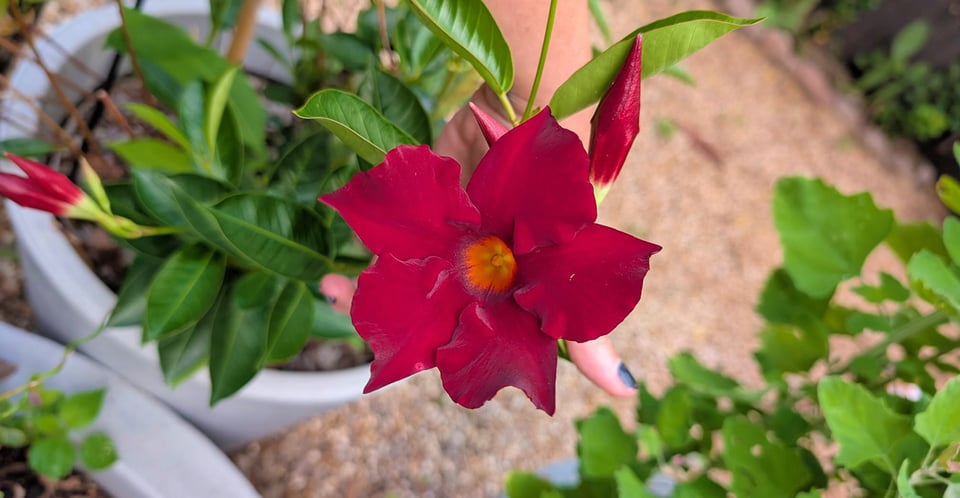
I bought it as "Rio Grande Red." It has nothing to do with the Rio Grande, it turns out. This cutie grows all over the Americas, and has had three names in its life, only one of them was ever earned. Scientists looked at it under glass and found two small glands at the base of the ovary, hidden from the outside, something you'd only discover if you looked closely enough. Paired like a secret held in both hands. They called it Dipladenia — from the Greek, diploos, double, aden, gland. What it actually was, on the inside.
Everyone else called it something it wasn't. At some point, a British diplomat passed through Buenos Aires, spotted it, sent it to Europe, and they named it after him. You know how that goes. Also, throughout Latin America, Jazmín Chileno. Jazmín de Brasil. Jazmín de Jujuy, depending on where you are. It isn't a jasmine at all, wrong genus entirely, but it climbs and releases a scent in the evening the way jasmine does, so across three countries, people gave it the name of a flower it only resembles. We've all been there, mistaken for the thing we resemble instead of who we are.
This flower is very present in the Andean foothill provinces of northern Argentina: Catamarca, Salta, Tucumán, and Córdoba. It grows wild up the mountainsides, and they call it jazmín de la sierra. Jasmine of the mountains. I grew up with my own Sierra. Monterrey sits in the lap of the Sierra Madre; most days, you cannot see the city without seeing the mountains first. I love when I can find the tiniest connections between myself and beautiful things; it reminds me we're all made of stars…
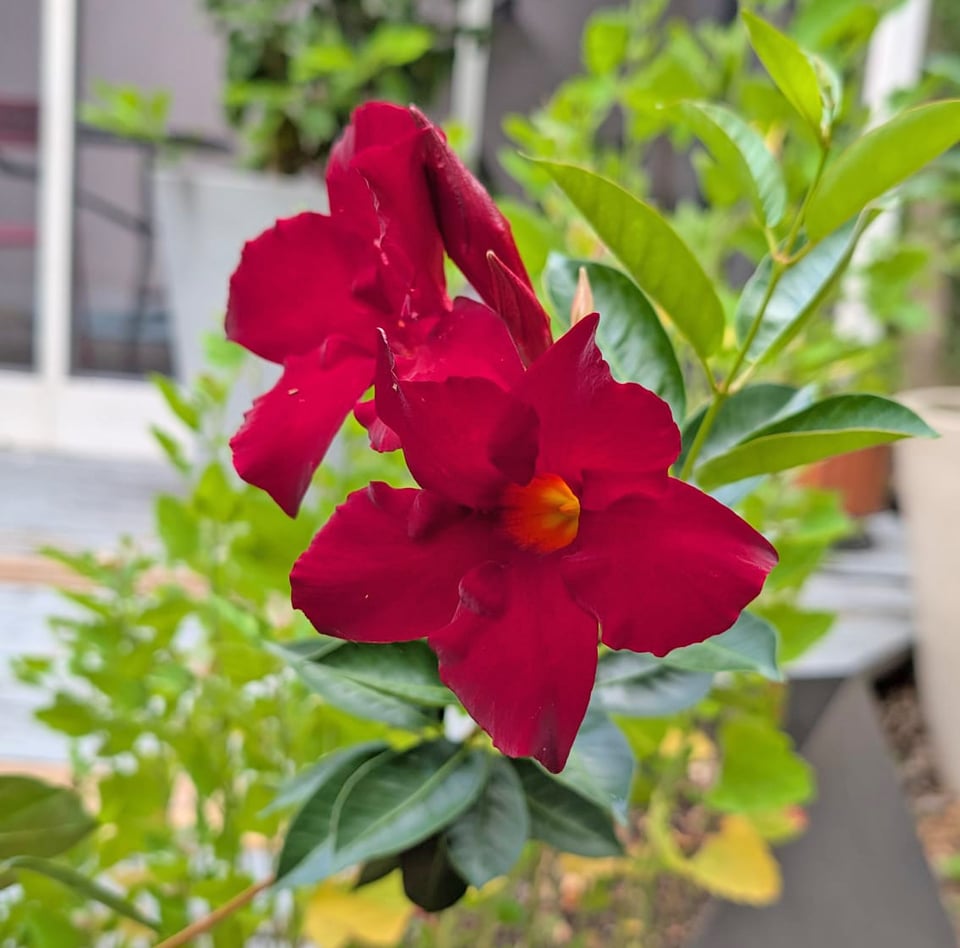
Even more impactful, it's the florist's meaning that stopped me. Across every Spanish source I could find, the same line, repeated like something people actually say to each other about it: la superación de problemas, la salida triunfante de una situación difícil. Overcoming. The triumphant exit from a hard situation. Not a metaphor invented for a flower; something people already believed, and then gave a flower to say it with.
This is what I mean by alignment: this newsletter and the people featured exist triumphantly against the everyday difficulties, the constant bad news, the heartbreak. I didn't pick this flower because of its meaning. I picked it because it was red, loud, and plentiful. I only learned what it meant afterward, and today, I take it as a sign.
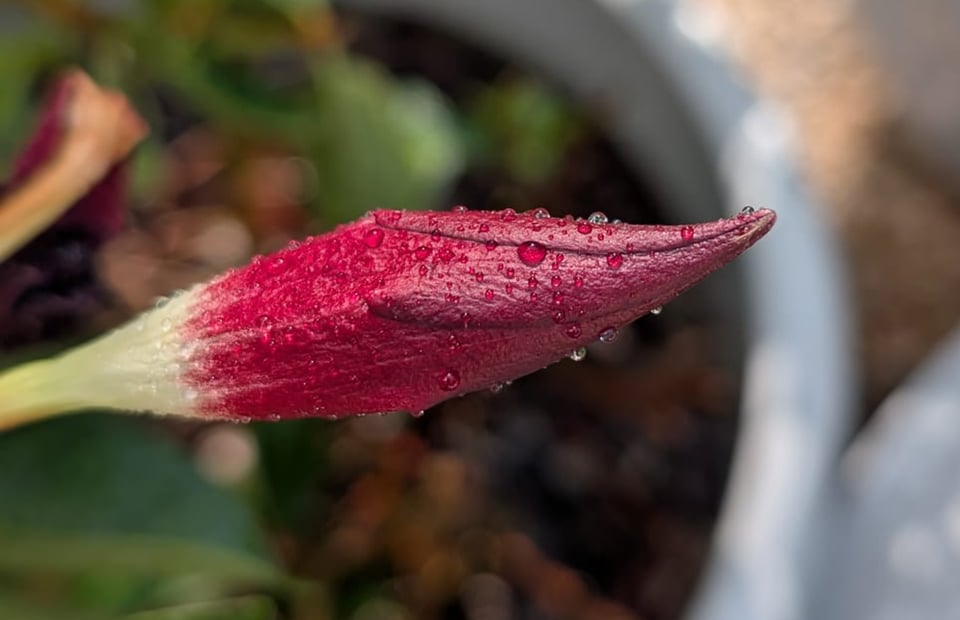
If you see it in the wild, get it! It is low maintenance, handles hot weather perfectly fine, and flowers so much, for so long. Also, the buds are beautiful, and there is a chance for a vine with flowers, but you can also keep it as a bush. So versatile, discerning, and strong.
I see you in it too.
I asked Shea to do more food for us, something delicious, summery, homey, and easy for us to replicate. He did that and added some characteristic extra-ness. I know it is worth it, and I know you’ll love it too.
PLT is not the vegetarian BLT
My parents are vegetarians. They raised me and my siblings on vegetarian cooking, but they didn’t insist on us being vegetarians. My grandmother, on the other hand, thought we might be undernourished and not grow to our full potential, so she fed us meat whenever possible. I like eating all the foods; I don’t think I could be a vegetarian, but I have a deep appreciation and fondness for vegetarian dishes, especially the ones my mother made us as kids. This is one of those meals she regularly made for us.
This sandwich is considered a vegetarian take on the classic bacon, lettuce, and tomato, or BLT. I do love a good BLT, but when it comes to sandwiches, I think this one, the PLT, is hard to beat. Fried provolone gives you a similar crispy crunch to bacon, but it is not trying to be bacon. I’m not really into vegetarian options that try their hardest to emulate a meat counterpart. I don’t think we need plant based products to look and taste as close as possible to a burger or chicken. The PLT is authentically its own thing, it is a delicious meatless alternative to a BLT that shares some qualities, but it has its own world of flavor and texture.
There is just something about a fried provolone sandwich; I would put it near the top of any “best sandwich list.” Maybe there is a tiny bit of childhood nostalgia swaying my thinking here, but I hope you give this recipe a try and see for yourself.
Provolone, Lettuce, and Tomato Sandwich
This recipe is for one sandwich, and it takes whatever time it takes to make.
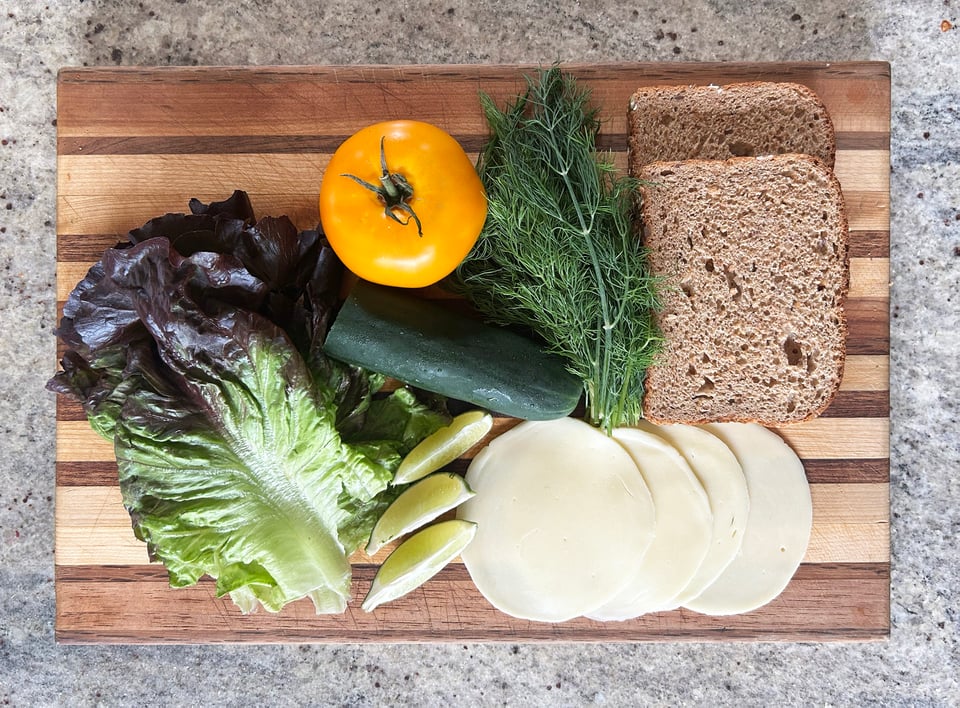
Ingredients
Provolone - 4 slices
Red Lettuce - a leaf or two
Yellow Tomato - 2 or 3 thick slices
Bread
Mayonnaise
Lime
Dill
Cucumber
Salt
Peppers
The Sandwich Crossroads
Before you start on your PLT journey, you should consider how you like your sandwiches. This recipe has a tangy dill and cucumber mayonnaise. I think it balances nicely with the sweetness of the yellow tomato. But there are some people in this world who sadly don’t like mayonnaise. Tzatziki would be a good replacement here; it’s very similar to what I make but with yogurt instead of mayonnaise. Or you could just go with mustard.
Directions
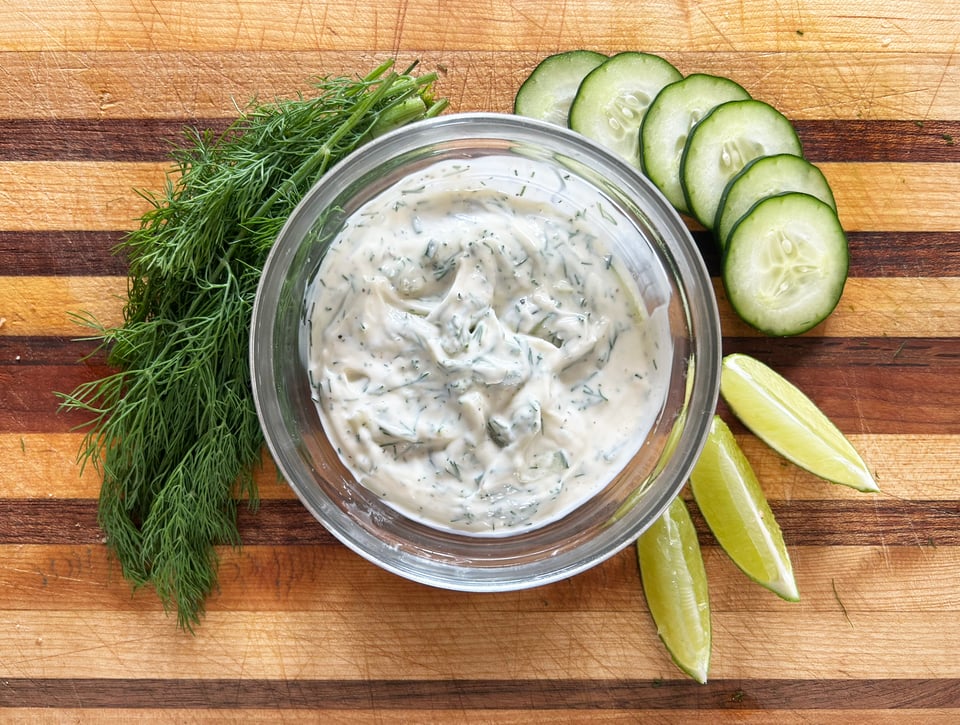
1. Coarsely chop the dill and finely chop the cucumber. Add them to a bowl with the mayonnaise, add lime juice and combine. The amounts here are really up to your taste. I used a spoonful of mayonnaise, 4 slices of cucumber, maybe a tablespoon of chopped dill, and a quarter of a lime. Taste this combination and see if it works; adjust as needed.
2. Prepare the lettuce and slice the tomato. Any lettuce will do, but full leaves work better than chopped lettuce. I like thick slices of tomato, and yellow tomatoes have sweet and fruity flavors that balance well with the tangy mayonnaise.
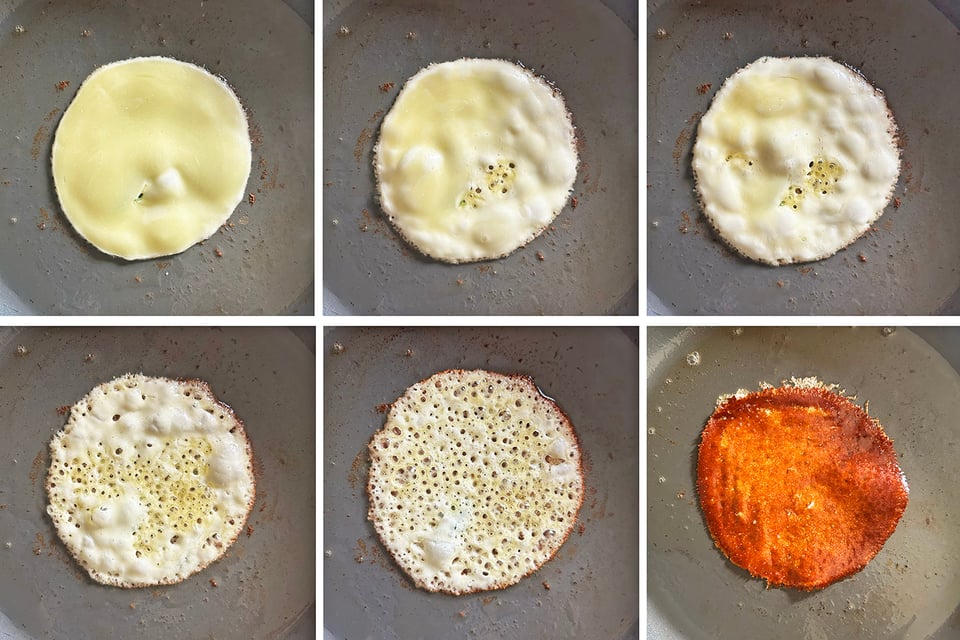
3. Fry the provolone. This is where the magic happens, and it isn’t always the easiest thing to do. I fry the provolone on medium heat and normally in a cast iron skillet (I made this sandwich while away from home so I used a nonstick skillet, which works well too). One piece at a time is best. Watch the edges of the cheese, and you’ll see it turn brown, and that’s the sign it’s getting close to flipping time. I use tongs and grab an edge and slowly pull the cheese up from the skillet; the provolone may stick or pull apart a little. If that’s the case, lay it back down and try another side. Releasing the provolone from the skillet in one piece and flipping it over without it breaking or folding onto itself is a bit of an art, but can be done easily with a little practice. Once flipped, it doesn’t need very long on the other side before it's done. Place the fried provolone on a paper towel and move on to the next piece.
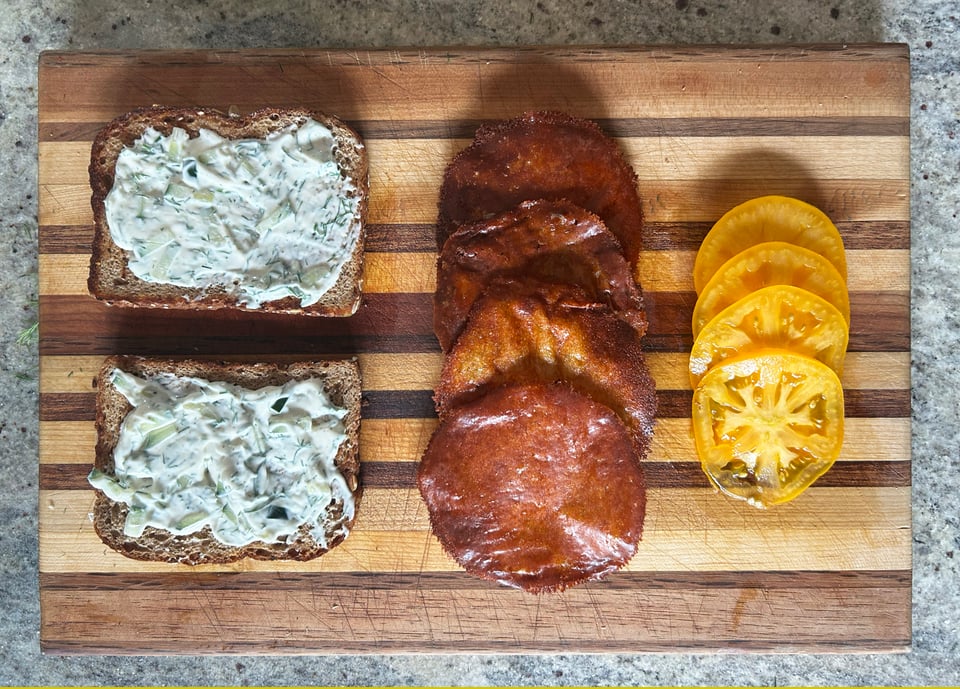
4. Assemble your sandwich. I like to toast the bread, and I put the mayonnaise concoction on both sides. After that, stack the rest of the ingredients in whatever order you like best. I think cutting your sandwich in half is a good idea. The provolone will be a little hard to cut cleanly, so use a serrated knife to saw through the fried cheese and get a clean cut. Enjoy!
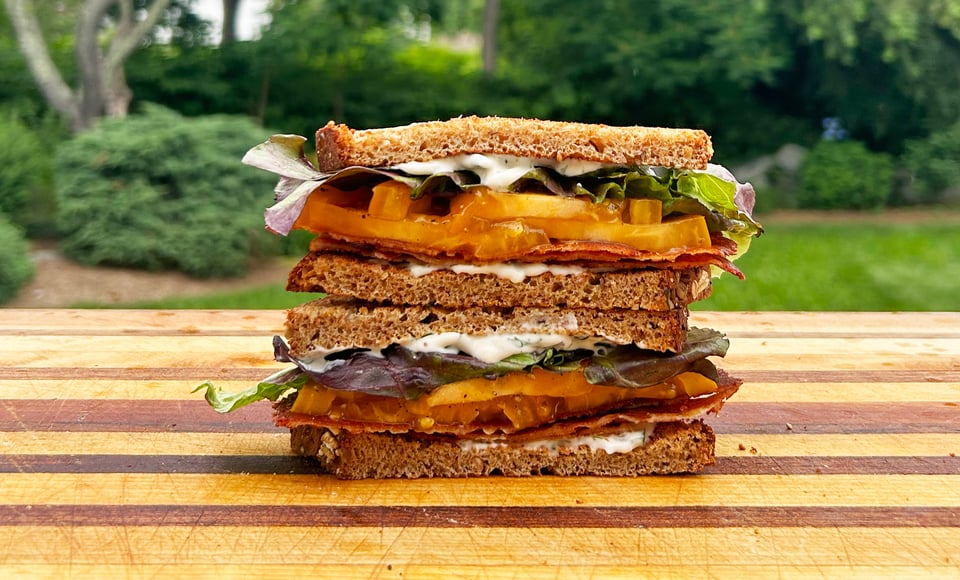
Now that you're probably drooling or have stopped to make yourself a sandwich, let's bring other senses into your day.
Not your typical academic
I'm not sure when I met Claudia E. Zapata; I think it was through artist Claudia G Aparicio Gamundi and Nepantla USA, her independent art space. The two of them, together with James Huizar, have the "Puro Chingón Collective." Anywho, I've been following Zapata sometimes closely, sometimes sporadically; every single time I hear of them, it is something great that fills me with joy and somehow feels like a collective win.
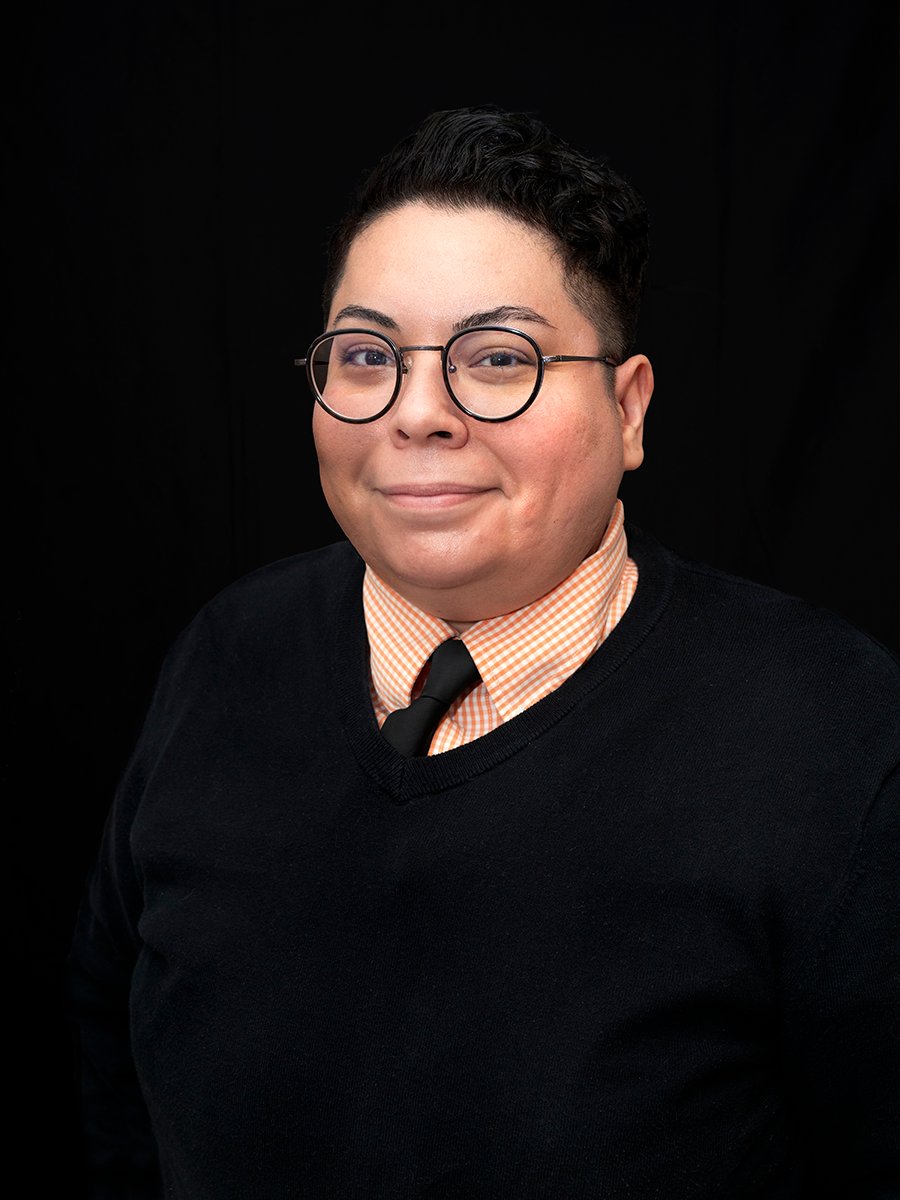
I've been lucky to be on panels with Claudia. (From here on, I'll refer to them as Claudia when writing, and I'll clarify whenever I'm speaking about Claudia G Aparicio Gamundi or Claudia Chapa, Claudia Zapata's partner and collaborator, who will make an appearance shortly. I know. Coincidences.) They have a way of speaking that is knowledgeable, funny, and quite honest. Which, yes, is the hope of panels and public conversations, but often being in art spaces with experts and institutions leads to flat, soulless, cookie-cutter conversations sprinkled with opinions. That's not what you can expect from anything Claudia is participating in. You'll get the plain truth, delivered with research, authority, and a presence that grabs your attention and you’re okay trusting. Especially for people like me, not only those who share our Latinidad, but anyone who rejoices in unveiling truths, who passionately loves underdog stories, who thrives on sharing discoveries, and who wants to make a difference in people's lives.
They are full of energy, ideas, and ganas to make their time fulfilling. They are the inaugural Associate Curator of Latino Art at the Blanton Museum in Austin, TX, which comes with responsibilities you can imagine: education, publications, a lot of public speaking. In tandem, they were appointed to inventory, research, and catalogue the Gilberto Cárdenas and Dolores Garcia Collection (7,000+ works received by the Blanton). This is huge for an individual, but the fact that they're doing this for a historically underrepresented tradition like Chicanx art and for an institution like the Blanton and the University of Texas seems to carry generations of voices, screams really, of people wanting to be seen, to prove their worth, and to leave a mark.
That weight didn't show up in our conversation. Their spirit was generous, soft, and full of love for the people and for the labor, too. We'll discuss their work as an artist, advocate, musician, and creator of multimedia pieces, immersive environments, and soon, film.
Grab your coffee and take notes; this is the kind of conversation that makes you want to clear your afternoon and start something.
G: You hold the institutional and the punk rock at the same time. How do you do that without losing either one?
C: Graduate school made it very clear. I grew up in a single-parent household. There was an awareness of economic disparities. In undergrad, you're trying to figure yourself out, and then going to graduate school, there can be a similarity among students.
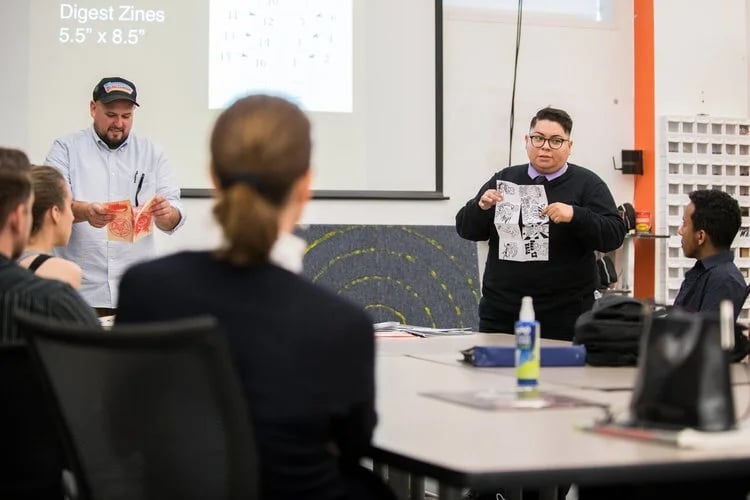
Their master's was in Mesoamerican art: Mayanist, glyphs, royal court iconography. An internship at Mexic-Arte redirected them toward Chicanx art. The PhD became non-negotiable.
C: If you have a master's and want to do museums, you're going to hit a wall. All the jobs were: MA required, PhD preferred. I will always have to stick out because I don't have the usual biography. So there's no point trying to replicate it. That's where you can really lean in: I'm completely different.
And once the cultural studies competency kicked in:
C: You start to see what's blended into someone's evaluation of your work, whether it's misogynistic, classist, whatever. And once that clicked, I was like: if they're saying it's not X, Y, or Z, that's probably good. Because that standard only exists to exclude poor people, people with disabilities, queer people.
The punk didn't leave. It just learned the room.
G: Was it always together, artist and curator?
C: No. That one happened at Mexic-Arte. A lot of people assume you must have been an artist and then became a curator. For me, it was the reverse. As a child, you do drawings, in high school art and stuff like that, but studio work, for real? No, I did not do that. It wasn't until I was working at Mexic-Arte and started doing the zines that I started working collectively that I was like, "Okay, I'm an artist now."
Aside from the award-winning zines, they made toys, threw events like interactive cinema, and happenings where “the party was the art, la fiesta as artwork”.
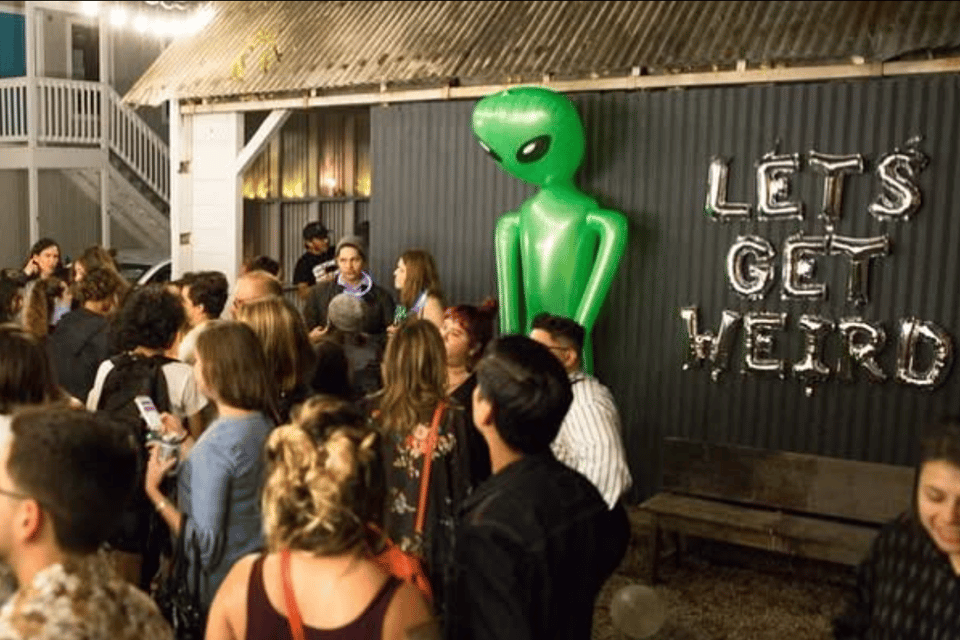
C: We wanted to make spaces that we didn't see. Queer spaces, BIPOC art spaces, because the art world was very white. Or the Latino part of it was very straight. It was always something that was not quite it. So our events became that thing we wanted to see. The audience members were now part of it, part of change, even when they didn't see it like that.
That instinct, making what doesn't exist for people who need to see themselves in it, didn't stay in the collective. It scaled.
The recently premiered Memorias Project is the work that everything else points toward. A civic, archival, multimodal piece about the history of Mexican Americans on Austin's East Side. Three movements, roughly forty minutes. Claudia composed the cello and opera, plus they worked with Claudia G Aparicio Gamundi on music choices regarding her pre-recorded selections; the lyrics were written entirely in Spanish.
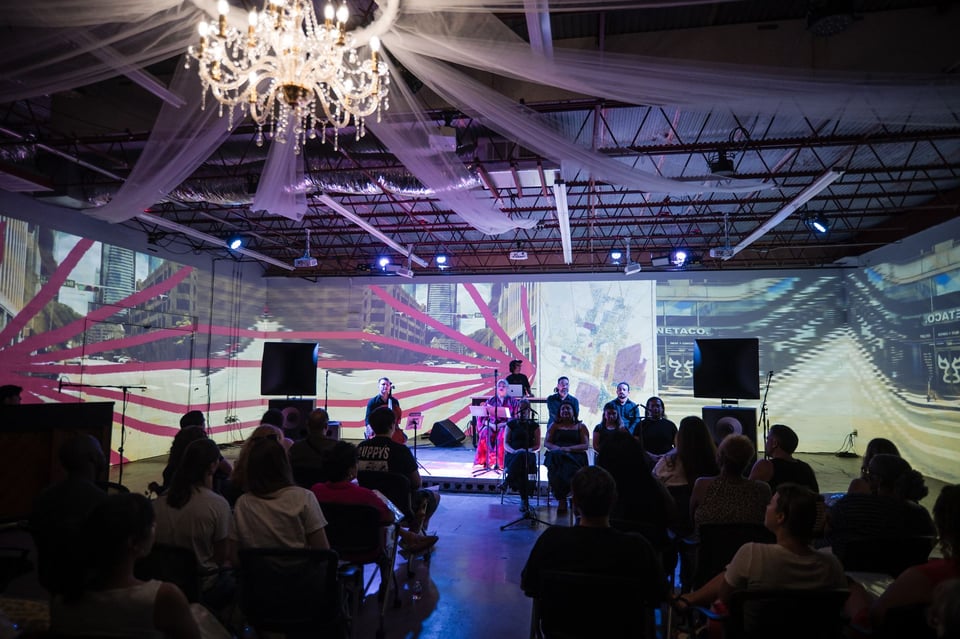
The first movement: displacement, longing, the distance of having to move across a city that was once yours. The second: community built on the East Side, memories made. The third: resistance.
C: The 1928 City Plan, I've read it many times. It's so egregious, so intentional. The city moved certain utilities and services to the East Side: get out of here, because now this is worth money. They kicked out the Black community, and that also affected the Mexican community. And in Texas history, as it's taught, Mexicans are always kind of like, oh yeah, they were there too. Like Phoebe in Friends. I remember in a U.S. history class asking, "What about the Mexicans?" And someone said, "Ah, they were there." I was like, you can't really brush that off. Especially in Texas.
The concept was clear; all they had to do was compose the music and write the lyrics, something they had never done before.
C: I looked up the range for each instrument, put Post-its on my MIDI keyboard, and then: go.
Here are your parameters: sad, happy, angry. Make something.
When classical musicians would ask, "What key is this in?" I was like: Here are the notes. Play those notes with this feeling.
The cello movement, about nostalgia and melancholia, Claudia played for their partner, Claudia Chapa, one of the singers in the project. She started crying.
C: And I was like, whoa. I did that. With a set of tones.
After the performance, a survey respondent wrote: "I've never heard a Spanish opera scene."
But Claudia knows what it carries. Spanish wasn't considered academic enough for PhD language requirements for PhD programs in Art History until recently; they know of people who completed research on the Caribbean who were required to test in German rather than Spanish. That comment has all those legacies of linguistic oppression slowly starting to break. That's why fusing all these elements matters.
There is a version of the curatorial job that is head-down, credential-forward, institution-first. Claudia is not that version.
C: If elderly communities made their way out to the museum, entertain them. Are they lonely? You're often dealing with a loneliness epidemic among older people. Maybe this is the only time they've gone out today. Maybe they haven't talked to many people. My asking, "What do you think?" may be the best thing that happens to them all day. There's a health aspect to it.
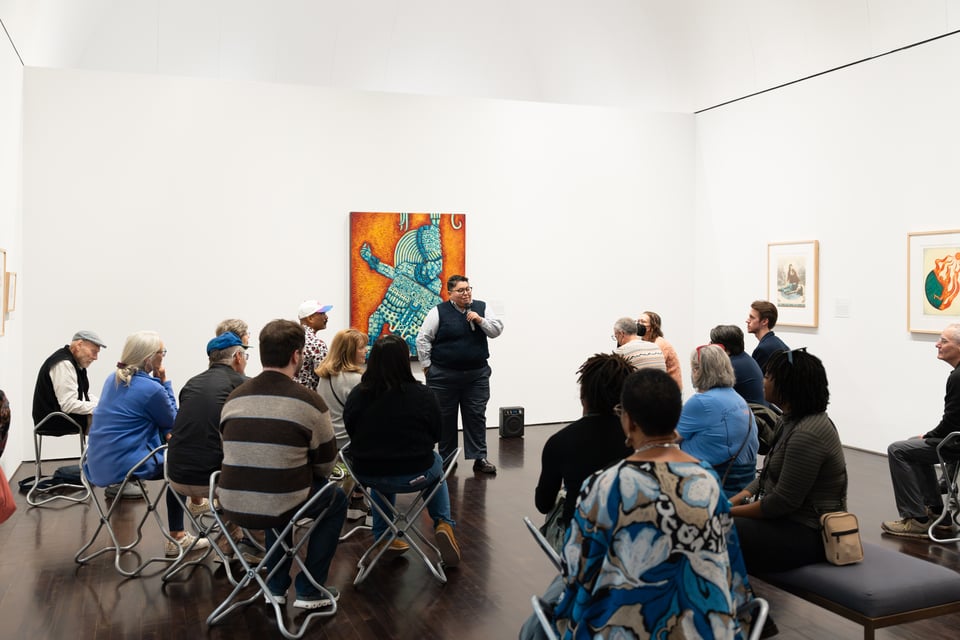
When there's a range of people in front of them, Claudia reads it. If they sense someone in the room has spent their whole life not seeing themselves reflected in a gallery, they'll lean into that.
How are they showing someone the most beautiful part of themselves? The artwork is what makes that possible. The artists aren't in the room, but Claudia is their proxy. Every talk is a version of the same question: how do I bring your beauty into this conversation?
This is where it gets more personal. To keep reading about Claudia’s plans, both professional and personal
Upgrade now
Two hours went fast; I laughed a lot, and I left that conversation genuinely inspired and already curious about what they'll make possible next. The word intentionality keeps coming up, but it feels too small for what I actually perceived. They commit. They embrace. They don't perform being anything other than exactly what they are, and then they move forward with conviction.
When people ask for advice, they offer directness, no sugarcoating, no vagueness; lived experience shared with generosity. It feels like they want us to be prepared to take the baton and keep running, to carry forward the visibility and progress of this culture without losing ground.
I asked about burnout and what it's like carrying such a visible job. What came through: knowing your value and moving accordingly is what sustains you. Being different, or feeling like an alien, can be lonely; Claudia knows that. But it can also mean you're creating from imagination and openness instead of just continuing what already exists.
Follow them on social media, seriously (probably one of the funniest accounts I follow). And if you can catch them live at a talk or panel, do it. It's a privilege.
🖤
I loved reading your replies to my last newsletter. It would be lovely to stay in touch!
This time, would you share your ideal environment? I want to know and spread the word if you’re ok with it.
This issue is about things that thrive when they're finally in the right environment, called by the right name, and allowed to be exactly what they are.
If your practice, brand, or institution is ready to find its right environment, book an intro call at georginatrevino.com
For speaking and programming inquiries: [email protected]
