Your mouse is pulling you sideways.
2026-10-05
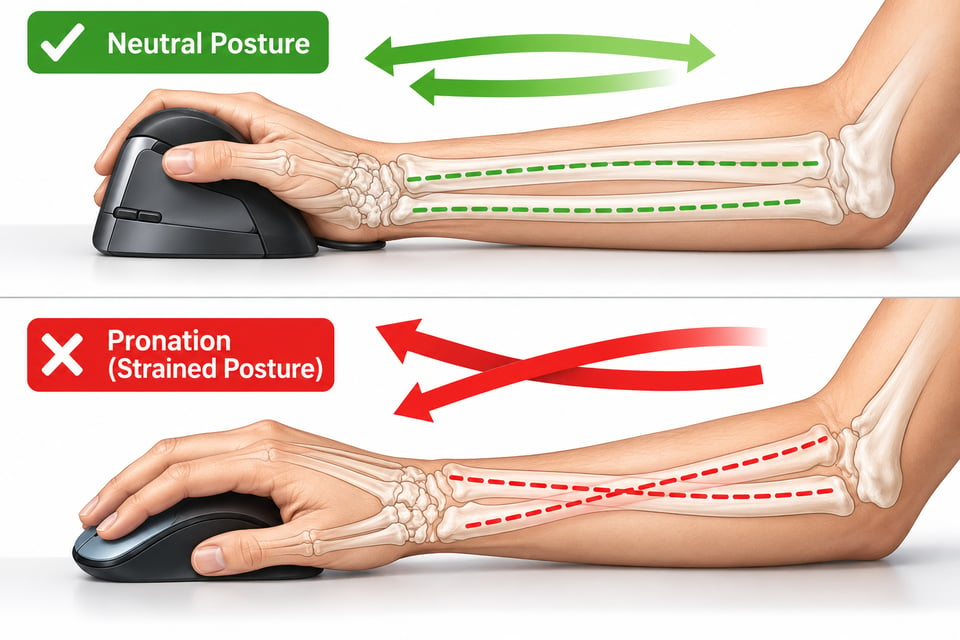
There's a pattern I commonly notice in practice with people who work at a desk.
If you're right-handed, a traditional mouse may encourage your right shoulder to rotate inward while your elbow drifts farther from your body. As you keep reaching for and moving the mouse throughout the day, you may also start leaning to the right or subtly rotating your torso.
None of these movements are a problem by themselves. The problem is repeating the same position for hours every day.
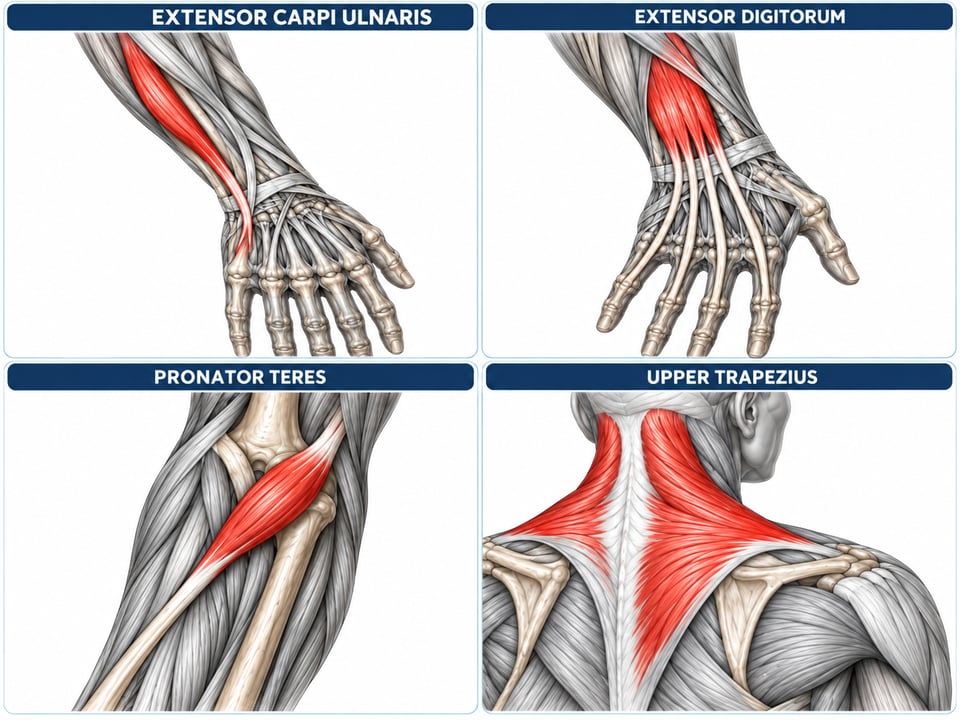
Over time, that workstation habit may contribute to tension around the:
• Forearm and wrist
• Right shoulder
• Lower neck and upper trapezius
• Upper back and shoulder blade area
The effect on forearm and shoulder muscle activity in using different slanted computer mice, Han-Ming Chen, Chun-Tong Leung, https://www.sciencedirect.com/science/article/abs/pii/S0268003307000101
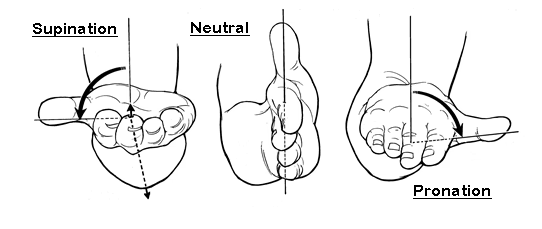
Part of the reason is hand position. Most traditional mice keep your palm facing down for long periods. An ergonomic or vertical mouse places the hand and forearm in a more neutral, slightly rotated position. Research suggests this setup may reduce unnecessary muscle activity in the forearm, shoulder, and upper trapezius.
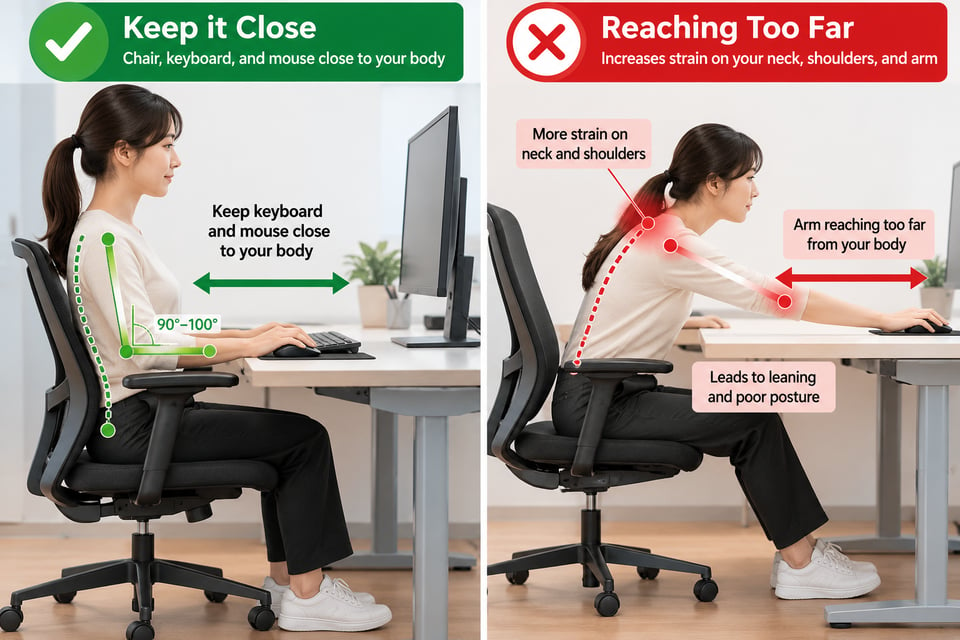
Placement matters too. Keep the mouse close enough that your elbow stays comfortably near your torso. Sit tall without forcing yourself rigid, keep both feet supported, and avoid reaching forward or sideways every time you use the mouse.
A small change repeated for several hours a day can make a meaningful difference. Try it for two weeks and notice how your shoulder, arm, and upper back feel.
Don't miss what's next. Subscribe to WH.:


