
WiderListen.ing Weekly — 6 November 2026
Set works or wider listening?
Most arguments about set works assume every GCSE works the same way. It does not.
On AQA, 68 of the 96 marks on the listening paper are for unfamiliar music; the other 28 are for study pieces. Eduqas names two set works, Badinerie and Africa, and its own comparison guide puts unfamiliar listening at three quarters of the exam. OCR's specification summary ties the listening paper to four areas of study and names no set works. Pearson Edexcel goes the other way: eight set works across four areas of study, with wider listening offered as suggested repertoire. Same qualification. Four different ideas on what listening is for.
So start with the arithmetic. On AQA and Eduqas, a student who knows the named pieces inside out still spends most of the paper hearing music for the first time. Even Pearson, with the longest list, sells its wider listening as preparation for appraising music students have not studied.
Now the case for set works, because it is a good one. A set work gives a class a shared text they can return to for months, score in hand. Depth cannot be built by skimming, and Ofsted is clear that breadth alone does not do the job: its 2023 music report notes that leaders sometimes assumed hearing a wide range of music would develop discrimination by itself. It does not. Exposure is not teaching.
The narrowing is real, though, and it is not about how many pieces are on the list. Ofsted found that in most schools "the exam specification had become the key stage 4 curriculum". Teachers pointed out features, pupils annotated scores, and little attention went on how to find those features unaided. Many pupils could recall facts about the music. Far fewer could recognise the devices by ear. A student told where the syncopation falls in one song has learned one fact about one song.
Set works and wider listening are not rivals. The set work is where you teach the concept. Wider listening is where you find out whether it transferred. Without set works, wider listening has no anchor. Without wider listening, a set work is a memory test. Without a question attached, either one is background music.
I see WiderListen.ing as one tool for the second half of that. It does not fix the problem on its own. A bank of examples is only exposure until you ask something of it. Personally, I take a study piece for a half-term or a mini series of 1-3 lessons (even if that study piece is not a set work), then balance this out with lots of wider listening to those key ideas in other pieces of music.
Probably the quickest win I have in my own classroom is to introduce the idea in a set work as the anchor, then show them 5 more examples of the same thing in different contexts to drive the point home.
Read more
Track of the Week
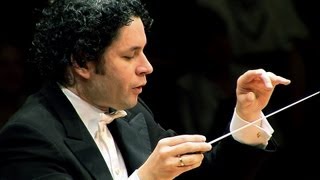
Also sprach Zarathustra by Richard Strauss — featuring Drone, Timpani, Tutti, Disjunct
New in the database this week
- Take Me Out by Franz Ferdinand — featuring Presto, Simple Quadruple (4/4), Ritardando, Minor
- Also sprach Zarathustra by Richard Strauss — featuring Drone, Timpani, Tutti, Disjunct
- Kinderszenen, Op.15 by Robert Schumann — featuring Chordal, Rubato, Ornamentation, Perfect cadence, Piano
- Schindler's List (Main Theme) by John Williams — featuring Vibrato, Harp, Disjunct, Adagio, Rubato, Legato
Enjoying this? Forward it to a colleague who teaches music.