
WiderListen.ing Weekly — 30 October 2026
Music for nobody
In April 2023, YouTube Music family-plan subscribers streamed Taylor Swift’s entire catalogue 9.3 million times. In the same month, on the same kind of accounts, a man from North Carolina was streamed 80.9 million times. You have never heard of him. Nobody had. That was the point.
Michael Smith was sentenced on 6 October to 18 months in a US federal prison and ordered to forfeit just over $8 million. Between 2017 and 2024 he uploaded hundreds of thousands of AI-generated songs to Spotify, Apple Music, Amazon Music and YouTube Music, then ran up to 10,000 bot accounts to play them on repeat. Software wrote the music. Software listened to it. The royalties were real. His plan, in a 2018 email quoted by prosecutors: “we need a TON of content with small amounts of Streams.” Spread the plays thinly enough and no single track looks suspicious. US prosecutors called it the first criminal case of its kind. In America, that holds, but a Danish court had already jailed a man for bot-streaming in March 2024.
The money is the part worth teaching. Streaming services don’t pay per play out of their own pocket. They pool subscription and advertising income, then split that pot by each track’s share of total streams. A bot pressing play doesn’t make the pot any bigger. It just splits it more ways. Every fake stream of Smith’s catalogue took a fraction of a penny from someone real: a songwriter, a session player, the band your Year 10s saw last summer.
Smith isn’t an outlier. He was early. In July, Deezer reported that fully AI-generated tracks now make up more than half of its daily uploads, around 90,000 a day, up from 10% in January 2025. Yet those tracks account for between 1% and 3% of what people play. The music is being made faster than anyone can listen to it, and the gap between those two numbers is exactly the space a fraudster works in.
For KS4 and Music Tech students, this story does something a worksheet can’t. It makes copyright, royalties and ownership feel like money changing hands, because it was. It also asks a question every music department should put to a class at least once: what is music for?
For teachers, here's a class discussion idea: “In 2023, a set of AI-generated songs was streamed 80.9 million times in one month, and computer programs did all the listening. No human heard them. Is it still music? Give one reason for and one against.” For older groups, particularly those doing music business modules in BTEC qualifications or similar, a follow-up: “Who lost money, and how?”
Track of the Week
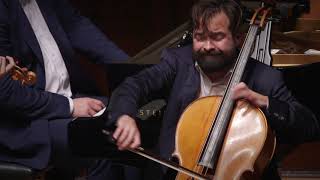
Trio No 1 in D Minor, Op.49, Mvt 1 by F. Mendelssohn — featuring Trio, Crescendo, Imitation
New in the database this week
- Appalachian Spring by Aaron Copland — featuring Homophonic, Clarinet, Simple Quadruple (4/4), Conjunct, Disjunct, Syncopation
- drivers license by Olivia Rodrigo — featuring Pedal, Ascending, Simple Quadruple (4/4), Verse
Enjoying this? Forward it to a colleague who teaches music.