Vietnam v. Antarctica
I think we all have a war that we think of when we think of war. A war which has imprinted on us its own magnitude. For many outside of the united states, and many inside it—their war is the one they lived through.
By right of age and generation, really my war should be the forever war in the Middle East. Many of my first memories of are Bush era nationalism and of the raw umber desert of Afghanistan and Iraq—as seen through news cameras.
The war in Vietnam ended 22 years before I was born. I remember it not through news reels but through the films and the writings of those who lived it. But it is undeniably my war. It is the war that taught me what war is, and it was the war that taught me the after effects of conflict on the body are not limited to soldiers.
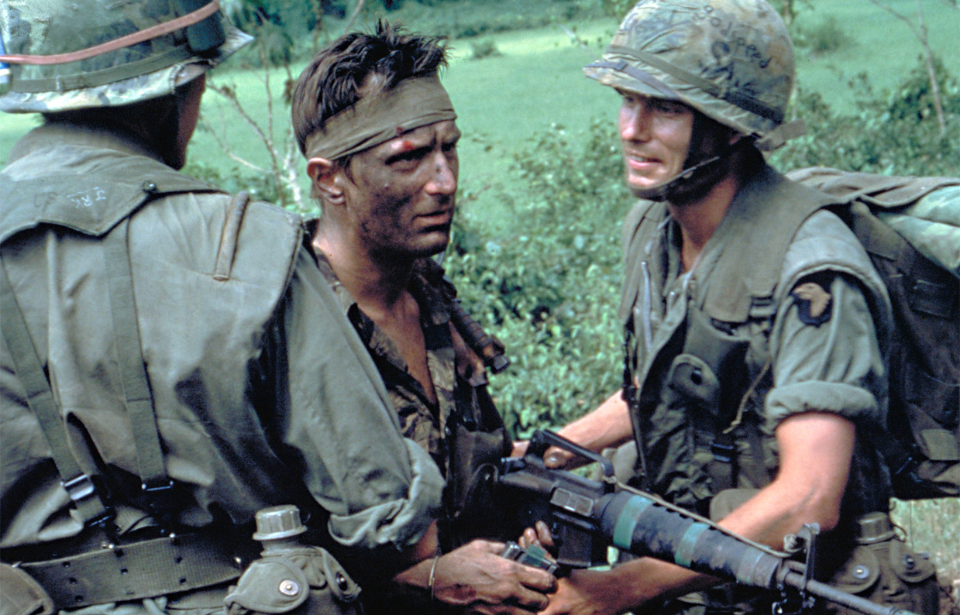
The first time I saw the Deer Hunter I cried, not simply for the misery of the film but also for my own misery. It did not picture my memories but it moved like my memories. Long scenes full of disjointed action, scenes of collective madness at home and abroad, and in that jungle one terrible thing after another without explanation, without meaning.
And Michael, played by Robert De Nero, stands alone among all of it. He is not okay. He was not okay when the movie opened and all those canyons which separate him from his friends only gape wider and wider. He goes to Vietnam and discovers, in unspoken horror, that he was made to survive it and others were not. That is a bitter misery I know all too well.
I have a place I go called Vietnam. It is a state of being, not a place or a conflict. Yet, it is as hot and humid as the jungle. It characterized by fits of rage, and great sobbing monsoons where my tears make up for all the dryest seasons of my heart.
In my Vietnam one discovers the hundred thousand tiny cruelties the body is heir to. Injustice and horror loom large. When I’m in Vietnam my living room grows full of trees and between those trees the horrors of my memory emerge. The past and present tangle like roots.
The war was senseless. This state of being is senseless. In my Vietnam there is no why. In my Vietnam there is no reason. In my Vietnam there is no narrative, only overwhelming experience.
These last two weeks I have been somewhere else. I have been home and not been home. I do not know where my days have gone. I am reminded of Gibson’s idea of “soul delay” and the image he returns to of ones soul, lagging behind, reeled back in ever so slowly by the thinnest thread.
I have asked my self again and again, “is this Vietnam?” And resoundingly the answer has come back no. This is not Vietnam. I would know Vietnam from the way my body feels as I crawl through the jungle of my living room. I would know Vietnam by the fire and water which war in me when I am there.
So the question must be asked. If this is not Vietnam what is this state? And I think I have found an answer. This is my Antarctic Station.
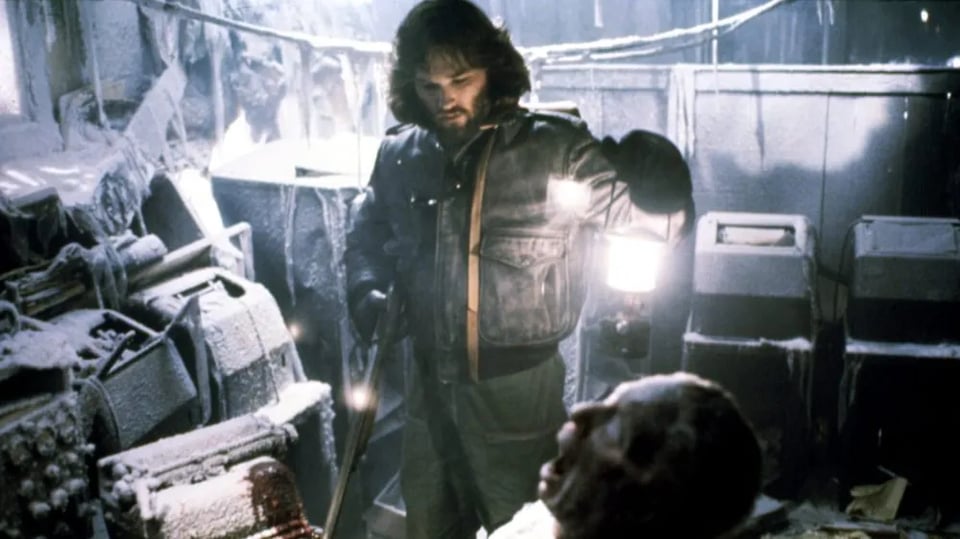
John Carpenter’s The Thing is a very different movie than The Deer Hunter—stylistically, generically, methodologically, emotionally. Not to mention that the latter is a film of sweat and heat in which its hero faces trial by water, and the former a film of ice and snow in which its hero faces trial by fire.
Yet, the emotional notes that stick with me are very similar. MacReady, like Michael, is a man put in a situation beyond what should be asked of anyone and finds that he can face the horror. Both are veterans of the Vietnam war. Michael is more stained by love than Macready who has retreated into his shack and into a bottle.
Yet, the look of self calculation on Michael’s face as he raises his rifle to sight the deer is no different than the look on MacReady’s face as he holds his torn sweater and swigs from his bottle. And it takes the same remarkable humanity to navigate the Fall of Saigon to save a friend that it does to share a bottle of J&B Scotch whisky with a man who might or might not have been transformed into something horrible.
I am no stranger to ice. When I was young and angrier than I am now, I learned to pull a sheet of ice between me and the world. I would imagine my true feelings hidden deep beneath a glacier—rock that had not seen the sun in generations. I imagined I held inside me a world as icy as Europa.
But the last few years have been all Vietnam. So it is strange to ask where I see myself and find my answer in The Thing and not The Deer Hunter.
I was surprised, upon rewatch, to find the mechanics of the titular Thing revealed almost immediately. Trained on modern “deception” films I expected the stations residents to remain oblivious to their invasion. They do not. The scream. They break. They curse at god. They try, in turn successfully and in vain, to kill themselves as they transform and, failing that, they ask their fellow man to do it for them.
There are no more answers in the Arctic than there are in Vietnam. The thing transforms, eats, seeks further infection without reason. It defies all logic, even that of biological Imperative. The cold hearted hunter can predict its movements, but not more than that.
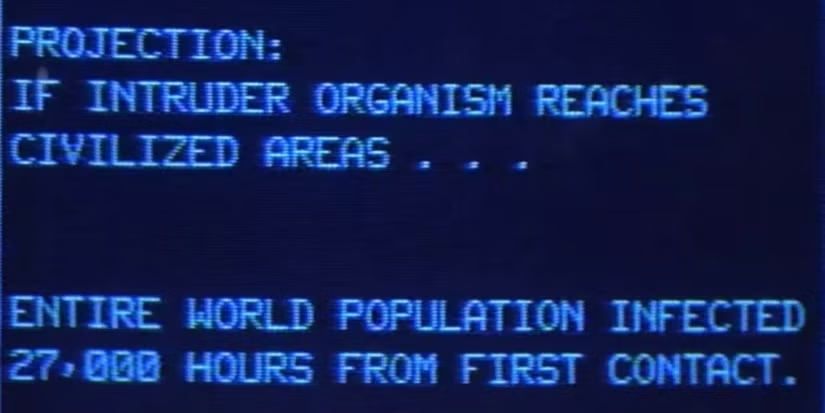
In my Antarctic Station, the mechanisms of failure are illuminated in unforgiving light. I can see how each cruelty the body is heir too links into the next. I see them not in their hundred thousands but in their billions, multiplied across the population of the globe. I can see them, but in the cold I can barely feel them.
Here I am beset by the monsters of the moment, rather than those which emerge from memory. I see the eyes of peers empty of cruelty even as they magnify the pain of others. I find I cannot understand them, even in the light of biological imperative. They are as alien to me as the Thing is to earth.
In Antarctica, I fear losing my ability to see others as people, even as I clutch my bottle waiting for the lone survivor to fine me so we can share it. There is little anger here, few tears, only gleaming necessity.
I have wondered if what I am experiencing is dissociation. But I do not feel dissociated. My body is very present. I feel each pang of hunger or twinge of pain keenly—in Vietnam my body often becomes secondary. I can tell the story of my days. But they blend together when faced with an unchanging landscape. I want to move onward, outward, away, but in a white out one direction becomes much like any other.
In my Antarctic Station, it is only the emotion that is gone. There is no anger, only frustration and that with out much depth. There are no tears. They have all frozen. Boredom predominates, but fun is fleeting and thought itself moves sluggishly.
In the Antarctic, I begin to long for the jungle. I wonder if, in the dark of that endless night, MacReady longs for it too.
More Soon,
Weaver
← Previous | Next →
-
Maybe you're dissociating in the same way that a dissociation exists between Michael and his peers in the first hour of The Deer Hunter, and something in what sets him apart is what keeps him alive. The alien aspect of being a human being.
-
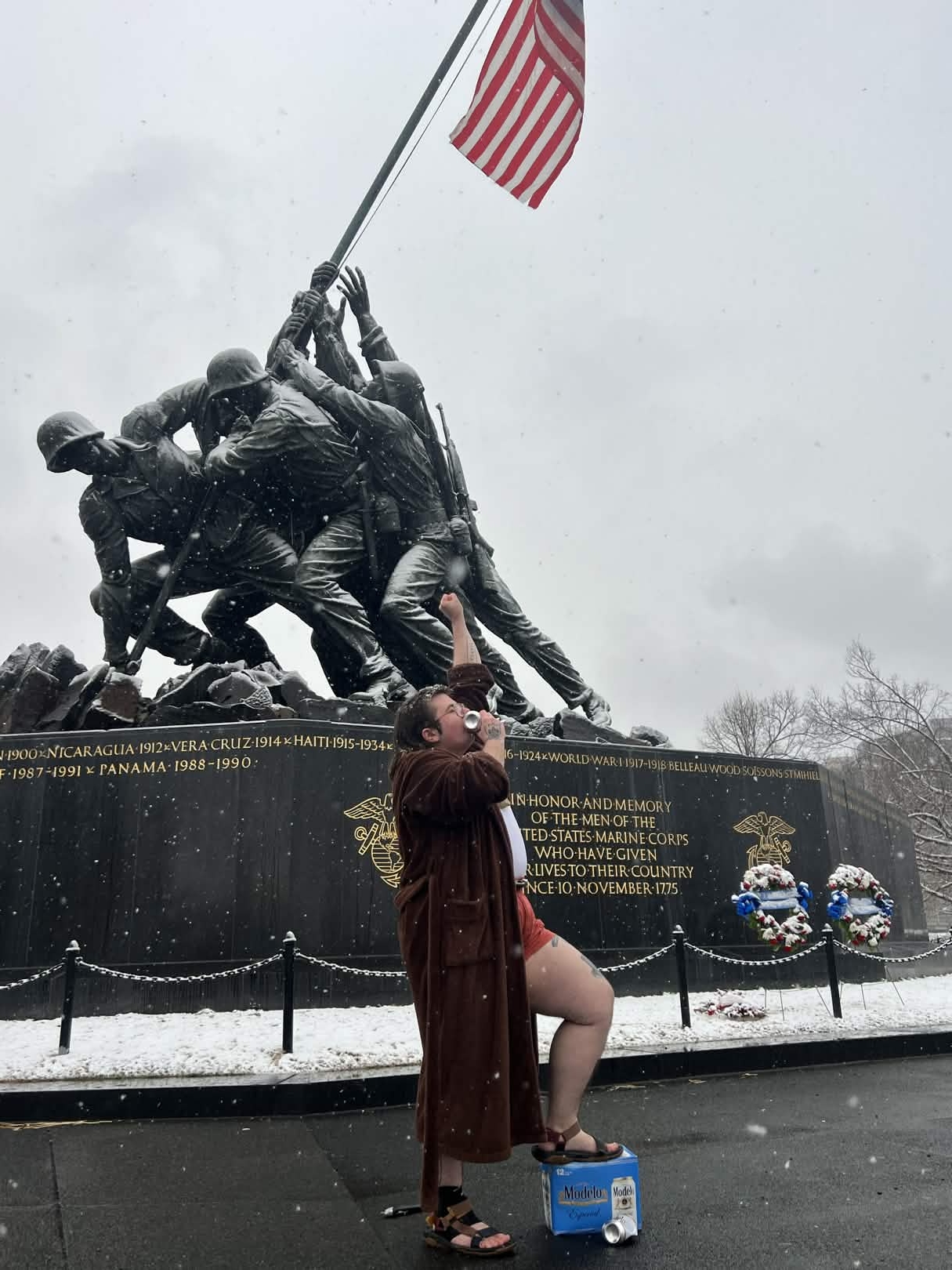
Your diagnosis is probably correct.
-
in one, too much life with too many hidden rules. in the other, precious little contact, and all of that contact wrought with distrust and tension and domestic irritation. both change at the drop of a dime; both force learning regardless of whether the student survives. hostile landscapes for the interior of a person. hard to film out there then, and in here now. but worth it to try. the coastline cannot be mapped only simplified but at least it's something to sail by.
Add a comment: