
Sensei Notes #11 - Three.js r185, game-ready AI models, and a question for you
Hey!
This week: Three.js r185 is out and I picked my 3 favorite features, Tripo P1 might be the best way to get game-ready assets out of AI right now, and I have a question for you about what I should film next.
🚀 Three.js r185: my 3 picks
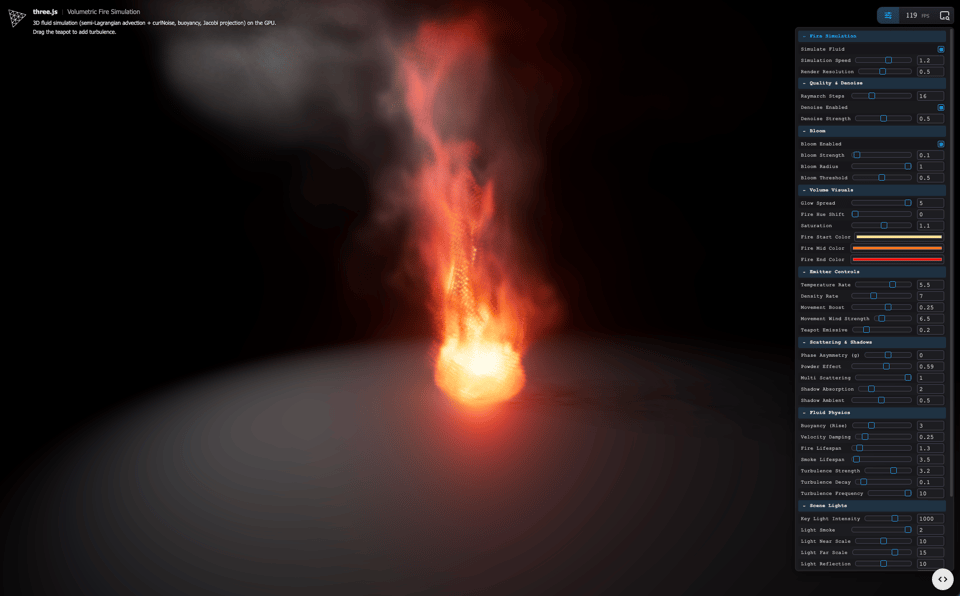
r185 just landed. The changelog is long as usual, so here are the three things that caught my eye:
- WebXR on WebGPU: WebGPURenderer now supports WebXR, with a fallback path when needed. That was one of the last excuses to stay on the WebGL renderer if you build for headsets.
- Volumetric fire: a new example built on the VolumetricLightingModel. If you ever wanted fire, smoke, or god rays without writing a raymarcher yourself, this is the reference to steal from.
- A nanite-style rasterizer: yes, nanite, in the browser. A compute-based rasterizer that can chew through way more geometry than the classic pipeline. Unreal folks have been bragging about this for years, now we get to play too.
PS: I haven't tried the nanite one yet, but it's on my todo list for Pascal 👀
There's also a good amount of perf work in this release (frustum computations, UBO updates, faster matrix determinant), so upgrading might give you a few free FPS.
🎮 Tripo P1: AI models you can actually ship

If you've generated 3D models with AI before, you know the drill: a cool looking blob with 300k triangles and soup topology that melts your frame budget the second it enters the scene.
Tripo P1 takes a different route. It's a native 3D diffusion model trained directly on polygon meshes, instead of lifting 2D images into 3D and cleaning up the mess afterwards. You control the face budget (anywhere from 48 to 20k faces), the topology comes out clean, and you get a textured GLB at the end. Load it with useGLTF and you're done. No retopology, no decimation pass, no Blender detour.
For Three.js and R3F projects, that's what separates a fun demo asset from an asset you can actually ship: stylized props, characters, whole environment kits, all real-time friendly.
To be clear: this is not sponsored in any way. It's just the result of my own research into what's good right now.
You can play with it on the official Tripo website, and if you're building a product around 3D generation, it's also available as an API on Fal.
🎥 A question for you
I'm back to writing for YouTube, and I have a confession: I don't open VS Code anymore. The only place I still read code is in PRs. My Three.js knowledge has never been more useful, but I use it to guide and review the work, not to type it myself. So recording pure coding tutorials would feel dishonest, it's just not how I build anymore.
Which leaves me with two directions, and I'd rather ask you than guess:
- I address your pain points. What breaks when you build Three.js / R3F projects with AI? Outdated Three.js code, shaders that never compile, scenes that look nothing like what you asked for, performance mysteries... I make videos that unblock you.
- I build and share. Building became easy, it's now mostly a matter of taste and workflow. So I simply build real projects and walk you through my process, decisions included.
Which one would you rather watch? Hit reply and tell me, I read everything.
Happy (vibe?) coding 🧑💻
Wawa


