23. consent is a foundation for society
and foundations require disciplines
cw: i’m going to talk about consent, and the lack there of, at both a societal and individual level (including sexual consent and the lack thereof)
hey y’all,
happy new year! i love the new year so much, and i feel renewed mentally, spiritually, and emotionally. i’m taking bets for how long that lasts, but i’m seizing it while i can. oh, what do you think of the new logo? i’m into it, i think it’s less busy and more “me”. i’m excited to get some business cards printed for AWP!
i actually can’t comprehend that it’s 2026. i don’t think that’s a real year. thankfully a “5” is easy to turn into a “6”, so my journal isn’t a total scribblefest. i closed out the year sipping on homemade mulled wine, and it was utterly divine. i used a cabernet and a spiced whiskey instead of brandy.
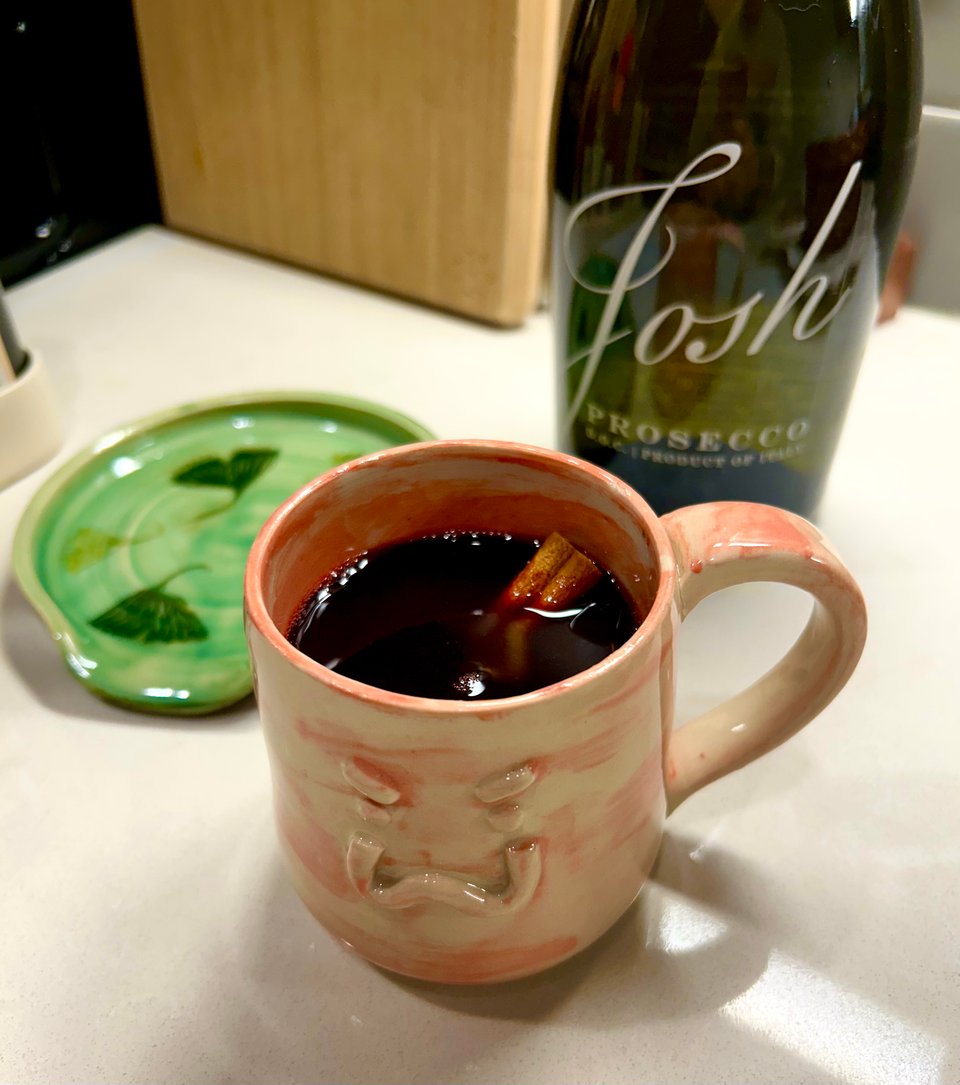
the last time i had mulled wine was at a market stall in old krakow while studying genocide in europe. i was living in the netherlands, but spent a week in poland either on-site at Auschwitz, or in political archives in krakow. so much of what i learned there still matters, and there are tons of small (and large) tactics that authoritarian regimes deploy to seize power. today, i want to talk specifically about our relationship to consent as a concept, and what it means about societal control.
this is on my mind right now because i’m working with a K-12 client who is struggling to engage with parents and guardians about their sexual health curriculum. parents want more, but they also want to approve every aspect of the curriculum to ensure it meets their standard of approval. it needs to prepare their children for the future, but it can’t do anything to condone sexual behaviors. it needs to build a healthy relationship with their bodies, but it shouldn’t let them think they have control over their choices. what has been notably absent in the parent feedback is the agency and autonomy of their children.
a somewhat entry-level analysis of this is white supremacy = patriarchy = rape culture. my undergraduate research analyzed the relationship between identity, political beliefs, and personal sentiments around rape and rape culture. not surprisingly, those who identified as white, cis, straight, and conservative had negative opinions of rape victims, blaming them for their own assault with a statistically significant correlation between identity and sentiment.
you can read it here, but be gentle, it’s undergrad. (and don’t tell anyone my deadname, okay?)
this was my very first independent research project where i collected and analyzed my own data. it is likely the catalyst for my career in sexual health and sexual advocacy, which i had until 2021 when i pivoted to more macro-level political and systems change. since my departure from the sexual liberation movement, i have developed a discomfort with talking about sex in public. there are calls for literal bounties on my head, so i feel extra-cautious about what i speak out about. this is by design.
one of project 2025’s goals is to return society to that of puritanical secrecy regarding our sexualities. gen z, we know, is less interested and more critical of sexuality, not as an identity but as a practice. social media has created a hyper-surveilled world where we live in fear of being outed and canceled, which has created an online culture of policing. as regular individuals, we cannot be caught doing anything remotely close to scandalous. only the powers-that-be have that luxury (diddy, epstein, trump, etc.)
if we think about consent as a concept on its own, we do not actually value or practice consent in our culture here in the U.S. when a celebrity’s privacy is constantly invaded, for example, there is a resounding chorus of people saying they deserve it for being famous. you can’t expect privacy if you’re famous, right? it comes with the job, right? on a more individual level, go into any comment section on any reel or tiktok, and it’s flooded with people raging at each other and the poster. the simple act of posting is taken as consent to receive unsolicited opinions from the masses. being in public is implicit consent to being filmed. it’s an endless cycle of bracing for impact at any potential misstep.
zooming out even further, every terms of service relies on you not reading it and signing your rights away. then, in court, all they have to say is you signed your name on the dotted line. remember when a man almost couldn’t sue disney because of the terms of service on his disney+ subscription? disney walked it back due to public pressure, but is it possible they always planned to? they would rather be in trouble for something at the micro level than be held accountable for the ways in which they are contributing to fall of our democracy.
we started to see this conversation escalate around generative AI usage and copyright a few years ago, with one of the largest pillars of the resistance campaign being that generative AI violates artist consent. the historic writers/actors strike was held up on this very unified principle: we did not consent to this new world order. the results of that strike were largely disappointing, and did little to stop the AI takeover of our media.
now, there’s an AI actress in hollywood, every post on linkedin is AI manufactured as well as is every comment. i do a lot of hiring in my 9-5 and every cover letter i read is AI slop. every instagram reel is some midjourney nightmare. i did not consent to living in an online world full of slop. i also did not consent to all my music, movies, video games and TV being on lease as long as i cough up $10/month for each new platform.
further, i absolutely did not consent to my likeness being used without restrictions for AI-generated pornography, which is why i deleted all of my X accounts last year. the irony epidemic i’ve written about previously has fueled these digital violations. when victims ask for the abuse to end, online users generate even more images to continue to antagonize the victim. their edge-lord leader, musk, goads them and approves of the behavior in the replies. do they deserve it because they posted it online? is it it still “not that deep?”
i’m guessing you didn’t consent to living like this either, but we’ve all agreed to the terms of service at some point. here’s my thesis statement: consent requires collaboration. collaboration requires mutual respect. mutual respect requires trust. trust requires agency. if you do not have equal power in a dynamic, you cannot in good faith consent. this is not a cut and dry issue, because power is fluid.
if we were to take a horizontal approach to power, no woman could ever consent to sex with any man, and we know that’s not true. but what we do know is that it’s more difficult for a woman to have agency over her sexual choices than it is for a man in our culture.
this is why intersectionality matters, because it can get hazy really quick if you’re trying to do one-to-one power math at an individual level. in this example man/woman dynamic, who has a higher income? who has higher education? who has generational wealth? who has a disability? who is white? who is cis? who is straight? societal power is not static, and our movements have been treating it like it is for so long that we have completely lost our way.
the sociological definition of power is the ability to exact one’s will regardless of the protestations of others. you can think about this at a macro-level with governments, or at a micro-level with your toxic coworker who seems to always get their way no matter how often they fuck up. power is achieved and accumulated through authority, which must be cultivated.
there are 3 types of authority that sociological theorist max weber explores, which legitimize systems of power in a society:
traditional authority - power is distributed based on long-standing beliefs, customs, and traditions. (e.g. the pope and kings and queens).
rational-legal authority - power is distributed based on a set of established rules legitimized by institutions. this is those pesky concepts like “rule of law” and “democracy.”
charismatic authority - power is distributed to an individual who has captivated a large audience with either their character or personality. these used to be few and far between, with examples like MLK and hitler often taught in sociology 101.
we should all know by now that the rule of law is puppetry, and that rational-legal authority does not actually protect vulnerable people. the united states can veto international indictments with a single vote at the UN. laws, as we currently use them, largely exist to protect the power and assets of the very wealthy and if you have enough money you can simply circumvent them entirely. we know rational-legal authority is a catalyst for systemic violence all over the world.
the catholic church is a great example of traditional authority. the church’s desire for total religious control resulted in the fracturing and democratization of all of europe, and was the inciting incident for the invasion of what is now the united states. the fact that the catholic church is still one of the most powerful religious institutions in the world following a global child sex exposé demonstrates just how strong traditional authority can be.
in our modern, globalized, digital-first culture, charismatic authority is now the law of the land. the mass accessibility of the microphone has enabled just about anyone to become a person of authority. everyone is trying their best to utilize the cult of personality for their own benefit, even if that benefit is in service to a higher purpose. we cannot actually be liberated if we are focusing so heavily on the self, and gaining power in this way requires constant ego-attention.
trump’s asinine truth social and X presence are not the unhinged ramblings of a senile old man. they are a highly curated and tactical approach to charismatic authority in order to maintain his standing with his base. it doesn’t matter what you think. it doesn’t matter what the world thinks. all that matters is that enough people like him that they won’t get in the way.
this is also why charismatic leaders don’t often last very long. we churn and burn through celebrity after celebrity the moment they violate the unspoken terms of our worship of them, but every now and then one of those celebrities finds their way into real power. trump is one of them, but he isn’t the first. i truly believe to break this cycle, we must demand agency for ourselves and each other regardless of how we individually feel about each other.
the ruling class does not respect or trust you, and they know if they were forced to collaborate with you they would not be able to extract from you endlessly. we have an enormous consent problem globally. there is not one government on earth that is designed with the will of the people at its core. billionaires extract and destroy all over the world, no matter how democratic the nation is that they’re pillaging. they do not have to follow the rules, because they believe no one can stop them.
this is why silence = violence. you don’t have to overthrow the government today, but can you practice adding “i’m not okay with that” to your regular vernacular? can you take up a little more space and name your boundaries and expectations in your friendships? can you practice beginning with questions, not assumptions?
i practice microconsent every single day with everyone. i take the time to ask “can i get by you real quick?” when someone blocks the aisle at the grocery store, i don’t just squeeze past them. when either me or my husband can’t decide on dinner, we ritually ask each other “do you have a preference or do you want me to just decide?”
we’re able to do this because we trust each other implicitly to 1. give an honest answer, and 2. be satisfied with the outcome. while this degree of trust is (and should be) earned, i extend and expect mutual respect out into the world, despite being repeatedly disappointed. no matter how badly i’d like to become a full-blown misanthrope, i want to believe in us. history and data don’t lie: we have more autonomy than we ever have in human history.
i know it doesn’t feel like it, but the fact that i’m writing this at all instead of being lobotomized in a sanitarium is living proof. with more autonomy comes better consent practices. what’s happening now is an extinction boom from a dying class of colonial war lords descended from the most violent psychopathic families in world history. their reign will end, but we’ll still be here. so i’m asking you: what would it take for us to have a society based on consent?
xoxo,
kuya von
i showed you my gooey center, please respond 👉👈
(you can reply directly to this email)
if you liked this, you’ll love vonreyes.com
eat local, buy small press, support your local library, and don’t call the police <3