Weird That it Happened Twice: On Gay French Werewolves
A double review of The Wolf and his King and Red Winter.


Occasionally I find myself reading a series of unrelated books that fall into an unplanned pattern: similar topics, similar themes. At the beginning of the year I read multiple historical fiction novels set during the Tudor period, which mostly illuminated how little I know about the Tudors. More recently, I encountered two books that happened to fall into the unlikely category of Gay French Werewolf Retellings, and they got me thinking about retellings in general. The first is Finn Longman’s The Wolf and His King, the second is Red Winter by Cameron Sullivan. Both books were enjoyable, but each takes a wildly different approach to the representation of history and legend, to different ends.
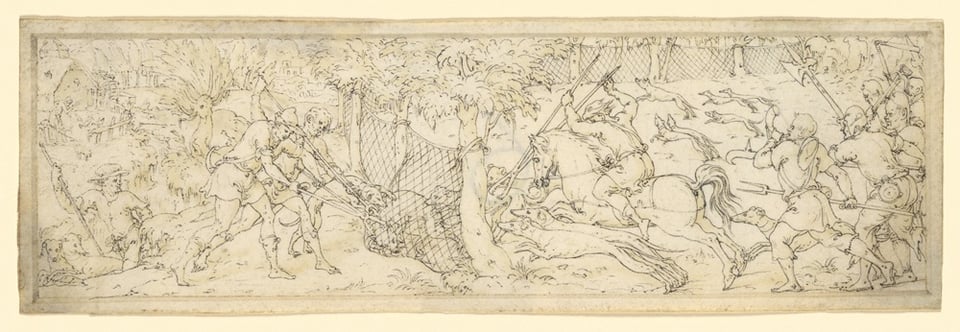
The Wolf and His King drew my attention back when it was announced because it’s a queer retelling of Marie de France’s lais “Bisclavret,” and broadly speaking, retellings of medieval French narrative poems are a little thin on the ground. So my first thought was: interesting! My second thought was: what are they going to do about the wife, though?
My misgivings on that second point were well-founded, unfortunately, but I’ll get back to that.
Longman’s novel presents the story of Bisclavret, a nobleman who is secretly a werewolf, in a way that hews closely to the original lais—much more closely than I realized when I was reading the book, since it’s been a while since I read the poem. Parts of the book are written in verse, and the remaining chapters take the perspectives of Bisclavret and the King, both of whom are deeply concerned with their own inner worlds: shame at his own monstrosity in Bisclavret’s case, shame at not living up to the demands of being king, in the King’s case.
A note on names: hardly any characters have names in the novel, which preserves the fairy-tale sensibilities of the medieval poem. Bisclavret is given as the nobleman/werewolf’s name, although in the original poem bisclavret is simply another word for werewolf. The King is The King.
Usually, the function of a retelling is to flesh out something that was missing from the original. Depth of character, motivation, setting, etc. What psychological and emotional state leads the characters of a fairy tale to make the decisions they do? What political circumstances could have put a fairy tale kingdom in a certain situation? What if the setting was treated with the rigorous detail of historical fiction, or alternatively, moved forward into a futuristic setting? So it’s interesting to look at where The Wolf and His King expands upon the source material (interior lives of Bisclavret and the King) and where it retracts (archetypes rather than names, the use of verse).
Overall I found Longman’s approaches to be both interesting and well-considered. Bisclavret is compellingly drawn as a man who is really going through it—the contrast between the depths of his despair at never escaping the wolf inside him and the hope that comes from being admitted to court and respected as a human man is beautifully laid out. The departures from the poem (the additional backstory given to Bisclavret’s wife, the recasting of her lover as Bisclavret’s cousin) help balance out the inner turmoil that otherwise governs most of the narrative. Also, the writing is just great in general. There’s a hunting scene near the beginning that’s just absolutely stunning in presenting Bisclavret, the human, in a violent, animal light, and the appeal this has for the King.
The second half is where things started to fall apart for me, even though the actual page-to-page reading experience was still enjoyable. This is partially because there is something wrong with me, and sometimes I latch onto a detail and it spirals out until I find myself writing a thesis on how this one element ruins everything and is also responsible for the fall of civilization at large. I’m not going to do that here; I’m just warning you about the kind of person you’re dealing with.
So. The original lais is the story of a respected nobleman whose wife betrays him when she finds out he is turning into a wolf several times a week. The retelling is the story of a nobleman plagued by fears of turning into a wolf, who rises at court with the assistance of his cousin, receives the attention of the King, marries the King’s ward, and is betrayed by his cousin and his wife after she finds out he is turning into a wolf several times a week. Bisclavret and the King have compelling reasons to fall in love: both are plagued by inner turmoil and self-loathing, and they find something of the ideal man in the other. However, the main barrier between them is not Bisclavret’s wolfishness: it’s his wife.
She is the villain of the original lais. To maintain the retelling, obviously she must remain the villain, but by adding a romantic element between the King and Bisclavret her role in the story takes on certain implications. New details were already added to her story: in The Wolf and His King, she is the King’s ward, who pursues Bisclavret as he rises at court. The King is clear that he wants to support her in finding a husband she desires, rather than marrying her off for political advantage. But at the crucial moment, when she learns Bisclavert’s secret (after weeks of not knowing why he has been vanishing or where to) her motivations become vague. Bisclavret’s cousin, who first championed Bisclavret’s cause and then joins his wife in betraying him, similarly loses the motivations he had in the first half. The wife Bisclavret lied to may have cause to be angry with him; throwing him (literally) to the wolves still seems an abrupt shift. Why not have the wife show . . . reasonable distress and betrayal of her own?
It’s a choice to adapt a medieval poem with one woman in it into a book with one woman in it, and make the woman the ultimate, senseless villain, who is treated to the most graphic violence in the book. This is true to the original, though I note that the author chose not to include the detail that (see footnote for spoilers for a several hundred year old poem).1
In spite of attempts to level the misogynistic playing field of medieval France (the King choosing not to use his ward’s marriage to accomplish political ends, emphasizing her choice in the matter), the wife is painted into a corner where she must both be the villain and is denied any compassion that might reasonably be read into the situation: trapped in a marriage under false pretenses, with a man who has the love of the one other man who might be able to deliver her from the situation. This kind of undercuts the sense of betrayal we are meant to feel on Bisclavret’s part; his reasons for keeping his secret are thoroughly explained, but there’s no sense that he’s done real harm to other people by the way he’s managing his wolfishness. There seems to be a desire to absolve both Bisclavret and the King from the negative effects their decisions have on others. For someone who is so worried about the problems his turning into a wolf may cause others, Bisclavret doesn’t really want to take responsibility for it. He treats his wife like a beast, and his King like a man. It’s hard not to read something into that.
Having said all that, I don’t want to gripe too much, because I would like to see more retellings of obscure medieval stuff. Longman’s next book seems to be a retelling of the Welsh Blodeuedd, which I am pretty excited about!
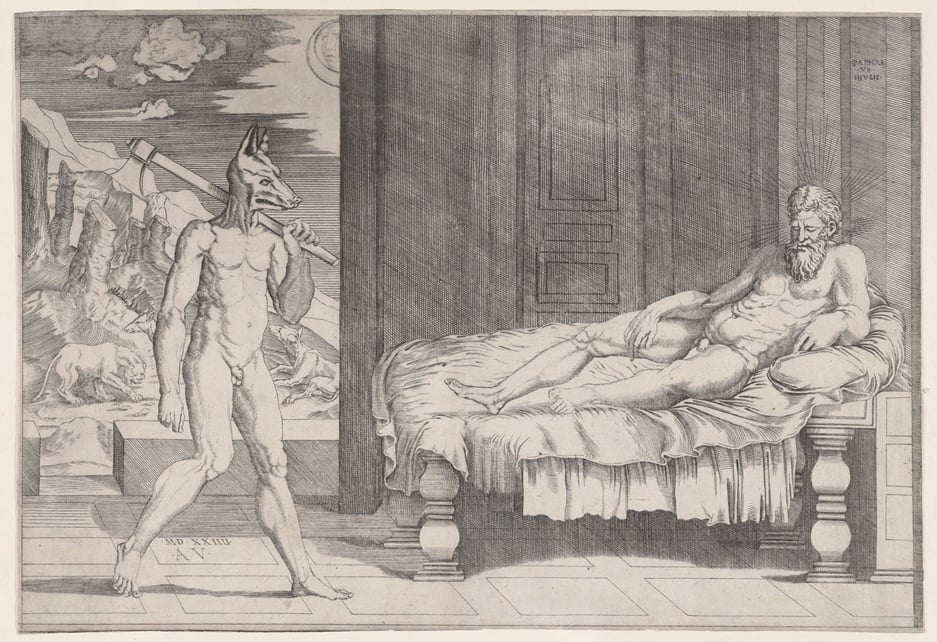
Red Winter is an entirely different approach to retelling; in this case, of the real-life Beast of Gévaudan, a wolf/cryptid that attacked several people and was the subject of a hunt in the 1760s in France.2 While the book is pitched on this premise, the actual story and characters are more wide-ranging, with Gévaudan being an event in the (very) long lifespans of the protagonists. Where The Wolf and His King sticks strictly to the source material, Red Winter flits between the events surrounding the Beast of Gévaudan, the execution of Joan of Arc, and occasional references to more modern events.
The book is told from the perspective of Sebastian, who in the opening is writing from present-day Italy. This sets up an interesting frame, which allows the narrator to introduce modern jokes and commentary in the footnotes while dipping into the historical details of 18th century France (along with other historical periods) as the story calls for it. It’s a delicate balance, but it works. It also happens to have one of my favorite . . . tropes? If you can call it that, where the main character has someone else living in their mind with them.3 Sebastian shares his mind with an entity (demon?) named Sarmodel, who lends him certain powers. They wander the earth killing monsters (read: other demons) and absorbing their life-forces.
I appreciated that even though this book is fundamentally about the tragic love between Sebastian and Antoine (a nobleman involved in the hunt for the Beast), it allows the tragedy to play out and doesn’t absolve Sebastian or Antoine of their crimes. Antoine is a selfish noble. Sebastian is a monster who, even if he tries to avoid killing innocents, doesn’t always manage it.
Overall I liked the book a lot; I’d read more with these characters (who, based on the framing narrative, seem likely to reappear in future books). It’s fun, fast-paced, and the characters entertaining. It reminds me of a certain style of 90s fantasy that I didn’t realize I was missing until I read this. My only real gripe is particular to me: any time authors start pulling in angels, demons, and real world religions, I start thinking too hard about it and annoy myself. I also have a lot of hang ups about how Joan of Arc is adapted in fiction, to the point that I will pretty much skip a book if I know she’s involved. I didn’t like her depiction here, and the theological implications of whatever was going on with the gods and Michael opened various cans of worms. Where is Judaism in this? Islam? God forbid, Buddhism?? What are those guys up to?
None of this is really relevant to the plot of the book, so I did my best to repress my more annoying mental sidetracks. But worth noting if you suffer from similar afflictions.
Anyways, I had a good time reading these books. If you want a deeply introspective story, try The Wolf and His King. If you’re looking for action and hijinks, go for Red Winter.
Any other entries in the field of Gay-French-Historical-Werewolf-Retellings I should know about?
As the wife gets her nose bitten off, her daughters are all born without noses as well. In my opinion, this bizarre detail in the original helps defuse the violence; it adds dark humor instead of being merely moralistic. ↩
Shout out to Bar Cart Bookshelf for making me realize I have been mispronouncing Gévaudan incredibly incorrectly for several years now. He also has a really good review of The Wolf and His King, and excellent themed cocktails. ↩
If anyone knows the name for this, please tell me. It’s everywhere, but I’ve never seen anyone address it as a trope? Maybe I’ll write about it in the future. ↩
You just read issue #2 of Vespertine Dispatch. You can also browse the full archives of this newsletter.
