Your Fave Is Problematic (by Kristen Koopman)
What do we do when the things we love—media, science, just about anything these days—suddenly seem to be morally gray?
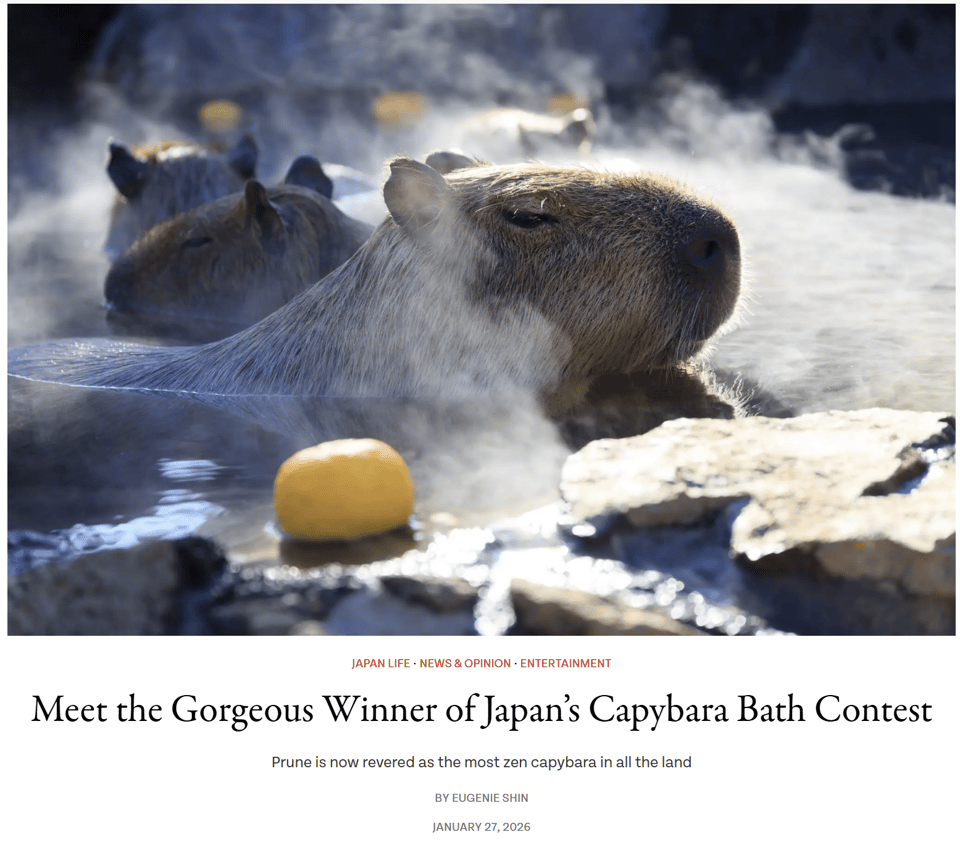
(Read to the end for… the winner of a capybara bathing competition as well as Katie’s Corner! That’s right, we’re switching it up this week!)
As a pretty significant Trekkie, I really did intend to stay caught up with Strange New Worlds. It checked all the boxes for what I want out of Star Trek: fun, complex characters, creative worldbuilding and plots, a willingness to go back to episodic format (that holographic fairytale episode though!), and that good old-fashioned sci-fi sensawunda. Yes, yes, and yes!
But after season one, season two languished on my to-watch list. I was keeping up with what was happening (these days I’m all about going into media with a finely-tuned idea of what to expect), and something was just rubbing me the wrong way.
I couldn’t quite figure out what it was until a few seasons later, when a video review of the eighth episode of season three came across my YouTube algorithm.
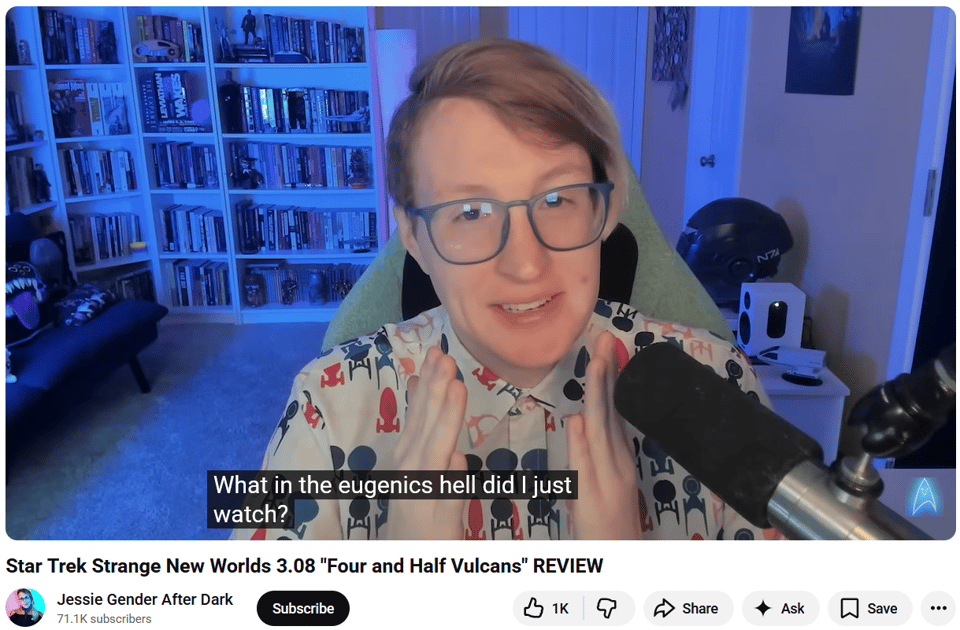
In the episode “Four and a Half Vulcans,” four of Spock’s crewmates (including his boss) are turned into Vulcans. They immediately become extremely logical and… racist? Because they are full Vulcans, you see, and Spock is only half-Vulcan.
Jessie wasn’t the only one to notice this—Reactor Magazine had an entire commentary article calling out the way Strange New Worlds was consistently equating biology with behavior.
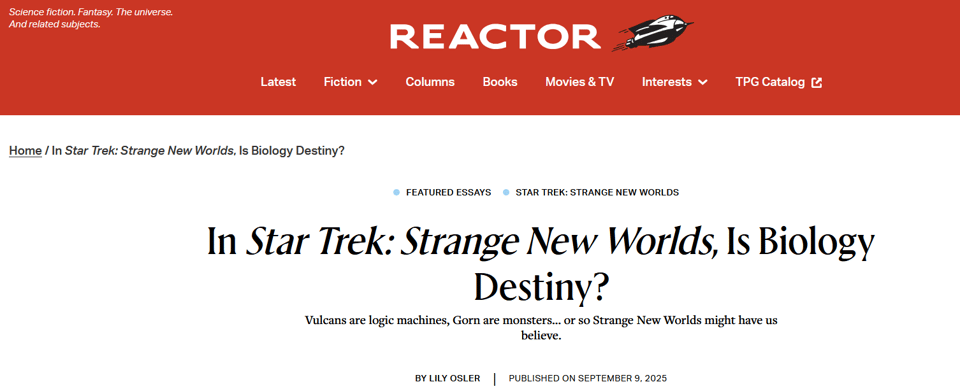
Setting aside—with difficulty—the way this breaks both the ethos of Star Trek and the previously-established historical lore (ummm, actually, Surak didn’t develop Vulcan logic to control their strong emotional impulses just for all his hard work to be attributed to genetics!), it’s also just kind of creepy.
And it’s something that people in science fiction and fantasy are noticing more and more: the way that stories will frequently have a species stand in for a culture. Dungeons & Dragons has a character’s race (maybe more accurately a species) literally determine some of its physical characteristics like strength and dexterity, and high fantasy has a long history of having some species that don’t really count as “people” so that our heroes can mow down fields of them in the epic final battle.
Because I’m an academic, I started putting some thoughts together into a talk. It focused on giving speculative fiction writers context about why things are so deeply complicated when it comes to species that are, fundamentally, made-up for fun make-believe reasons, as well as some suggestions for other ways of thinking about speculative biology.
To do that, I had to bring up some examples. Hitting Star Trek over and over again felt a little lazy (and incomplete—the spinoff comedy Lower Decks, for example, told many more nuanced and thoughtful stories about characters’ relationships to their origins and personhood, despite being animated and very funny).
So I went back to where my love of sci-fi really grabbed me by the throat and never let go: Stargate.
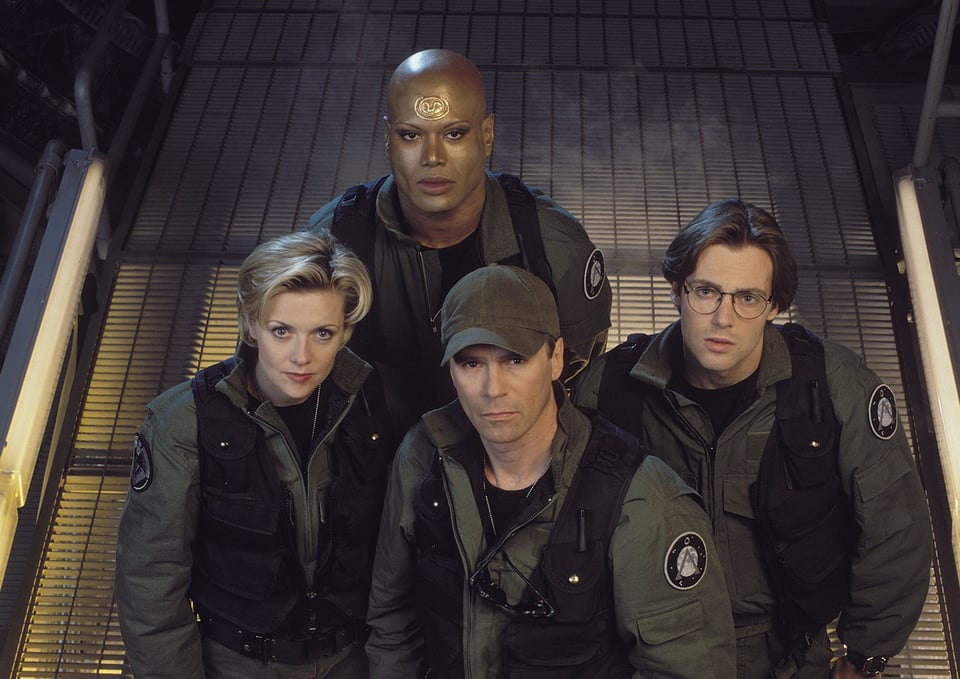
I didn’t even get as far as the main villains in Stargate—I looked at the starting cast for the first time in years and realized that the humans were all white and uncomplicatedly heroic while the Black character is, 1. the alien, and 2. a war criminal fighting for redemption.
I want to be clear that I love the character of Teal’c, and his actor, Christopher Judge, did an absolutely fantastic job delivering some of the most thoughtful and nuanced performances in the show. Despite the initial cringe optics, Teal’c got some really excellent development as not just a stand-in Other, but as an actual, fully-fledged person.
But on its face, it… doesn’t really look good, does it? The villains aren’t much better: Most of the aliens-posing-as-gods come from Egyptian, Phoenician, or Hindu traditions, with the occasional Japanese, Chinese, Greek, or Celtic inspiration. They are also disproportionately played by actors of color.
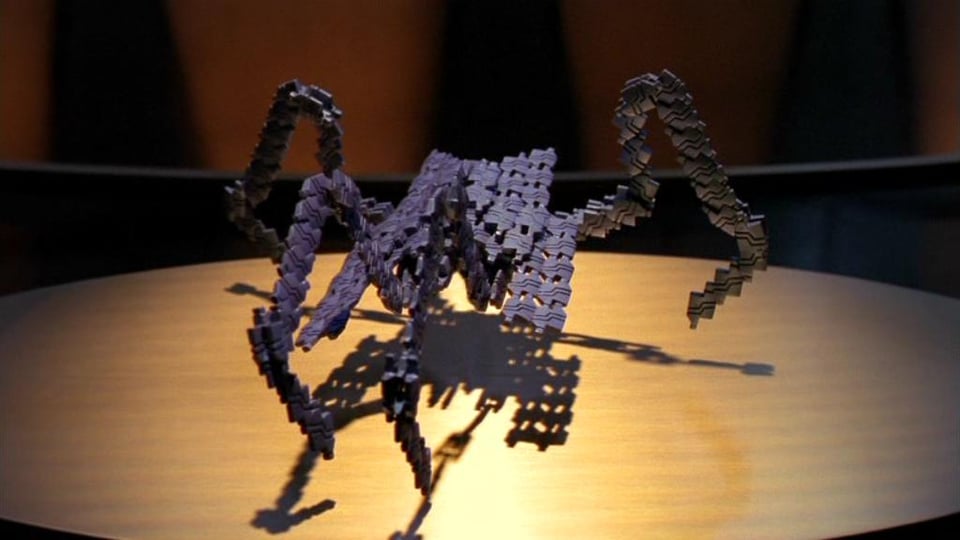
Meanwhile, Norse mythology is represented by the Asgard, highly technologically advanced little gray men; the (again, highly technologically advanced) nanite/robot villainous Replicators are almost entirely played by Legos and white actors (with the exception of Tahmoh Penikett, who is Indigenous Canadian); and in later seasons, when the plot turned towards a heavily Christian-coded religion and Arthurian myth, almost all the relevant Ori were portrayed by white actors.
And this isn’t even getting into Stargate: Atlantis, with a main cast of white humans from Earth and alien people of color from primitive hunter-gatherer societies. Well, that’s not fair—they had one main Black cast member, who, uh, became addicted to an alien drug, ran away, kidnapped his former friends and then sacrificed himself.
Yikes.
The more I thought about it, the more I realized: Was Stargate bad, actually?
I freaking loved Stargate. Scratch that—I still love Stargate! It was fun, it had action, its humor episodes were unmatched (the time loop episode? classic), and even though it occasionally felt like it happened despite the writers, the characters felt real and had arcs. Watching an episode felt like hanging out with friends, and I’d be lying if I said a lot of my taste (both as a consumer and producer of speculative fiction) wasn’t shaped by the show.
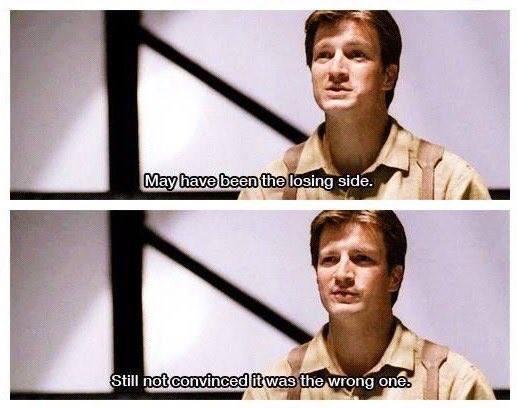
I’m no stranger to the idea that beloved stories might not hold up under the passage of time. You know what else I was watching at the same time as Stargate? Firefly, the show that dared to ask, “What if we rooted for the space Confederacy and spoke Chinese without having any Chinese characters and also called our upper-class courtesan a whore a whole bunch?” To say nothing of the more recent revelations about Joss Whedon’s treatment of women.
So if our media is problematic, where does that leave us?
I don’t know, man. I’m not going to pretend I have any answers. For me, I’m probably not going to rewatch Firefly anytime soon—the last time I did was before I had really seen the (very fair) criticisms, and now I can’t unsee them. I also don’t really want to unsee them. I’m looking for different things in my media now, and I think that’s fine, and maybe even good!
Firefly and Stargate were shows of a different era, and though it might not be an era that’s entirely behind us, I’m fine with remembering it the way it was and acknowledging that my tastes (and approach to media) have changed.
I’m also fine with acknowledging now that I definitely could have noticed all this stuff when I was watching for the first time. I don’t think it’s bad to revisit the things we hold dear, if only to make sure that we’re still fundamentally doing what we want to be doing.
Which brings me back to where I started: my talk on speculative biology. Problematic treatment of race isn’t exactly the sole territory of late-nineties-to-mid-2000s Sci-Fi Channel television filmed in Vancouver. It’s also woven into science itself, all the way back to the early days of trying to biologically prove that different races were scientifically distinct in ways that just so happened to mean that slavery was good, actually. (An idea, I must emphasize, that has been debunked thoroughly.)
But science is also revisiting its conclusions. Doctors are rethinking things they’ve taken for granted for decades: that Black patients have a lower range of indicators for healthy kidney function, that Black patients inherently have lower lung capacities, that Black patients feel less pain. These are changes that very well may mean the difference between life and death for some patients, and they arguably get medicine closer to its goal: help people, regardless of race.
While I’m sure there’s a time and a place for arguing about moral purity in art, this is ultimately what it comes down to for me: What is it going to change, and what are you going to do about it?
Katie's Corner: Great Escapism (by Katie Burke)
I recently attended an online class with a publishing agent, Alia Hanna Habib, who wrote a fantastic book about building nonfiction writing careers, Take It From Me. She mentioned that selling nonfiction books lately has been harder than usual, because what’s selling best is escapist fiction. That makes so much sense, because ever since November 2024, that’s all I’ve been wanting to read for pleasure. We are all bombarded with incredibly disturbing news right now—journalists most especially. Fortunately, Habib also thinks the horizon for nonfiction books is brightening. While that’s great for my career, I must say I don’t think I’ll be leaving behind my penchant for fun fantasy anytime soon. Here are some recent fiction favorites of mine:
Uprooted, by Naomi Novik.
Novik’s Scholomance series is already a favorite because of its portrayal of academia and its subversion of the lone hero “chosen one” trope. In Uprooted, Novik again delivers powerful metaphors about the magic of combining traditional academic rationalism with intuitive senses. This standalone, short high fantasy novel also feels really good to read.
The Will of the Many and The Strength of the Few, by James Islington
The pyramid structure of the magic system in this book is a brilliant metaphor for capitalism-driven inequality: People must cede their will to people with more social power, so that they have less energy in their daily lives, while the people at the top of the pyramid have superpowers. This action-packed fantasy series is hard to put down. The much-anticipated second book in the trilogy just came out in November. I recommend reviewing the final chapter and epilogue in The Will of the Many to orient yourself in the second book. It kind of throws readers in the deep end.
Recent Things Katie Wrote:
Policies Support Miners’ Health, American Scientist
Progress and challenges on Europe’s pathway to clean air, AHCJ
Recent Things Katie Recommends:
The Meltdown at The Washington Post—and the Crisis in News, by Derek Thompson, Plain English
The Grief We Won’t Allow, Jess Steier, Unbiased Science Substack
Using Data for Good: A Crash Course, Project Salt Box
For a Rare Disorder, Is Language Complicating Care?, Jyoti Madhusoodanan, Undark
Tell Us What You Think
Please tell us here what sorts of content and subscriber perks you suggest. In the meantime, please subscribe to the free version and buy me a coffee here.
Something Fun:
About Me:
https://authory.com/KatieBurke
Add a comment: